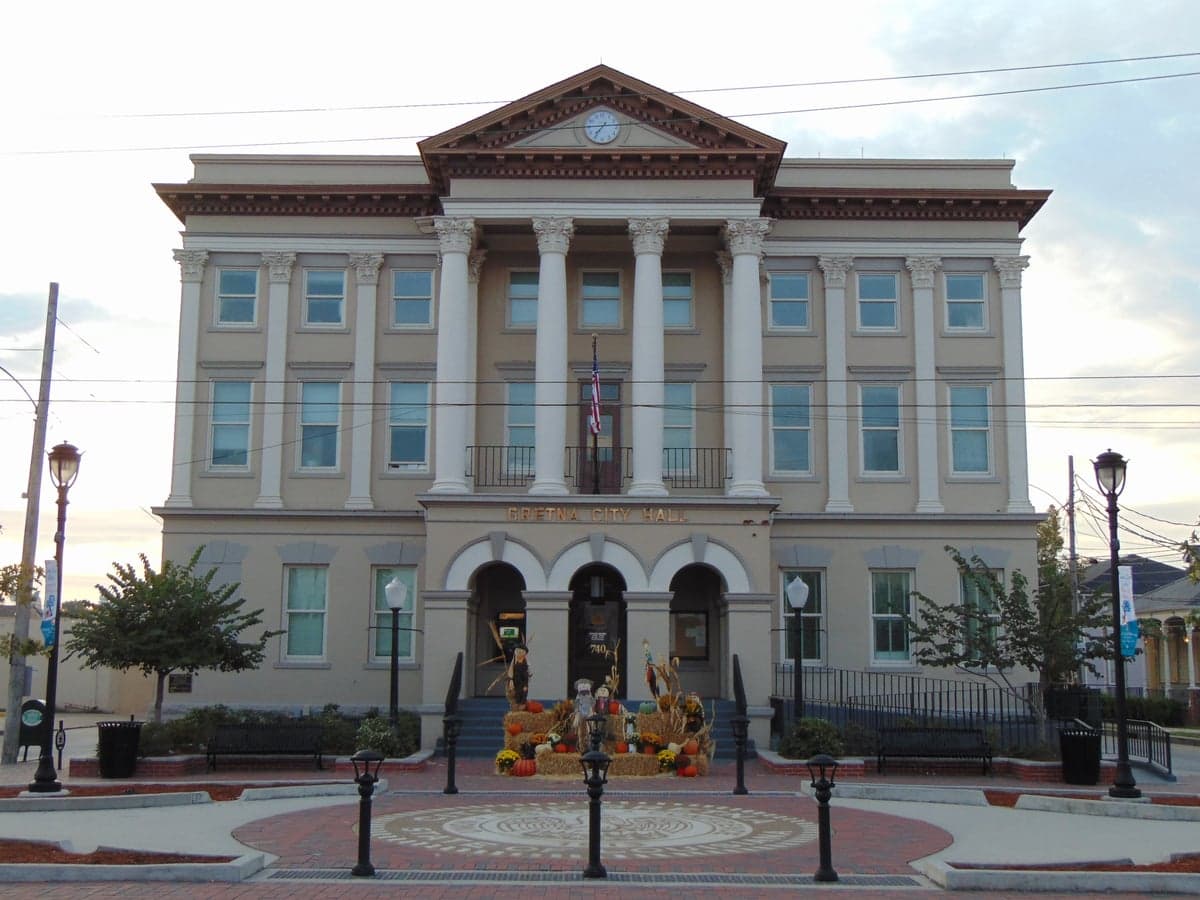
Photo: Wikipedia
Political ClimatePolitical Climate in Gretna, LA
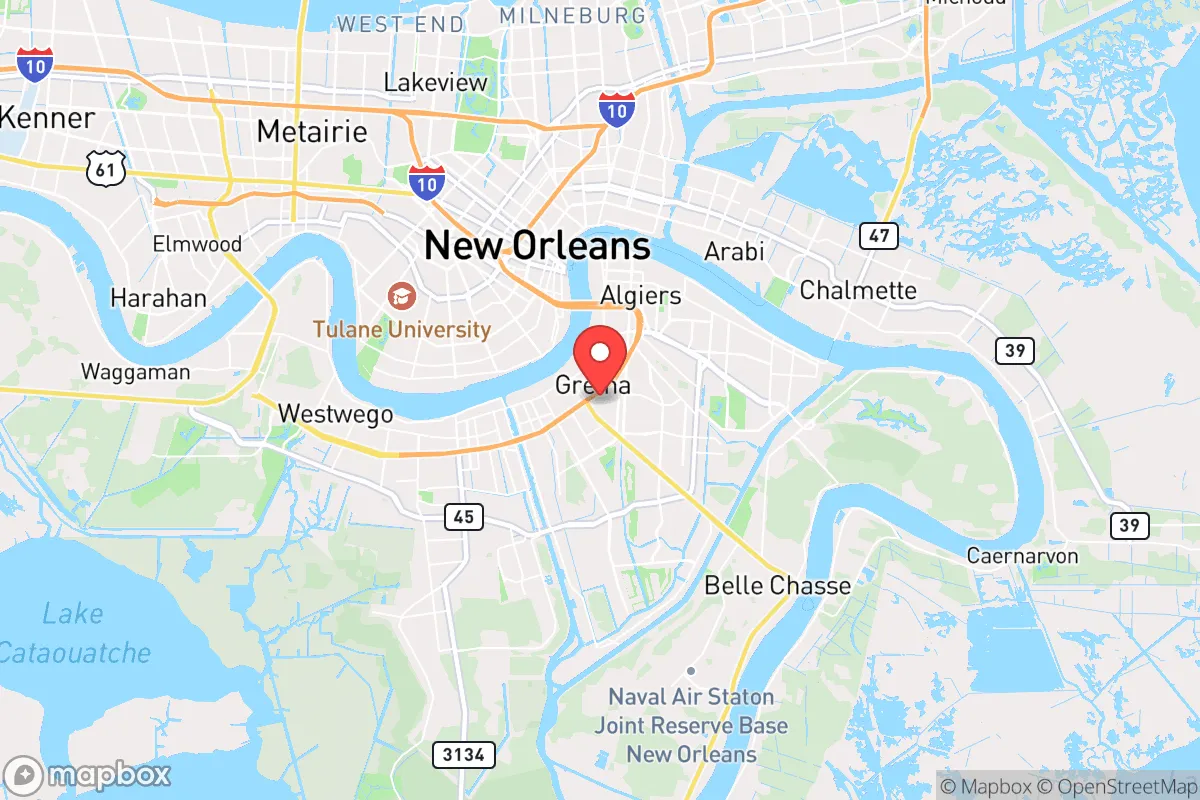
District shown is the primary district for this city’s centroid. Cities may span multiple districts.
Local Political AnalysisPolitical Analysis of Gretna, LA
Gretna, Louisiana, leans heavily Democratic, with a Cook PVI of D+17, meaning the area votes about 17 points more Democratic than the national average in presidential elections. That’s a pretty stark number, and it’s been trending that way for a while now, though it wasn’t always this lopsided. If you’re looking at the political climate here, you’re seeing a place that’s been shifting leftward, especially in the last decade, and that’s got some of us longtime residents a little uneasy about where things are headed.
How it compares
To get a real feel for Gretna’s politics, you gotta look at the neighbors. Just across the Mississippi River, New Orleans is a deep blue stronghold, and Gretna’s numbers are basically a reflection of that metro influence. But drive a few miles west to places like Westwego or Harahan, and you’ll find a more mixed bag—still some Democratic lean, but with a stronger conservative undercurrent. Up in Jefferson Parish as a whole, the politics are more purple, with suburban areas like Metairie often voting more Republican. Gretna, though, is the odd one out in the parish—it’s the urban core, and it’s been getting bluer. That contrast is important because it shows how local policies can diverge from the surrounding area, especially on things like taxes and zoning.
What this means for residents
For folks living here, the political lean means you’re seeing more government involvement in daily life than you might in a more conservative town. Property taxes in Jefferson Parish are already on the higher side for Louisiana, and there’s been talk of new bond measures for infrastructure that could push them up further. On the personal freedom front, you’ve got a city council that’s been more open to progressive ideas—like stricter rental regulations and noise ordinances—that can feel like overreach if you’re used to a little more elbow room. The school board has also seen a push for more centralized curriculum decisions, which raises eyebrows for parents who want local control. It’s not a full-on progressive takeover, but the trend is there, and it’s something to watch if you value keeping government out of your backyard.
Cultural and policy distinctions
One thing that sets Gretna apart is its historic downtown and the annual Gretna Heritage Festival, which still has a small-town feel despite the political shift. But the culture is changing. You’ll see more “Black Lives Matter” signs in yards than “Don’t Tread on Me” flags these days, and the local police department has faced calls for reform that wouldn’t have been a big deal a decade ago. On policy, the city has been slow to push back on state-level mandates—like mask mandates during COVID or energy efficiency standards for new builds—which some see as a lack of fight for local autonomy. If you’re a conservative moving here, you’ll find a community that’s friendly on the surface but increasingly aligned with a bigger-government mindset. It’s not a bad place to live, but you’ll want to keep an eye on the ballot box if you want to keep things from sliding further left.

State Political ClimatePolitical Climate in Louisiana
State Political AnalysisPolitical Environment in the State
Louisiana has long been a reliably red state in federal elections, but its political climate is far more complex than a simple partisan label suggests. The state has voted for the Republican presidential candidate in every election since 2000, with Donald Trump carrying it by nearly 20 points in 2024. However, the state’s deep-rooted Democratic tradition at the local level, particularly among Black voters and in certain Cajun parishes, creates a unique political landscape where conservative governance often clashes with a more populist, culturally libertarian streak. Over the past two decades, the shift has been unmistakable: the state has moved from a competitive purple state to a solidly red one, driven by the suburbanization of Baton Rouge and New Orleans suburbs, the decline of union influence in the industrial corridor, and the cultural conservatism of the northern and rural parishes.
Urban vs. rural divide
The political map of Louisiana is a textbook example of the urban-rural divide, but with a twist. The state’s two largest cities, New Orleans and Baton Rouge, are Democratic strongholds, with Orleans Parish delivering over 80% of its vote to Joe Biden in 2020. However, the surrounding suburbs tell a different story. Jefferson Parish, just west of New Orleans, has flipped from a swing parish to a reliably red one, with Trump winning it by 15 points in 2024. The same pattern holds in East Baton Rouge Parish, where the city itself is blue but the suburban precincts in places like Zachary and Central are deeply conservative. The northern part of the state, including the Shreveport-Bossier City metro, is more mixed: Bossier Parish is solidly red, while Caddo Parish (Shreveport) leans Democratic due to its large Black population. The Lafayette area, the heart of Cajun country, has trended redder over the last decade, with the city itself becoming more competitive but the surrounding parishes like St. Martin and Vermilion remaining deeply conservative. The rural parishes of the Florida Parishes (e.g., Tangipahoa, Washington) and the northern tier (e.g., Union, Jackson) are among the most Republican in the nation, often voting 80%+ for GOP candidates.
Policy environment
Louisiana’s policy environment is a mixed bag for conservatives. On the positive side, the state has no personal property tax, and its homestead exemption is generous, protecting the first $75,000 of a home’s value from property tax. The state income tax is a flat 3% for most earners, and the corporate tax rate has been cut from 8% to 4% in recent years. However, the state’s sales tax is among the highest in the nation, with the average combined state and local rate exceeding 9.5%. This creates a regressive tax burden that hits low-income families hardest. On regulation, Louisiana is generally business-friendly, with a right-to-work law and a tort reform package passed in 2020 that capped damages and limited lawsuit abuse. Education policy has been a battleground: the state has a robust school choice program, including the Louisiana Scholarship Program and a growing charter school sector, but the teachers’ union remains powerful in New Orleans and Baton Rouge. Healthcare is a sore spot: the state expanded Medicaid under the Affordable Care Act in 2016, a decision that many conservatives view as a costly expansion of government dependency. Election laws are relatively secure: the state requires a photo ID to vote, has no same-day registration, and conducts post-election audits. However, the state’s use of closed primaries for federal offices has been criticized by some conservatives as limiting voter choice.
Trajectory & freedom
Louisiana has been on a trajectory of expanding personal freedom in several key areas, but with notable exceptions. On gun rights, the state is a clear winner: in 2021, Governor John Bel Edwards, a Democrat, signed a constitutional carry bill into law, allowing permitless carry of concealed firearms for anyone 21 or older. This was a major victory for the Second Amendment community. On parental rights, the state passed the “Parental Bill of Rights” in 2023, which requires schools to notify parents of any changes to a student’s mental, emotional, or physical health, and prohibits schools from withholding information about a child’s gender identity. This law has been challenged in court but remains in effect. On medical freedom, Louisiana has been a leader in protecting vaccine choice: in 2021, the state passed a law banning vaccine passports and prohibiting employers from mandating COVID-19 vaccines. On property rights, the state has a strong “stand your ground” law and has resisted efforts to impose statewide zoning or land-use restrictions. However, the state’s high incarceration rate and the continued presence of the “Louisiana Purchase” tax on business inventories are red flags for those who prioritize economic freedom. The state’s recent move to eliminate the corporate franchise tax by 2027 is a positive step.
Civil unrest & political movements
Louisiana has a history of political activism that can be intense but rarely spills into the kind of civil unrest seen in other states. The most visible flashpoints in recent years have been around police reform and racial justice, particularly in New Orleans and Baton Rouge. The 2016 shooting of Alton Sterling in Baton Rouge sparked protests that led to the killing of three police officers, a tragedy that still resonates. In New Orleans, the removal of Confederate monuments in 2017 was a highly contentious issue, with protests from both sides. On the right, the state has a strong Second Amendment movement, with groups like the Louisiana Shooting Association and the Louisiana Firearms Coalition actively lobbying against any new gun restrictions. Immigration politics are less heated than in border states, but the state has seen a rise in anti-sanctuary city rhetoric, particularly in the state legislature, which passed a law in 2024 banning sanctuary policies and requiring local law enforcement to cooperate with ICE. Election integrity has been a major topic since 2020, with the state legislature passing a voter ID law and a ban on ballot harvesting in 2022. The state’s Republican Party has also been active in challenging the use of drop boxes and mail-in voting, though these efforts have been largely symbolic.
Projection
Over the next 5-10 years, Louisiana is likely to become even more conservative, but the path is not without challenges. The state’s population is aging and slowly declining, with the biggest losses in New Orleans and rural parishes. In-migration is modest, mostly from other Southern states, and tends to be conservative-leaning. The growing Hispanic population, particularly in the New Orleans metro and the sugarcane parishes, is a wild card: while many Hispanic voters are culturally conservative, they have not yet aligned strongly with either party. The state’s Democratic Party is increasingly dominated by Black voters and urban progressives, making it harder for them to win statewide elections. The next governor, likely a Republican, will have a supermajority in the legislature, which could lead to further tax cuts, school choice expansion, and restrictions on abortion (though the state already has a near-total ban). The biggest risk for conservatives is the state’s fiscal health: the reliance on oil and gas revenue makes the budget volatile, and the high sales tax is a drag on economic growth. A new resident moving in now should expect a state that is culturally conservative, with a strong emphasis on gun rights, parental control, and local autonomy, but with a tax structure that is less friendly than it appears at first glance.
For a conservative family or individual looking to relocate, Louisiana offers a solid foundation of personal freedom, particularly in the areas of gun rights, school choice, and vaccine freedom. The state’s low cost of living and generous homestead exemption are major draws. However, the high sales tax, the legacy of Medicaid expansion, and the lingering influence of the Democratic Party in New Orleans and Baton Rouge mean that the fight for conservative values is ongoing. If you’re looking for a place where your vote counts and your values are respected, the suburbs of Baton Rouge, the Lafayette area, or the northern parishes like Bossier are your best bets. Just be prepared for the humidity and the potholes.
* Values derived from national, state, county, city and local statistics and may differ in a specific area. Last updated: 2026-05-01T07:10:46.000Z
Narrative content on this page is AI-generated and may contain mistakes. Verify any details that matter before acting on them.
ReloMaps may earn a commission from affiliate links at no extra cost to you.

