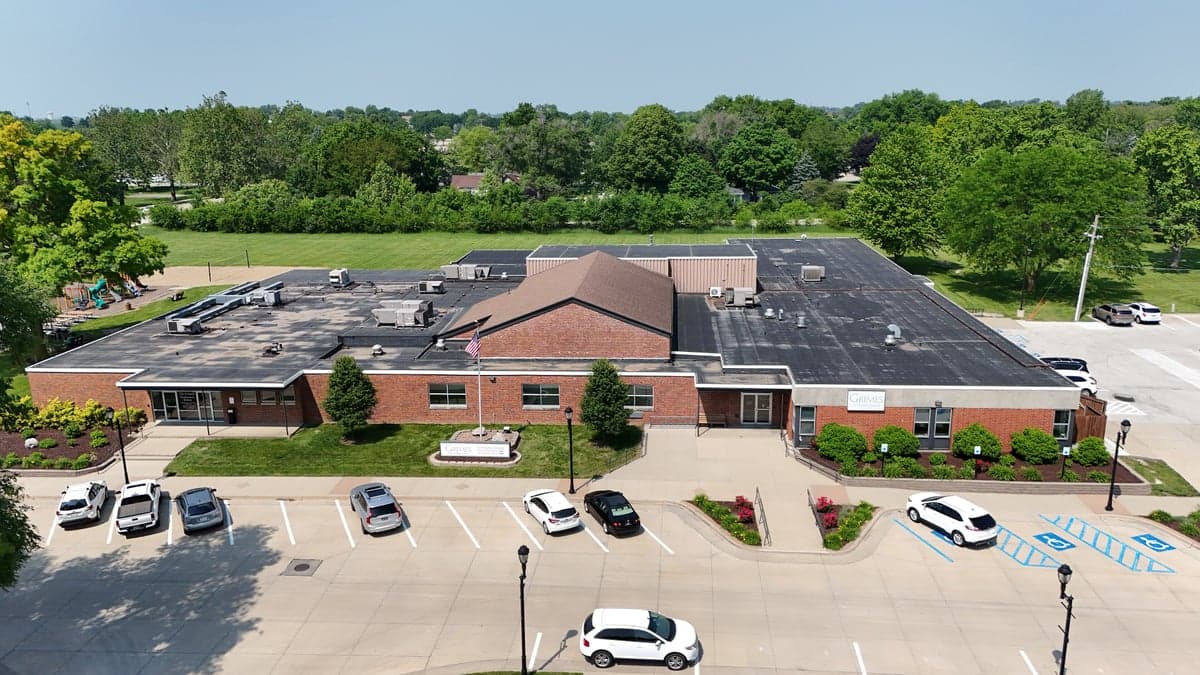
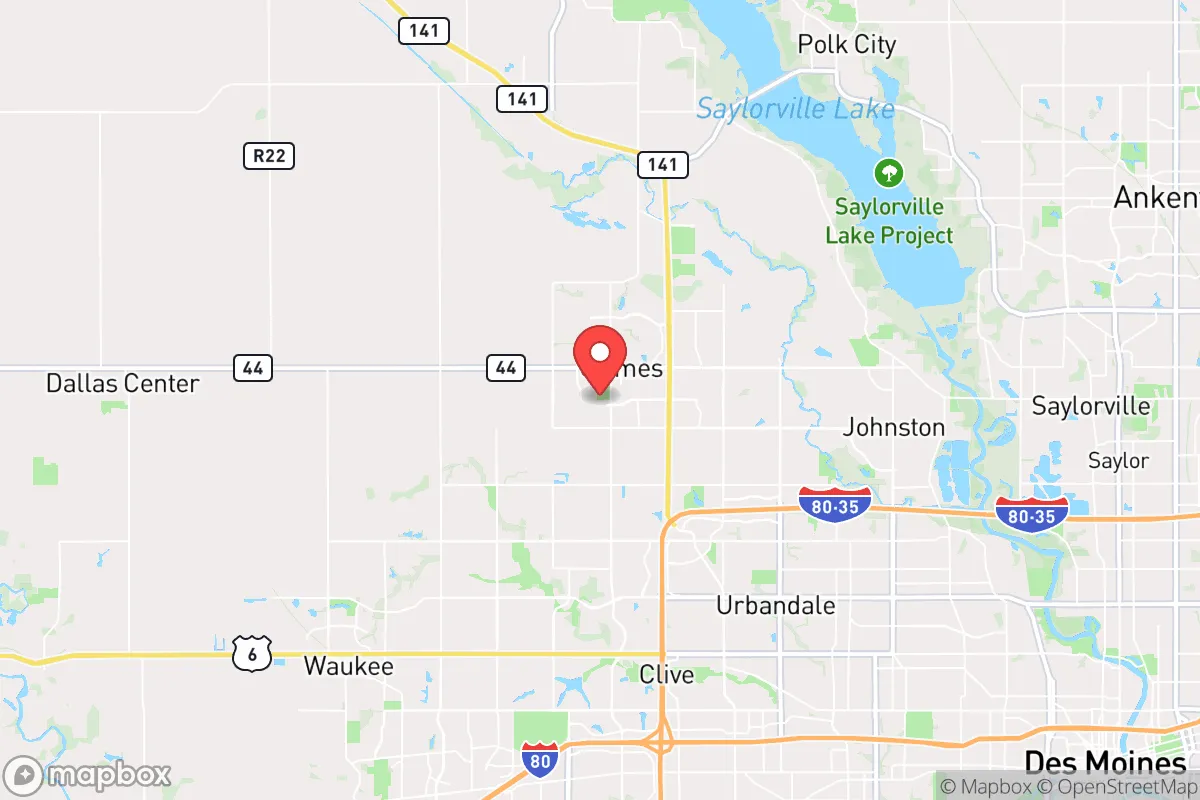
Photo: Wikipedia
Personal Sovereignty in Grimes, IA
Viable for self-reliance. Generally workable, though some barriers may limit total independence.
What does Personal Sovereignty tell us?
Personal Sovereignty measures your capacity for self-reliance and independence with minimal government friction. Higher scores mean fewer barriers between you and the way you want to live... but it assumes you have the space you need and good neighbors.
What does this tell us?
Personal Sovereignty measures your capacity for self-reliance and independence with minimal government friction. Higher scores mean fewer barriers between you and the way you want to live... but it assumes you have the space you need and good neighbors.
State Policy
Energy independence: Importer (50% of energy produced in-state)
Personal Liberty
Homesteading

Personal Liberty Analysis
Grimes, Iowa, offers a notably high degree of personal sovereignty relative to many other Midwestern suburbs, largely due to Iowa’s state-level preemption laws and a local culture that leans heavily toward self-reliance. While no municipality is a libertarian utopia, Grimes sits in a state that has actively pushed back against federal overreach in areas like gun rights, parental authority, and tax policy. For a single individual or family operating from a survivalist or prepper mindset, the key question isn’t whether the government is absent—it’s whether the legal framework lets you live your life without constant interference. In Grimes, the answer is a qualified yes, with the main caveats being property taxes and zoning restrictions that still reflect suburban order rather than rural freedom.
Tax burden and regulatory posture: how Iowa’s flat tax and preemption laws protect your wallet and choices
Iowa’s move to a flat 3.8% individual income tax rate (as of 2026, down from a progressive top rate of 8.53% in 2022) is a direct reduction in the state’s claim on your earnings. This is part of a broader trend: the state has been phasing out the inheritance tax and cutting corporate rates, signaling a regulatory posture that favors economic autonomy over government expansion. For Grimes residents, the local property tax burden is the real weight—Polk County levies around $18-$22 per $1,000 of assessed value, which is moderate for the Des Moines metro but higher than rural Iowa counties. However, the state’s strict preemption laws prevent cities like Grimes from enacting their own minimum wage hikes, plastic bag bans, or rental control ordinances—common tools of local overreach elsewhere. This means your business or rental property isn’t subject to a patchwork of unpredictable local rules. The regulatory environment for home-based businesses is also favorable: no special permits for low-impact operations like online sales or consulting, and no county-level health department overreach for small-scale food production (though state licensing still applies for selling to the public). For a prepper, the key takeaway is that Iowa’s state-level tax and regulatory reforms create a predictable, low-interference baseline—Grimes doesn’t add much friction on top of it.
Self-defense and gun law specifics: constitutional carry, stand your ground, and what it means for daily carry
Iowa is a constitutional carry state (permitless carry for both open and concealed) for anyone 21 or older who can legally possess a firearm. This went into full effect in 2021, and Grimes has no local ordinances that restrict it—you can carry in most public spaces, including parks and sidewalks, without a permit. The state also has a stand your ground law (no duty to retreat in any place you are lawfully present), which is critical for self-defense scenarios in your home, vehicle, or even a public parking lot. Magazine capacity is unrestricted, and there is no state-level registry or waiting period. The only notable restriction: you cannot carry in courthouses, schools (with exceptions for those with a professional permit), or federal buildings. For a prepper, the practical reality is that Grimes is a low-risk area for legal trouble if you carry daily. The local police department (Grimes PD) is generally pro-2A, and Polk County’s sheriff has a reputation for not enforcing federal overreach like ATF rule changes on pistol braces or bump stocks. If you’re concerned about federal confiscation scenarios, Iowa passed a Second Amendment Preservation Act in 2021 that prohibits state resources from enforcing any future federal bans—a legal shield that matters if the political winds shift. In short, your right to keep and bear arms in Grimes is about as strong as it gets in the Midwest outside of a few free-state counties in the West.
Self-reliance and homesteading viability: lot sizes, zoning, and off-grid feasibility in a growing suburb
This is where Grimes shows its suburban limits. Most residential lots in newer subdivisions are 0.15 to 0.25 acres, which is fine for a large garden and a few chickens (hens only, no roosters, per city code) but not for serious homesteading. The city’s zoning code allows backyard chickens, beekeeping, and rain barrels without a permit, but livestock like goats or pigs are prohibited within city limits. For off-grid systems: solar panels are allowed but must meet building code and HOA approval if you’re in a covenanted neighborhood—many newer developments have HOAs that restrict visible panels or battery storage. Composting toilets and greywater systems are not explicitly banned, but they require a plumbing permit and must meet state health codes, which effectively makes them impractical for full-time use. The real opportunity for self-reliance lies just outside Grimes: unincorporated Polk County and adjacent Dallas County have 5- to 20-acre parcels available within a 15-minute drive, where zoning is minimal and you can build a pole barn, install a well, and keep livestock without city interference. For a prepper, the strategy is clear: live in Grimes for the schools and infrastructure, but buy a rural lot nearby for a bug-out location or serious food production. The city’s water supply is municipal (from the Des Moines Water Works), so you’re dependent on the grid for potable water unless you drill a well—which is expensive and not allowed on most suburban lots. Overall, Grimes is a “suburban compromise” for self-reliance: you can supplement your food and energy, but you won’t be living off the land within city limits.
Personal liberties: parental rights, medical autonomy, speech, and property protections
Iowa has been a battleground for parental rights, and the current legal landscape is favorable. The state’s Parents’ Bill of Rights (enacted in 2021) gives parents explicit authority over their children’s education, healthcare, and religious upbringing, including the right to opt out of any school curriculum or activity without penalty. Grimes’ school district (Dallas Center-Grimes) has been conservative in practice—no critical race theory or gender ideology mandates in K-8, and a transparent opt-out process for sex ed. For medical autonomy, Iowa does not have a state-level vaccine mandate for adults (though some employers require them), and COVID-era emergency powers have been sunset, meaning the governor cannot unilaterally shut down businesses or mandate masks again without legislative approval. This is a direct check on executive overreach that many states lack. On speech: Iowa has no hate speech laws that criminalize political or religious expression, and Grimes has no local noise or signage ordinances that restrict political yard signs or public commentary. Property rights are protected by Iowa’s strict eminent domain laws—the state cannot take land for private economic development (like a shopping mall) under the Kelo precedent. For a prepper concerned about government overreach, the combination of parental rights, medical choice, and property protections makes Grimes a relatively safe harbor. The biggest ongoing threat is federal overreach (e.g., EPA regulations on burning or ATF rules on firearms), but state-level preemption and preservation acts provide a legal buffer that most coastal states don’t offer.
In the broader context of the Midwest, Grimes ranks as a strong-to-moderate sovereignty location. It’s not as free as a rural county in South Dakota or Wyoming, where you can build a bunker without permits and carry a rifle in your truck without a second glance. But compared to suburbs in Illinois, Minnesota, or Colorado—where local governments routinely ban gas stoves, restrict firearm carry, and impose vaccine mandates—Grimes offers a legal environment that respects individual autonomy. The trade-off is suburban conformity: HOAs, lot size limits, and municipal water dependence. For a single person or family willing to accept those constraints in exchange for good schools and low crime, Grimes provides a solid foundation for a self-reliant lifestyle. The key is to use the city as a base while maintaining a rural property or network for the scenarios where suburban rules become a liability. In a world of increasing federal overreach and cultural instability, Grimes is a place where you can still live your life on your own terms—provided you understand the limits of the suburban bargain.

* Values derived from national, state, county, city and local statistics and may differ in a specific area. Last updated: 2026-10-10T16:27:33.000Z
Narrative content on this page is AI-generated and may contain mistakes. Verify any details that matter before acting on them.
ReloMaps may earn a commission from affiliate links at no extra cost to you.

