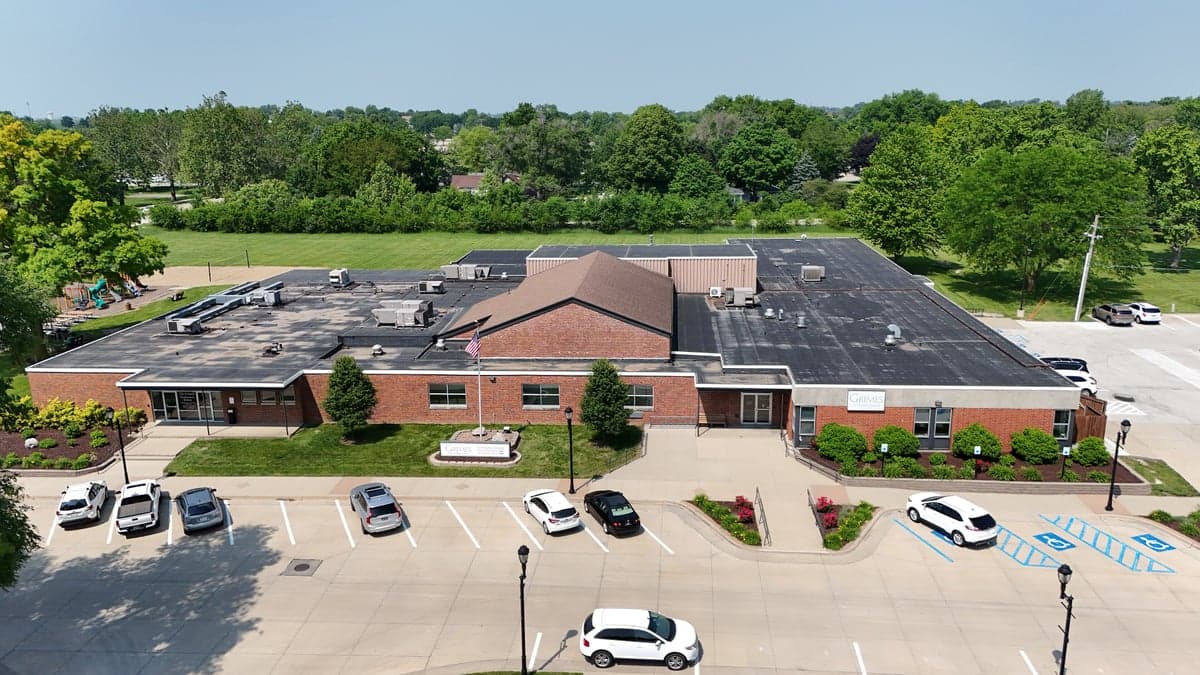
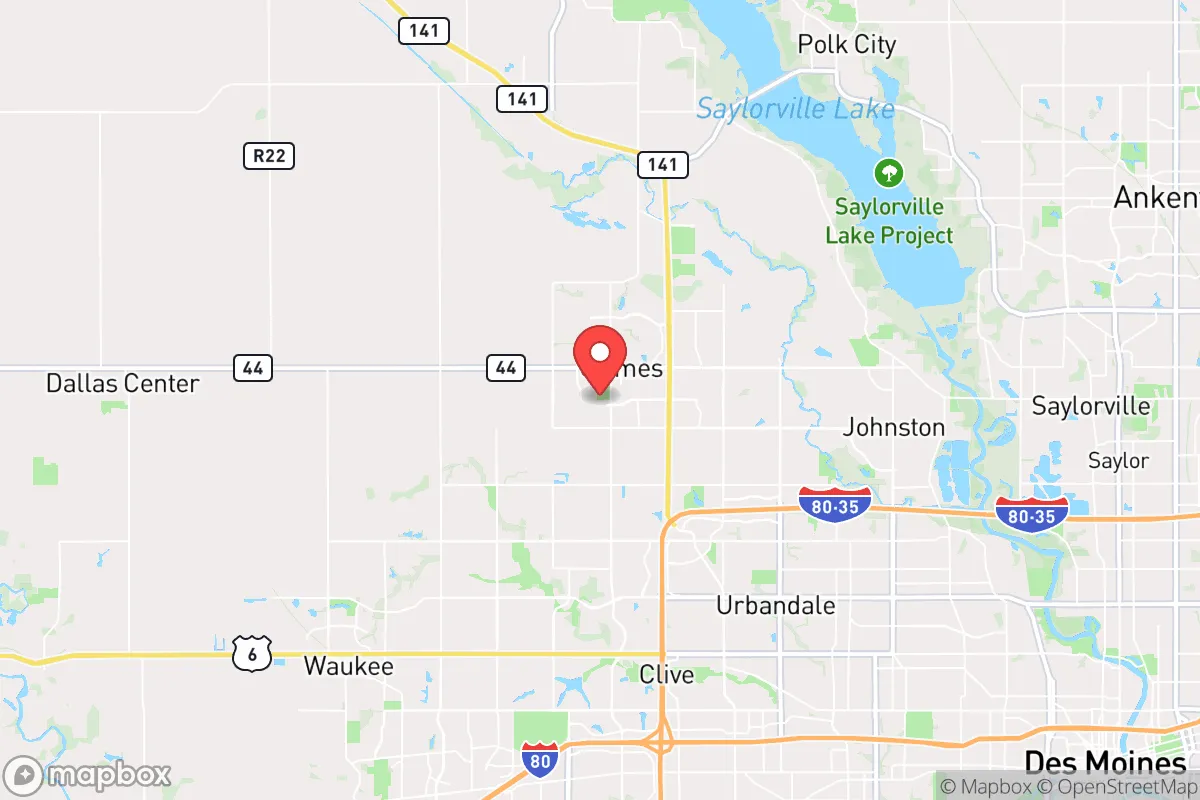
Photo: Wikipedia
Political ClimatePolitical Climate in Grimes, IA
District shown is the primary district for this city’s centroid. Cities may span multiple districts.
Local Political AnalysisPolitical Analysis of Grimes, IA
Grimes, Iowa, has long been a reliably conservative community, and that hasn’t changed much despite the rapid growth. The Cook PVI of R+2 might not sound like a landslide, but out here in Dallas County, that number feels a bit low for the actual vibe on the ground. Most folks you’ll meet at the local coffee shop or the high school football game lean right, and the voting patterns in recent cycles have held steady—Trump carried the county by a comfortable margin in 2024, and local races tend to go the same way. The real story, though, is how Grimes is holding its ground as the Des Moines metro area creeps westward, bringing with it a more progressive tilt from the city. You can feel the tension at the county board meetings, where the old guard is fighting to keep property taxes low and zoning loose, while newer transplants from Polk County sometimes push for more government involvement in day-to-day life.
How it compares
Drive ten minutes east into West Des Moines or Clive, and you’ll hit a noticeably different political climate—those suburbs have shifted leftward in recent years, especially among younger families and tech workers. Grimes, by contrast, still feels like the rural outpost it was a generation ago. Head north to Perry or west to Adel, and you’ll find even deeper red territory, but Grimes sits right on the edge of that cultural divide. The contrast is sharpest when you look at school board elections: Grimes’s board has consistently resisted curriculum changes that lean into progressive social agendas, while neighboring districts in the metro have adopted more controversial policies. It’s not that Grimes is isolated—it’s just that the community has been vocal about keeping government out of the classroom and off the front porch.
What this means for residents
For someone moving here, the political climate translates into a few concrete realities. Property taxes are still among the lowest in the metro area, and the city council has been reluctant to impose new fees or mandates on homeowners and small businesses. You won’t see the kind of overreach you hear about in places like Portland or even parts of Des Moines—no mask mandates that last forever, no heavy-handed zoning that tells you what you can do with your own land. Gun rights are respected without much fuss, and the local sheriff’s office isn’t interested in enforcing state-level red flag laws that feel like a backdoor infringement. The downside? If you’re hoping for a lot of public transit or bike lanes funded by tax hikes, you’ll be disappointed. The community prioritizes personal responsibility over collective programs, and that’s a trade-off most residents are happy to make.
Looking ahead, the biggest concern is the growth itself. As more people move in from blue states and blue cities, there’s a real risk that the political character of Grimes could shift. Already, you see a few more Harris-Walz yard signs in the newer subdivisions than you did five years ago, and the local Democratic Party has been more active in recruiting candidates for city council. The long-term trajectory depends on whether the newcomers assimilate into the existing culture or try to change it. For now, the conservative majority holds, but it’s something to keep an eye on—especially if you value a community where the government stays out of your business and lets you live your life the way you see fit.

State Political ClimatePolitical Climate in Iowa
State Political AnalysisPolitical Environment in the State
Iowa has been a reliably Republican state in presidential elections since 2016, but its political identity is more nuanced than a simple red-state label suggests. The state’s overall partisan lean is roughly R+6, driven by a deep rural-urban divide that has widened over the past decade. While Democrats held the state for six of seven presidential elections from 1988 to 2012, the 2016 and 2020 cycles saw Donald Trump win by 9.4 and 8.2 points respectively, signaling a durable shift to the right that shows no signs of reversing.
Urban vs. rural divide
The political map of Iowa is a textbook case of the urban-rural split. The state’s two major metros—Des Moines and Iowa City—anchor the Democratic vote. Polk County (Des Moines) went for Joe Biden by 16 points in 2020, while Johnson County (Iowa City) gave Biden a 35-point margin. These two counties alone produce roughly 30% of the state’s Democratic votes. But the rest of the state is overwhelmingly Republican. Rural counties like Sioux, Lyon, and Plymouth in northwest Iowa routinely vote 75-80% Republican. The real story is the suburbs: Dallas County, just west of Des Moines, flipped from blue to red in 2020, voting for Trump by 4 points after supporting Romney in 2012. Similarly, Scott County (Quad Cities) has trended right, with Trump winning it by 2 points in 2020 after Obama carried it twice. The result is a state where Democrats are increasingly confined to a handful of urban islands, while the vast rural and exurban landscape solidifies Republican dominance.
Policy environment
Iowa’s policy environment has shifted sharply conservative over the past five years. The state now has a flat income tax of 3.9% (down from a top rate of 8.98% in 2018), with a plan to reach 3.65% by 2026. Property taxes are relatively low, with a median effective rate of 1.29% of home value. The regulatory posture is business-friendly: Iowa is a right-to-work state with no state-level minimum wage above the federal $7.25. On education, Governor Kim Reynolds signed a universal school voucher program in 2023, allowing any family to use public funds for private or homeschool expenses—a major win for parental rights. Healthcare policy is mixed: Iowa expanded Medicaid under the Affordable Care Act, but the state has also imposed work requirements for able-bodied adults on the program. Election laws tightened in 2021 with a law reducing early voting days, requiring voter ID, and banning private funding for election administration. The state also passed a six-week abortion ban in 2023, which is currently blocked by court order but reflects the legislature’s strong pro-life stance.
Trajectory & freedom
On balance, Iowa is becoming more free for conservative-leaning residents, particularly in the areas of fiscal policy and parental rights. The 2023 universal school voucher law (HF 68) is a landmark expansion of educational freedom, allowing families in towns like Cedar Rapids, Sioux City, and Council Bluffs to choose alternatives to their assigned public schools. Gun rights expanded in 2021 with permitless carry (SF 554), meaning any law-abiding adult can carry a concealed firearm without a permit. Property rights were strengthened with a 2022 law limiting eminent domain for carbon capture pipelines, a direct response to landowner concerns in counties like Story and Hardin. However, there are areas of concern. The state’s medical marijuana program remains highly restrictive—only low-THC products are allowed, and there’s no recreational cannabis. On medical autonomy, Iowa imposed one of the strictest COVID-19 vaccine mandates for healthcare workers in 2021, though that was later repealed. The trajectory is clearly toward more personal liberty on guns, education, and taxes, but the state still lags on medical freedom and drug policy reform.
Civil unrest & political movements
Iowa has seen relatively little civil unrest compared to coastal states, but there have been notable flashpoints. The 2020 Black Lives Matter protests in Des Moines and Iowa City were largely peaceful, though there were isolated incidents of property damage. More recently, the political energy has shifted to the right. The “Parents’ Rights” movement is strong, particularly in suburban districts like Ankeny and Waukee, where school board meetings have become battlegrounds over library books and curriculum. Immigration politics are less heated than in border states, but Governor Reynolds deployed the Iowa National Guard to the Texas border in 2021 and 2023, signaling solidarity with southern states. Election integrity remains a live issue: the 2020 election in Iowa was conducted without major controversy, but the 2021 voting law (SF 413) was passed in response to widespread Republican concerns about mail-in voting. There is no serious secession or nullification movement, but local “constitutional sheriff” movements have gained traction in rural counties like Clay and Dickinson. A new resident would notice the absence of visible homelessness or street-level political conflict in most towns, but the culture war is very much alive in school board races and county party meetings.
Projection
Over the next 5-10 years, Iowa is likely to become more Republican and more conservative. The demographic trends favor the GOP: rural counties are aging but stable, while the urban cores are growing slowly. The key wildcard is in-migration. Iowa is attracting conservative-leaning migrants from Illinois and California, drawn by lower taxes and housing costs. Towns like West Des Moines, Johnston, and North Liberty are seeing new subdivisions filled with families fleeing blue states. This inflow will likely reinforce the state’s rightward tilt. The Democratic base is shrinking as union membership declines and rural voters continue to realign with the GOP. The state’s six-week abortion ban, if ultimately upheld, will further energize conservative voters while potentially depressing Democratic turnout. The biggest risk to the current trajectory is a national Democratic wave that could flip the state in a presidential year, but that seems unlikely given the structural advantages Republicans have built at the state level. Someone moving in now should expect a state that is reliably red, with a policy environment that continues to prioritize low taxes, school choice, and gun rights.
Bottom line for a new resident: If you’re looking for a state where your tax dollars aren’t funding progressive social experiments, where your kids can attend a school that reflects your values, and where you can exercise your Second Amendment rights without bureaucratic hassle, Iowa delivers. The trade-off is that you’ll be living in a state with harsh winters, limited big-city amenities, and a political culture that can feel insular. But for conservative families and individuals who value freedom and community, Iowa is one of the best bets in the Midwest right now.
* Values derived from national, state, county, city and local statistics and may differ in a specific area. Last updated: 2026-10-10T16:27:33.000Z
Narrative content on this page is AI-generated and may contain mistakes. Verify any details that matter before acting on them.
ReloMaps may earn a commission from affiliate links at no extra cost to you.

