Photo: Wikipedia
Demographics of Groton, CT
Affluence Level in Groton, CT
A middle-class area roughly in line with national averages across income, home values, education, and employment.
People of Groton, CT
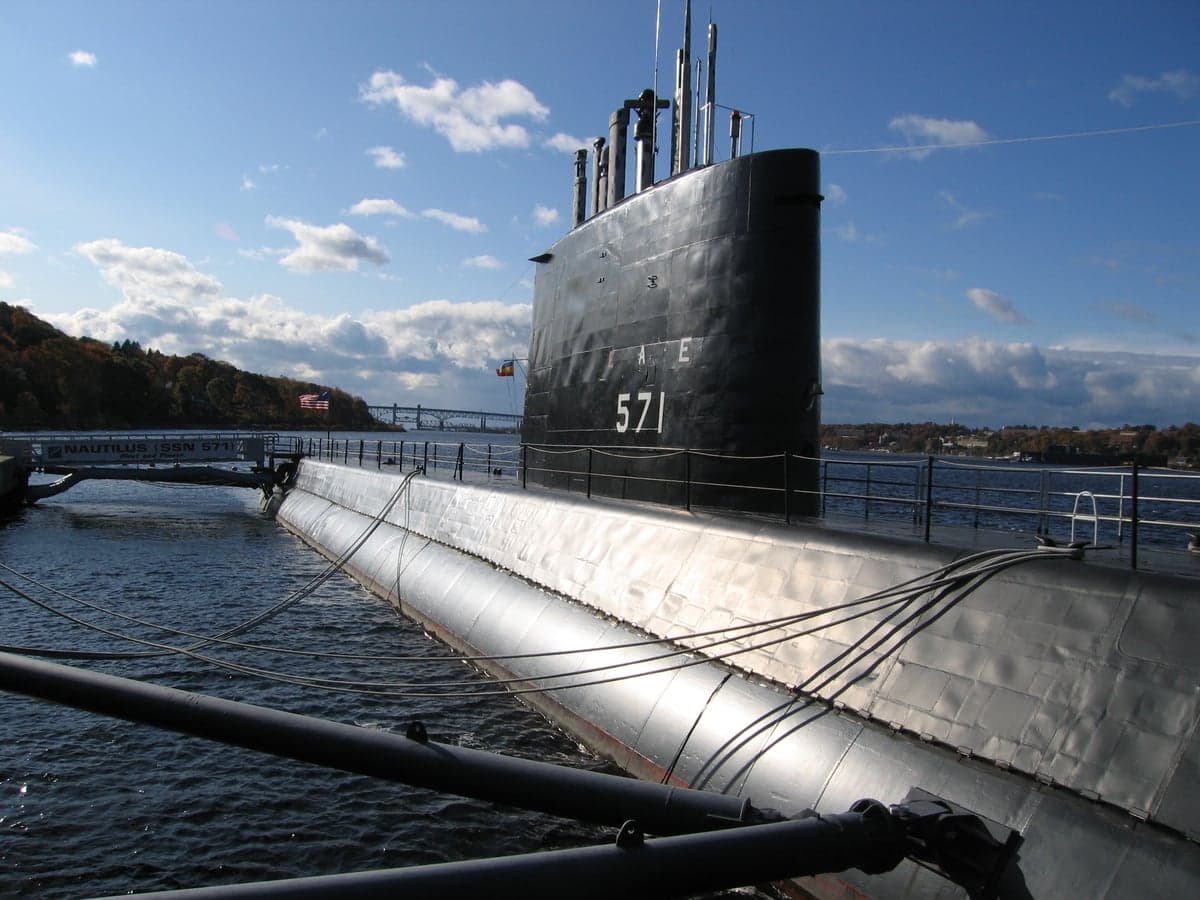
Groton, Connecticut, is a compact city of 9,343 residents with a distinctly working-class, military-anchored character. Its population is predominantly white (62.2%) but notably diverse for southeastern Connecticut, with a Hispanic community of 16.0%, a Black population of 9.0%, and East/Southeast Asian residents at 4.2%. The city's identity is inseparable from the submarine-building industry and the nearby Naval Submarine Base New London, which have drawn successive waves of workers and military families since the early 20th century.
How the city was settled and grew
Groton's original European settlement began in the mid-17th century as an agricultural outpost of New London, with English colonists farming the land along the Thames River. The area remained sparsely populated through the 1800s, with fishing and small-scale shipbuilding supporting a handful of families in what is now the Groton Bank neighborhood along the river. The city's population exploded after 1868, when the Naval Submarine Base New London was established, and even more dramatically in 1899, when the Electric Boat Company (now General Dynamics Electric Boat) opened its shipyard. This industrial pivot drew a first wave of immigrant workers—primarily Irish, Italian, and Polish laborers—who settled in the City of Groton (the downtown core) and the working-class Poquonnock Bridge neighborhood. By 1920, Groton's population had surged past 5,000, and the submarine base's expansion during World War II brought a second wave of domestic migrants from rural New England and the South, many of whom found housing in the Noank and Mystic River areas (the latter now partly in Groton's town boundaries).
Modern era (post-1965)
The 1965 Hart-Cellar Immigration Act reshaped Groton's demographics more gradually than in larger cities, but its effects are visible. The city's foreign-born population stands at 5.4%, a modest share that reflects the military base's role as a pipeline for naturalized citizens. The Hispanic community—now 16.0% of the population—grew notably from the 1980s onward, with Puerto Rican and Dominican families settling in the Fort Hill and Branford Avenue corridors, drawn by shipyard jobs and relatively affordable housing. The Black population (9.0%) includes both long-standing African American families with roots in the World War II shipyard migration and more recent arrivals connected to the Navy. East/Southeast Asian residents (4.2%) are concentrated among active-duty and retired Navy personnel, with many living in the Thames Street area near the base. The Indian-subcontinent community (1.3%) is smaller and more dispersed, often tied to professional roles at Electric Boat or the Naval Undersea Warfare Center. Notably, the white population has declined from over 80% in 1990 to 62.2% today, driven by an aging native-born cohort and out-migration of younger families to newer suburbs like Ledyard and Stonington.
The future
Groton's demographic trajectory points toward continued diversification, but at a slower pace than national averages. The Hispanic share is projected to grow to roughly 20% by 2035, driven by higher birth rates and continued recruitment for shipyard labor. The East/Southeast Asian population may plateau as the Navy's presence stabilizes, while the Indian community is likely to remain small unless Electric Boat expands its engineering workforce. The city faces a challenge of aging in place: the median age is 38.2, and many white residents over 55 are staying put, while younger families—regardless of ethnicity—often move to newer subdivisions in Mystic or Gales Ferry for better schools and larger lots. This could lead to a bifurcated Groton: a denser, more diverse core in the City of Groton and Poquonnock Bridge, and a whiter, older periphery in Noank and the eastern neighborhoods. The city's population has been essentially flat since 2010, suggesting that growth will come from replacement rather than expansion.
For someone moving to Groton today, the city offers a genuinely mixed community where military, industrial, and immigrant histories converge. It is not a homogenizing suburb but a place where distinct neighborhoods retain their character—from the shipyard-worker rowhouses of Poquonnock Bridge to the base-adjacent apartments of Fort Hill. The trade-off is clear: you get affordability and diversity, but the schools and housing stock lag behind wealthier neighboring towns. Groton is becoming a more multiethnic working-class city, not a gentrifying one, and that stability is its defining feature.

* Values derived from national, state, county, city and local statistics and may differ in a specific area. Last updated: 2026-04-29T23:21:28.000Z
Narrative content on this page is AI-generated and may contain mistakes. Verify any details that matter before acting on them.
ReloMaps may earn a commission from affiliate links at no extra cost to you.

