
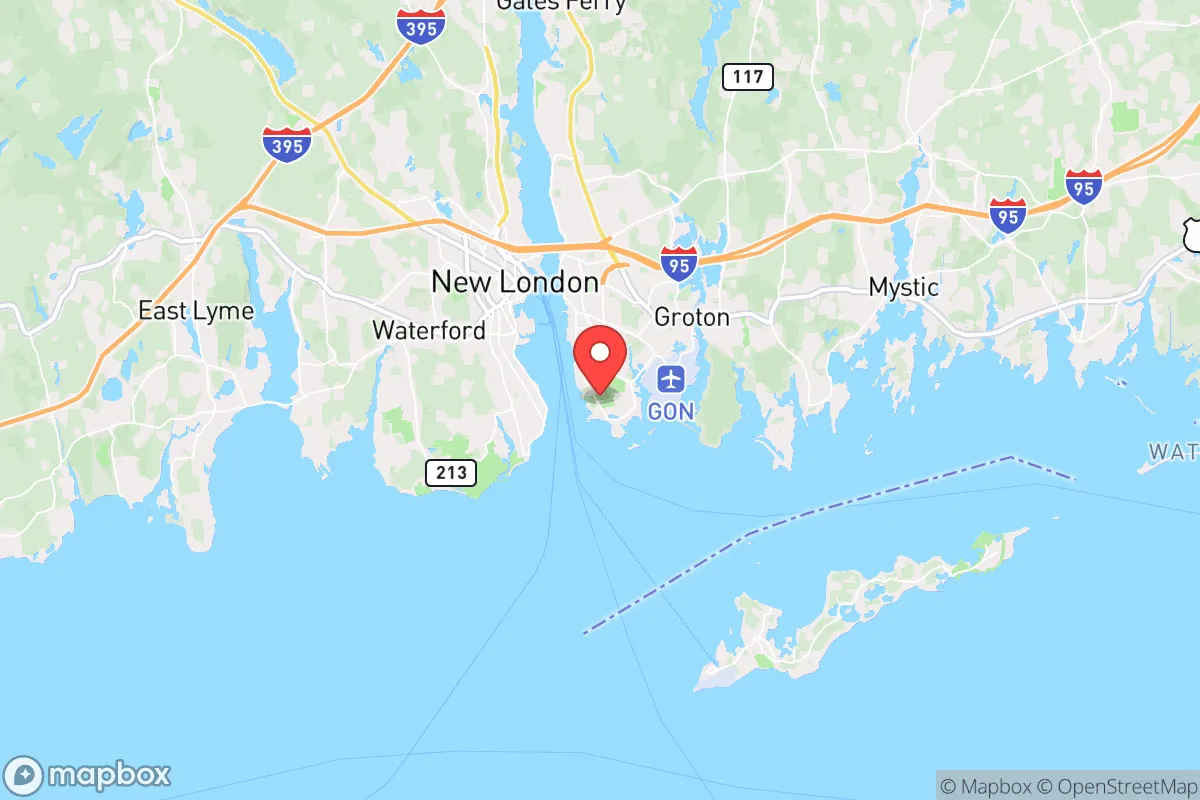
Photo: Wikipedia
Personal Sovereignty in Groton, CT
Viable for self-reliance. Generally workable, though some barriers may limit total independence.
What does Personal Sovereignty tell us?
Personal Sovereignty measures your capacity for self-reliance and independence with minimal government friction. Higher scores mean fewer barriers between you and the way you want to live... but it assumes you have the space you need and good neighbors.
What does this tell us?
Personal Sovereignty measures your capacity for self-reliance and independence with minimal government friction. Higher scores mean fewer barriers between you and the way you want to live... but it assumes you have the space you need and good neighbors.
State Policy
Energy independence: Importer (5% of energy produced in-state)
Personal Liberty
Homesteading

Personal Liberty Analysis
Groton, Connecticut, presents a challenging environment for those prioritizing personal sovereignty, as the state’s dense regulatory framework and high tax burden significantly constrain individual autonomy. While the town itself offers some practical advantages for self-reliance—such as access to coastal resources and a lower population density than Hartford or New Haven—the overarching legal and fiscal climate in Connecticut imposes substantial limits on gun rights, property use, and parental decision-making. For a survivalist or prepper mindset, Groton is a mixed bag: the local geography and community resilience are assets, but the state’s progressive governance creates a persistent headwind against true independence.
Tax burden and regulatory posture: How Connecticut’s fiscal policies affect your autonomy
Connecticut’s tax structure is among the most aggressive in the nation, and Groton residents feel the squeeze directly. The state levies a progressive income tax with rates up to 6.99%, and property taxes in Groton average around 2.5% of assessed home value—one of the highest effective rates in New England. This means a $300,000 home carries an annual tax bill of roughly $7,500, money that could otherwise fund your own preparedness supplies, land improvements, or off-grid infrastructure. Sales tax is 6.35%, with no exemptions for essential preparedness gear like generators or water storage tanks. The regulatory posture is equally burdensome: Connecticut mandates strict building codes, environmental impact reviews for any land modification near wetlands (which cover much of Groton’s coastline), and a complex permitting process for even minor structural additions. For someone wanting to build a root cellar, install a rainwater catchment system, or erect a privacy fence, expect months of red tape and fees. The state’s debt burden—over $40,000 per capita—also signals future tax hikes, further eroding your financial sovereignty.
Self-defense and gun law specifics: What you can and cannot do in Groton
Connecticut’s gun laws are among the most restrictive in the country, and Groton offers no local exceptions. The state requires a permit to purchase any firearm, a background check for every sale (including private transfers), and a 10-round magazine limit that severely hampers defensive capability in a prolonged emergency. “Assault weapons” as defined by state law—including many common AR-15 platforms—are banned for new purchases, and existing ones must be registered with the state. Open carry is effectively prohibited without a permit, and concealed carry permits require a 16-hour safety course, a $70 fee, and a background check that can take months. Stand-your-ground laws do not exist; Connecticut imposes a “duty to retreat” in public spaces, meaning you must attempt to escape before using deadly force, even if you’re legally carrying. For a prepper, this means your home defense options are limited to handguns with reduced capacity, shotguns, or bolt-action rifles. The state also maintains a centralized firearm registry, which many view as a precursor to confiscation. If self-defense is a core pillar of your sovereignty plan, Groton’s legal environment is a significant liability.
Self-reliance and homesteading viability: Lot sizes, zoning, and off-grid feasibility
Groton offers some genuine opportunities for self-reliance, but they come with strings attached. Residential lot sizes in the town’s rural areas—like Poquonnock Bridge or the eastern side near the Thames River—range from 0.5 to 2 acres, enough for a substantial garden, a small orchard, or a chicken coop. Zoning permits backyard livestock like chickens and rabbits, but pigs, goats, and cattle require a special permit and a minimum of 3 acres. Off-grid living is legally difficult: Connecticut requires connection to the municipal water and sewer system in most residential zones, and solar panels must be grid-tied unless you obtain a variance. Rainwater collection is allowed for non-potable uses (irrigation, washing) but not for drinking without a permit. The coastal location is a double-edged sword: you have access to fishing, crabbing, and foraging in Long Island Sound, but sea-level rise regulations restrict building near the shoreline. For a serious homesteader, Groton’s zoning is more permissive than urban areas but far less flexible than rural towns in the Midwest or South. The biggest hurdle is the cost of land—an acre in Groton averages $150,000—making large-scale self-sufficiency financially prohibitive for most.
Personal liberties: Parental rights, medical autonomy, speech, and property
Connecticut’s approach to personal liberties is heavily tilted toward state authority, which will concern those wary of government overreach. Parental rights are under constant pressure: the state mandates comprehensive sex education in public schools (with no opt-out for content you may find objectionable), and it has passed laws allowing minors to consent to certain medical treatments—including mental health care and substance abuse treatment—without parental notification. Medical autonomy is similarly constrained: Connecticut has a vaccine mandate for school attendance (with only narrow religious exemptions), and during public health emergencies, the governor has broad powers to mandate treatments or restrict movement. Free speech is protected under the First Amendment, but the state has enacted “hate speech” laws that can be used to prosecute perceived intimidation, which some view as a chilling effect on political discourse. Property rights are limited by eminent domain laws that allow the state to seize land for “economic development”—a tool used aggressively in nearby New London (the infamous Kelo case). For a prepper, this means your bug-out location or stockpile could theoretically be targeted if the state deems it in the public interest. The overall message is clear: in Connecticut, the individual’s rights are secondary to the state’s agenda.
In the broader context of personal sovereignty, Groton ranks poorly compared to states like New Hampshire, Texas, or Idaho. The tax burden, gun restrictions, and regulatory density create a constant friction against self-reliance and autonomy. However, for those already rooted in the Northeast, Groton’s coastal resources, relatively low crime rate (violent crime is about 30% below the national average), and access to a like-minded military community (the Naval Submarine Base is a major employer) offer some compensating advantages. The bottom line: if you value maximum personal freedom and minimal government interference, Groton is not your destination. But if you’re willing to navigate the legal labyrinth and can afford the high cost of compliance, it’s possible to carve out a modest degree of self-sufficiency—just don’t expect the state to make it easy.

* Values derived from national, state, county, city and local statistics and may differ in a specific area. Last updated: 2026-04-29T23:21:28.000Z
Narrative content on this page is AI-generated and may contain mistakes. Verify any details that matter before acting on them.
ReloMaps may earn a commission from affiliate links at no extra cost to you.

