 Popular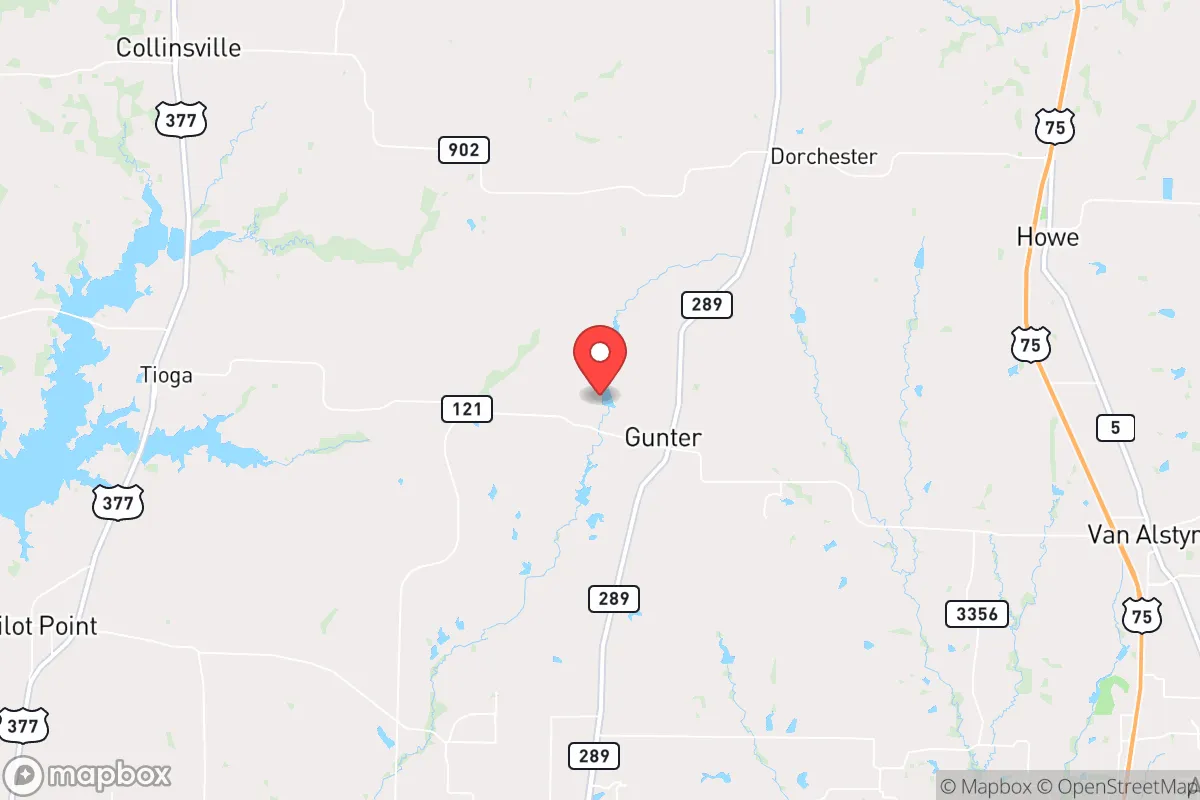
Demographics of Gunter, TX
Affluence Level in Gunter, TX
An upper-middle-class area. Household wealth, education levels, and homeownership run ahead of national benchmarks.
People of Gunter, TX
Gunter, Texas, is a small but rapidly evolving city of 2,382 residents, characterized by a predominantly White population (63.4%) with a significant and growing Hispanic community (29.8%). The city’s identity is shifting from a quiet, rural railroad stop into a bedroom community for the North Texas metroplex, attracting families and individuals seeking more space and a slower pace while remaining within commuting distance of McKinney and Sherman. Distinctive markers include a strong sense of local heritage, a rising number of new housing developments, and a population that is notably more educated than the state average, with 40.8% holding a college degree.
How the city was settled and grew
Gunter’s human history begins with its founding in the late 19th century as a stop on the Missouri-Kansas-Texas Railroad (the Katy). The original settlers were primarily Anglo-American farmers and ranchers drawn by the promise of fertile Blackland Prairie soil and the economic lifeline the railroad provided for shipping cotton and grain. The town was officially platted in 1886 and named after a railroad official, Jot Gunter. These early families—many of German and Scots-Irish descent—established the core of what is now Old Town Gunter, the historic district centered around the railroad tracks and Preston Street. This area remains the heart of the city’s heritage, with a few original homes and the old commercial buildings still standing. A second early settlement cluster formed around the Gunter Cemetery and the surrounding farmsteads to the east, where the descendants of these pioneer families still own land today. For the first half of the 20th century, Gunter remained a small, homogeneous farming community, with its population hovering in the low hundreds and almost entirely White.
Modern era (post-1965)
The post-1965 era brought little immediate change to Gunter, as it remained insulated from the large-scale immigration waves that transformed major Texas cities. The city’s modern demographic shift began in earnest in the 1990s and accelerated after 2000, driven by two forces: domestic in-migration from the Dallas-Fort Worth metroplex and a growing Hispanic population. The domestic newcomers—largely White, middle-class families and professionals—were attracted by affordable land and the promise of a new master-planned community. This wave settled primarily in Westwood Village, a newer subdivision of single-family homes built on former ranchland west of Highway 289, and in the sprawling Preserve at Gunter development, which offers larger lots and a semi-rural feel. Meanwhile, the Hispanic population grew through both direct immigration and the natural growth of families who moved from nearby agricultural areas or from the Dallas suburbs for work in construction, landscaping, and service industries. This community is concentrated in the South Gunter area, along and near Highway 289, where older, more affordable housing stock and mobile home parks are located. The Black population remains very small at 2.2%, and East/Southeast Asian communities are nearly absent at 0.3%, reflecting the city’s limited history of attracting those groups. The Indian-subcontinent population is 0.0%.
The future
The population of Gunter is heading toward continued growth and gradual diversification, though it is likely to remain predominantly White and Hispanic for the foreseeable future. The city is not homogenizing; rather, it is developing distinct enclaves. The newer, master-planned subdivisions like Westwood Village and The Preserve are attracting a largely White, college-educated demographic, while the older core and southern edge remain more mixed and working-class. The Hispanic community is growing through both in-migration and higher birth rates, and its share of the population is expected to rise, potentially approaching 35-40% within a decade. There is no evidence of significant new immigrant communities from Asia or the Indian subcontinent forming. The city’s future is likely to see continued suburban-style development, with more rooftops and retail following the population, but the social fabric will remain shaped by the contrast between the established rural families and the newer commuter residents.
For someone moving in now, Gunter is becoming a place of two distinct experiences: the newer, planned subdivisions offering a quiet, family-oriented suburban life with strong schools, and the older, more traditional parts of town where the city’s agricultural roots are still visible. The community is growing but not yet crowded, and its political and social character leans conservative, reflecting its rural heritage and the values of its new residents. The key consideration is whether you align with the fast-growing, master-planned lifestyle or the slower, more established small-town atmosphere.

* Values derived from national, state, county, city and local statistics and may differ in a specific area. Last updated: 2026-05-11T17:42:34.000Z
Narrative content on this page is AI-generated and may contain mistakes. Verify any details that matter before acting on them.
ReloMaps may earn a commission from affiliate links at no extra cost to you.

