 Popular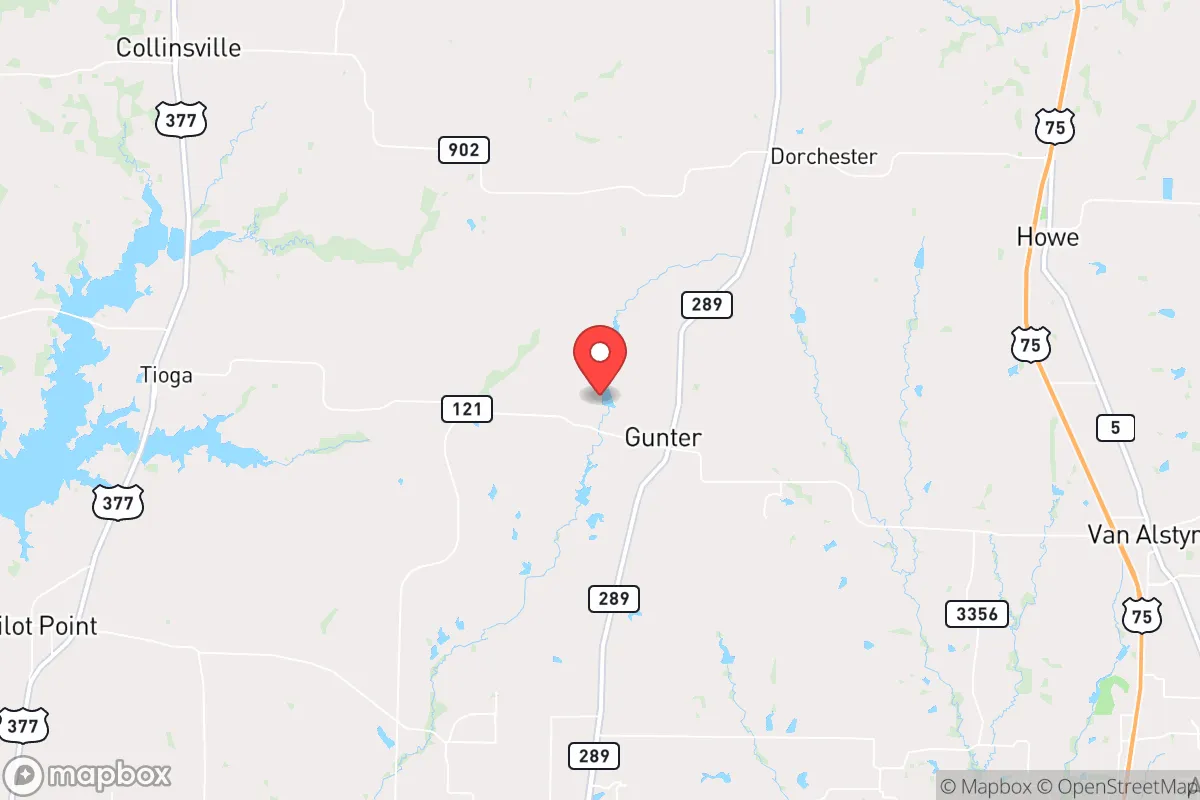
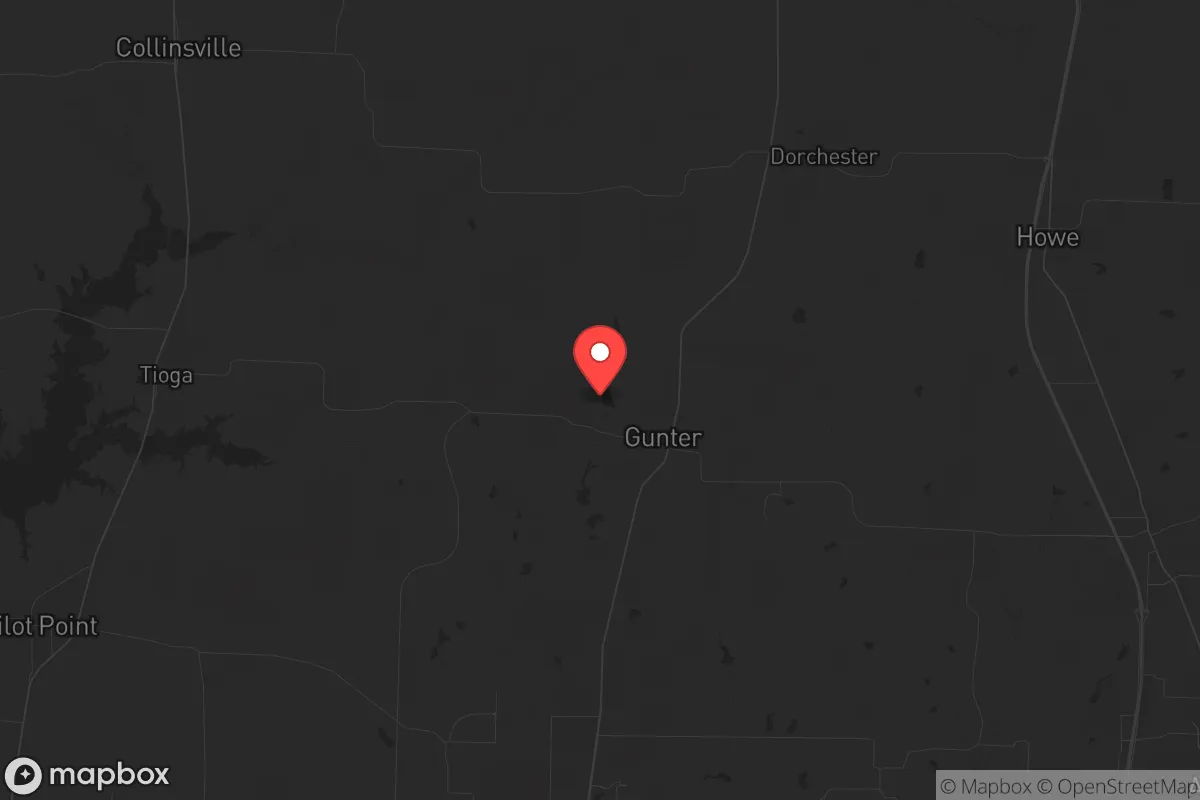
Strategic Assessment of Gunter, TX
Meaningful friction. Expect exposure to either population pressure, blast zones, or natural disaster risk. Consider buying a retreat property.
What does the Strategic Assessment tell us?
Our Strategic Assessment grades tactical survivability of an area. Major population centers, military targets, fallout zones, natural disasters, and border exposure all drive risk — lower exposure means a more defensible position in a crisis.
This is heavily inspired by Joel Skousen's Strategic Relocation book. Highly recommended you checkout the book ($)What does this tell us?
Our Strategic Assessment grades tactical survivability of an area. Major population centers, military targets, fallout zones, natural disasters, and border exposure all drive risk — lower exposure means a more defensible position in a crisis.
This is heavily inspired by Joel Skousen's Strategic Relocation book. Highly recommended you checkout the book ($)Strategic Pillars

Key Distances
Regional Safe Places
Below is our recommended "safe zones" in Texas and the surrounding area based on our strategic heuristics. For most people, it's unrealistic to live in a “safe zone” full-time due to work, family or other personal reasons. They tend to be more rural. However, many of these areas are perfect for second homes and retreat properties that double as a vacation home or even a short-term rental.

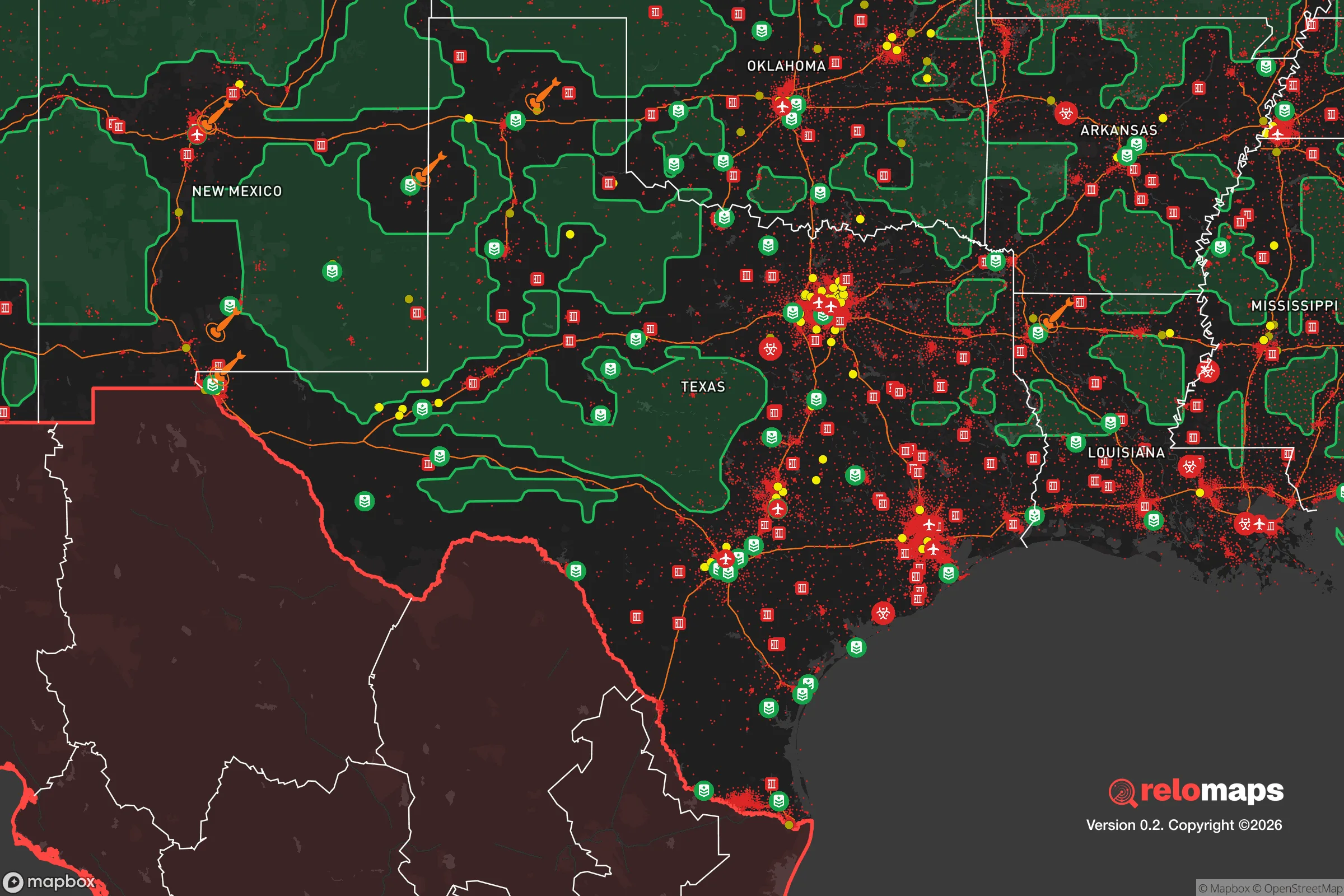


Important Note: For informational purposes only. This does not mean nothing bad ever happens in the green zones. Please use common sense. This is based on public data and modeled with AI. We tried to take a conservative approach but mistakes happen. We update this regularly as new information becomes available.
Solar Generator Recommendations
Backup power matters more here than in safer locations. We've picked three solar generators across budgets and capacity tiers — start with the budget unit if you only need a few essentials, or step up if you want to run a fridge and HVAC for days at a time.

Jackery Portable Power Station Explorer 300
Budget OptionPower on the Go: Weighing only 11 lbs, it's convenient to set up and store with book-sized foldable solar panels

BLUETTI Portable Power Station AC180
Designed for both indoor and outdoor scenarios, AC180 is highly capable as it has a robost capacity and continuous output power.

EF ECOFLOW DELTA Pro Ultra Power Station
Upgraded PickEcoFlow DELTA Pro Ultra is a whole-home energy system designed to grow with your family. Integrated with the Smart Home Panel 2, it scales to meet your evolving energy needs — keeping your home powered, intelligent, and secure through every stage of life.
We earn a commission, at no additional cost to you.
Strategic Assessment Analysis
Gunter, Texas, presents a compelling case for the strategic relocator who prioritizes resilience, but it is not without its trade-offs. This small town, perched on the northern edge of the Dallas-Fort Worth metroplex, offers a unique blend of rural buffer and logistical access that can be leveraged for long-term security. The key is understanding that Gunter’s advantage lies not in being a remote bunker, but in being a defensible, resource-rich position on the periphery of a major urban center—a position that requires active management, not passive reliance.
Geographic position and natural advantages for long-term security
Gunter’s primary strategic asset is its location at the intersection of two major transportation corridors: US Highway 75 and the soon-to-be-completed Outer Loop (SH 121/380). This gives residents a rare ability to move quickly in multiple directions—north toward the Red River and Oklahoma, east toward the piney woods, and west toward the open plains—while still being within a 45-minute drive of DFW Airport. The town itself sits on the Blackland Prairie, a region of deep, fertile clay soils that are among the best in Texas for small-scale agriculture. The area’s natural water resources are also notable: the Elm Fork of the Trinity River runs just west of town, and the nearby Lake Ray Roberts (about 15 miles north) provides a massive, state-managed water reservoir. For a prepper, this means the potential for independent water access and food production is real, not theoretical. The local aquifer, the Trinity Group, is generally reliable for shallow wells, though depth varies. The terrain is gently rolling, offering decent natural drainage and limited flood risk, which is a significant plus compared to the flood-prone areas closer to Dallas.
Risks, exposures, and proximity to fallout-relevant landmarks
The most significant vulnerability of Gunter is its proximity to the DFW metroplex, a population center of over 7 million people. In a scenario of civic unrest, mass casualty events, or a major disaster, Gunter sits directly in the path of the most likely exodus routes. US 75 and the future Outer Loop will become choke points, and the town itself could be overrun by refugees or become a target for looting if the urban core collapses. Furthermore, the area is within the 50-mile radius of several high-value targets: the DFW airport (a major logistics hub), the large defense contractor facilities in Plano and Richardson (e.g., Raytheon, Texas Instruments), and the nuclear power plant at Comanche Peak (about 70 miles southwest). While not a direct blast zone, Gunter is within the fallout plume risk zone for a nuclear event at Comanche Peak, depending on wind direction. The town also sits near the intersection of major natural gas pipelines and high-voltage transmission lines, which could be disrupted in a coordinated attack or grid failure. The local economy is heavily tied to the DFW housing market, meaning a severe economic downturn would hit Gunter hard, reducing local resources and increasing crime.
Practical resilience for a relocator: food, water, energy, and defensibility
For the relocator serious about self-sufficiency, Gunter offers a mixed bag. Water is the strongest asset. The Trinity River and Lake Ray Roberts provide surface water, and the local aquifer is generally accessible for private wells. However, well permits and drilling costs can be high, and the water quality in some areas requires filtration due to high mineral content. Food production is viable but not automatic. The soil is good, but the growing season is hot and dry from June to August, requiring irrigation. Local farmers markets are sparse; most food comes from the big-box stores in Sherman or McKinney, which are vulnerable to supply chain disruptions. Energy resilience is a weak point. The local grid is part of the ERCOT system, which has proven unreliable during winter storms (e.g., 2021). Solar is viable, but net metering policies are not favorable for off-grid setups. Natural gas is the primary heating fuel, and pipeline disruptions are a real risk. Defensibility is moderate. Gunter is a small, spread-out town with limited natural barriers. The best defensive positions are on the northern and eastern edges, where larger lots and tree lines offer some cover. The town’s police force is small (fewer than 10 officers), and backup from the Grayson County Sheriff’s Office could be delayed in a widespread event. The local population is generally conservative and self-reliant, which is a social asset, but there is no organized community defense network. The best strategy for a relocator is to buy a property with at least 5-10 acres, dig a well, install solar with battery backup, and establish a deep pantry. The town’s small size means you can know your neighbors, which is the single most important factor in a crisis.
The overall strategic picture for Gunter is one of calculated risk. It is not a remote survivalist retreat, but it is a viable forward operating base for someone who wants to be close enough to the economic engine of DFW to work and build wealth, yet far enough to have a fighting chance when things go sideways. The key is to treat Gunter as a springboard, not a fortress. The land is affordable relative to the rest of the metroplex, the water is good, and the community is generally aligned with conservative values of self-reliance and preparedness. However, the proximity to a major urban center means that the first 72 hours of any major event will be the most dangerous. If you can secure your property, store your supplies, and have a plan to either hold or bug out north toward Oklahoma, Gunter can work. If you are looking for absolute isolation and zero risk of fallout, look further north or west. But for the strategic relocator who understands that resilience is a spectrum, not a binary, Gunter is a solid, if imperfect, choice.

* Values derived from national, state, county, city and local statistics and may differ in a specific area. Last updated: 2026-05-11T17:42:34.000Z
Narrative content on this page is AI-generated and may contain mistakes. Verify any details that matter before acting on them.
ReloMaps may earn a commission from affiliate links at no extra cost to you.

