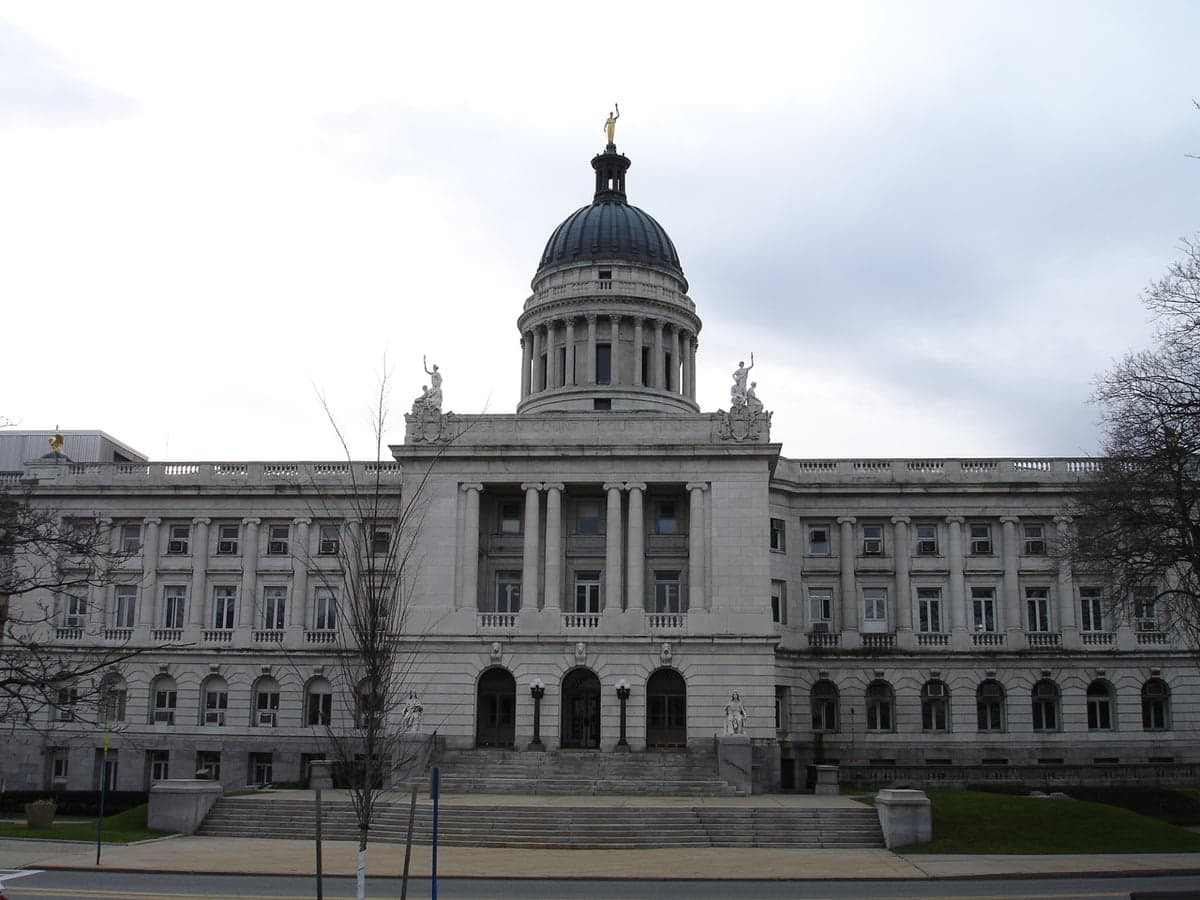
Photo: Wikipedia
Personal Sovereignty in Hackensack, NJ
Viable for self-reliance. Generally workable, though some barriers may limit total independence.
What does Personal Sovereignty tell us?
Personal Sovereignty measures your capacity for self-reliance and independence with minimal government friction. Higher scores mean fewer barriers between you and the way you want to live... but it assumes you have the space you need and good neighbors.
What does this tell us?
Personal Sovereignty measures your capacity for self-reliance and independence with minimal government friction. Higher scores mean fewer barriers between you and the way you want to live... but it assumes you have the space you need and good neighbors.
State Policy
Energy independence: Importer (8% of energy produced in-state)
Personal Liberty
Homesteading

Personal Liberty Analysis
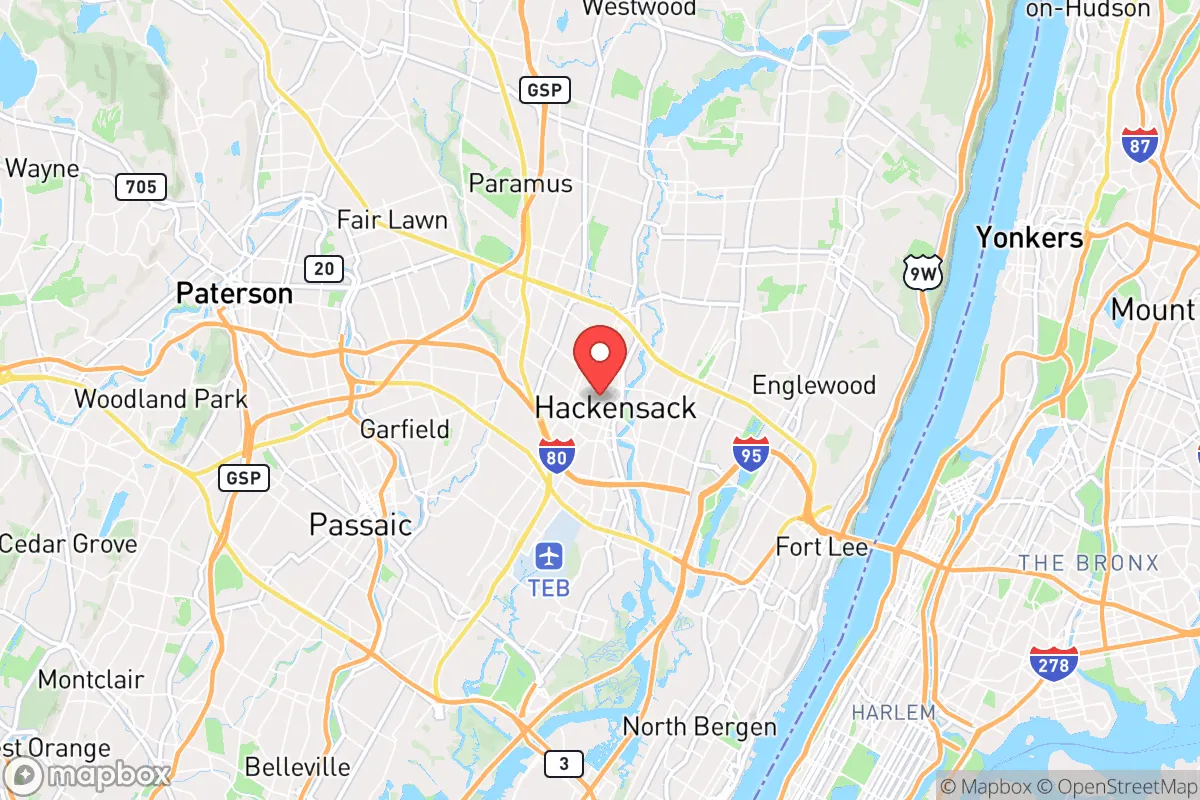
Hackensack, New Jersey, presents a challenging environment for personal sovereignty, where state-level overreach significantly constrains individual autonomy. As the county seat of Bergen County, this densely populated urban center operates under New Jersey's expansive regulatory framework, which consistently ranks among the most restrictive in the nation for gun rights, tax burdens, and property use. For a survivalist or prepper evaluating this area, the core reality is that the state government exercises heavy control over daily life, from what you can own to how you can use your land, making true self-reliance an uphill battle. While the city itself offers some practical conveniences, the broader political and legal climate in New Jersey systematically erodes the personal freedoms that conservative-minded individuals prioritize.
Tax burden and regulatory posture in Bergen County
New Jersey's tax burden is the highest in the United States, and Hackensack residents feel this acutely. The state's progressive income tax, combined with some of the nation's highest property taxes—averaging over $9,000 annually in Bergen County—siphons a significant portion of household income directly to government coffers. This financial drain directly undermines a prepper's ability to stockpile resources, invest in self-sufficient infrastructure, or maintain financial independence. The regulatory posture is equally aggressive: the state imposes stringent building codes, environmental regulations, and business licensing requirements that make it difficult to modify property for self-reliance purposes. For example, installing a backup generator, rainwater collection system, or even a simple chicken coop often requires permits and inspections that invite government scrutiny into private property decisions. The state's Department of Environmental Protection has broad authority over land use, and local zoning boards in Hackensack routinely deny variances for alternative energy systems or non-standard structures. This regulatory chokehold means that even if you own your home, the government retains substantial control over how you live on it.
Self-defense realities and New Jersey gun law specifics
New Jersey's gun laws are among the most restrictive in the nation, making Hackensack a hostile environment for those serious about self-defense. The state requires a Firearms Purchaser Identification Card for long guns and a separate permit to purchase a handgun, each involving background checks, fingerprinting, and reference requirements. The carry permit process is notoriously difficult, with applicants needing to demonstrate "justifiable need" and undergo a rigorous approval process that often takes months. In 2022, the Supreme Court's Bruen decision forced New Jersey to loosen its "may-issue" standard, but the state responded by enacting new restrictions, including a ban on carrying in "sensitive places" that covers vast swaths of public space. Magazine capacity is capped at 10 rounds, and the state maintains a strict "safe storage" law that can create legal jeopardy for gun owners who keep firearms readily accessible for home defense. The state's "red flag" law allows for the temporary seizure of firearms based on ex parte petitions, a mechanism that can be abused by vindictive neighbors or family members. For a prepper, the legal landscape means that even lawful gun ownership is burdened by bureaucracy, and the ability to defend one's home or person is significantly curtailed compared to states with stronger Second Amendment protections.
Self-reliance and homesteading viability in an urban setting
Hackensack's dense urban character and restrictive zoning make traditional homesteading or off-grid living nearly impossible. The city's typical lot sizes range from 3,000 to 6,000 square feet, with most properties featuring small yards that preclude meaningful food production. Zoning ordinances prohibit livestock, limit garden structures, and require adherence to municipal water and sewer connections, eliminating the possibility of well water or septic systems. The city's building code mandates grid-tied electrical systems, making solar panels with battery backup a complex and expensive proposition that still requires utility interconnection. Rainwater harvesting is technically legal but subject to state Department of Environmental Protection regulations that limit collection to 50 gallons per property without a permit. Composting toilets are not permitted for primary residences. The climate in Bergen County—with cold winters and humid summers—does support vegetable gardening for about five months of the year, but the small lot sizes and shade from neighboring buildings limit production. For a prepper seeking true self-reliance, Hackensack offers little beyond the ability to maintain a modest vegetable patch and perhaps a few fruit trees. The regulatory environment actively discourages the kind of independent infrastructure that would allow a household to function during extended grid-down scenarios.
Personal liberties in New Jersey: parental rights, medical autonomy, and property
New Jersey's approach to personal liberties consistently prioritizes state authority over individual and parental rights. In education, the state mandates comprehensive sex education that includes LGBTQ+ content, requires schools to adopt policies supporting transgender students without parental notification, and has eliminated most exemptions for vaccine mandates. Parental rights are further eroded by the state's broad definition of medical emancipation, which allows minors to consent to certain treatments without parental knowledge. Medical autonomy is heavily restricted: New Jersey maintains strict vaccine mandates for school attendance, and during the COVID-19 pandemic, the state imposed some of the nation's most aggressive lockdowns and mask mandates. The state's health department has broad authority to declare public health emergencies and impose restrictions without legislative oversight. Property rights are similarly constrained by the state's powerful eminent domain authority and extensive environmental regulations that can restrict land use. Free speech protections are nominally strong, but the state's anti-discrimination laws and hate crime statutes can be applied broadly to limit certain forms of political expression. For a conservative individual, the cumulative effect is a legal environment where the state consistently asserts its authority over personal decisions in education, healthcare, and property use.
In the broader context of personal sovereignty, Hackensack ranks poorly compared to most of the United States. The combination of the nation's highest tax burden, some of the most restrictive gun laws, dense urban zoning that precludes self-sufficiency, and a legal framework that subordinates parental and individual rights to state authority creates a fundamentally hostile environment for those seeking to maximize personal autonomy. While the city offers proximity to New York City and certain economic opportunities, the trade-off in lost freedoms is substantial. For a prepper or survivalist evaluating relocation options, Hackensack represents the antithesis of a sovereignty-friendly location—a place where the state's reach extends into nearly every aspect of daily life, and where building the kind of independent, self-reliant existence that conservative-minded individuals value is systematically discouraged by law and regulation.

* Values derived from national, state, county, city and local statistics and may differ in a specific area. Last updated: 2026-04-25T03:10:02.000Z
Narrative content on this page is AI-generated and may contain mistakes. Verify any details that matter before acting on them.
ReloMaps may earn a commission from affiliate links at no extra cost to you.

