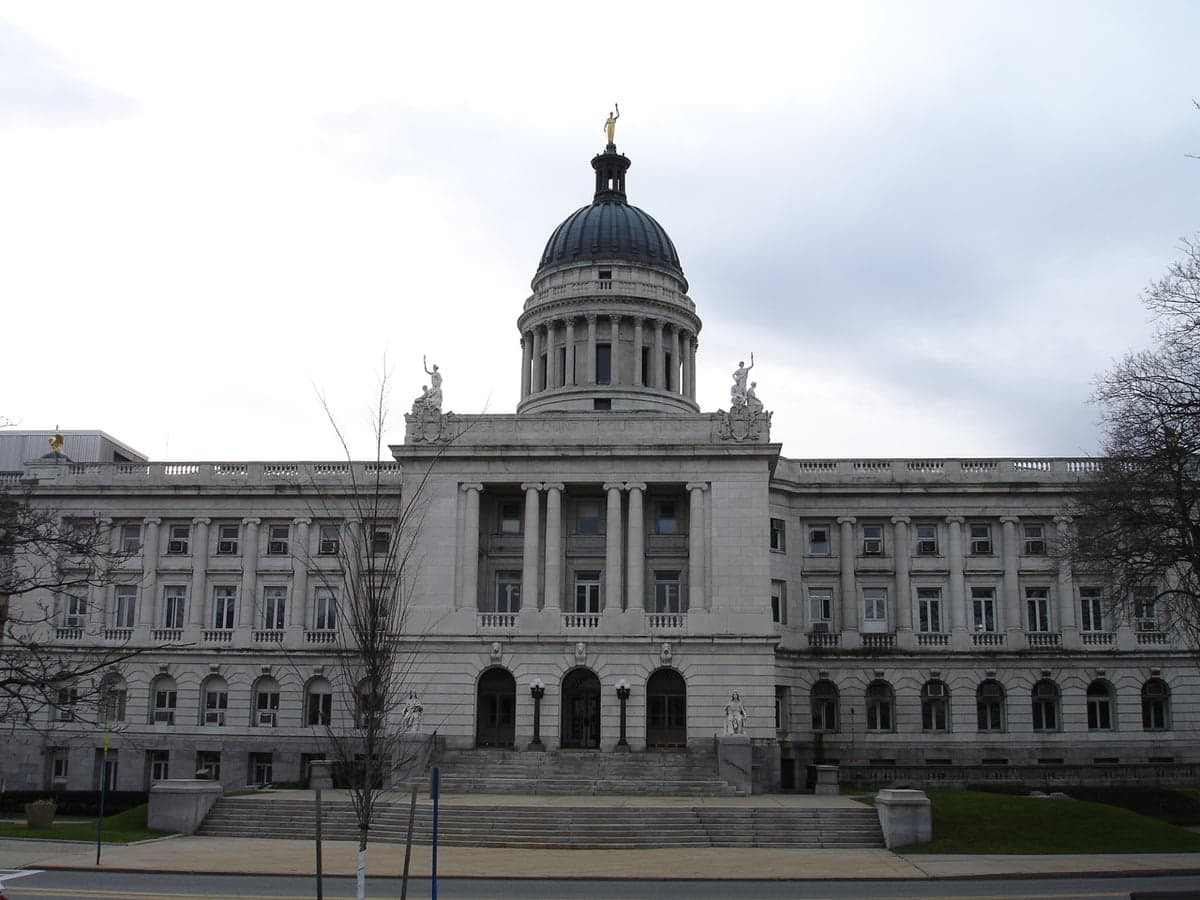
Photo: Wikipedia
Political ClimatePolitical Climate in Hackensack, NJ
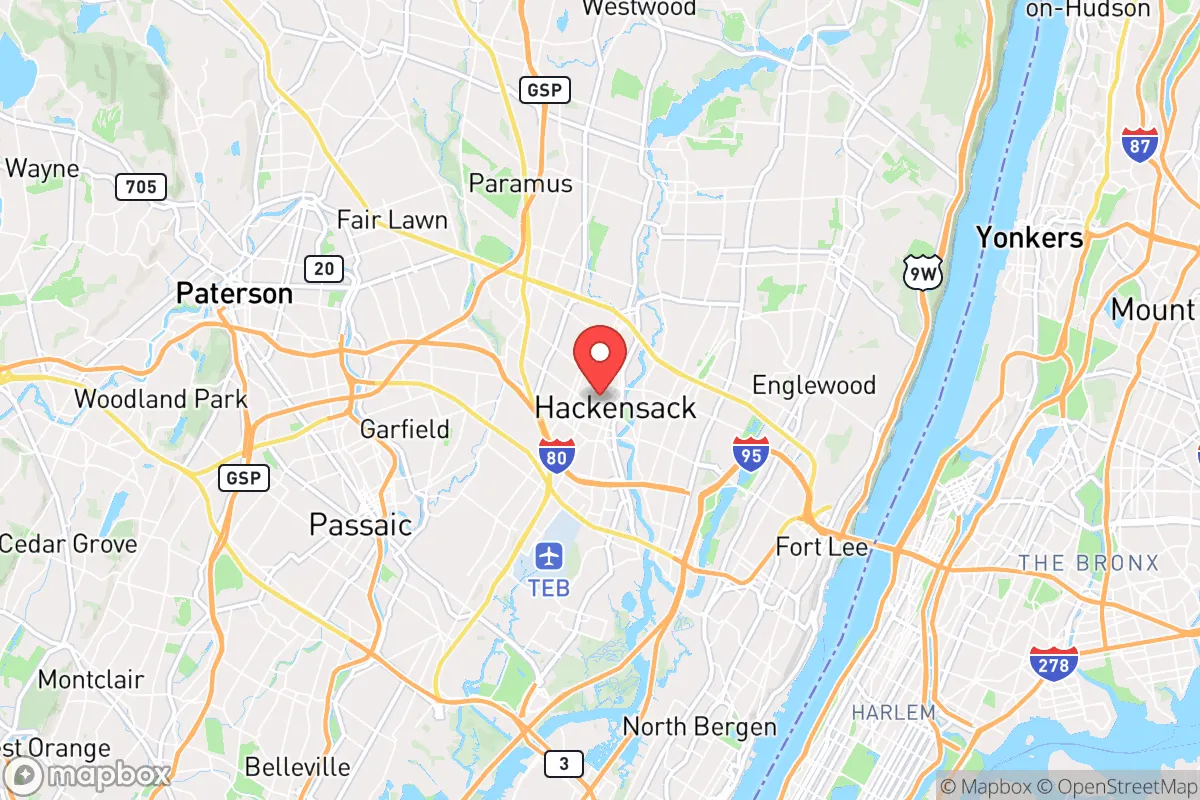
District shown is the primary district for this city’s centroid. Cities may span multiple districts.
Local Political AnalysisPolitical Analysis of Hackensack, NJ
Hackensack, New Jersey, has a Cook PVI of D+2, meaning it leans slightly more Democratic than the national average, but don't let that number fool you—this isn't some deep-blue bastion like Newark or Jersey City. The city's political lean has shifted leftward over the past decade, but it's still a place where a lot of old-school, moderate-to-conservative voices hold sway, especially among the long-time residents who remember when Hackensack was a quieter, more family-run town. The trajectory is concerning, though: you're seeing more progressive policies creep in, from zoning changes that favor dense development to local ordinances that feel less about freedom and more about control.
How it compares
Compared to its neighbors, Hackensack is a political middle ground. Head west to towns like Paramus or Ridgewood, and you'll find a more reliably conservative tilt—those places still vote red in local races and push back hard on state mandates. Go east to Teaneck or south to Jersey City, and you're in solidly progressive territory, where things like rent control, sanctuary city policies, and aggressive climate mandates are the norm. Hackensack sits in the middle, but the pressure is mounting. The county government in Bergen County has been trending blue for years, and that trickles down. What used to be a place where you could quietly disagree with the party line is now a place where you feel that subtle push—more regulations on small businesses, more talk about "equity" in local planning, and a general sense that the government knows better than you do.
What this means for residents
For the average resident, this shift means you're paying more attention to local elections than you used to. The city council and school board races are where the rubber meets the road. You're seeing more proposals for affordable housing mandates that override local zoning, which sounds nice in theory but often means less control over your own neighborhood's character. There's also a growing push for police oversight boards and diversity, equity, and inclusion (DEI) training in city departments—things that sound good on paper but can lead to bureaucracy and a loss of common-sense decision-making. If you value personal freedoms—like the right to run a small business without endless red tape, or the right to speak your mind without being labeled—you're going to feel the squeeze. The long-time residents I know are worried that Hackensack is losing its independent, live-and-let-live spirit.
One cultural distinction that stands out is Hackensack's strong sense of local identity that still pushes back against the tide. Unlike some neighboring towns that have fully embraced progressive orthodoxy, Hackensack has a vocal contingent of residents who show up to council meetings to question new spending, challenge zoning overrides, and defend property rights. The city's historic downtown and its mix of older homes and small businesses still reflect a more traditional, family-oriented ethos. But the warning signs are there: if you're not paying attention, you could wake up in five years and find Hackensack has become just another cookie-cutter progressive suburb, where government overreach is the norm and your voice gets drowned out by well-funded advocacy groups. Keep your eyes on the local ballot—that's where the real fight is.

State Political ClimatePolitical Climate in New Jersey
State Political AnalysisPolitical Environment in the State
New Jersey has shifted from a classic swing state to a reliably blue stronghold over the past two decades, with Democrats now holding every statewide office and both chambers of the legislature. The state hasn't voted Republican for president since 1988, and in 2024, Joe Biden carried it by roughly 16 points. However, that top-line number hides a deeply fractured electorate: the state's political soul is a tug-of-war between the dense, progressive urban corridor and a surprisingly resilient conservative suburban and rural base. For a conservative considering a move here, the reality is that you'll be living under a unified Democratic government, but your day-to-day experience will vary wildly depending on whether you're in Bergen County or Burlington County.
Urban vs. rural divide
The political map of New Jersey is essentially a story of two states. The northern and central urban core—Newark, Jersey City, Paterson, and Elizabeth—drives the state's blue lean with massive, lopsided margins. These cities are home to dense populations of union households, public-sector workers, and immigrant communities that reliably deliver 70-80% Democratic votes. Meanwhile, the suburbs and exurbs tell a different story. Ocean County is the state's Republican stronghold, voting +20 points for Trump in 2024, while Sussex, Hunterdon, and Warren counties in the northwest are reliably red. The real battleground has been the suburban ring counties—Bergen, Morris, Somerset, and Monmouth—which have been trending blue since 2016 as college-educated voters shift left. In 2024, even traditionally red-leaning Morris County only went for Trump by about 4 points, a far cry from the double-digit margins of a decade ago. The rural south, particularly Cumberland and Salem counties, remains conservative but is too sparsely populated to offset the urban machine.
Policy environment
New Jersey's policy environment is a textbook case of progressive governance with high costs. The state has the highest property taxes in the nation, averaging over $9,500 annually, and a progressive income tax that tops out at 10.75% for earners over $1 million. The regulatory climate is dense: the state has its own version of the Affordable Care Act, a strict gun permit system that requires a "justifiable need" for carry permits (though that's been challenged post-Bruen), and a school funding formula that heavily favors urban districts. On education, the state has a strong teachers' union and has resisted school choice expansion, though charter schools exist in limited numbers. Election laws are among the most liberal: no-excuse mail-in voting was made permanent in 2020, and same-day voter registration is available. For a conservative, the policy environment feels like a constant headwind—high taxes fund generous public benefits, but the regulatory burden on small businesses and homeowners is palpable.
Trajectory & freedom
On the freedom front, New Jersey is trending in a concerning direction for conservatives. The state has been a leader in restricting gun rights: in 2022, Governor Phil Murphy signed a law banning concealed carry in "sensitive places" like parks, libraries, and public transit, which has been partially blocked by courts but remains a live legal battle. On parental rights, the state passed a law in 2022 requiring school districts to adopt policies that affirm LGBTQ+ students, including allowing them to use preferred names and pronouns without parental consent—a flashpoint for many conservative families. Medical freedom took a hit with the state's strict COVID-19 vaccine mandates for healthcare workers and school employees, which remain in place. Property rights are constrained by the state's powerful Pinelands Commission and Highlands Council, which impose strict land-use regulations across large swaths of the state. The New Jersey Economic Development Authority has also used eminent domain aggressively for redevelopment projects. The overall trajectory is toward more state control over personal choices, not less.
Civil unrest & political movements
New Jersey has seen its share of political flashpoints. The 2020 Black Lives Matter protests were large and sometimes violent in Newark and Jersey City, leading to property damage and a lasting police reform debate. On the right, the New Jersey Second Amendment Society has been a vocal force, organizing rallies at the statehouse and challenging gun laws in court. Immigration politics are a constant tension: the state is a "sanctuary" in practice, with Attorney General directives limiting local police cooperation with ICE, and the Newark mayor has publicly resisted federal immigration enforcement. Election integrity has been a hot-button issue since 2020, with Republican activists raising concerns about the state's widespread mail-in voting system, though no major fraud has been proven. More recently, the 2023 controversy over the "Don't Say Gay" bill (which didn't pass) and the ongoing debate over school library books have energized conservative parents in suburbs like Middletown and Freehold. A new resident would notice that political activism here is less about street protests and more about school board meetings and local zoning battles.
Projection
Looking ahead 5-10 years, New Jersey's political trajectory is likely to continue its leftward drift, but with important caveats. The state's population is aging and slowly declining, with net domestic out-migration of about 30,000 people per year, many of them middle-class families heading to Florida, Texas, or the Carolinas. This exodus is disproportionately conservative-leaning, which will further concentrate the remaining electorate in blue strongholds. However, the state's high cost of living and tax burden are creating a ceiling on how far left it can go—there's a growing bipartisan push for property tax reform, and even some Democrats are wary of further tax hikes. The wild card is the 2025 gubernatorial election, which will be an open seat. If a moderate Democrat like Steve Sweeney wins, the state could see a slight moderation on economic issues. But if a progressive like Mikie Sherrill takes the helm, expect more of the same. For a conservative moving in now, the realistic expectation is that you'll be living in a state that remains blue but with a vocal and organized conservative minority, especially in the suburbs and rural areas. Your freedom will be constrained by state-level policies, but your local community—if you choose wisely—can still feel like a redoubt.
For a conservative relocating to New Jersey, the bottom line is this: you're moving to a state where your vote for president or governor will almost certainly be in the minority, but your quality of life depends heavily on your town. Choose a red-leaning suburb like Randolph or Mendham in Morris County, or a rural area like Hunterdon County, and you'll find good schools, low crime, and neighbors who share your values. But be prepared for high taxes, a regulatory-heavy state government, and a political culture that often feels hostile to traditional conservative principles. It's not an easy place for a conservative, but it's not impossible—if you know where to look and are willing to fight for your local school board and town council.
* Values derived from national, state, county, city and local statistics and may differ in a specific area. Last updated: 2026-04-25T03:10:02.000Z
Narrative content on this page is AI-generated and may contain mistakes. Verify any details that matter before acting on them.
ReloMaps may earn a commission from affiliate links at no extra cost to you.

