 Popular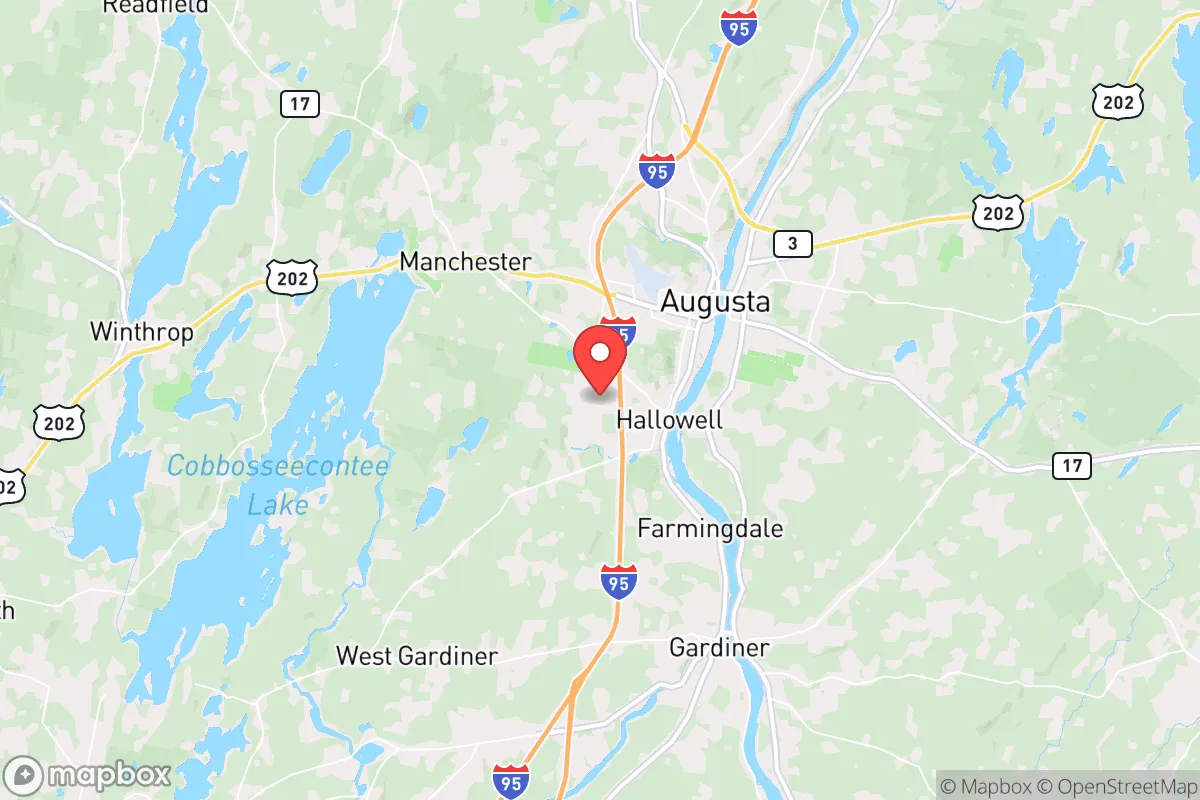
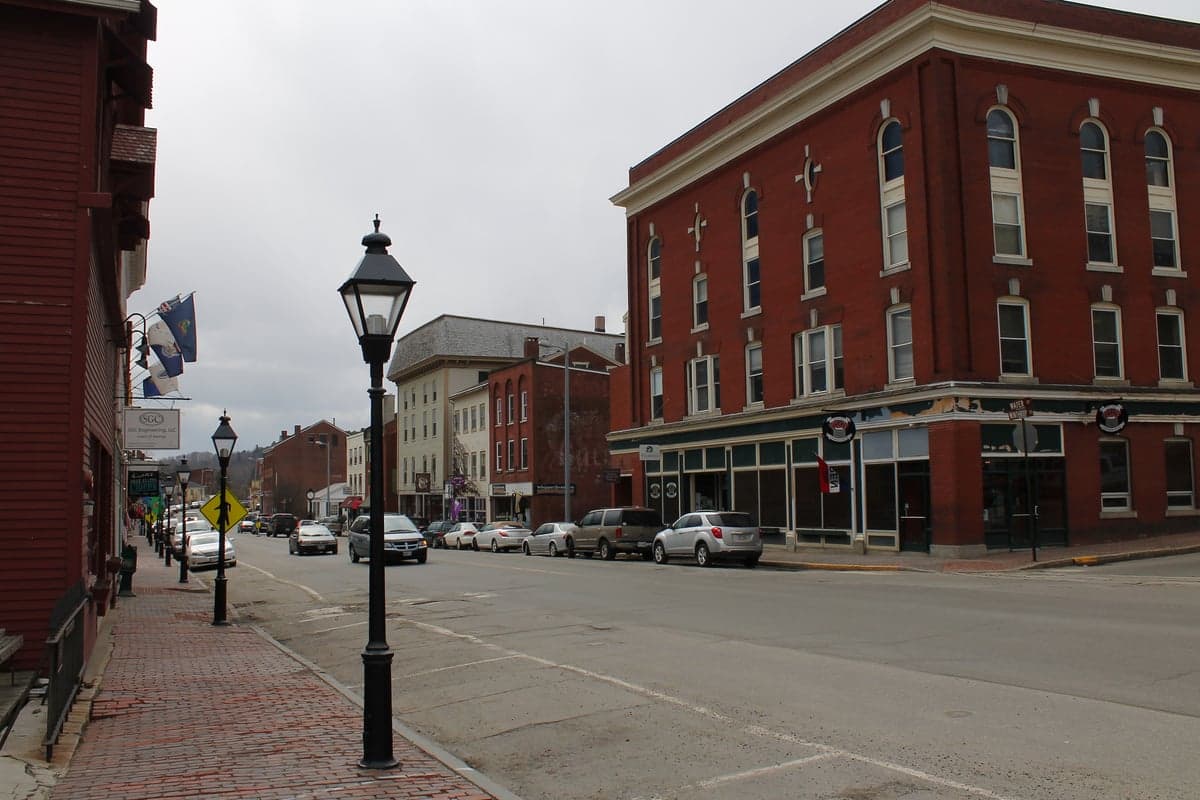
Photo: Wikipedia
Demographics of Hallowell, ME
Affluence Level in Hallowell, ME
A middle-class area roughly in line with national averages across income, home values, education, and employment.
People of Hallowell, ME
Hallowell, Maine, is a small, densely historic city of 2,570 residents that remains overwhelmingly white (99.3%) and native-born, with a foreign-born population of just 1.6%. Its character is defined by a high concentration of college-educated professionals (46.4%) living in a compact, walkable downtown of Federal-style brick buildings along the Kennebec River. The city’s identity is less about ethnic diversity and more about a deep, preservation-minded Yankee lineage, with a recent influx of educated newcomers drawn to its historic architecture and proximity to Augusta.
How the city was settled and grew
Hallowell’s population history begins with the Abenaki people, who used the Kennebec River as a travel corridor, but permanent European settlement began in the 1760s after the end of the French and Indian War. The original English and Scottish-Irish settlers were granted land as part of the Kennebec Purchase, and they established farms and a riverfront trading post. The city’s explosive growth came in the early 19th century when it became a major shipbuilding and granite quarrying center. The Granite City neighborhood, along the river south of downtown, was built by skilled Scottish and Irish stonecutters who arrived to work the quarries that supplied stone for buildings like the Smithsonian Castle. The South End, near the current boat landing, housed the shipwrights and river pilots who drove the maritime economy. By the mid-1800s, Hallowell was a bustling port rivaling Portland, but the decline of shipbuilding and the granite industry after 1900 led to a long, slow population drop from a peak of roughly 4,000 in 1850 to under 2,500 by the 1960s.
Modern era (post-1965)
After the 1965 Immigration Act, Hallowell saw virtually no new foreign-born settlement. The city’s 1.6% foreign-born rate is among the lowest in Maine, and the population remains 99.3% white with no measurable Black, Hispanic, East/Southeast Asian, or Indian-subcontinent communities. The major demographic shift after 1965 was not ethnic but economic and educational: the decline of manufacturing and the rise of state government in nearby Augusta drew a new class of professionals. These newcomers, often from other parts of New England, settled in the Winthrop Street corridor and the Vaughan Field area, buying and restoring the Federal and Greek Revival homes that had been subdivided into rooming houses. The Downtown Historic District, centered on Water Street, became a hub for antique shops, galleries, and restaurants, attracting a creative-class population that valued walkability over suburban sprawl. Meanwhile, the Granite City and South End neighborhoods retained their working-class roots, with many longtime families still living in the same clapboard houses their great-grandparents occupied.
The future
Hallowell’s population is projected to remain small and stable, with modest growth driven by infill development rather than new subdivisions. The city is not homogenizing in a racial sense—it was already nearly monoracial—but it is becoming more economically stratified as rising home prices push out lower-income residents. The Granite City neighborhood, once solidly working-class, is seeing gradual gentrification as professionals from Augusta and Portland buy properties for weekend homes or remote work. The immigrant communities that have grown in nearby Augusta (primarily Somali and East African) have not extended into Hallowell, largely due to the city’s high housing costs and lack of rental stock. Over the next 10–20 years, Hallowell will likely become even more college-educated and older, with a shrinking share of families with children. The city’s zoning allows for accessory dwelling units, which could bring a slight increase in younger renters, but the overall trajectory is toward a preservation-focused, high-amenity enclave for professionals who prioritize history and walkability over diversity or affordability.
For someone moving in now, Hallowell offers a stable, safe, and culturally rich environment with a strong sense of place—but it is not a place of demographic change or growth. It is a city that has largely finished its evolution, settling into a comfortable, homogeneous, and educated niche that values its past more than its future expansion. New residents should expect a tight-knit, politically moderate-to-liberal community where newcomers are welcomed if they respect the historic fabric, but where the population is unlikely to become significantly more diverse or youthful in the coming decades.

* Values derived from national, state, county, city and local statistics and may differ in a specific area. Last updated: 2026-05-01T03:37:33.000Z
Narrative content on this page is AI-generated and may contain mistakes. Verify any details that matter before acting on them.
ReloMaps may earn a commission from affiliate links at no extra cost to you.

