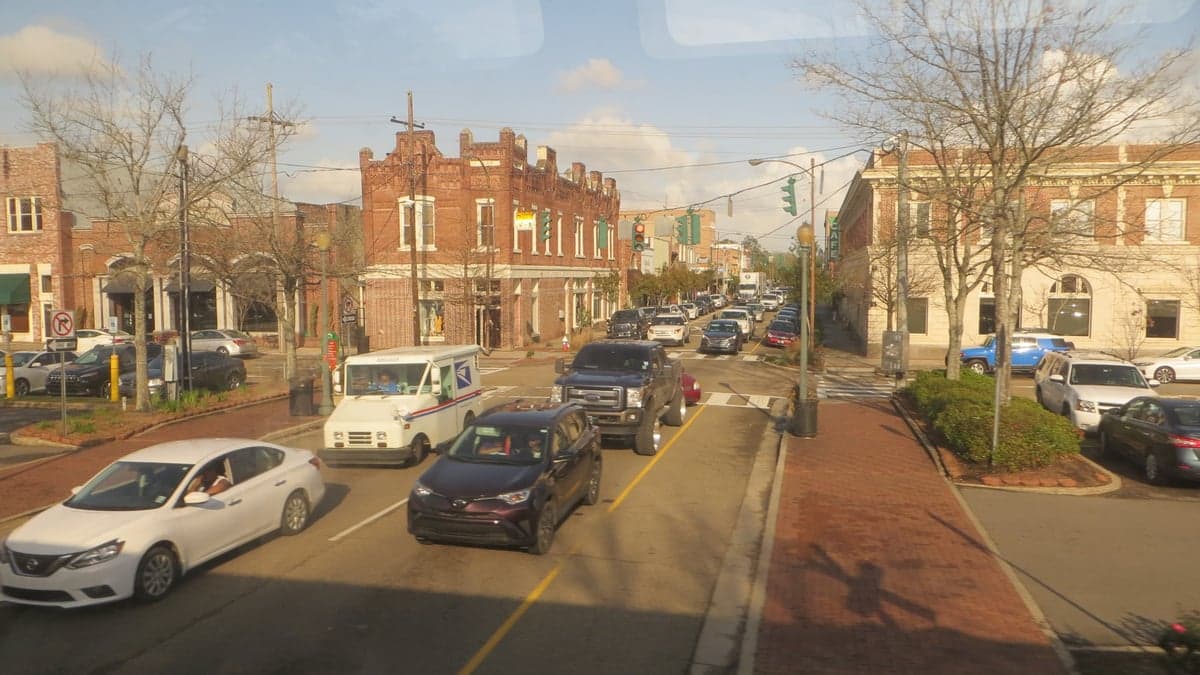
Photo: Wikipedia
Political ClimatePolitical Climate in Hammond, LA
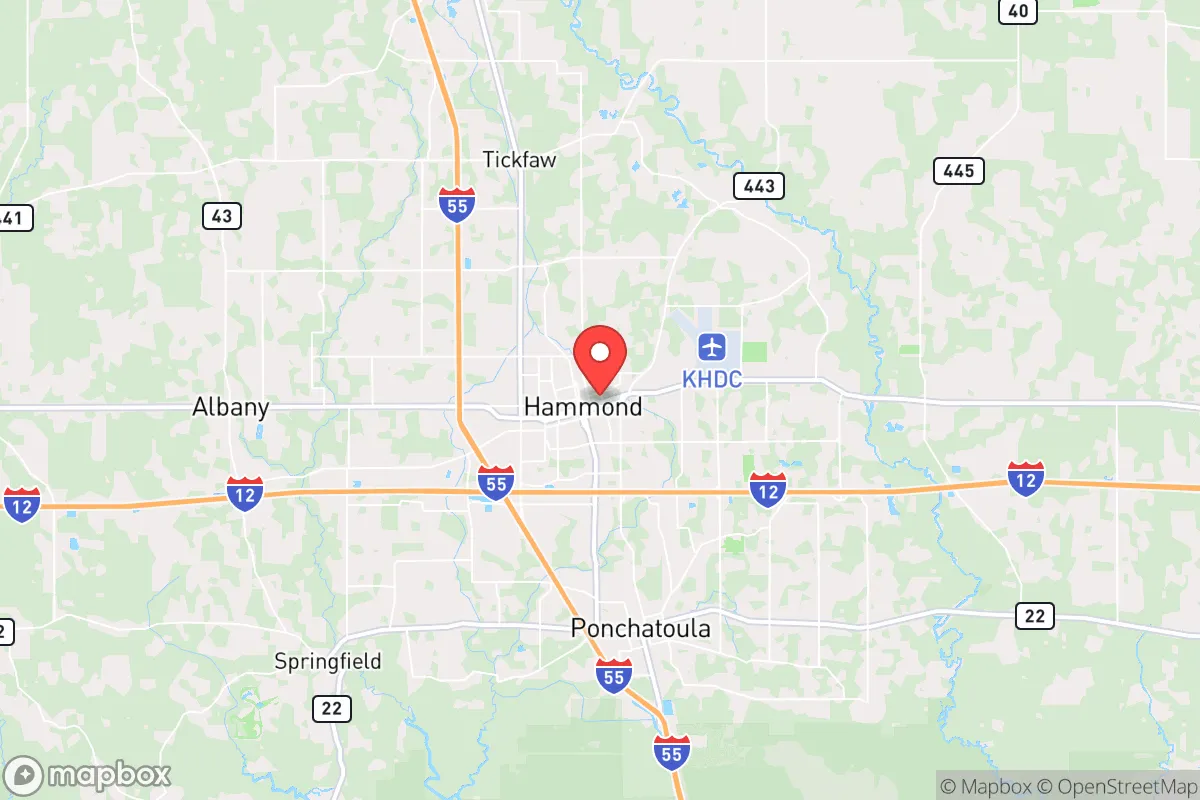
District shown is the primary district for this city’s centroid. Cities may span multiple districts.
Local Political AnalysisPolitical Analysis of Hammond, LA
Hammond, Louisiana, is about as solidly conservative as they come, with a Cook PVI of R+19 that tells you everything you need to know about the local political DNA. This isn't a purple town or a swing district; it's a place where Republican candidates routinely win by double digits, and the local culture reflects that. The political lean here has been steady for decades, rooted in a deep-seated belief in limited government, personal responsibility, and a healthy skepticism of federal overreach. If you're looking for a place where your rights to speak your mind, keep and bear arms, and live without a laundry list of government mandates are still respected, Hammond is it.
How it compares
Drive 45 minutes east to New Orleans, and you might as well be in a different country politically. Orleans Parish votes reliably blue, with a Cook PVI of D+27, a massive 46-point swing from Hammond's R+19. The contrast is stark: New Orleans embraces progressive policies on everything from policing to taxes, while Hammond and the surrounding Tangipahoa Parish hold the line on conservative values. Even nearby Baton Rouge, about an hour west, is more of a mixed bag—East Baton Rouge Parish leans slightly Democratic, while the surrounding suburbs are red. Hammond sits in a sweet spot of consistent, no-nonsense conservatism that hasn't been diluted by urban growth or transplants pushing a different agenda. You won't find the same kind of activist energy or government expansion here that you see in those bigger cities.
What this means for residents
For the people who live here, the political climate translates into a daily life with fewer headaches from government overreach. Local officials generally keep taxes low, zoning minimal, and regulations light. You won't see the kind of heavy-handed mandates that have become common in blue areas—no mask mandates that drag on for years, no aggressive business closures, no push to defund the police. The local sheriff's office and city council are aligned with the community's values, meaning your Second Amendment rights are taken seriously and your property rights aren't constantly under threat from new ordinances. That said, there's a quiet concern among long-time residents that the progressive creep is real. As Southeastern Louisiana University grows and attracts more out-of-state faculty and students, there's a slow but noticeable shift in the local discourse. Some worry that if the university continues to expand its influence, Hammond could start to see the same kind of ideological battles that have already hit other college towns in the South.
Culturally, Hammond still holds onto its traditional Louisiana roots—family, faith, and freedom are the pillars here. You won't find the kind of performative activism or government-sponsored diversity initiatives that dominate in blue cities. Instead, the community handles things the old-fashioned way: through churches, civic clubs, and neighbor-to-neighbor relationships. The biggest policy distinction is the local government's hands-off approach. They trust residents to make their own choices, whether it's about homeschooling, starting a business, or carrying a firearm. That's the kind of freedom that's becoming rare in America, and it's why people who value their rights are still choosing to call Hammond home. The trajectory is clear: as long as the local leadership stays grounded in conservative principles, this town will remain a refuge from the overreach that's plaguing so many other places.

State Political ClimatePolitical Climate in Louisiana
State Political AnalysisPolitical Environment in the State
Louisiana has long been a reliably red state in federal elections, but its political climate is far more complex than a simple partisan label suggests. The state leans Republican by about 12-15 points in presidential races, with Donald Trump winning it by 19 points in 2020 and 16 points in 2024. However, this conservative dominance is a relatively recent development—as recently as 2008, Louisiana voted for Barack Obama in the general election, and Democrats controlled the governor's mansion for all but eight years between 1992 and 2016. The real story is a slow, steady realignment driven by suburban flight from the Democratic Party, cultural conservatism in rural areas, and the collapse of the old "Blue Dog" Democratic coalition that once dominated state politics.
Urban vs. rural divide
The political map of Louisiana is a textbook example of the urban-rural split that defines American politics today. The state's two major metros—New Orleans and Baton Rouge—are Democratic strongholds, but they operate very differently. New Orleans (Orleans Parish) votes about 80% Democratic, powered by a coalition of Black voters, progressive whites, and a growing Hispanic population. Baton Rouge (East Baton Rouge Parish) is more competitive, flipping between parties depending on turnout, but its core city votes reliably blue. Meanwhile, the sprawling suburbs of Metairie (Jefferson Parish) and Mandeville (St. Tammany Parish) are deeply red, with St. Tammany voting +40 points Republican in 2024. The rural "Cajun Country" parishes like Lafayette, Alexandria, and Lake Charles are solidly conservative, driven by oil-and-gas workers, evangelical Christians, and a strong gun culture. The only real exception is the Shreveport-Bossier City area in the northwest, where Caddo Parish votes Democratic due to its large Black population, but surrounding Bossier Parish is a GOP stronghold thanks to military families from Barksdale Air Force Base. The bottom line: if you're looking for a conservative environment, stick to the suburbs and rural parishes; the cities are increasingly progressive.
Policy environment
Louisiana's state-level policy is a mixed bag for conservatives. On the plus side, the state has no income tax on Social Security benefits, a flat 4.25% personal income tax rate (down from 6% in 2022), and a relatively low corporate tax rate of 5.5%. The state is also a "right-to-work" state, meaning union membership is voluntary, and it has some of the weakest labor protections in the country. However, the sales tax is high—averaging 9.55% statewide—and property taxes are low, which shifts the burden onto consumption. On education, Louisiana has a robust school choice program (the Louisiana Scholarship Program) and charter schools are widespread, especially in New Orleans. But the state's public schools rank near the bottom nationally, and the teacher's union remains politically active. On healthcare, Louisiana expanded Medicaid under the Affordable Care Act in 2016, a move that many conservatives opposed, and the state has some of the highest per-capita Medicaid spending in the South. Election laws are generally secure: voter ID is required, early voting is available for 7 days, and there's no widespread mail-in voting abuse. However, the state's "jungle primary" system (all candidates run on the same ballot, regardless of party) can produce unpredictable results and sometimes leaves conservatives without a clear choice in runoff elections.
Trajectory & freedom
Louisiana has been moving in a more conservative direction on several key freedom issues, but the pace is frustratingly slow. In 2024, the state passed a near-total abortion ban (Act 545) with exceptions only for rape, incest, and life of the mother—a major win for pro-life advocates. On gun rights, Louisiana is a "constitutional carry" state (permitless carry for adults 21+), and in 2023 it passed a law prohibiting state enforcement of federal gun regulations (the "Second Amendment Sanctuary" law). Parental rights got a boost with the 2024 "Parents' Bill of Rights" (Act 123), which requires schools to notify parents about curriculum changes and medical services. However, the state still has a massive government footprint: the state budget has grown 40% in the last decade, and the pension system is underfunded by over $20 billion. On medical freedom, Louisiana was one of the first states to ban COVID-19 vaccine mandates for state employees and students, but it also maintained mask mandates in schools longer than many neighboring states. The biggest red flag for conservatives is the continued influence of the "Louisiana Democratic Party" in local offices—many parish sheriffs, district attorneys, and school board members are still Democrats, though they tend to be more moderate than national Democrats.
Civil unrest & political movements
Louisiana has a history of political flashpoints, but the last few years have been relatively quiet compared to states like Oregon or Texas. The most visible recent unrest was the 2020 George Floyd protests in New Orleans and Baton Rouge, which saw some property damage but no widespread violence. The state has a small but vocal progressive activist scene centered in New Orleans, focused on criminal justice reform and environmental justice (the "Cancer Alley" issue along the Mississippi River). On the right, the Louisiana Republican Party has been energized by the "MAGA" movement, with groups like the Louisiana Conservative Alliance pushing for school board takeovers and election integrity audits. Immigration politics are less heated here than in border states—Louisiana has a relatively small foreign-born population (about 4%), and the state passed a law in 2024 requiring local law enforcement to cooperate with ICE (the "Sanctuary City" ban). There's been no serious secession or nullification rhetoric, though some rural parishes have passed symbolic resolutions asserting local control over federal lands. Election integrity was a major issue after 2020, with the state legislature passing stricter voter ID laws and banning ballot drop boxes, but no widespread fraud was ever proven. A new resident would notice that political conversations are more polite and less confrontational than in, say, Florida or Texas—people here tend to avoid politics at the dinner table.
Projection
Over the next 5-10 years, Louisiana is likely to become more conservative, but not as fast as its neighbors. The key demographic trend is out-migration: the state lost population for three consecutive years (2020-2023), with young professionals and families leaving for Texas, Florida, and Tennessee. Those who stay tend to be older, whiter, and more conservative, which will deepen the red lean. However, the growing Hispanic population (now about 7% of the state) could shift some parishes toward the center, especially in the Lake Charles and Lafayette areas. The biggest wildcard is the state's economy: if the oil-and-gas industry continues to decline, rural parishes could become even more conservative out of frustration, while New Orleans and Baton Rouge could become more progressive as they attract remote workers and creatives. The state's political leadership is aging—Governor Jeff Landry (R) is term-limited in 2028, and the next generation of GOP leaders (like Attorney General Liz Murrill) are more culturally conservative but less focused on fiscal restraint. Expect more fights over school choice, transgender rights, and property taxes. For a conservative moving in now, the state will likely feel more aligned with your values in 2035 than it does today, but you'll still have to deal with a bloated state government and a Democratic stronghold in New Orleans.
For a new resident, the bottom line is this: Louisiana offers a genuinely conservative culture in most of the state, with low taxes on income and property, strong gun rights, and a growing school choice movement. But you'll need to accept that the state government is inefficient, the infrastructure is crumbling, and the cities are increasingly progressive. If you're looking for a place where your vote actually counts and your values are respected in daily life, the suburbs of Baton Rouge, the Northshore (Mandeville/Covington), or the Acadiana region (Lafayette) are your best bets. Just don't expect the kind of rapid conservative transformation you'd see in Texas or Florida—Louisiana moves at its own pace, and that pace is slow.
* Values derived from national, state, county, city and local statistics and may differ in a specific area. Last updated: 2026-05-01T05:32:49.000Z
Narrative content on this page is AI-generated and may contain mistakes. Verify any details that matter before acting on them.
ReloMaps may earn a commission from affiliate links at no extra cost to you.

