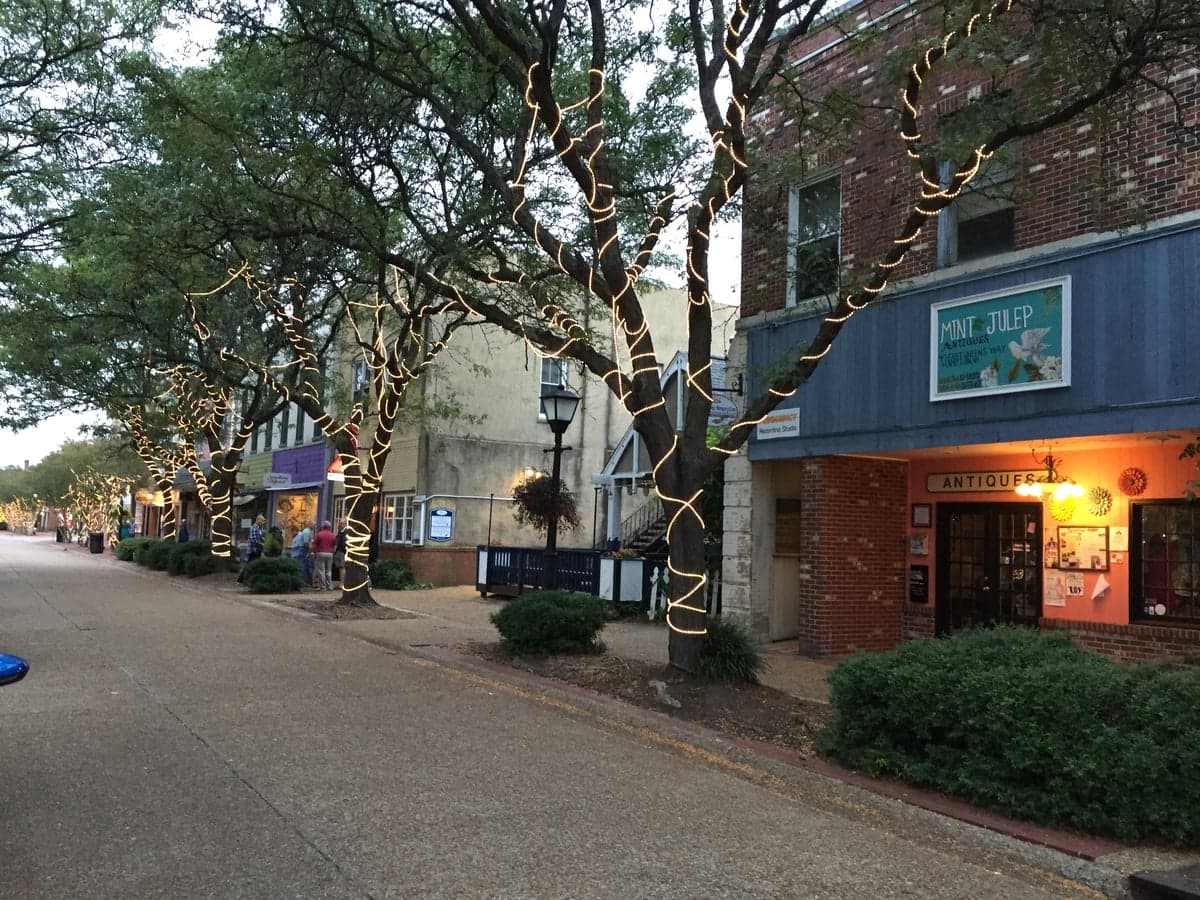
Photo: Wikipedia
Political ClimatePolitical Climate in Hampton, VA
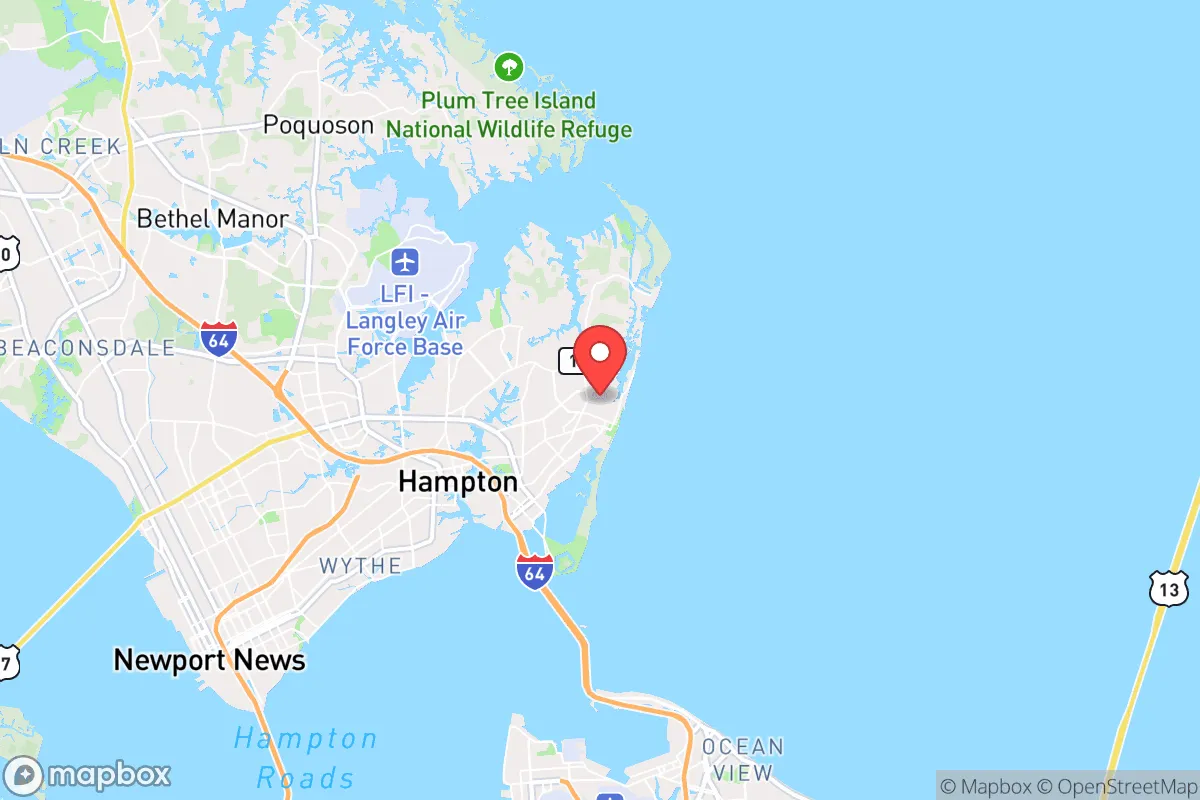
District shown is the primary district for this city’s centroid. Cities may span multiple districts.
Local Political AnalysisPolitical Analysis of Hampton, VA
Hampton, Virginia, has a Cook PVI of D+18, meaning it leans heavily Democratic, and that's been the case for a long time. But if you've lived here as long as I have, you know the political climate has shifted from a more moderate, community-focused vibe to something that feels a lot more progressive and, frankly, top-down. It used to be that local politics were about keeping the shipyards running and the schools decent; now, it's increasingly about pushing a broader ideological agenda that can feel disconnected from the everyday concerns of folks just trying to live their lives.
How it compares
To really get the picture, you have to look at the contrast with the surrounding areas. Drive just a few miles west to York County or Poquoson, and you'll find a much more conservative, fiscally-minded electorate. Those communities tend to vote Republican and are more skeptical of government expansion. Even Newport News, while still blue, has a more mixed political makeup than Hampton. The difference is stark: in Hampton, you feel the weight of a one-party system where there's less pushback on new regulations or spending initiatives. It's not like the old days when you could have a real debate at a city council meeting; now, it often feels like the outcome is predetermined.
What this means for residents
For the average person, this political lean translates into a few concrete things. First, expect higher taxes and more government services, which sounds good in theory but means less money in your pocket. Second, there's a noticeable push on social issues—from how schools handle curriculum to local ordinances that can feel like they're micromanaging personal choices. The government overreach is real; you see it in everything from business licensing to how the city handles property rights. The progressive majority seems less interested in keeping government small and more interested in using it as a tool for social change. For a long-time resident, it's concerning to watch the local culture shift from "live and let live" to "we know what's best for you."
Looking ahead, I don't see this changing much. The demographics and the voter registration numbers are what they are. The real concern is that as the city gets more comfortable with its progressive identity, it could become even less tolerant of dissenting views. You already see it in local politics—if you're not on board with the latest initiative, you're often dismissed as out of touch. The long-term trajectory feels like more of the same: more regulations, higher costs, and a growing disconnect between the people in charge and the people who actually have to live under their rules. It's a shame, because Hampton used to be a place where you could disagree without being disagreeable.

State Political ClimatePolitical Climate in Virginia
State Political AnalysisPolitical Environment in the State
Virginia has shifted from a reliably purple swing state to a solidly blue one over the past 15 years, driven largely by explosive growth in the Washington D.C. suburbs. The state’s political center of gravity now lies in Northern Virginia, where dense, affluent, and increasingly progressive populations in places like Arlington, Alexandria, and Loudoun County routinely deliver massive margins for Democrats. While the rest of the state—particularly rural Southside, Southwest Virginia, and the Shenandoah Valley—remains deeply conservative, the population imbalance means statewide elections now lean left. The 2021 gubernatorial race was a rare Republican win, but the 2023 legislative elections saw Democrats retake full control of the General Assembly, cementing a blue trifecta in Richmond.
Urban vs. rural divide
The political map of Virginia is a tale of two commonwealths. The urban crescent stretching from Northern Virginia through Richmond to Hampton Roads is the engine of Democratic power. Fairfax County alone, with over 1.1 million residents, votes more Democratic than many entire states. Meanwhile, rural and exurban areas like Roanoke, Lynchburg, and the coal country around Bristol vote Republican by 30-40 point margins. The key battlegrounds have been the outer D.C. suburbs—places like Prince William County and Stafford County—which have flipped from red to blue over the past decade as new arrivals from D.C. and Maryland bring their voting habits with them. The 2020 presidential election saw Joe Biden win Virginia by 10 points, with Northern Virginia alone providing a net margin larger than his statewide victory.
Policy environment
Virginia’s policy environment has shifted dramatically leftward since Democrats took full control in 2020. The state has one of the highest income tax rates in the South at 5.75%, with no signs of reduction. Property taxes are set locally, and in Northern Virginia they are among the nation’s highest. The regulatory posture is increasingly burdensome: the Virginia Clean Economy Act mandates a 100% carbon-free electric grid by 2050, driving up energy costs. On education, the state has eliminated its Standards of Learning (SOL) graduation requirements and adopted the "Virginia Math Pathways Initiative," which de-emphasizes algebra in favor of data science—a move that has alarmed parents concerned about rigor. Election laws have been loosened: no-excuse absentee voting, same-day registration, and a permanent absentee voter list are now law. The state also legalized recreational marijuana in 2021, though retail sales remain stalled due to political infighting.
Trajectory & freedom
Virginia’s trajectory over the past five years has been toward less personal freedom, particularly for gun owners and parents. The 2020 "Virginia Way" gun control package included universal background checks, a "one handgun a month" limit, and a red flag law that allows temporary firearm seizure without a criminal conviction. In 2023, the legislature passed a ban on "assault firearms" and large-capacity magazines, though it was vetoed by Governor Glenn Youngkin. Parental rights took a hit with the 2020 law requiring school boards to adopt policies that "protect the rights of transgender students," effectively overriding parental notification. The state also expanded Medicaid under the Affordable Care Act in 2019, and in 2021 passed a law requiring all health insurance plans to cover abortion without cost-sharing. On the positive side for conservatives, Youngkin signed a 2023 law eliminating the state’s grocery tax, and the state has maintained a right-to-work law that protects workers from forced union membership.
Civil unrest & political movements
Virginia has been a flashpoint for political activism on both sides. The 2017 "Unite the Right" rally in Charlottesville remains a national symbol of far-right extremism and led to a statewide ban on firearms in public spaces during declared emergencies. The 2020 protests in Richmond saw the Robert E. Lee statue become a focal point for both Black Lives Matter demonstrations and counter-protests; the statue was eventually removed in 2021. Immigration politics are heated: Fairfax County and Arlington have declared themselves "sanctuary cities," refusing to cooperate with federal immigration enforcement, while rural counties like Augusta and Rockingham have passed resolutions opposing sanctuary policies. Election integrity remains a live issue: the 2020 election saw widespread use of drop boxes and mail-in ballots, and while no major fraud was proven, many conservatives remain skeptical of the state’s voting system. The 2023 legislative session saw a failed attempt to require voter ID for absentee ballots.
Projection
Over the next 5-10 years, Virginia is likely to become more Democratic and more progressive. The population growth in Northern Virginia shows no signs of slowing, and the state’s in-migration is overwhelmingly from blue states like New York and California. The 2030 redistricting cycle will likely further entrench Democratic control of the General Assembly. However, there are countercurrents: the exodus of conservatives from Northern Virginia to places like Fredericksburg and Spotsylvania County is slowly shifting those areas rightward. The 2025 gubernatorial election will be a key test—if a Republican can win again, it would signal that the state is not yet a lost cause. But the long-term demographic trends favor the left, and a new resident moving in now should expect to see continued expansion of government programs, higher taxes, and more restrictions on gun rights and parental autonomy.
For a conservative considering relocation, Virginia offers a mixed bag. The rural and exurban areas remain strongholds of traditional values, with good schools, low crime, and a high quality of life. But you will be living under a state government that is increasingly hostile to your values, and your vote will be diluted by the D.C. suburbs. If you can afford the taxes and are willing to fight for your rights at the local level, places like Lynchburg or Roanoke can still feel like home. But if you want a state where your values are reflected in state law, you may want to look further south or west.
* Values derived from national, state, county, city and local statistics and may differ in a specific area. Last updated: 2026-04-24T11:08:10.000Z
Narrative content on this page is AI-generated and may contain mistakes. Verify any details that matter before acting on them.
ReloMaps may earn a commission from affiliate links at no extra cost to you.

