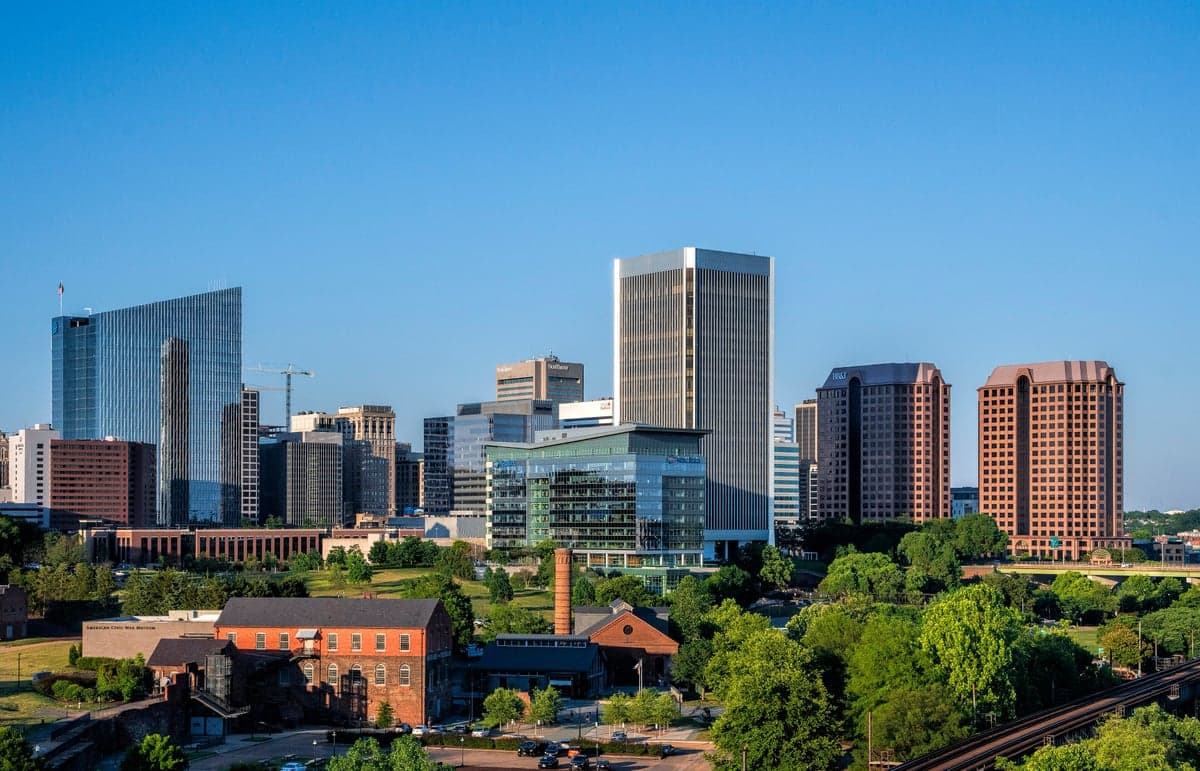
Photo: Wikipedia
Find The Best Places To Live
in Richmond
PRO TIP! You can paste a Zillow or Redfin link to get info on that property.
What It's Like Living in Richmond, VA
Richmond has a way of sneaking up on you. It’s not trying to be a polished Southern postcard or a hyper-modern boomtown—it’s a city of brick warehouses, James River rapids, and a stubborn, unpretentious character that grows on you the longer you stay. People here are quick to tell you they love it, but they’ll also admit the potholes are brutal and the summer humidity feels personal. It’s a place where you can grab a beer at a converted tobacco factory, watch the sunset over the river, and still be home by 7:30.
The Daily Rhythm: River City Living
Most days in Richmond move at a pace that feels deliberate, not frantic. The average commute clocks in at just over 22 minutes—short enough that you can actually run an errand or hit the James River Park System before work. That river is the city’s unofficial living room. On a warm Saturday, you’ll see kayakers threading through the rapids at Belle Isle, mountain bikers on the North Bank Trail, and families picnicking on the rocks at Pipeline. The city’s median age is 34.5, and you feel it in the mix of young professionals, grad students from VCU, and families who’ve settled into neighborhoods like the Fan, Museum District, or Church Hill. Grocery shopping often means a trip to a local market like Ellwood Thompson’s or a quick run to Wegmans, and weekend mornings revolve around grabbing coffee at Lamplighter or a biscuit at Early Bird Biscuit Co.
Work life here is anchored by a few big players—VCU Health System, Capital One, and the state government—but the real texture comes from the small creative firms, breweries, and restaurants that fill the old industrial spaces. The median household income sits at $62,671, which is enough to afford a median home value of $328,100—a combination that feels reasonable compared to Northern Virginia or the Northeast. The cost of living index is 114, meaning you pay a slight premium over the national average, but you get a lot of city for it.
Sports, Community, and What People Actually Do
Sports in Richmond are less about one dominant pro team and more about a patchwork of loyalties. There’s no NFL or NBA franchise, but the Richmond Flying Squirrels (the Giants’ Double-A affiliate) draw solid crowds at The Diamond, and the Richmond Kickers soccer club has a dedicated following. College sports are a bigger deal: VCU’s basketball games at the Siegel Center are loud, rowdy, and packed with students and locals alike. High school football is genuinely community-defining in the suburbs—Henrico and Deep Run games can pull thousands on a Friday night. For a city its size (population 227,595), Richmond punches above its weight in entertainment. The National and the Broadberry bring mid-tier national acts, while the Altria Theater hosts Broadway tours. The Richmond Folk Festival every October is the city’s signature event—free, sprawling along the riverfront, with seven stages of music and food that draws over 200,000 people over three days. It’s the kind of weekend where you run into everyone you know.
Bars and restaurants are a serious hobby here. You can spend years working through the city’s craft beer scene—The Veil, Triple Crossing, and Hardywood are local institutions—or the food scene, which ranges from soul food at Mama J’s to modern Vietnamese at Mekong. The quirks run deep: there’s an annual Ukrop’s Monument Avenue 10k that shuts down the city’s grandest boulevard, and a tradition of decorating the statues on Monument Avenue (controversial as they’ve become) for holidays. People take their local identity seriously, but not in a pretentious way.
Pros and Cons of Living Here
What longtime residents love: The river access is unmatched for a city this size. You can be on a mountain bike trail or a Class III rapid within 10 minutes of downtown. The neighborhoods have real character—the Fan’s row houses and tree-lined streets, Church Hill’s historic views, and the growing food scene in Scott’s Addition. The city is also surprisingly walkable for its Southern peers, with a decent bus system and bike lanes improving each year. The sense of community is tangible; people show up for each other, whether it’s a neighborhood block party or a fundraiser at a local brewery.
What frustrates them: The violent crime rate is 430.9 per 100,000—higher than the national average, and it’s concentrated in certain areas, but it’s a real concern that comes up in conversation. The public schools are uneven; families often research zones carefully or go private. Traffic isn’t terrible by big-city standards, but the 64/95 interchange downtown can be a nightmare, and the city’s infrastructure (potholes, aging water lines) feels neglected. Summers are brutally humid, and winters are gray and damp—you earn your nice spring and fall days. And while the cost of living is manageable, property taxes have crept up, and the city’s politics can feel parochial and slow-moving.
Richmond isn’t for someone who wants a clean, predictable, master-planned suburb. It’s for people who don’t mind a little grit, who want a city with a real past and an evolving present, and who are willing to trade a perfect commute for a river view and a neighborhood where the bartender knows your name. It’s a place that rewards curiosity and patience—and if you give it both, it tends to stick.

Similar small cities to Richmond
* Values derived from national, state, county, city and local statistics and may differ in a specific area. Last updated: 2026-05-01T21:27:23.000Z
Narrative content on this page is AI-generated and may contain mistakes. Verify any details that matter before acting on them.
ReloMaps may earn a commission from affiliate links at no extra cost to you.

