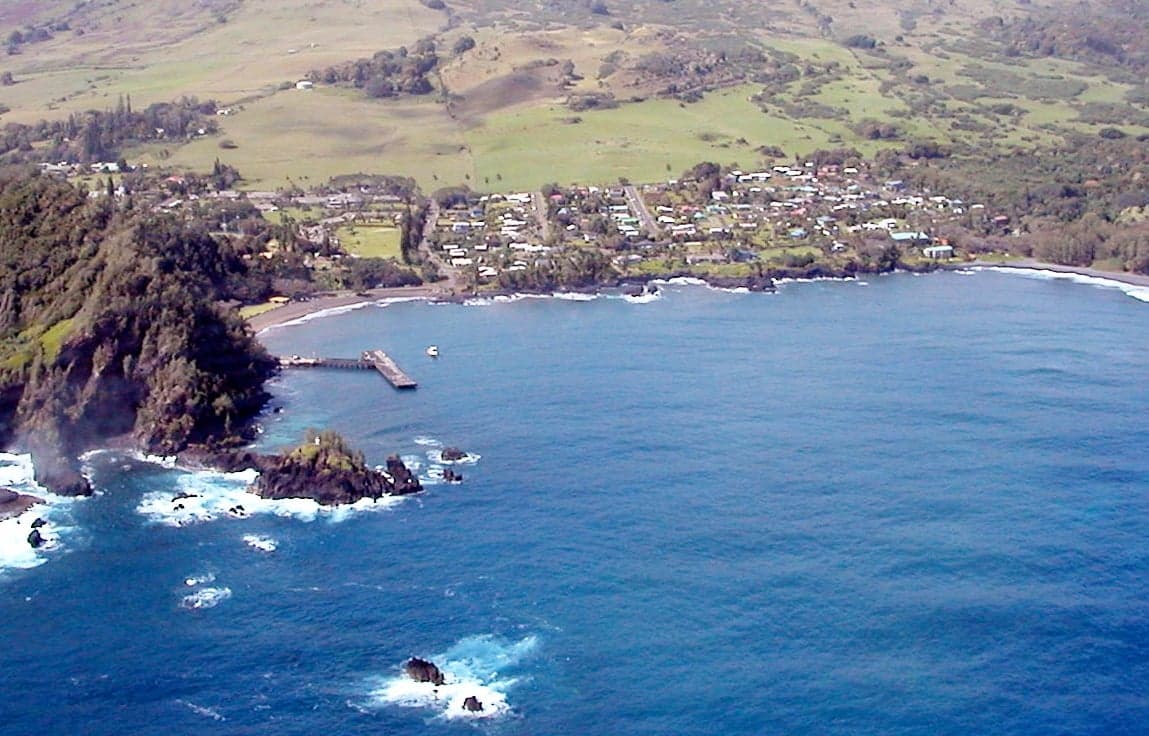
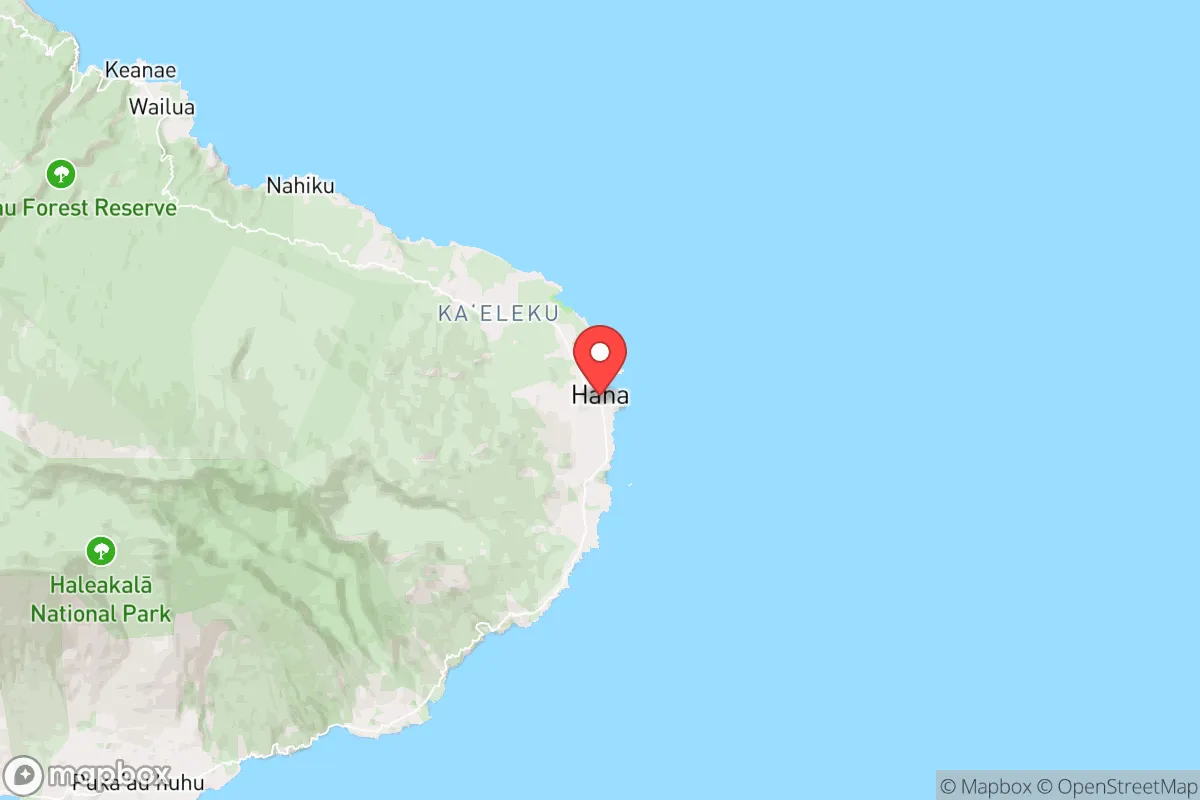
Photo: Wikipedia
Demographics of Hana, HI
Affluence Level in Hana, HI
A middle-class area roughly in line with national averages across income, home values, education, and employment.
People of Hana, HI
The people of Hana, Hawaii, today number just 793 residents, forming one of the most isolated and culturally distinct communities in the state. The population is predominantly Native Hawaiian and part-Hawaiian, with 41.0% identifying as White and 3.8% as East/Southeast Asian, while the foreign-born share stands at 0.0%. This is a place where traditional Hawaiian lifeways persist alongside a small but dedicated cohort of mainland transplants, creating a tight-knit, rural identity centered on subsistence, family, and stewardship of the land. Hana is not a melting pot but a stronghold of Hawaiian heritage, with a character defined by its remoteness and resistance to rapid change.
How the city was settled and grew
Hana’s human history begins with the earliest Polynesian voyagers, who settled the fertile eastern coast of Maui around 500–800 AD. The area’s abundant rainfall, rich volcanic soil, and protected bays supported large ahupuaʻa (traditional land divisions) that sustained thriving Hawaiian communities for centuries. The primary settlement clusters were along the coast, with Hana Bay serving as the central hub for fishing and canoe travel, while inland valleys like Kīpahulu and Waiʻānapanapa were cultivated for taro, sweet potato, and breadfruit. By the time of Western contact in the late 18th century, Hana was a densely populated district with multiple chiefly residences and heiau (temples).
The 19th century brought dramatic change. The Great Māhele of 1848 privatized land, and many Native Hawaiians lost access to their ancestral plots. Sugar plantations arrived in the 1860s, with the Hana Sugar Company (later Hana Ranch) consolidating vast tracts. This drew a small wave of immigrant laborers, primarily from Japan and China, who settled in the Hana Town core near the mill. However, the plantation era was short-lived here compared to other Hawaiian islands; the rugged terrain and lack of a deep-water port limited industrial scale. By the 1940s, sugar production had ceased, and the population shrank as many moved to Maui’s central valley for work. The Hana Ranch transitioned to cattle ranching, and the community reverted to a more traditional, subsistence-oriented economy.
Modern era (post-1965)
The post-1965 period saw Hana’s population stabilize at a low level, with little of the immigration-driven growth that reshaped the rest of Hawaii. The 0.0% foreign-born share today reflects this: no significant new immigrant wave arrived. Instead, the modern era has been defined by two countervailing trends. First, a slow but steady in-migration of mainland Americans—many seeking an alternative lifestyle—who purchased former plantation homes and built new residences in areas like Hāna Town and along the Hāna Highway corridor. These newcomers are overwhelmingly White, contributing to the 41.0% White share. Second, a persistent out-migration of Native Hawaiian youth to Oʻahu and the mainland for education and employment, which has gradually reduced the Hawaiian plurality.
The East/Southeast Asian population (3.8%) is largely composed of descendants of the original Japanese and Chinese plantation families, who remain concentrated in Hāna Town and the Kīpahulu area. There is no Indian subcontinent population (0.0%). The Hispanic share (2.6%) is minimal and recent, mostly individuals who moved from the mainland or other Hawaiian islands for service jobs. The Black population is 0.0%. The result is a community that is more ethnically homogeneous than most of Hawaii, with a clear divide between long-resident Hawaiian and Asian families and a smaller, newer White cohort.
The future
Hana’s population is likely to remain small and stable, with no major growth drivers on the horizon. The 26.8% college-educated rate is low by national standards, reflecting the limited professional job market and the community’s reliance on tourism, ranching, and remote work. The most significant demographic trend is the aging of the Native Hawaiian population, as younger generations continue to leave for opportunities elsewhere. This could gradually shift the ethnic balance toward a higher White share, as mainland retirees and second-home buyers purchase available properties. However, strong cultural preservation efforts—including the Hāna School’s Hawaiian-language immersion program and community land trusts—are working to maintain Hawaiian presence and prevent wholesale displacement. The community is not tribalizing into distinct enclaves but rather consolidating around a shared identity of isolation and tradition, with newcomers expected to adapt to local norms.
For a conservative-leaning individual or family considering relocation, Hana offers a place where community bonds are strong, crime is low, and the pace of life is deliberately slow. The trade-off is limited economic opportunity, high cost of living (especially for housing and goods), and a social environment that prizes conformity to local Hawaiian customs. This is not a place for those seeking diversity or upward mobility, but for those who value stability, tradition, and a deep connection to the land. Hana is becoming a quieter, more insular version of itself—a deliberate choice for those who want to opt out of modern Hawaii’s growth pressures.

* Values derived from national, state, county, city and local statistics and may differ in a specific area. Last updated: 2026-05-15T03:22:14.000Z
Narrative content on this page is AI-generated and may contain mistakes. Verify any details that matter before acting on them.
ReloMaps may earn a commission from affiliate links at no extra cost to you.

