Photo: Wikipedia
Political ClimatePolitical Climate in Hana, HI
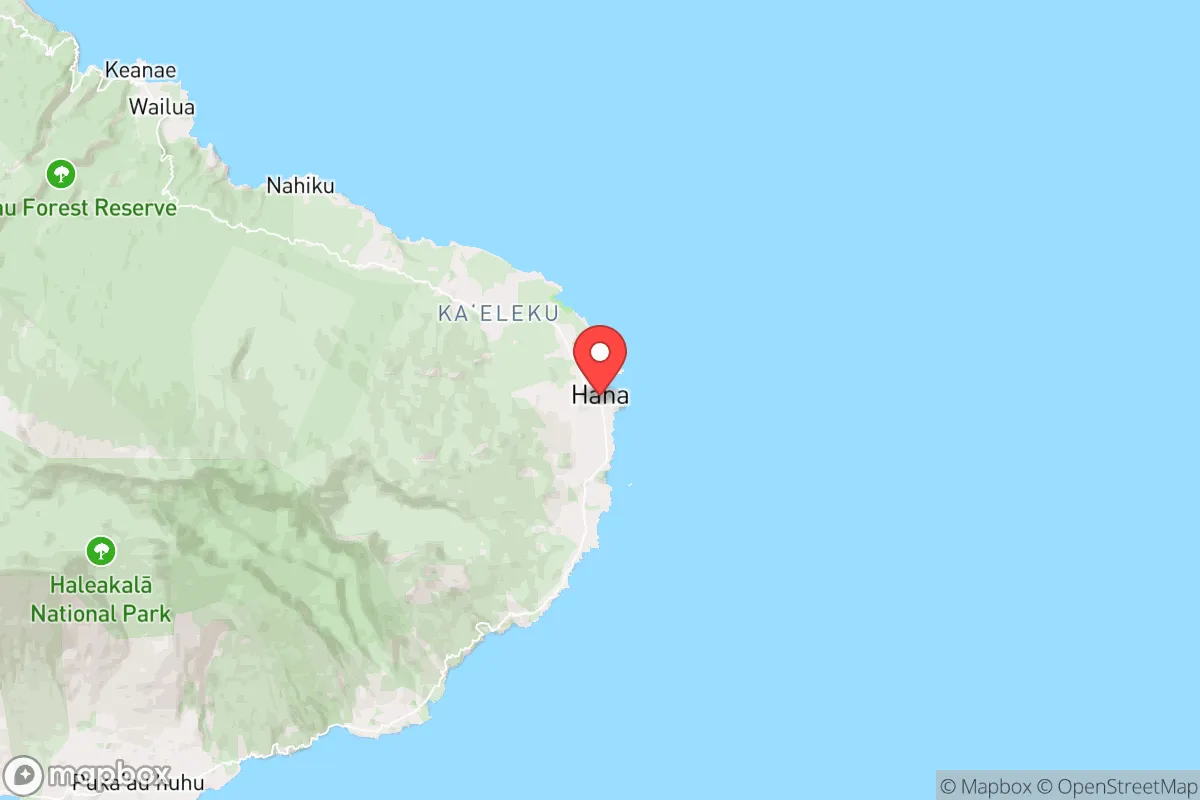
District shown is the primary district for this city’s centroid. Cities may span multiple districts.
Local Political AnalysisPolitical Analysis of Hana, HI
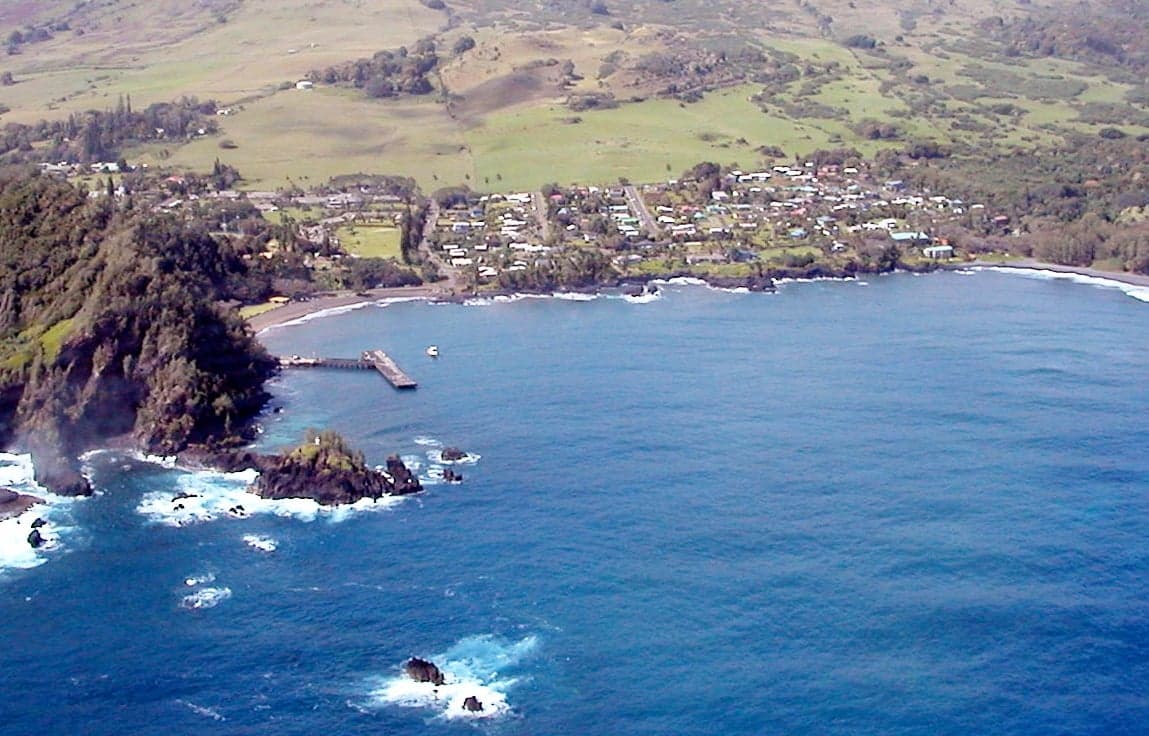
Hana, HI, leans heavily Democratic with a Cook PVI of D+12, matching the state of Hawaii as a whole, but don’t let that single number fool you—this small, rural town on Maui’s east side has a political vibe that’s more about local independence than the progressive activism you see in Honolulu or even Kahului. Historically, Hana was a place where folks minded their own business, lived off the land, and kept government at arm’s length. Over the last decade, though, you’ve seen a slow creep of outside influence—newcomers from the mainland and even from other parts of the island pushing for more regulations on everything from short-term rentals to fishing rights. The local elections here still lean blue, but it’s a different shade of blue than the state capital—more about preserving the rural lifestyle than chasing the latest social agenda.
How it compares
When you stack Hana against the rest of Hawaii, HI, the PVI numbers are identical at D+12, but the lived reality is night and day. In Honolulu, you’ve got a bustling urban machine where progressive policies on housing, taxes, and environmental rules get passed with little pushback. Hana, by contrast, feels like a throwback—many residents here are wary of government overreach, especially when it comes to land use and property rights. Nearby towns like Paia and Makawao lean more moderate, with a mix of farmers and artists who vote blue but grumble about new building codes and permit fees. The contrast is sharpest with Kihei or Lahaina, where tourism-driven politics have embraced tighter rental restrictions and higher transient accommodation taxes. In Hana, those same policies hit harder because the local economy depends on a handful of family-run lodges and farm stands, not big resorts. The state’s D+12 rating masks a real tension: Hana’s brand of blue is more about community self-reliance, while the state government in Honolulu keeps pushing top-down mandates that feel like they were written for a different island.
What this means for residents
For folks living in Hana, the political climate means you’re constantly fighting to keep your way of life intact. The state’s progressive tilt has brought tighter environmental regulations that sound good on paper but can choke small-scale farming and fishing—activities that have sustained families here for generations. You see it in the new rules for shoreline access and the push to ban certain fishing practices, which locals argue are traditional and sustainable. There’s also a growing concern about housing mandates from Honolulu that could force more development into this rural area, threatening the very isolation that makes Hana special. On the flip side, the local community is tight-knit, and there’s a strong resistance to letting outside bureaucrats dictate how to live. The long-term trend is worrying—if the state keeps doubling down on progressive policies, Hana could lose its character, becoming just another regulated corner of Hawaii where personal freedoms take a backseat to government plans. For now, the best bet is to stay involved in local meetings and vote for candidates who understand that rural life doesn’t fit a one-size-fits-all political mold.
One cultural distinction that sets Hana apart is its deep-rooted sense of place—people here have been farming taro and fishing the same waters for centuries, and that connection to the land breeds a skepticism of government intervention that you don’t find in more transient parts of the state. The push for renewable energy projects, for example, has sparked debate: while everyone wants clean power, the idea of large solar farms or wind turbines on sacred land feels like another form of overreach. Hana’s politics are a quiet rebellion against the idea that progress always means more rules. If you’re considering a move here, understand that the D+12 label doesn’t capture the real fight—it’s about keeping the government out of your backyard while preserving a way of life that’s already under pressure from the outside world.

State Political ClimatePolitical Climate in Hawaii
State Political AnalysisPolitical Environment in the State
Hawaii is a solidly Democratic state with a Cook PVI of D+12, meaning it votes about 12 points more Democratic than the national average in presidential elections. Over the past 20 years, the state has shifted further left, driven by a growing progressive activist base in Honolulu and the erosion of its once-strong Republican presence in rural and suburban areas. While no county has flipped from red to blue in that timeframe, the GOP’s share of the vote has steadily declined, and the state’s political culture now leans heavily toward government-centric solutions, high taxes, and expansive social programs.
Urban vs. rural divide
The political map of Hawaii is dominated by the urban core of Honolulu on Oahu, which accounts for roughly two-thirds of the state’s population and votes overwhelmingly Democratic. In the 2024 presidential election, Honolulu County gave Democrats a margin of nearly 30 points. The rest of the state—the neighbor islands of Hawaii (the Big Island), Maui, and Kauai—are more mixed but still lean blue. The Big Island’s rural districts, like Puna and Hilo, have a strong progressive and even libertarian streak, with pockets of conservative voters in areas like Waimea and Kona. Maui County, including the towns of Kahului and Kihei, is reliably Democratic, while Kauai’s North Shore and Hanalei are among the most liberal areas in the state. The only place where Republicans still have a foothold is in the more suburban and exurban parts of Oahu, such as Mililani and Kapolei, and in some rural Big Island precincts, but these are shrinking. The GOP hasn’t won a statewide election since Linda Lingle’s gubernatorial victory in 2002, and its legislative presence is now negligible.
Policy environment
Hawaii’s policy environment is defined by high taxes, heavy regulation, and a strong government role in daily life. The state has the highest combined state and local tax burden in the nation, with a general excise tax of 4% that applies to nearly all goods and services, plus a progressive income tax that tops out at 11%. Property taxes are relatively low, but the state makes up for it with aggressive land-use regulations and a notoriously slow permitting process. Education policy is centralized and union-dominated; the Hawaii Department of Education is the only statewide school district in the country, meaning local control is virtually nonexistent. School choice is limited, with only a handful of charter schools and no voucher program. Healthcare is heavily regulated, and the state has a near-universal coverage mandate that predates the Affordable Care Act. Election laws are relatively permissive, with same-day registration and no voter ID requirement, which has raised concerns among conservatives about election integrity. The state also has a strong sanctuary policy, limiting cooperation with federal immigration enforcement.
Trajectory & freedom
Over the past decade, Hawaii has become less free, particularly in terms of economic liberty and personal autonomy. The state has expanded its gun control laws significantly, passing a 2022 law that bans the open carry of firearms and requires a permit for concealed carry, effectively making it one of the most restrictive states in the country for gun owners. In 2023, the legislature passed a bill requiring background checks for all private firearm transfers, closing the so-called “gun show loophole.” On parental rights, the state has moved in the opposite direction of many red states: in 2022, Hawaii passed a law protecting access to abortion and gender-affirming care for minors without parental consent, a move that has alarmed conservative families. Property rights are also under pressure, with the state’s powerful Land Use Commission and county planning departments making it difficult to build new homes or develop land. The state’s rent control and tenant protection laws have been strengthened, further limiting what landlords can do with their own property. On the positive side for conservatives, Hawaii has no state-level income tax on military pensions, which is a small draw for veterans, but overall the trajectory is toward more government control.
Civil unrest & political movements
Hawaii has a history of civil unrest, much of it tied to Native Hawaiian sovereignty movements and environmental activism. In 2019, the Thirty Meter Telescope protests on Mauna Kea drew thousands of demonstrators and became a flashpoint for both indigenous rights and anti-development sentiment. More recently, the 2023 wildfires in Lahaina, Maui, sparked protests over government response and land use, with some activists accusing state and county officials of negligence. On the right, organized conservative movements are small but vocal, centered around gun rights groups like the Hawaii Rifle Association and a handful of pro-life organizations. Immigration politics are relatively quiet, given the state’s geographic isolation, but the sanctuary policy has drawn criticism from conservatives who argue it encourages illegal immigration. Election integrity has been a growing concern, particularly after the 2020 election when Hawaii’s all-mail voting system was implemented without a voter ID requirement. There have been no major secession or nullification movements, though some Native Hawaiian groups advocate for independence, which is a fringe position. Overall, the political climate is less confrontational than on the mainland, but the underlying tensions are real.
Projection
Over the next 5-10 years, Hawaii is likely to become even more Democratic and more progressive. Demographic trends favor the left: the state’s population is aging, but younger residents moving in from the mainland tend to be liberal, and the Native Hawaiian population, which leans Democratic, is growing. In-migration from California and other blue states is accelerating, particularly to Oahu and the Big Island, bringing with it progressive voting habits and a demand for even more government services. The Republican Party shows no signs of revival; its base is shrinking and its leadership is fractured. For a conservative moving to Hawaii now, the expectation should be that the policy environment will continue to tighten: expect higher taxes, more gun control, less parental autonomy in education and healthcare, and a regulatory climate that makes it harder to start a business or build a home. The state’s housing crisis will likely worsen, driving up costs and pushing out middle-class families. The only silver lining is that the state’s isolation and small population mean that national culture wars are less intense, but the direction of travel is unmistakably leftward.
For a new resident, the bottom line is this: Hawaii offers unmatched natural beauty and a unique cultural experience, but it comes at the cost of high taxes, heavy regulation, and a political system that prioritizes government solutions over individual freedom. If you value low taxes, school choice, gun rights, and local control, this state will be a constant frustration. If you can afford the cost of living and are willing to accept the trade-offs, it’s a beautiful place to live—but don’t expect the political climate to improve anytime soon.
* Values derived from national, state, county, city and local statistics and may differ in a specific area. Last updated: 2026-05-15T03:22:14.000Z
Narrative content on this page is AI-generated and may contain mistakes. Verify any details that matter before acting on them.
ReloMaps may earn a commission from affiliate links at no extra cost to you.

