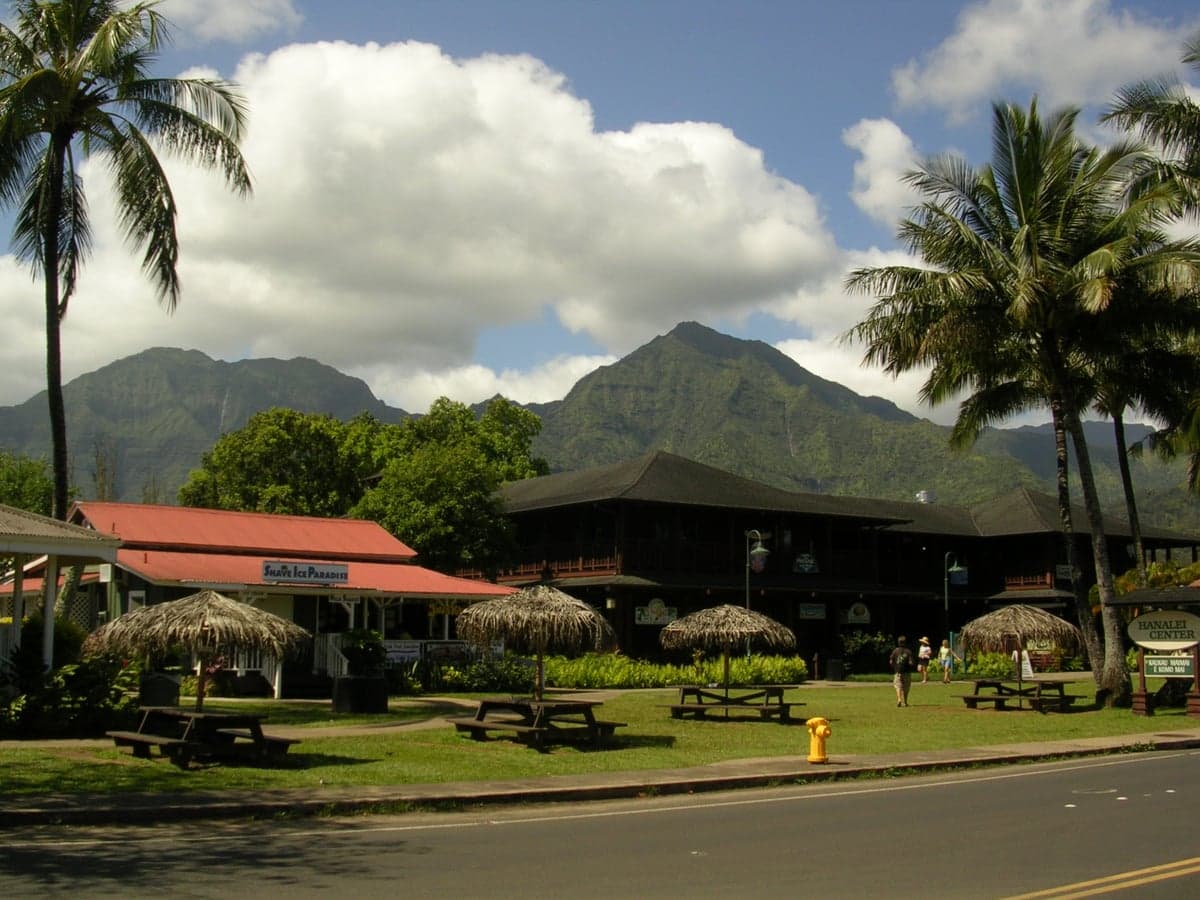
Photo: Wikipedia
Personal Sovereignty in Hanalei, HI
Self-reliance is harder here. Restrictive laws and challenging geography make a self-reliant lifestyle difficult to maintain.
What does Personal Sovereignty tell us?
Personal Sovereignty measures your capacity for self-reliance and independence with minimal government friction. Higher scores mean fewer barriers between you and the way you want to live... but it assumes you have the space you need and good neighbors.
What does this tell us?
Personal Sovereignty measures your capacity for self-reliance and independence with minimal government friction. Higher scores mean fewer barriers between you and the way you want to live... but it assumes you have the space you need and good neighbors.
State Policy
Energy independence: Importer (2% of energy produced in-state)
Personal Liberty
Homesteading

Personal Liberty Analysis
Hanalei, on Kauai’s north shore, presents a paradox for the sovereignty-minded individual: breathtaking natural isolation paired with some of the nation’s most restrictive state-level governance. While the physical remoteness offers a buffer from urban chaos, Hawaii’s centralized, heavily regulated system imposes significant constraints on personal autonomy. For a conservative or survivalist-leaning relocator, Hanalei’s appeal lies in its distance from mainland turmoil, but the trade-off is a legal and political environment that actively limits self-defense, property rights, and self-reliance. The key question is whether the geographic freedom outweighs the regulatory chokehold.
Tax burden and regulatory posture in a remote island economy
Hawaii’s tax climate is among the most aggressive in the nation, and Hanalei offers no escape. The state levies a general excise tax of 4% to 4.5% on nearly all goods and services—including rent and groceries—which functions as a hidden sales tax that hits every transaction. Property taxes are relatively low by mainland standards (around 0.3% of assessed value for owner-occupied homes), but that’s cold comfort when the median home price in Hanalei exceeds $2 million. Income taxes are steep, with a top marginal rate of 11% on earnings over $200,000, and the state taxes capital gains as ordinary income. For a prepper or homesteader, the regulatory posture is even more stifling. Hawaii’s land use commission and county zoning boards exert near-total control over development. Building permits can take years, and any new structure—even a simple shed—requires county approval. The state’s strict environmental and coastal regulations mean that even basic improvements like rainwater catchment systems or solar panels must navigate a bureaucratic maze. This is not a place where you can quietly improve your property without government oversight.
Self-defense and gun law specifics in Hawaii’s restrictive environment
For anyone prioritizing the right to keep and bear arms, Hanalei is a hostile jurisdiction. Hawaii is one of the few states that requires a permit to purchase a firearm, and that permit is issued at the discretion of the county police chief. Concealed carry is effectively banned—the state is a “may-issue” jurisdiction, and as of 2026, no permits are being issued to ordinary citizens. Open carry is also prohibited. The state maintains a registry of all firearms and ammunition purchases, and magazine capacity is limited to 10 rounds. Self-defense with a firearm in the home is legally risky; Hawaii has no “Stand Your Ground” law and imposes a duty to retreat if safely possible. For the survivalist, this means that your primary defense tool is heavily restricted, and any use of force will be scrutinized by a state that is not friendly to gun owners. The practical alternative is less-lethal options like pepper spray or a good dog, but these are poor substitutes when facing a determined threat. The nearest gun-friendly state is Alaska, which is not exactly a quick boat ride away.
Self-reliance and homesteading viability: lot sizes, zoning, and off-grid feasibility
Hanalei’s zoning and geography severely limit traditional homesteading. Most residential lots in the Hanalei valley are small—typically under one acre—and are zoned for single-family dwellings with strict setback and coverage requirements. Agricultural land exists in the taro fields and surrounding hillsides, but it is subject to state agricultural district rules that limit residential structures and require active farming. Off-grid living is technically possible but practically difficult. The county requires connection to the electrical grid if it is available within 300 feet, and solar systems must be permitted and grid-tied. Rainwater catchment is common for irrigation, but potable water systems must meet health department standards. Septic systems are tightly regulated. For a prepper wanting to be fully self-sufficient—growing food, harvesting rainwater, generating power off-grid—the regulatory hurdles are substantial. The climate is forgiving (year-round growing season, abundant rainfall), but the legal framework is not. You can raise chickens and grow vegetables, but don’t expect to build a bunker or a standalone off-grid compound without years of permitting battles.
Personal liberties: parental rights, medical autonomy, speech, and property
Hawaii’s state government has a strong track record of overriding local and parental autonomy. The state mandates comprehensive sex education in public schools, requires vaccination for school attendance with limited exemptions, and has some of the nation’s strictest COVID-era mandates still on the books (including vaccine requirements for state employees and healthcare workers). Parental rights in education are weak; the state board of education sets curriculum without local input, and there is no robust school choice system (charter schools exist but are limited). Medical autonomy is constrained by the state’s single-payer-like healthcare system and strict licensing laws that limit alternative practitioners. Free speech is constitutionally protected, but the state’s broad anti-discrimination laws and hate speech statutes create a chilling effect for those who hold views outside the progressive mainstream. Property rights are the weakest link: the state’s strong eminent domain powers and land use controls mean that your ability to use your land as you see fit is heavily circumscribed. The county can impose conservation easements, and the state can restrict development in flood zones or near streams. For the sovereignty-minded, this is a place where the government is a constant presence in your daily decisions.
In the broader context of U.S. personal sovereignty, Hanalei ranks near the bottom for regulatory freedom but near the top for physical isolation. If your primary concern is escaping mainland social collapse or urban unrest, the remote location and tight-knit community offer a genuine buffer. However, the trade-off is a state government that actively restricts firearms, taxes heavily, controls land use, and limits parental and medical autonomy. For a survivalist or prepper, Hanalei is a beautiful cage—the scenery is world-class, but the bars are real. Compare this to states like Idaho or Montana, where you can own property, carry a firearm, and build off-grid without asking permission, and the contrast is stark. Hanalei is best suited for those who value natural beauty and community over personal liberty, or for those willing to work within the system and accept its constraints. For the uncompromising sovereign individual, it is likely a frustrating and expensive compromise.

* Values derived from national, state, county, city and local statistics and may differ in a specific area. Last updated: 2026-05-15T21:56:50.000Z
Narrative content on this page is AI-generated and may contain mistakes. Verify any details that matter before acting on them.
ReloMaps may earn a commission from affiliate links at no extra cost to you.

