Photo: Wikipedia
Demographics of Hanalei, HI
Affluence Level in Hanalei, HI
A wealthy area with high-earning, well-educated households. Incomes, home values, and educational attainment meaningfully outpace national averages.
People of Hanalei, HI
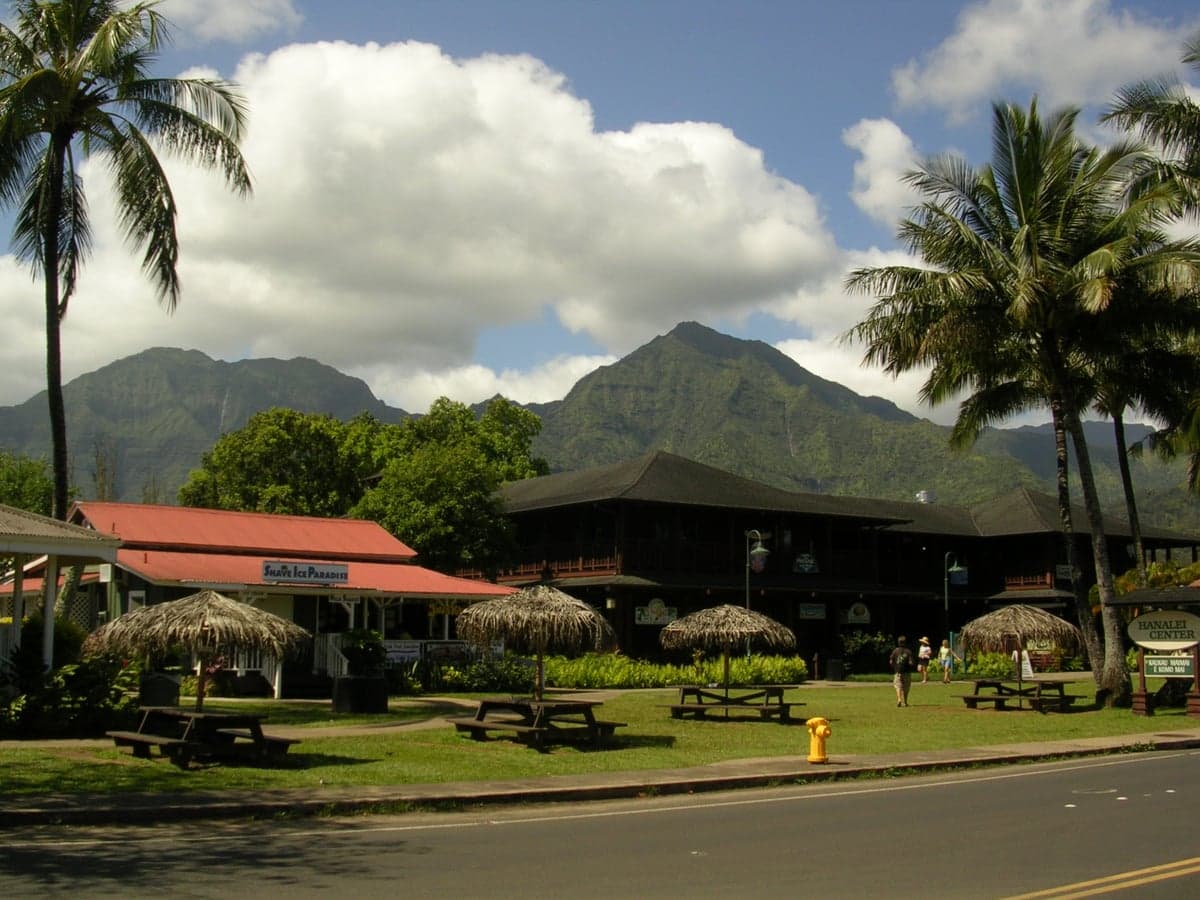
Hanalei, Hawaii, is a small, tight-knit community of 239 residents where Native Hawaiian and East/Southeast Asian heritage remains deeply woven into daily life, alongside a significant white population drawn by the area’s natural beauty and rural character. With a foreign-born share of just 2.9% and a college-educated rate of 64.8%, the population is highly educated yet ethnically stable, reflecting little recent immigration-driven change. The town’s identity is defined by its historic taro fields, surf culture, and a strong sense of place that resists rapid development, making it a distinctive enclave on Kauai’s north shore.
How the city was settled and grew
Hanalei’s human history begins with Native Hawaiians, who established extensive taro cultivation in the Hanalei Valley centuries before Western contact. The ahupuaʻa (traditional land division) system organized life around the Hanalei River, with families living in dispersed clusters along the valley floor and coastal flats. After the 1848 Mahele land division, many Native Hawaiian families retained small parcels, but the 19th century brought waves of Chinese and Japanese laborers to work on rice and sugar plantations. These East/Southeast Asian immigrants settled in what is now Hanalei Town, building modest homes near the pier and along what is today Aku Road. The Hanalei Valley itself remained predominantly Native Hawaiian, with families continuing taro farming through the early 1900s. By the mid-20th century, the sugar industry declined, and many descendants of plantation workers moved to Lihue or Oahu, leaving Hanalei’s population small and predominantly Native Hawaiian and white.
Modern era (post-1965)
The post-1965 era brought a new wave of white in-migrants—surfers, artists, and retirees—drawn by Hanalei’s pristine beaches and the countercultural appeal of Kauai’s north shore. These newcomers settled primarily in Hanalei Colony Resort and along Weowei Road, where vacation rentals and second homes began to replace older housing stock. The 1990s and 2000s saw further white in-migration from mainland states, particularly California, pushing home prices upward and creating tension with long-time Native Hawaiian families. Today, the population is 83.3% white, 10.5% East/Southeast Asian (largely descendants of Chinese and Japanese plantation families), and 0.0% Hispanic or Black. The Asian community remains concentrated in Hanalei Town and along Kuhio Highway near the Hanalei River bridge, where family-owned businesses and older homes persist. The Native Hawaiian population, while not separately tracked in the data, is a visible and culturally influential minority, particularly in the Hanalei Valley where taro farming continues under non-profit stewardship.
The future
Hanalei’s population is likely to remain small and stable, with little growth due to strict zoning, floodplain restrictions, and high property costs. The white share may increase slightly as wealthy retirees and remote workers replace aging residents, while the East/Southeast Asian and Native Hawaiian populations are expected to plateau or slowly decline as younger generations move to more affordable areas on Kauai or the mainland. The foreign-born share (2.9%) is unlikely to rise significantly, as Hanalei lacks the rental housing and job base to attract new immigrants. The community is not tribalizing into distinct enclaves but rather homogenizing into a wealthier, whiter demographic, with long-time families increasingly priced out. The next 10-20 years will likely see continued preservation of historic character, but with fewer Native Hawaiian and Asian residents able to remain in the valley of their ancestors.
For someone moving to Hanalei now, the town offers a culturally rich, rural lifestyle with strong community bonds, but newcomers should expect high housing costs, limited services, and a population that is becoming less diverse over time. The area’s future is one of careful stasis rather than growth, appealing to those who value authenticity and natural beauty over convenience or demographic change.

* Values derived from national, state, county, city and local statistics and may differ in a specific area. Last updated: 2026-05-15T21:56:50.000Z
Narrative content on this page is AI-generated and may contain mistakes. Verify any details that matter before acting on them.
ReloMaps may earn a commission from affiliate links at no extra cost to you.

