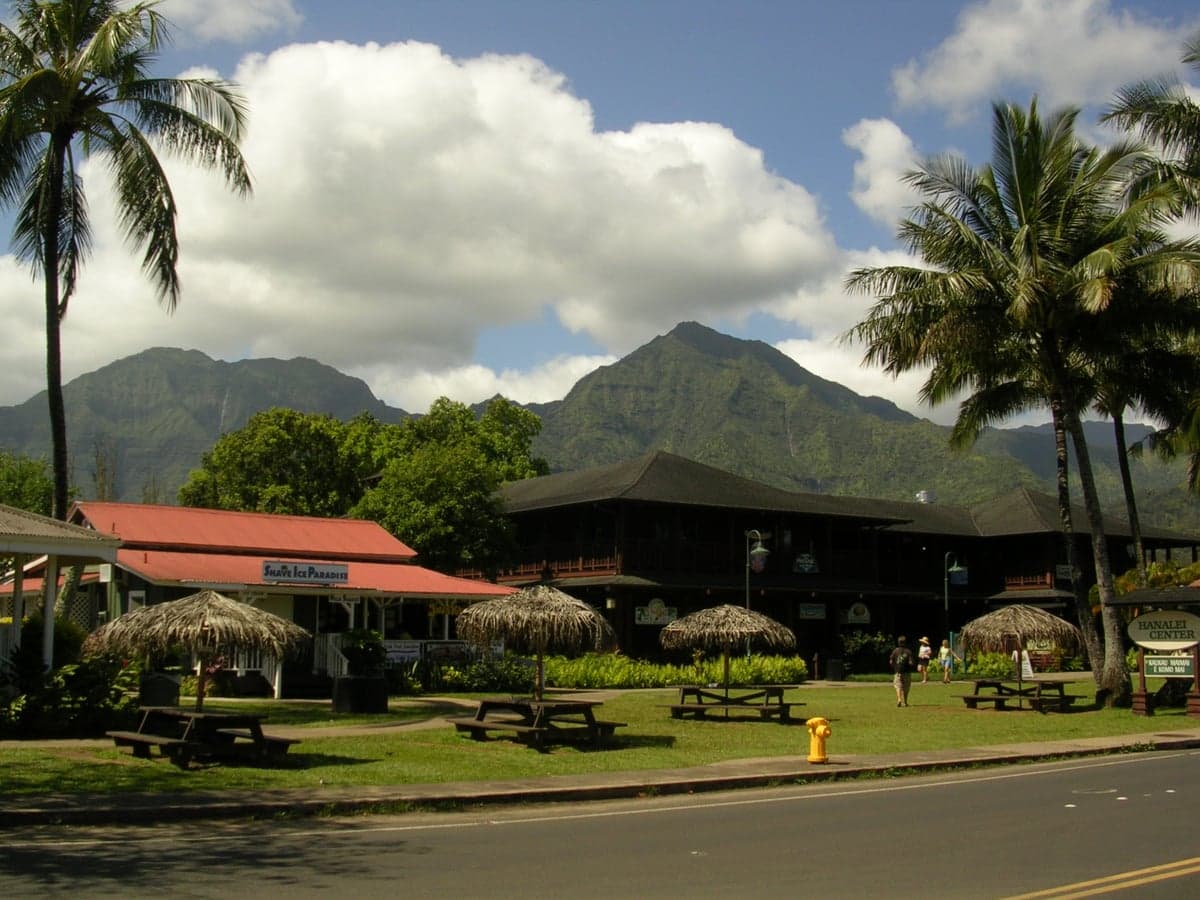
Photo: Wikipedia
Political ClimatePolitical Climate in Hanalei, HI
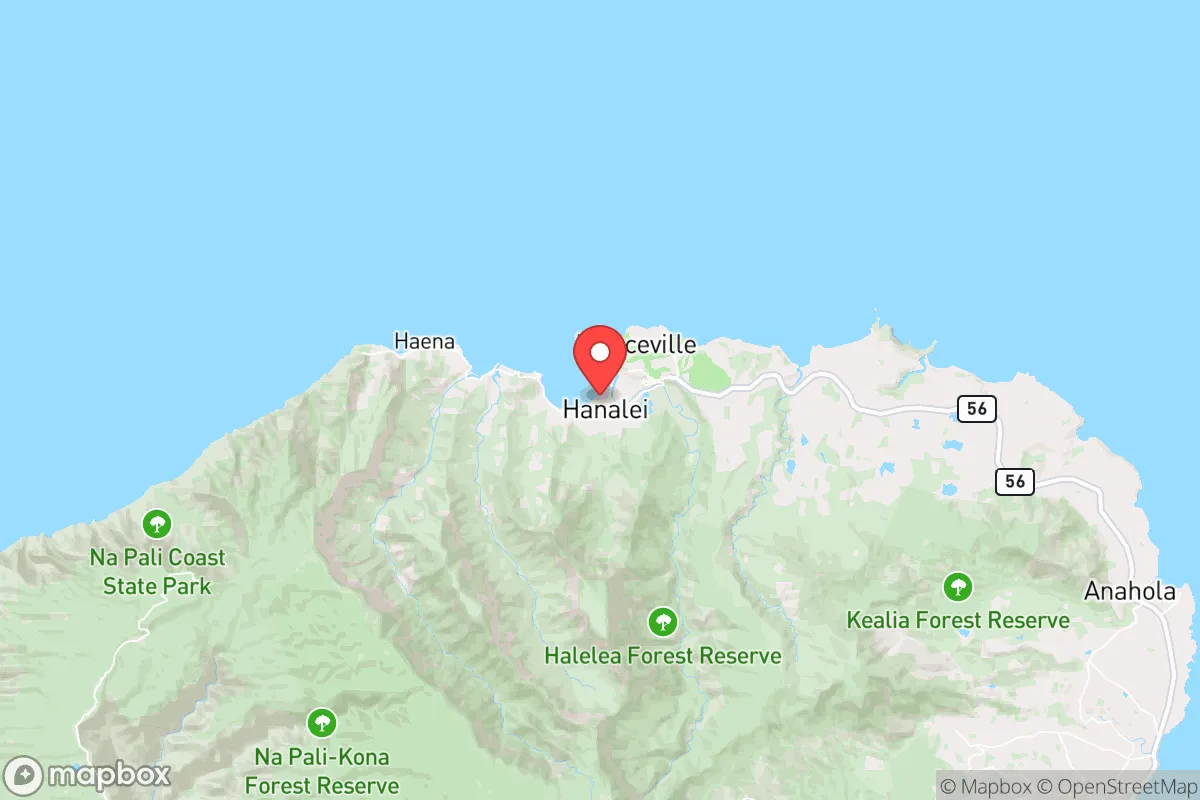
District shown is the primary district for this city’s centroid. Cities may span multiple districts.
Local Political AnalysisPolitical Analysis of Hanalei, HI
Look, I’ve been around Hanalei long enough to remember when this valley was more about quiet living than political posturing. Today, the political climate here leans heavily Democratic, with a Cook PVI of D+12—identical to the state of Hawaii as a whole. That means Hanalei votes about 12 points more Democratic than the national average, and it’s been trending that way for a while. The shift hasn’t been subtle: what was once a community of independent-minded locals and farmers has increasingly become a magnet for progressive transplants from the mainland, bringing with them a whole new set of priorities that don’t always align with the old ways.
How it compares
On paper, Hanalei and the rest of Hawaii share the same D+12 PVI, but the reality on the ground is different. In Honolulu or Hilo, you get a more diverse mix of voters—some conservative-leaning Filipino and Japanese communities, plus a sizable military presence that balances things out. Here on the North Shore of Kauai, it’s a different story. Hanalei is surrounded by smaller towns like Princeville and Kilauea, which are even more uniformly progressive. Drive a half-hour south to Kapaa or Lihue, and you’ll find a more moderate vibe—more working-class families, more folks who hunt and fish and don’t appreciate being told how to live. But in Hanalei itself, the political monoculture is thick. It’s the kind of place where questioning a new plastic bag ban or a vacation rental cap gets you sideways looks at the farmers market.
What this means for residents
For those of us who value personal freedoms and local autonomy, the direction here is concerning. The county council and state legislature have steadily tightened rules on everything from short-term rentals to beach access to building permits. It’s not just about tourism—it’s about a creeping sense that government knows better than you do. Want to fix up your old plantation cottage? Good luck navigating the permitting maze. Want to let your kids play in the river without a lifeguard? There’s a new ordinance for that. The progressive majority sees these as necessary protections; a lot of us see them as overreach. Property taxes are relatively low compared to the mainland, but the cost of living is sky-high, and new regulations keep squeezing the middle class. If you’re thinking of moving here, understand that your voice on local issues will be a minority one, and the trend is only accelerating.
Culturally, Hanalei still holds onto some of its old soul—the taro patches, the surf breaks, the potlucks—but the politics are increasingly out of step with that independent spirit. The long-term trajectory points toward more restrictions, more fees, and more bureaucracy. If you’re a conservative or even a moderate who values personal responsibility over government mandates, you’ll find yourself swimming against a strong current. It’s not a bad place to live if you keep your head down, but don’t expect the political winds to shift anytime soon.

State Political ClimatePolitical Climate in Hawaii
State Political AnalysisPolitical Environment in the State
Hawaii has been a one-party Democratic stronghold for decades, with a Cook PVI of D+12 that makes it one of the most reliably blue states in the nation. The dominant coalition is a mix of unionized government workers, Native Hawaiian advocacy groups, and a progressive-leaning professional class on Oahu, while the Republican Party has been reduced to a fringe presence, holding no statewide offices and only a handful of legislative seats. Over the last 10-20 years, the state has shifted further left, with Democrats consolidating power and pushing policies that many conservatives view as expanding government overreach into personal freedoms, from strict gun control to heavy-handed COVID mandates.
Urban vs. rural divide
The political map of Hawaii is starkly divided between the urban core of Honolulu on Oahu and the more rural, conservative-leaning areas on the neighbor islands. Honolulu and its suburbs, including Waipahu and Kailua, drive the state's Democratic dominance, fueled by a dense population of union households, government employees, and a growing progressive activist base. In contrast, the Big Island's Hilo leans left but is tempered by more conservative pockets in Kona and Waimea, where ranching and agriculture dominate. Maui County, including Kahului and Kihei, is reliably blue, but Kauai shows a slight Republican tilt in its rural north shore areas like Hanalei. The only county that occasionally flips Republican in local races is Hawaii County (the Big Island), where libertarian-leaning farmers and ranchers push back against Honolulu's centralized control. This urban-rural split means that a conservative moving to Hawaii would find more like-minded neighbors in places like Puna or North Kohala than in the dense apartment blocks of Waikiki.
Policy environment
Hawaii's policy environment is a textbook case of progressive governance that many conservatives find alarming. The state has the highest combined tax burden in the nation, with a state income tax that tops out at 11% and a general excise tax (GET) of 4% that applies to nearly all goods and services, including rent and groceries—effectively a hidden sales tax that hits low-income families hardest. Property taxes are relatively low, but the state's regulatory posture is suffocating: building permits can take years, and the cost of living is driven up by strict land-use laws and a powerful public employee union that blocks reform. Education policy is dominated by a single statewide school district, the Hawaii Department of Education, which has been criticized for low test scores and a lack of parental choice; charter schools exist but are heavily restricted. Healthcare is heavily regulated, with a state-run insurance exchange and mandates that drive up premiums. Election laws are among the most restrictive in the nation for third parties, with high ballot access hurdles, and the state has moved to all-mail voting, which conservatives argue reduces election integrity. The legislature has also passed strict gun control laws, including a 2022 ban on carrying firearms in most public places, which was partially struck down by a federal court but remains a flashpoint.
Trajectory & freedom
Hawaii is becoming less free by almost any measure, especially for conservatives who value personal liberty. The state's response to COVID-19 was among the most draconian in the country, with a mandatory 14-day quarantine for all travelers that lasted over a year, effectively cutting off tourism and isolating residents. This was enforced by a "Safe Travels" program that required digital tracking and proof of vaccination or negative tests—a level of government surveillance that many saw as an overreach. On gun rights, the 2022 law (Act 207) banned carrying firearms in parks, beaches, and businesses unless the owner explicitly posts a sign allowing it, effectively making Hawaii a "no-carry" state despite the Supreme Court's Bruen decision. On parental rights, the state has moved to codify LGBTQ+ curriculum in public schools without an opt-out provision, and a 2023 bill (HB 1526) expanded gender-affirming care protections for minors, overriding parental consent in some cases. Property rights are weak: the state's land-use commission can seize land for "public good" with minimal compensation, and the county of Honolulu has used zoning laws to block new housing construction, driving up prices. The only bright spot for conservatives is that the state has no personal property tax on vehicles or boats, and there is no tax on military pensions, which is a small relief for veterans moving in.
Civil unrest & political movements
Hawaii has a history of civil unrest tied to Native Hawaiian sovereignty movements, which sometimes align with conservative anti-government sentiment. The most visible flashpoint in recent years was the Thirty Meter Telescope (TMT) protests on Mauna Kea in 2019, where activists blocked construction of a scientific observatory, citing cultural and environmental concerns. This movement drew support from both left-wing environmentalists and right-wing libertarians who opposed state and university authority. More recently, the 2023 wildfires on Maui sparked protests in Lahaina over the government's slow response and alleged land-grabbing by out-of-state developers, with some residents accusing the state of using the disaster to push redevelopment plans that ignore local input. Immigration politics are less contentious than on the mainland, but the state has a large undocumented population from the Philippines and Micronesia, and Honolulu is a sanctuary city that limits cooperation with ICE. Election integrity has been a low-level concern, with the 2020 and 2022 elections seeing no major scandals, but the move to all-mail voting has raised eyebrows among conservatives who worry about ballot harvesting and lack of in-person verification. Organized conservative movements are small but vocal, with groups like the Hawaii Republican Assembly and the Hawaii Firearms Coalition holding regular rallies at the state capitol. A new resident would notice that political signs are rare, and open conservative expression is often met with social pushback, especially in Honolulu.
Projection
Over the next 5-10 years, Hawaii is likely to become even more progressive, driven by demographic shifts and in-migration patterns. The state's population is aging and declining, with many native-born residents moving to the mainland for lower costs, while new arrivals tend to be wealthy retirees or remote workers from California and the Pacific Northwest who bring their progressive politics with them. The Democratic Party's supermajority in the legislature is unlikely to be challenged, as the GOP remains disorganized and underfunded. Expect more gun control, higher taxes (including a proposed wealth tax on high-value properties), and further expansion of government healthcare. The only wildcard is the growing Native Hawaiian sovereignty movement, which could push for a separate nation or greater autonomy, potentially fracturing the current political order. For a conservative moving in now, the state will feel increasingly hostile to traditional values, with fewer opportunities for school choice, higher taxes, and a culture that stigmatizes conservative viewpoints. The best bet for like-minded community is on the Big Island's rural east side or in parts of Kauai, but even there, the political tide is turning blue.
For a new resident, the bottom line is that Hawaii offers unmatched natural beauty and a unique culture, but it comes with a heavy price tag in both dollars and personal freedom. If you value low taxes, gun rights, school choice, and a government that stays out of your life, this state will be a constant frustration. The best approach is to come with eyes wide open: find a rural county like Hawaii County, get involved in local politics to push back against Honolulu's overreach, and be prepared for a political environment that is unlikely to change in your favor anytime soon. If you can afford the cost of living and tolerate the regulatory burden, the lifestyle is unmatched—but don't expect the state to become more conservative. It's a beautiful cage, and the bars are only getting thicker.
* Values derived from national, state, county, city and local statistics and may differ in a specific area. Last updated: 2026-05-15T21:56:50.000Z
Narrative content on this page is AI-generated and may contain mistakes. Verify any details that matter before acting on them.
ReloMaps may earn a commission from affiliate links at no extra cost to you.

