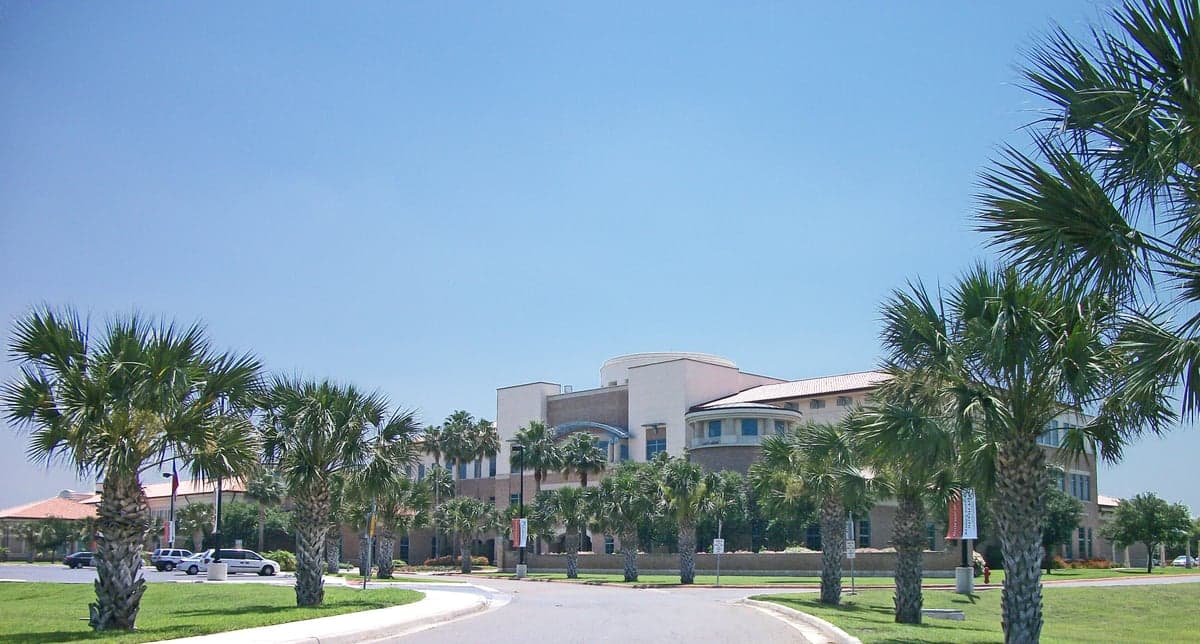
Photo: Wikipedia
Personal Sovereignty in Harlingen, TX
Strong independent fundamentals that actively favor personal liberty and low regulation.
What does Personal Sovereignty tell us?
Personal Sovereignty measures your capacity for self-reliance and independence with minimal government friction. Higher scores mean fewer barriers between you and the way you want to live... but it assumes you have the space you need and good neighbors.
What does this tell us?
Personal Sovereignty measures your capacity for self-reliance and independence with minimal government friction. Higher scores mean fewer barriers between you and the way you want to live... but it assumes you have the space you need and good neighbors.
State Policy
Energy independence: Net exporter (220% of energy produced in-state)
Personal Liberty
Homesteading

Personal Liberty Analysis
For the individual or family who views personal sovereignty as the bedrock of a free life, Harlingen, Texas, offers a strategic foothold in a state that has, for decades, positioned itself as a bulwark against federal overreach. While no location is a perfect fortress against the encroachments of a centralized government, Harlingen’s environment—shaped by Texas’s constitutional framework, its absence of a state income tax, and a deeply ingrained culture of self-reliance—provides a notably higher degree of autonomy than what is found in most of the United States. The city sits in a region where the practical realities of border life have historically demanded a certain level of personal preparedness, and where the legal architecture still largely respects the individual’s right to be left alone, to defend themselves, and to manage their own affairs without excessive bureaucratic interference.
Tax burden and regulatory posture: Keeping more of what you earn
The most immediate and tangible expression of personal sovereignty in Harlingen is its tax environment. Texas levies no state income tax, meaning every dollar you earn is yours to allocate—whether toward supplies, land, savings, or family needs—without the state taking a cut before you even see it. This is a fundamental shift from the high-tax states many relocating families are fleeing. The trade-off is a reliance on property and sales taxes, but the overall burden remains competitive. Cameron County’s property tax rates are moderate by Texas standards, and the lack of a state income tax means a family’s effective tax rate is often significantly lower than in states like California, New York, or Illinois. On the regulatory front, Texas maintains a posture of minimal interference in many areas of daily life. There are no state-level building codes in unincorporated areas of Cameron County, and even within Harlingen city limits, the regulatory touch is lighter than in major metropolitan hubs. For the prepper-minded, this means fewer hurdles for constructing a workshop, installing a rainwater catchment system, or modifying a property for self-sufficiency. The state’s business climate is similarly permissive, with few licensing requirements for small-scale home-based enterprises, which is critical for those seeking to build economic independence outside the corporate system.
Self-defense and gun law specifics: A legal framework for personal protection
For those who view the right to self-defense as non-negotiable, Harlingen sits in a state with some of the most robust protections in the nation. Texas law, including the 2021 permitless carry (constitutional carry) statute, allows law-abiding adults 21 and over to carry a handgun in public without a license. This is not a privilege granted by the state; it is recognized as a pre-existing right. The legal environment in Harlingen reflects this: there are no local ordinances that effectively nullify state preemption on firearms regulations. The city is in a region where firearm ownership is common, and the local culture is generally supportive of the Second Amendment. For the survivalist, this means you can maintain a fully stocked armory for defense against both criminal threats and, in a worst-case scenario, government overreach, without the constant fear of running afoul of local gun control measures. The Castle Doctrine and "Stand Your Ground" laws are fully in effect, meaning there is no duty to retreat before using deadly force in your home, vehicle, or workplace if you are lawfully present and face a threat. This legal clarity removes the ambiguity that can paralyze a person in a life-or-death moment. It is worth noting that while the state framework is strong, federal restrictions (like the NFA) still apply, so suppressors and short-barreled rifles require the usual paperwork—but the state itself will not add additional layers of bureaucracy.
Self-reliance and homesteading viability: Lot sizes, zoning, and off-grid feasibility
Harlingen and its surrounding rural areas offer genuine opportunities for a self-reliant lifestyle that are increasingly rare in modern America. Within the city limits, standard residential lots are often a quarter-acre or larger, but the real potential lies just outside town in the unincorporated areas of Cameron County. Here, zoning restrictions are virtually nonexistent, and lot sizes can range from one to ten acres at prices that are a fraction of what you would pay in the Hill Country or near Austin. This land is flat and fertile, part of the Rio Grande Valley’s agricultural heartland, making it viable for serious gardening, small-scale livestock (chickens, goats, rabbits), and even limited crop production. The climate allows for year-round growing, which is a massive advantage for food security. Off-grid feasibility is high: the region gets ample sun for solar power, and while municipal water is available, many rural properties have access to groundwater for wells. Rainwater harvesting is legal and encouraged. The biggest practical hurdle is the summer heat, which makes passive solar design and adequate insulation critical. For the prepper, the ability to buy a few acres, put up a shipping container or build a modest home, install solar panels, and start producing your own food with minimal government interference is not a fantasy—it is a realistic, achievable goal in the Harlingen area. The local culture, heavily influenced by ranching and farming traditions, also means that skills like animal husbandry, welding, and mechanical repair are still valued and practiced, creating a community of like-minded individuals.
Personal liberties: Parental rights, medical autonomy, speech, and property
On the broader spectrum of personal liberties, Texas—and by extension Harlingen—maintains a posture that is generally favorable to individual sovereignty, though not without its contradictions. Parental rights are strongly protected under Texas law, with statutes that affirm parents as the primary decision-makers for their children’s education, healthcare, and moral upbringing. The state has been a leader in pushing back against federal overreach in education, and local school boards in the Harlingen area are generally responsive to parental concerns. Medical autonomy is a mixed bag: Texas has banned vaccine passports and prohibits employers from mandating vaccines in many cases, but it also has some of the strictest abortion laws in the nation, which some conservatives view as a protection of life rather than a restriction of liberty. For the survivalist, the key point is that the state does not compel medical treatment or forcibly quarantine individuals without due process in the way some states did during the pandemic. Freedom of speech and assembly are robustly protected, and the region’s political climate is heavily conservative, meaning you are unlikely to face social or legal repercussions for expressing dissenting views on government policy. Property rights are also strong, with Texas having some of the most difficult eminent domain laws for the government to exploit—though the border region does see federal land management issues that can create friction. The overall legal environment is one where the default assumption is that the individual is free to act unless a specific law prohibits it, rather than the other way around.
In the final analysis, Harlingen offers a level of personal sovereignty that is increasingly difficult to find in the United States. It is not a libertarian utopia—you still pay property taxes, you must register your vehicle, and the federal government’s presence is felt through border security and environmental regulations. But compared to the heavily regulated, high-tax, and culturally coercive environments of the West Coast, the Northeast, or even parts of the Midwest, the Rio Grande Valley stands out as a place where a person can live largely on their own terms. The combination of no state income tax, constitutional carry, minimal zoning, affordable land for homesteading, and strong protections for parental and property rights creates a strategic environment for anyone serious about building a resilient, self-determined life. For the conservative-minded individual or family looking to opt out of the declining system and establish a foothold in a region that still respects the individual, Harlingen is a viable and underappreciated option.

* Values derived from national, state, county, city and local statistics and may differ in a specific area. Last updated: 2026-05-12T00:03:21.000Z
Narrative content on this page is AI-generated and may contain mistakes. Verify any details that matter before acting on them.
ReloMaps may earn a commission from affiliate links at no extra cost to you.

