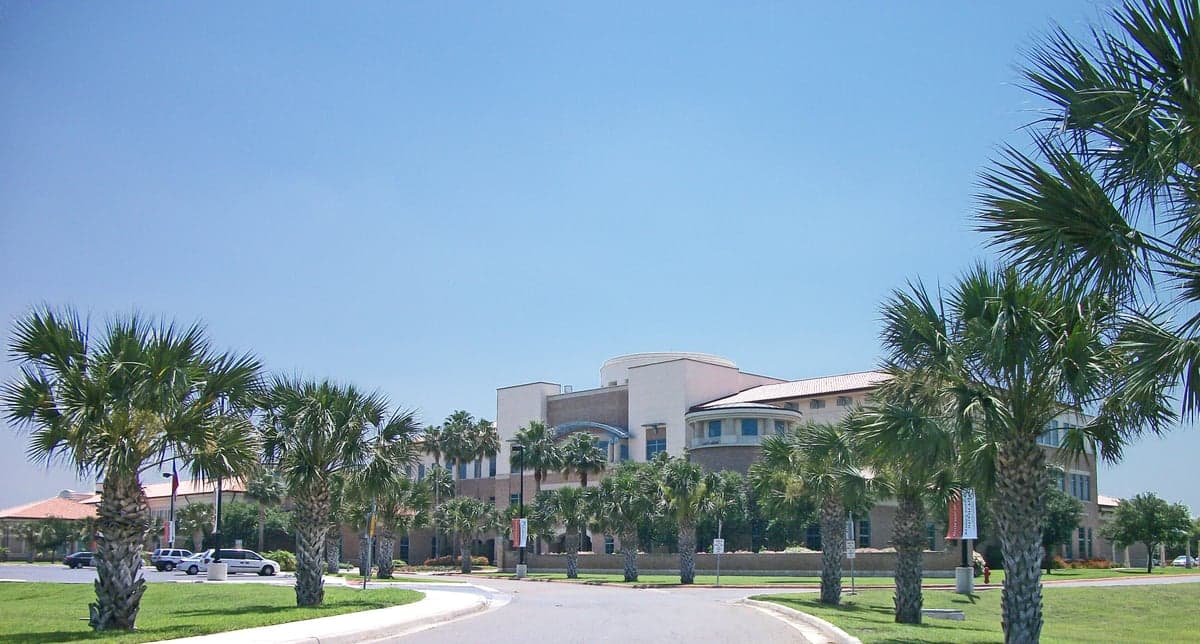

Photo: Wikipedia
Political ClimatePolitical Climate in Harlingen, TX
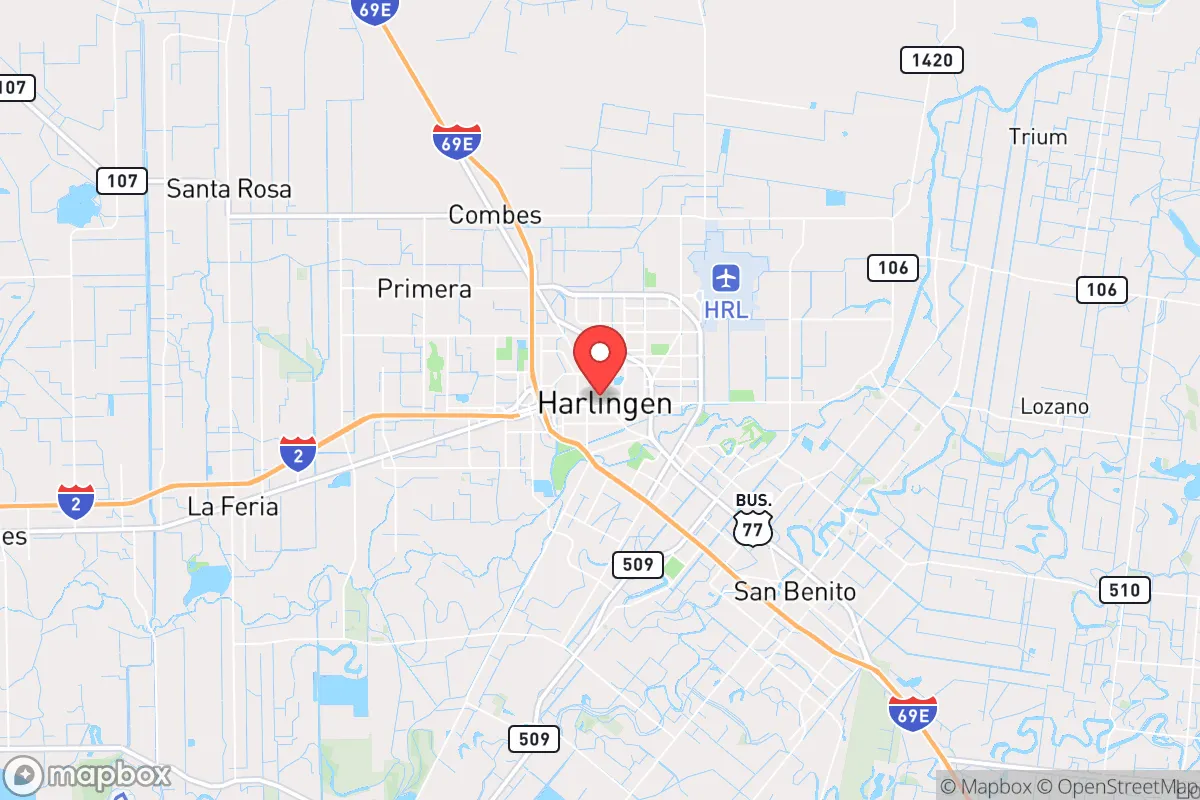
District shown is the primary district for this city’s centroid. Cities may span multiple districts.
Local Political AnalysisPolitical Analysis of Harlingen, TX
Harlingen has always been a bit of a political oddball in the Rio Grande Valley. For decades, it was reliably Democratic, but that was the old-school, conservative Democrat kind—pro-business, pro-military, and socially moderate to conservative. That’s shifting. The Cook PVI rating of EVEN tells you it’s a true battleground now, and if you’ve lived here as long as I have, you can feel the tension. The old guard is fading, and you’re seeing more progressive energy creeping in from the university and younger transplants, while the surrounding rural areas and towns like San Benito and Los Fresnos are staying solidly red. The trajectory is toward a split, but the conservative base here is still strong—it’s just fighting for air.
How it compares
Compared to the rest of Texas, which sits at R+4, Harlingen is noticeably more purple. That means you get a lot more back-and-forth on local issues than you would in, say, McAllen to the west, which leans further left, or in the deeply conservative ranch country north of here. In the state legislature, Harlingen’s district has flipped between parties a couple times in the last decade, which is rare for the Valley. What that means on the ground is that you’ll hear a lot of talk about “bipartisanship,” but in practice, it often leads to gridlock on things like property tax relief or school choice. The contrast with the rest of Texas is stark: while the state is pushing back hard on federal overreach, Harlingen’s local leadership sometimes seems more willing to accept mandates from Austin or Washington, which rubs a lot of us the wrong way.
What this means for residents
For folks who value personal freedom and limited government, the political climate here can be frustrating. You’ll see city council debates over things like mask mandates or zoning restrictions that feel like they’re testing how far they can push before people push back. The good news is that the conservative vote is organized—groups like the local GOP and the Tea Party-aligned activists are active and vocal. They’ve successfully blocked a few attempts to raise local sales taxes and fought off a proposed “equity” ordinance that would have tied up small businesses in red tape. But you have to stay engaged. If you sit back, the progressive side will fill the vacuum, and that’s when you start seeing government creep into decisions that should be yours alone—like how you run your business or what your kids learn in school.
One thing that sets Harlingen apart culturally is the strong military presence from the Marine Corps Air Station and the VA hospital. That keeps a lot of folks grounded in traditional values—patriotism, self-reliance, respect for service. You don’t see that as much in Brownsville or even in parts of McAllen. The local economy is also heavily tied to agriculture and healthcare, not tech or big corporate transplants, so the political conversation tends to stay practical: water rights, border security, and keeping taxes low. The long-term worry is that as more people move in from blue states, they’ll bring their voting habits with them. For now, though, Harlingen is still a place where a conservative can live without feeling like an outsider—you just have to keep an eye on the city council meetings and vote in every local election. That’s the only way to keep the government off your back and out of your wallet.

State Political ClimatePolitical Climate in Texas
State Political AnalysisPolitical Environment in the State
Texas has been a reliably Republican state for decades, with a Cook PVI of R+4, but the coalition that keeps it red is shifting under your feet. The dominant coalition is still conservative — pro-business, pro-gun, and skeptical of federal overreach — but the margin of victory has tightened from double digits in the 2000s to single digits in recent cycles. Over the last 10-20 years, the state has moved from a solid red fortress to a lean-red battleground, driven by explosive growth in the urban cores of Austin, Dallas, Houston, and San Antonio, while the rural and exurban counties have only grown more conservative in response.
Urban vs. rural divide
The political map of Texas is a tale of two worlds. The major metros — Austin (Travis County), Dallas (Dallas County), Houston (Harris County), and San Antonio (Bexar County) — have all trended blue over the past decade, with Travis County now voting +40 Democratic and Harris County flipping blue in 2018. Meanwhile, the rural and exurban counties — think Collin County (north of Dallas), Montgomery County (north of Houston), and Kendall County (west of San Antonio) — have become even more Republican, often voting +30 to +50 points red. The real action is in the suburbs: places like Fort Bend County (southwest of Houston) flipped from red to purple to blue over the last 15 years, while Denton County (north of Dallas) has held its red lean but with shrinking margins. The Rio Grande Valley — traditionally Democratic — has seen a notable shift toward Republicans, with counties like Zapata and Starr moving double digits right in 2020 and 2024, driven by conservative social values and frustration with border policy.
Policy environment
Texas’s policy environment is a mixed bag for conservatives. On the plus side, there is no state income tax, which is a massive draw for families and businesses. Property taxes are high — among the highest in the nation — but the state has used budget surpluses to buy down school tax rates in recent years. The regulatory posture is generally light-touch, with no state-level occupational licensing for many trades and a business-friendly tort system. On education, the state has expanded school choice through Education Savings Accounts (HB 3 in 2023) and charter schools, though rural districts have pushed back. Healthcare is a sore spot: Texas has not expanded Medicaid, leaving many low-income families uninsured, but the state has also banned vaccine mandates for private employers (SB 7 in 2023) and protected medical freedom of conscience. Election laws have tightened: SB 1 (2021) restricted mail-in voting, added ID requirements, and banned 24-hour and drive-through voting, which conservatives see as securing election integrity but critics call suppression. The state also passed a near-total abortion ban (SB 8, 2021) with a unique private enforcement mechanism, and a permitless carry law (HB 1927, 2021) for firearms.
Trajectory & freedom
On balance, Texas has become more free in some areas and less free in others over the last five years. The good news for conservatives: the state expanded gun rights with permitless carry, protected parental rights in education (HB 3979, 2021, which limits critical race theory instruction), and banned COVID-19 vaccine mandates for private employers and government entities. The state also passed a law (SB 14, 2023) banning gender transition procedures for minors, which is a major win for parental rights advocates. On the concerning side, property rights have taken a hit: the state’s use of eminent domain for private infrastructure projects (like the Dallas-to-Houston high-speed rail) has angered landowners. Additionally, the state’s abortion travel ban (SB 8) and efforts to prosecute out-of-state providers have raised questions about interstate freedom. The biggest threat to liberty, however, is the property tax burden — while the state has no income tax, the effective tax rate on a median home in Austin or Dallas can exceed 2.5%, which feels like a hidden income tax for homeowners.
Civil unrest & political movements
Texas has seen its share of political flashpoints. The 2020 George Floyd protests in Austin and Houston were large and occasionally violent, leading to property damage and a lasting distrust between police and activists. The “Defund the Police” movement gained traction in Austin, where the city council cut the police budget by $150 million in 2020 — only to reverse course after a spike in violent crime. Immigration politics are a constant firestorm: the state’s Operation Lone Star (2021) deployed state troopers and National Guard to the border, busing migrants to New York, Chicago, and Denver. This has been popular with conservatives but has drawn lawsuits and federal pushback. The “Texit” movement — secession rhetoric — is mostly fringe but has a vocal minority, especially after the 2020 election. Election integrity remains a hot-button issue: the 2020 and 2022 cycles saw lawsuits over mail-in ballots and voter roll purges, and the state’s new election laws have been challenged in court. A new resident will notice the political polarization in everyday life — yard signs, bumper stickers, and conversations at the grocery store are more charged than in most states.
Projection
Over the next 5-10 years, Texas is likely to remain Republican but with a shrinking margin. The demographic trends are clear: the state is growing fast, and most new arrivals come from blue states like California and New York. These transplants tend to be moderate-to-liberal on social issues but conservative on taxes and business — a mix that could push the state toward a more libertarian-leaning Republicanism or, if the GOP overreaches on social issues, toward a purple status. The Rio Grande Valley shift toward Republicans may continue, offsetting losses in the suburbs. The biggest wildcard is the Hispanic vote: if Republicans continue to gain ground with working-class Hispanic voters (as seen in Zapata County flipping red in 2020), the state could stay red for another decade. If the GOP alienates suburban women and college-educated voters with hardline abortion bans or book bans, the state could flip blue by 2032. A new resident moving in now should expect a state that is still conservative but increasingly contested, with a political climate that feels more like Ohio than Alabama.
For a conservative family or individual, Texas still offers a strong package: no income tax, gun rights, school choice, and a growing economy. But the political landscape is no longer a sure thing. The state is becoming more polarized, with urban areas drifting left and rural areas digging in. If you value local control and limited government, you’ll find plenty of like-minded communities — just avoid the city limits of Austin and Dallas if you want to keep your politics to yourself. The bottom line: Texas is still a good bet for conservatives, but it’s no longer a lock. Pay attention to the suburbs — that’s where the future of the state will be decided.
* Values derived from national, state, county, city and local statistics and may differ in a specific area. Last updated: 2026-05-12T00:03:21.000Z
Narrative content on this page is AI-generated and may contain mistakes. Verify any details that matter before acting on them.
ReloMaps may earn a commission from affiliate links at no extra cost to you.

