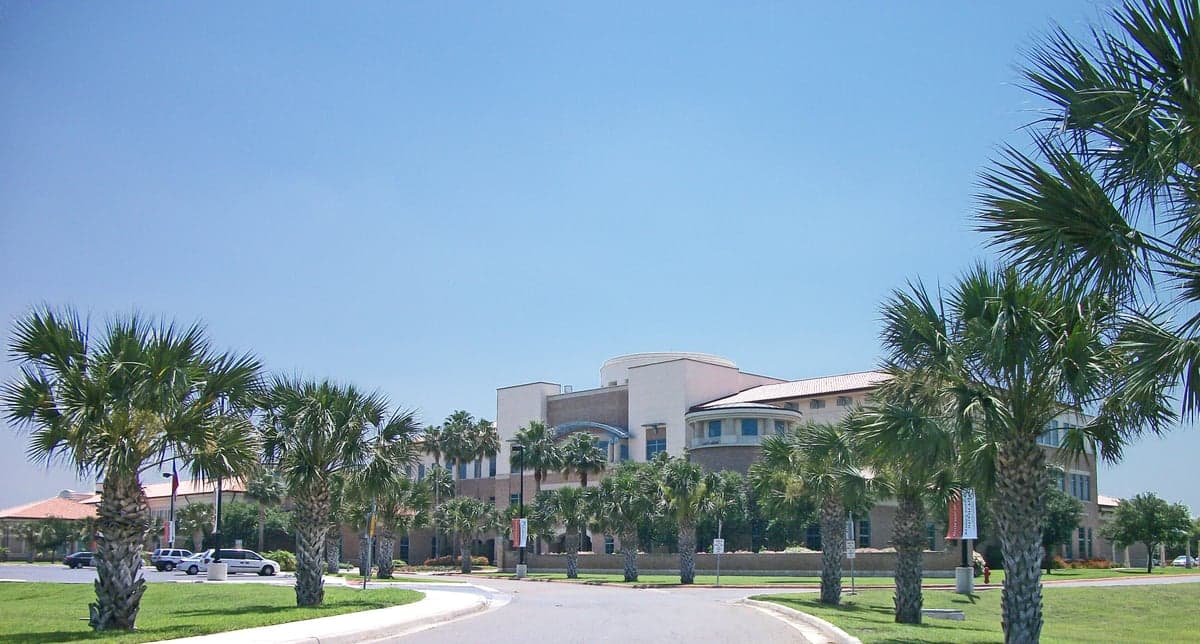
Photo: Wikipedia
Strategic Assessment of Harlingen, TX
Meaningful friction. Expect exposure to either population pressure, blast zones, or natural disaster risk. Consider buying a retreat property.
What does the Strategic Assessment tell us?
Our Strategic Assessment grades tactical survivability of an area. Major population centers, military targets, fallout zones, natural disasters, and border exposure all drive risk — lower exposure means a more defensible position in a crisis.
This is heavily inspired by Joel Skousen's Strategic Relocation book. Highly recommended you checkout the book ($)What does this tell us?
Our Strategic Assessment grades tactical survivability of an area. Major population centers, military targets, fallout zones, natural disasters, and border exposure all drive risk — lower exposure means a more defensible position in a crisis.
This is heavily inspired by Joel Skousen's Strategic Relocation book. Highly recommended you checkout the book ($)Strategic Pillars

Key Distances
Regional Safe Places
Below is our recommended "safe zones" in Texas and the surrounding area based on our strategic heuristics. For most people, it's unrealistic to live in a “safe zone” full-time due to work, family or other personal reasons. They tend to be more rural. However, many of these areas are perfect for second homes and retreat properties that double as a vacation home or even a short-term rental.

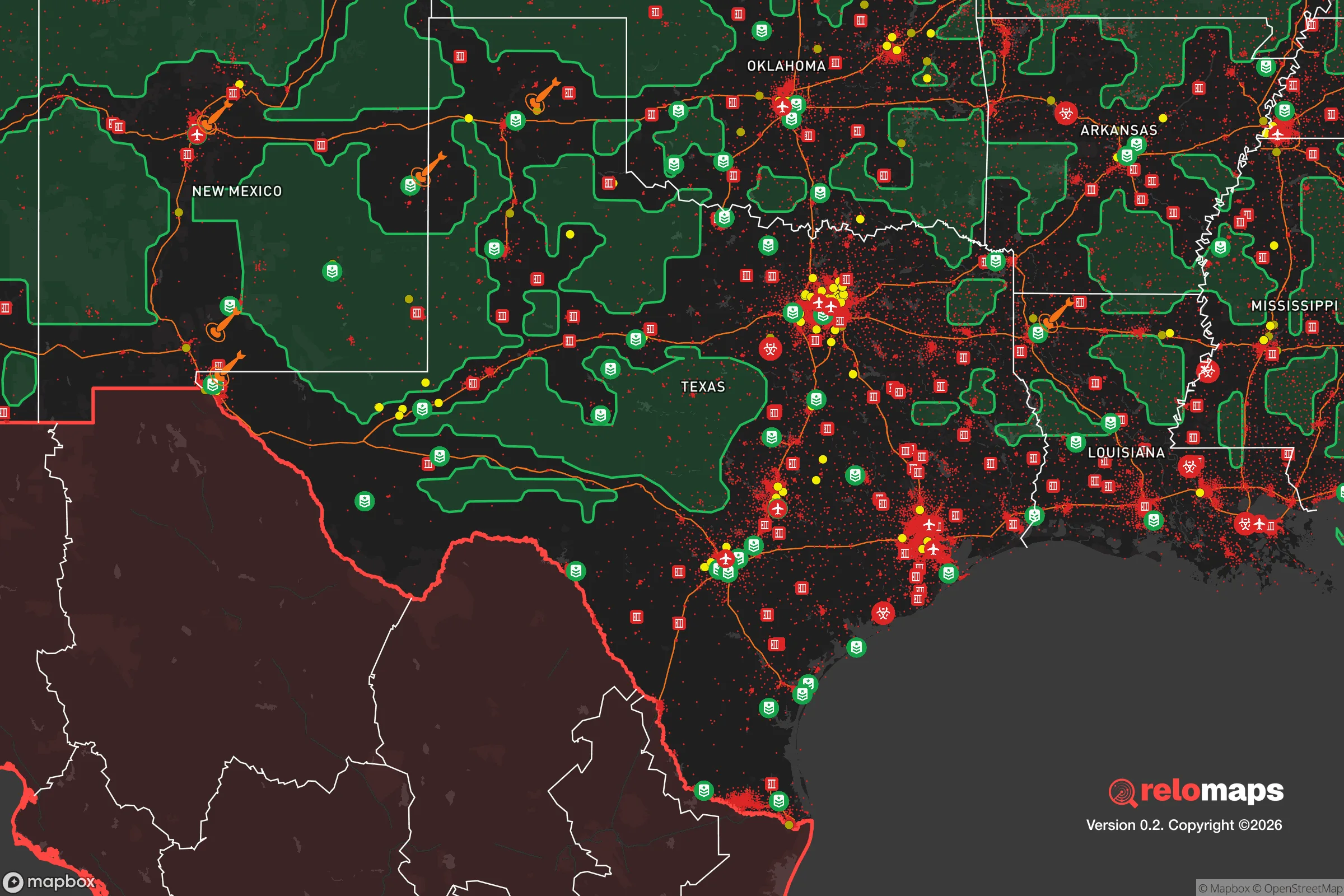


Important Note: For informational purposes only. This does not mean nothing bad ever happens in the green zones. Please use common sense. This is based on public data and modeled with AI. We tried to take a conservative approach but mistakes happen. We update this regularly as new information becomes available.
Solar Generator Recommendations
Backup power matters more here than in safer locations. We've picked three solar generators across budgets and capacity tiers — start with the budget unit if you only need a few essentials, or step up if you want to run a fridge and HVAC for days at a time.

Jackery Portable Power Station Explorer 300
Budget OptionPower on the Go: Weighing only 11 lbs, it's convenient to set up and store with book-sized foldable solar panels

BLUETTI Portable Power Station AC180
Designed for both indoor and outdoor scenarios, AC180 is highly capable as it has a robost capacity and continuous output power.

EF ECOFLOW DELTA Pro Ultra Power Station
Upgraded PickEcoFlow DELTA Pro Ultra is a whole-home energy system designed to grow with your family. Integrated with the Smart Home Panel 2, it scales to meet your evolving energy needs — keeping your home powered, intelligent, and secure through every stage of life.
We earn a commission, at no additional cost to you.
Strategic Assessment Analysis
Harlingen, Texas, offers a compelling mix of strategic depth and practical resilience for those looking to distance themselves from the fragility of major urban centers. Its position in the Rio Grande Valley, roughly 30 miles from the Gulf Coast and 20 miles from the Mexican border, provides a unique buffer zone—close enough to leverage regional infrastructure, yet far enough from the immediate blast radius of a major port or border crossing. For the prepper or survivalist, this isn't just a town; it's a fallback position with a distinct set of natural advantages and hard-to-ignore vulnerabilities.
Geographic position and natural buffers: why the Valley matters
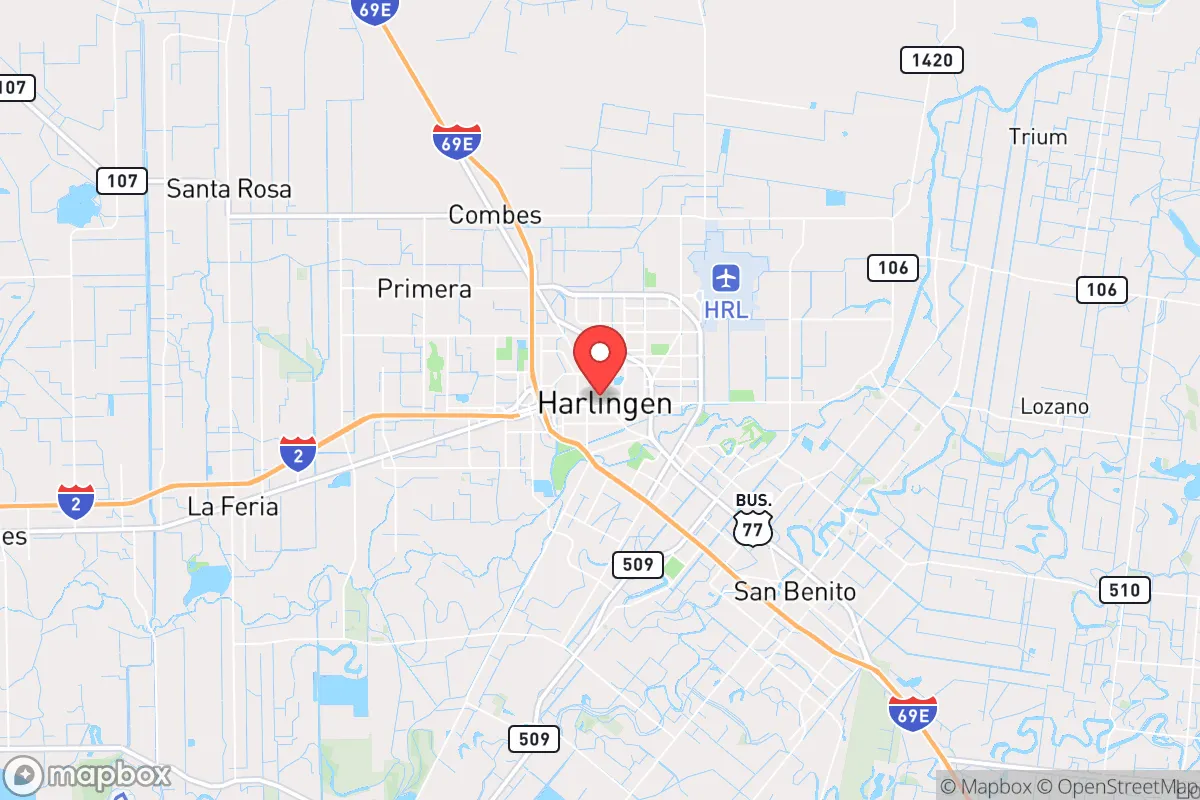
Harlingen sits on the western edge of the Laguna Madre, a hypersaline lagoon that acts as a natural barrier against storm surge—though not a perfect one. The area is part of the Lower Rio Grande Valley, a subtropical floodplain that historically has been a breadbasket for the region. The soil is rich, the growing season is nearly year-round, and the water table is relatively high, meaning well water is accessible for those who know how to tap it. The city itself is laid out on a grid, with the Arroyo Colorado—a slow-moving river—running through the southern edge, offering a potential water source and a natural defensive line. For a relocator, the key advantage is distance from high-value targets: Harlingen is over 250 miles from Houston, 150 miles from Corpus Christi, and 350 miles from San Antonio. No major military bases, no nuclear power plants, no major refineries sit within a 50-mile radius. The closest strategic infrastructure is the Port of Brownsville (30 miles south) and the SpaceX launch facility at Boca Chica (40 miles east), both of which are potential flashpoints in a crisis but are far enough away that a direct fallout event would likely not affect Harlingen's core.
Risks, exposures, and proximity to fallout-relevant landmarks
Let's be blunt: the Valley is not a fortress. The biggest risk is proximity to the U.S.-Mexico border. In a scenario of widespread civil unrest or a collapse of federal authority, Harlingen could become a chokepoint for northbound migration, with the potential for cartel activity spilling over. The city is a major hub for Border Patrol operations, and the nearby ports of entry (Hidalgo, Pharr, Brownsville) are high-traffic zones. A mass casualty event or biological incident originating from the border would hit Harlingen within hours. Additionally, the area is prone to hurricanes—Harlingen is in the direct path of storms that form in the Gulf. Hurricane Dolly (2008) and Hurricane Hanna (2020) both caused significant flooding and power outages. The city's drainage infrastructure is aging, and low-lying neighborhoods near the Arroyo Colorado are at risk. On the plus side, there are no nuclear reactors, no major chemical plants, and no large-scale ammunition depots within 100 miles. The nearest nuclear facility is the South Texas Nuclear Generating Station near Bay City, over 200 miles north—well outside any plausible fallout zone. The biggest man-made risk is the natural gas pipelines that run through the region; a rupture or sabotage could cause localized fires, but not a widespread contamination event.
Practical resilience for a relocator: food, water, energy, and defensibility
For the individual or family looking to hunker down, Harlingen offers a surprisingly strong baseline. Water is the first win: the Rio Grande River is 20 miles west, and the area's shallow aquifer means many rural properties have working wells. The city's municipal water comes from the Rio Grande via the American Canal, but in a grid-down scenario, a well with a hand pump or a solar-powered pump is a realistic option. Food production is viable: the Valley is one of the most productive agricultural regions in Texas, with citrus, sugarcane, and vegetables grown locally. Farmers' markets and roadside stands are common, and the growing season allows for year-round gardening. For energy, the grid is tied to the Texas Interconnection (ERCOT), which is notoriously fragile during winter storms (see 2021's Winter Storm Uri). However, solar potential is excellent—Harlingen averages over 260 sunny days per year. A modest solar array with battery storage can keep a fridge, lights, and a well pump running indefinitely. Defensibility is mixed. The city is flat and open, with no natural high ground. But the layout is suburban, with many homes on large lots (quarter-acre or more) that allow for perimeter fencing and gardens. The population density is low enough that a determined group could secure a neighborhood without being overwhelmed. The biggest defensive weakness is the highway network: U.S. 77 and U.S. 83 converge here, making it a natural funnel for displaced populations. In a crisis, controlling access to these roads would be critical.
The overall strategic picture: a calculated trade-off
Harlingen is not a bug-out location for the lone wolf; it's a community-oriented fallback for those willing to invest in local relationships and infrastructure. The trade-off is clear: you trade the high security of a remote mountain retreat for the practical advantages of a fertile, water-rich, low-population-density area with a long growing season. The border proximity is a double-edged sword—it brings risk of spillover violence but also a steady supply of cheap labor and goods in normal times. For the conservative prepper who values self-sufficiency, community, and distance from the chaos of megacities, Harlingen offers a viable middle ground. It's not a fortress, but it's a place where a prepared family can build a sustainable life with a reasonable expectation of surviving the first wave of a national crisis. The key is to arrive before the crisis, not during it. If you wait until the news breaks, the highways will be clogged, and the Valley will be a trap. But if you're already here, with a well, a garden, and a few like-minded neighbors, Harlingen could be one of the most survivable spots in Texas.

* Values derived from national, state, county, city and local statistics and may differ in a specific area. Last updated: 2026-05-12T00:03:21.000Z
Narrative content on this page is AI-generated and may contain mistakes. Verify any details that matter before acting on them.
ReloMaps may earn a commission from affiliate links at no extra cost to you.

