Photo: Wikipedia
Demographics of Harrisburg, SD
Affluence Level in Harrisburg, SD
An upper-middle-class area. Household wealth, education levels, and homeownership run ahead of national benchmarks.
People of Harrisburg, SD
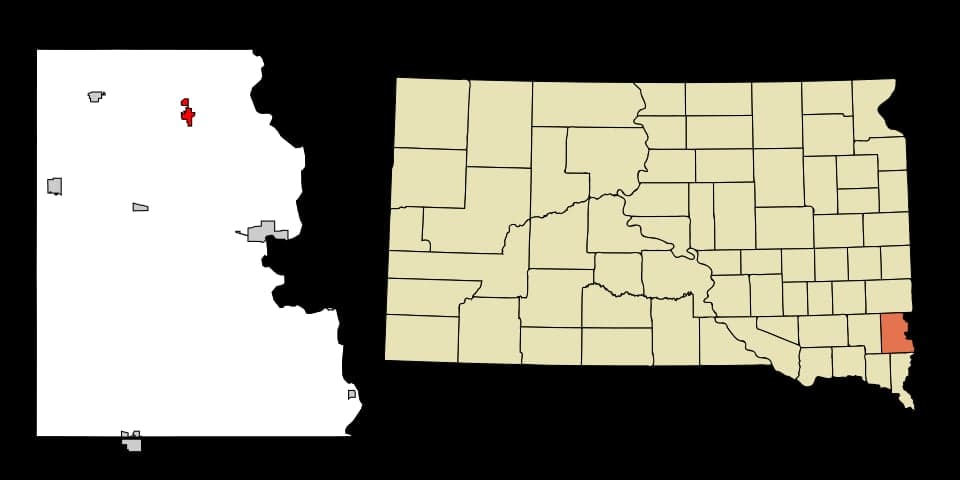
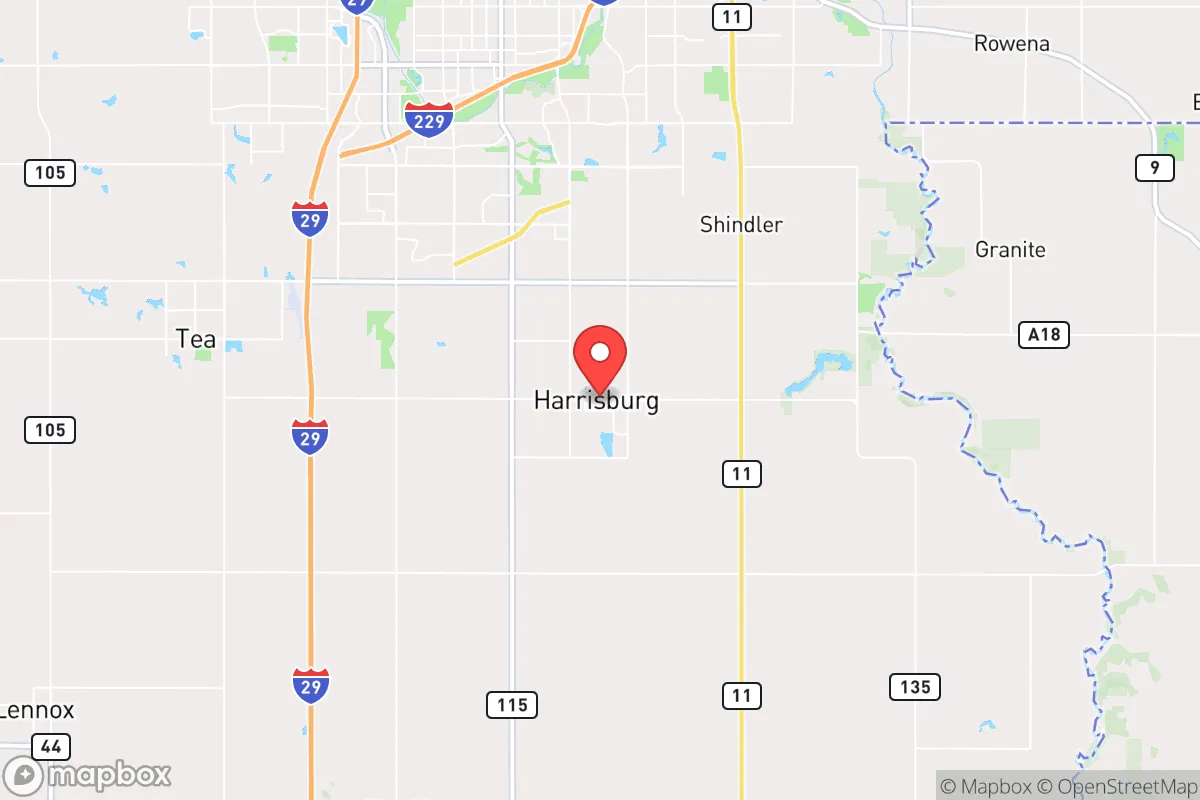
Harrisburg, South Dakota, is a fast-growing, predominantly white suburban community of 7,790 residents that has transformed from a rural railroad town into a bedroom community for Sioux Falls. The city is characterized by its family-oriented character, high homeownership rates, and a population that is 90.1% white with a very small foreign-born share of just 0.5%. With 40.5% of adults holding a college degree, Harrisburg attracts professionals and young families seeking newer housing stock, strong schools, and a conservative-leaning environment within commuting distance of South Dakota's largest metro area.
How the city was settled and grew
Harrisburg's original population was drawn by the railroad and fertile farmland in the late 19th century. Founded in 1879 as a stop on the Chicago, Milwaukee & St. Paul Railway, the town attracted Northern European immigrants—primarily Norwegian, German, and Dutch farmers—who established homesteads on the surrounding prairie. The original settlement clustered around the railroad depot and Main Street, an area now referred to as Old Town Harrisburg, where the first grain elevators, general stores, and churches were built. A second wave of settlers arrived during the early 1900s land boom, filling out the agricultural grid to the north and west in what is now the Western Acres neighborhood, a zone of older farmsteads and mid-century ranch homes. The town remained a small agricultural service center for decades, with its population hovering around 200–300 residents through the 1950s, as most families were directly tied to farming or the railroad.
Modern era (post-1965)
The post-1965 era brought no significant immigration from the Hart-Cellar Act changes; instead, Harrisburg's modern growth has been driven entirely by domestic in-migration from within South Dakota and neighboring Midwestern states. The key turning point came in the 1990s and 2000s, as Sioux Falls expanded southward and Harrisburg became a prime destination for families seeking larger lots and newer homes. The Prairie Crossing subdivision, developed in the early 2000s, absorbed the first wave of these relocating families—mostly white, college-educated professionals working in Sioux Falls' healthcare, finance, and manufacturing sectors. The Whispering Creek neighborhood, built in the 2010s, continued this trend, attracting younger families with its mix of single-family homes and proximity to the highly rated Harrisburg School District. The city's Hispanic population, now 4.4%, is a small but growing presence, concentrated in the Sunset Ridge area, where some families work in construction and service industries tied to Sioux Falls' broader economy. The East/Southeast Asian community (0.8%) is scattered across newer subdivisions, with no single ethnic enclave forming. The Black population remains at 0.0%, and the Indian-subcontinent population is also 0.0%, reflecting the city's limited draw for immigrant communities compared to Sioux Falls proper.
The future
Harrisburg's population trajectory points toward continued homogenization rather than diversification. The city's population has more than doubled since 2000, and annexations of surrounding farmland are planned to accommodate another 3,000–5,000 homes over the next decade. The North Creek Estates development, currently under construction, will add several hundred single-family homes, likely attracting more white, college-educated families from within the region. The Hispanic share may grow modestly as service-sector employment expands, but the foreign-born rate (0.5%) is unlikely to rise significantly given the city's lack of rental housing stock and limited public transit. The city is not tribalizing into distinct ethnic enclaves; instead, it is becoming more uniformly middle-to-upper-middle-class and white, with new subdivisions reinforcing the existing demographic pattern. The next 10–20 years will likely see Harrisburg solidify its identity as a high-amenity, low-diversity suburb where population growth comes almost entirely from domestic migration of families seeking the same attributes that drew the current residents.
For someone moving in now, Harrisburg is becoming a stable, family-centric suburb where the population is growing rapidly but not diversifying. The city offers a predictable, low-crime environment with strong schools and a conservative political culture, but it lacks the ethnic variety or immigrant-driven dynamism found in larger metros. New residents should expect a community that is welcoming to those who fit its existing demographic profile, with limited infrastructure for non-English speakers or rental-based newcomers.

* Values derived from national, state, county, city and local statistics and may differ in a specific area. Last updated: 2026-04-19T04:24:08.000Z
Narrative content on this page is AI-generated and may contain mistakes. Verify any details that matter before acting on them.
ReloMaps may earn a commission from affiliate links at no extra cost to you.

