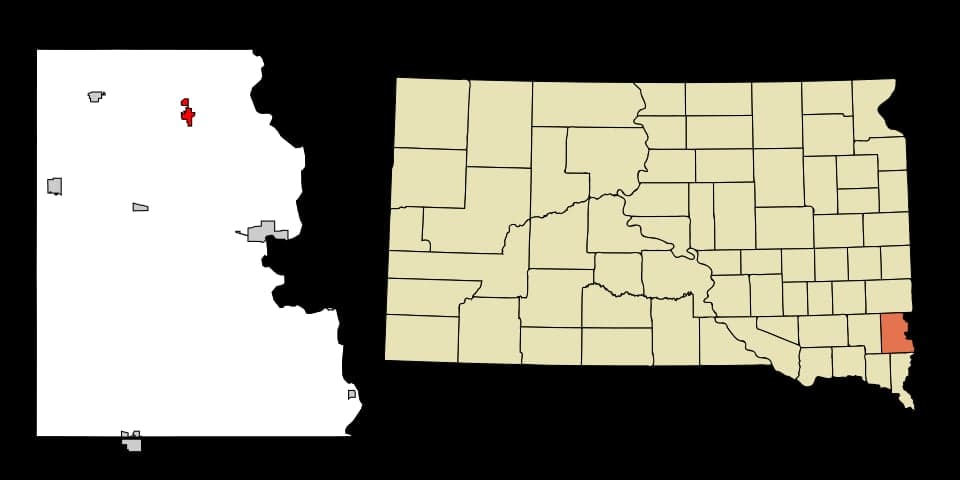
Photo: Wikipedia
Political ClimatePolitical Climate in Harrisburg, SD
District shown is the primary district for this city’s centroid. Cities may span multiple districts.
Inherited from parent state — no local data available.
Local Political AnalysisPolitical Analysis of Harrisburg, SD
Harrisburg, South Dakota, is about as solidly conservative as they come, with a Cook PVI of R+15 that tells you everything you need to know about the local voting habits. This isn't a recent shift either; the area has long been a stronghold for traditional values and limited government, and while the rapid growth from Sioux Falls spillover has brought new faces, the political DNA here hasn't budged much. If anything, the influx of families looking for good schools and a quieter life has reinforced the conservative bent, because most folks moving out here are doing it to escape the kind of progressive policies you see creeping into bigger cities.
How it compares
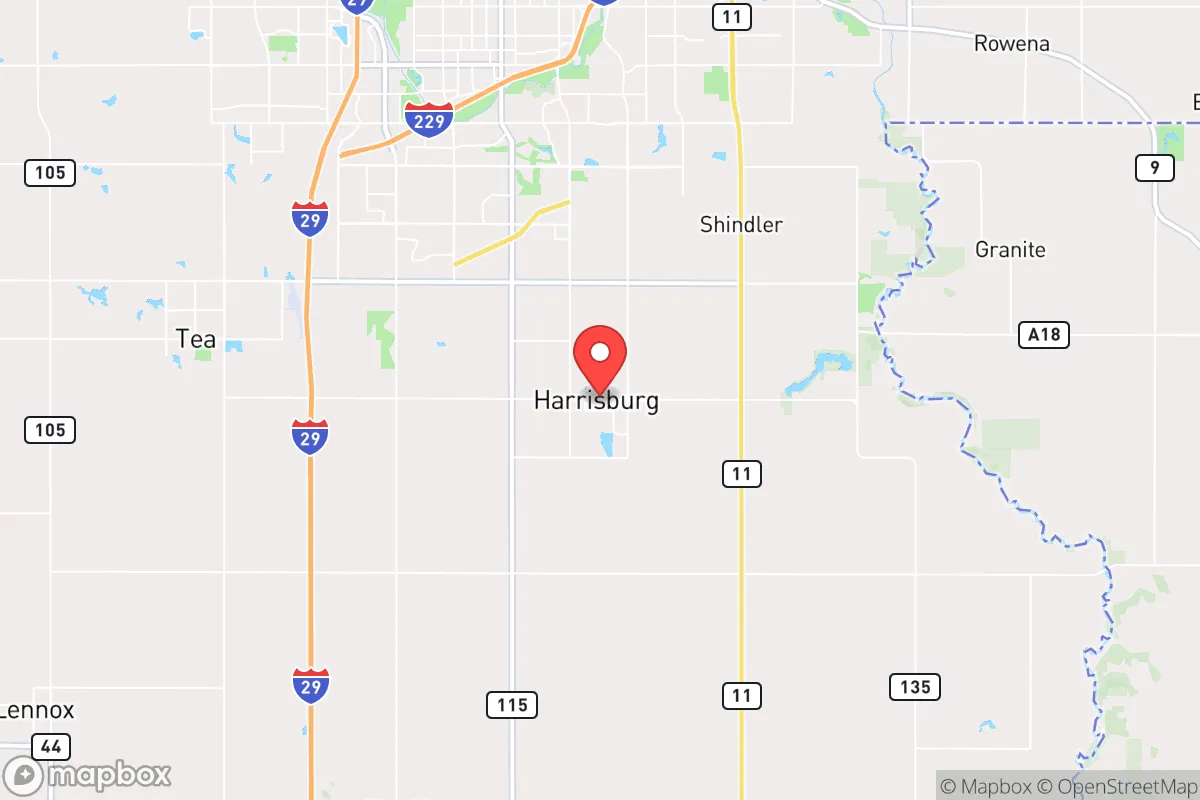
Drive ten minutes north into Sioux Falls, and you'll feel the difference immediately. That city has been trending left for years, with city council races and local ballot measures getting more progressive by the cycle. Harrisburg, by contrast, feels like a bulwark. The surrounding towns like Tea and Lennox lean similarly conservative, but Harrisburg's proximity to the metro makes its political stance more deliberate—people here chose this community specifically to avoid the urban drift. In the 2024 election, Minnehaha County as a whole was competitive, but Harrisburg precincts voted overwhelmingly red, often by margins closer to 70-30 than the county average. That's not an accident; it's a statement.
What this means for residents
For someone living here, the political climate translates into a government that mostly stays out of your way. Property taxes are reasonable compared to what you'd pay in progressive states, and there's no appetite for the kind of zoning overreach or mask mandates that became common elsewhere. The school board, which is a big deal in a town that prides itself on its schools, has held the line on curriculum transparency and parental rights—something that's becoming a rarity even in red states. You won't see Harrisburg adopting the kind of DEI initiatives or critical theory frameworks that are popping up in Sioux Falls classrooms. The long-term concern, though, is that as the metro expands, developers and newcomers who don't share these values could dilute the local culture. It's already happening in parts of southern Sioux Falls, and Harrisburg's city council has to stay vigilant to keep that from crossing the border.
One cultural distinction worth noting: Harrisburg has a strong "live and let live" streak that's different from the more activist conservatism you find in places like Rapid City. People here aren't interested in grand political gestures; they just want to be left alone to raise their kids, run their businesses, and go to church without the government meddling. That said, there's a growing unease about state-level trends—some in Pierre have flirted with tax increases and regulatory expansions that feel like a slippery slope. If that continues, you might see Harrisburg residents getting more vocal at the capitol. For now, though, it's one of the last places in the Sioux Falls area where you can still breathe easy knowing your vote actually counts for something.

State Political ClimatePolitical Climate in South Dakota
State Political AnalysisPolitical Environment in the State
South Dakota is about as reliably red as a state gets, with a Republican lean that’s only deepened over the last two decades. In 2024, Donald Trump carried the state by over 30 points, and every statewide office is held by a Republican. The dominant coalition is a mix of rural conservatives, libertarian-leaning ranchers, and a growing number of out-of-state transplants fleeing blue states. The trajectory has been a steady march rightward since the early 2000s, when the state was already solidly Republican but had a few competitive legislative races. Today, the GOP holds supermajorities in both chambers, and the political culture is defined by a deep skepticism of federal overreach and a fierce defense of local control.
Urban vs. rural divide
The political map is stark: the eastern corridor, anchored by Sioux Falls and Brookings, is the state’s most moderate region. Sioux Falls, home to about 200,000 people, has a growing professional class and a small but vocal Democratic presence—Minnehaha County went about 55% for Trump in 2024, which is actually the weakest GOP performance in the state. Brookings, home to South Dakota State University, is similarly purple-ish, with younger voters and academics pulling it slightly left. But drive 30 minutes in any direction, and you hit deep red territory. Rapid City and the Black Hills region lean conservative, but the real firepower is in the vast rural expanse: counties like Harding, Perkins, and Jones routinely vote 85-90% Republican. The divide isn’t just cultural—it’s economic. Sioux Falls has a diversified economy (finance, healthcare, tech), while the rest of the state depends on agriculture, tourism, and energy extraction. That economic split reinforces the political one, but even the “liberal” parts of South Dakota would be considered conservative in most other states.
Policy environment
South Dakota’s policy environment is a conservative dream—low taxes, minimal regulation, and a government that mostly stays out of your way. There’s no state income tax, no corporate income tax, and property taxes are among the lowest in the nation. The regulatory posture is aggressively pro-business: permitting for new construction or business licenses is fast, and there’s no state-level occupational licensing for many trades. Education policy is a mixed bag—the state has a robust school choice movement, with a new education savings account program passed in 2025 that lets parents use public funds for private or homeschool expenses. Healthcare is largely free-market, with no state-run insurance exchange and a Medicaid expansion that was only passed in 2023 after years of resistance. Election laws are solid: voter ID is required, no-excuse absentee voting is allowed, and the state has a clean voter roll system. The legislature has also passed laws banning ranked-choice voting and restricting ballot initiatives, which keeps the process from being hijacked by out-of-state money.
Trajectory & freedom
South Dakota is trending more free on most fronts, but not without some concerning bumps. The biggest win for personal liberty in recent years was the 2022 passage of a constitutional amendment requiring a three-fifths supermajority in the legislature to raise taxes—a direct check on government growth. Gun rights are rock-solid: permitless carry has been law since 2019, and the state has a “Second Amendment Preservation Act” that prohibits state enforcement of federal gun laws that violate the Second Amendment. Parental rights got a boost with the 2024 “Parents Bill of Rights,” which requires schools to notify parents about curriculum changes and medical services offered to minors. On the downside, the state has seen some overreach: the 2023 ban on nearly all abortions (with no exceptions for rape or incest) was a heavy-handed move that even some conservatives found too restrictive, and it’s currently tied up in court. Medical freedom took a hit during COVID when Governor Kristi Noem imposed a state of emergency that gave her broad executive powers—though those were later reined in by the legislature. Property rights remain strong, with no statewide zoning mandates and a “right to farm” law that protects agricultural operations from nuisance lawsuits.
Civil unrest & political movements
South Dakota is remarkably stable compared to the rest of the country. There’s no history of major civil unrest, no sanctuary city policies, and no significant secessionist movement. The most visible political flashpoint in recent years has been the Pine Ridge Indian Reservation and the broader Native American community, which has clashed with state officials over jurisdiction, law enforcement, and the controversial 2023 law that criminalizes “riot boosting” (a response to protests against the Keystone XL pipeline). The left-wing activist scene is small but loud, centered in Sioux Falls and Brookings, with groups like the South Dakota Democratic Party and the ACLU pushing back on abortion bans and voting restrictions. On the right, the most organized movement is the “constitutional sheriff” network, which has gained traction in rural counties like Meade and Lawrence, where sheriffs have publicly stated they won’t enforce federal gun laws. Immigration politics are mostly a non-issue—the state has a tiny foreign-born population (about 4%), and there’s no serious push for sanctuary policies. Election integrity controversies have been minimal, though the 2024 election saw a few isolated claims of voter fraud in Pennington County that were quickly debunked.
Projection
Over the next 5-10 years, South Dakota will likely get even more conservative, but with a twist. The in-migration wave—mostly from California, Colorado, and Minnesota—is bringing people who are fleeing high taxes and progressive policies, so they’re reinforcing the state’s rightward tilt. However, that same wave is also concentrating population in Sioux Falls and Rapid City, which could eventually create a more suburban, moderate Republican base that’s less interested in culture war battles and more focused on economic growth. The rural areas will continue to shrink and get redder, while the eastern corridor may see a slight purple shift as younger, more educated voters move in. The biggest wildcard is the state’s aging population—South Dakota has one of the oldest median ages in the country, and as the boomer generation fades, the libertarian-leaning younger voters could push the state toward a more “leave me alone” conservatism rather than the social-issue-focused version we see today. Expect continued fights over abortion, school choice, and property taxes, but the overall direction is clear: South Dakota will remain one of the freest states in the union, with a government that’s more interested in staying out of your way than telling you how to live.
For someone moving here, the bottom line is simple: you’ll find a state that respects your personal freedom, keeps taxes low, and mostly leaves you alone. The trade-off is that you’ll have to drive a bit for a decent restaurant or a concert, and the winters are brutal. But if you value autonomy over convenience, South Dakota is hard to beat. Just be prepared for the occasional culture war flare-up—and know that the state’s trajectory is firmly on your side.
* Values derived from national, state, county, city and local statistics and may differ in a specific area. Last updated: 2026-04-19T04:24:08.000Z
Narrative content on this page is AI-generated and may contain mistakes. Verify any details that matter before acting on them.
ReloMaps may earn a commission from affiliate links at no extra cost to you.

