Political ClimatePolitical Climate in Hartford, SD
District shown is the primary district for this city’s centroid. Cities may span multiple districts.
Inherited from parent state — no local data available.
Local Political AnalysisPolitical Analysis of Hartford, SD
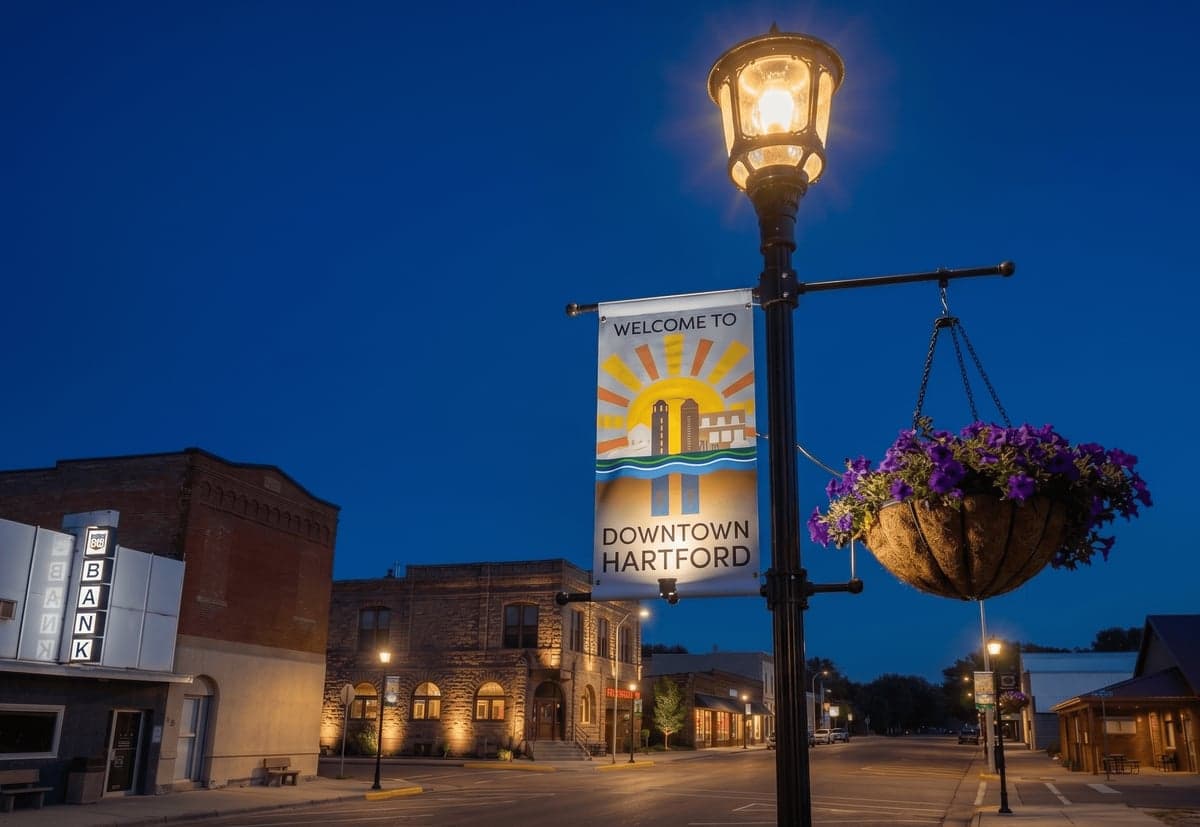
Hartford, South Dakota, leans solidly Republican, reflecting the broader political character of Minnehaha County’s rural and exurban precincts. In the 2024 presidential election, the precincts covering Hartford and its immediate surroundings voted roughly 70% for Donald Trump, a margin that has held steady since 2020. This isn’t a surprise to anyone who’s lived here a while—Hartford has always been a conservative farming and commuter town, but the political energy has shifted noticeably in the last decade as more people move out from Sioux Falls looking for cheaper land and a quieter life. The local school board and city council races are almost always won by Republicans or conservative-leaning independents, and there’s little organized Democratic presence in town. That said, the political climate here isn’t as loud or confrontational as you’d find in some other parts of the state; it’s more of a quiet, practical conservatism than a fire-breathing one.
How it compares
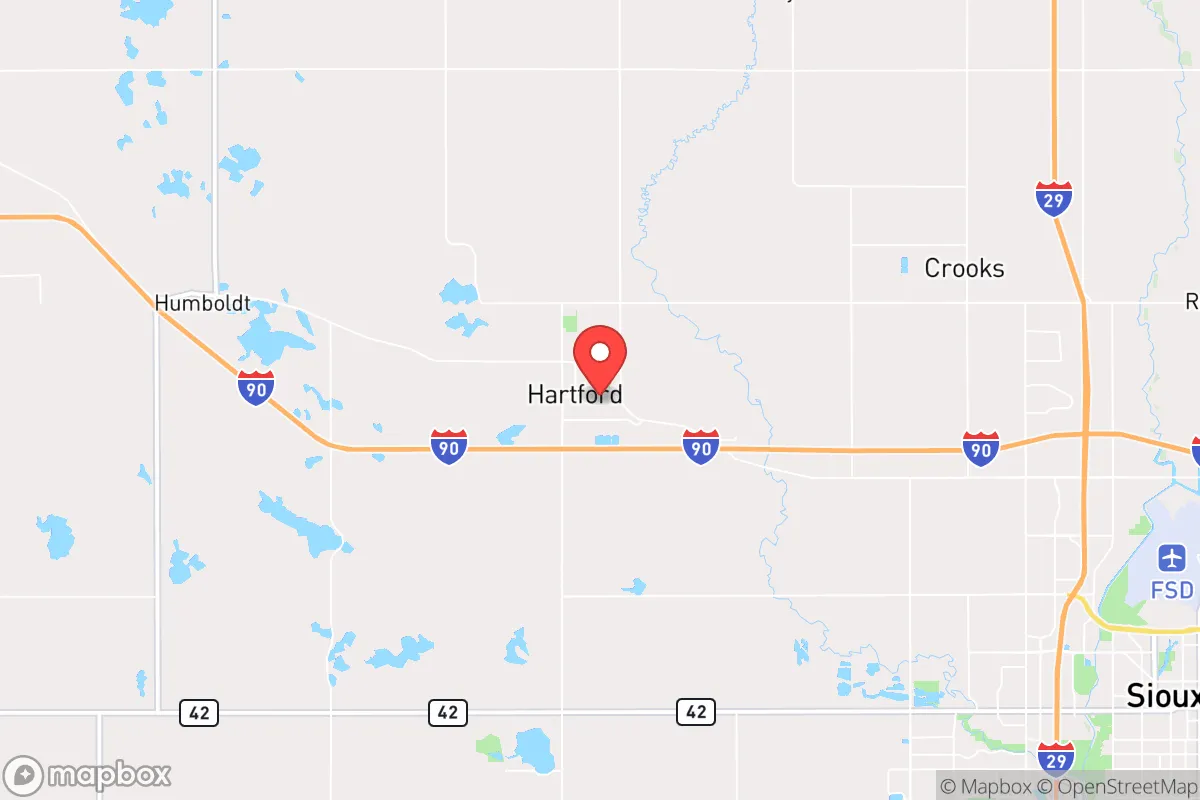
Compared to South Dakota as a whole, Hartford is actually a bit more conservative than the state average. While South Dakota voted about 63% for Trump in 2024, Hartford’s precincts came in closer to 70%, putting it to the right of places like Rapid City (roughly 65%) and well to the right of Sioux Falls proper (which was around 55% Republican). The contrast is sharpest when you drive 15 minutes east into Sioux Falls’ more liberal neighborhoods—like the area around Augustana University or the downtown core—where Democratic votes can hit 40-45%. Hartford’s politics are closer to what you’d find in nearby towns like Humboldt or Crooks, where the rural character and agricultural ties keep things reliably red. The state’s Cook PVI isn’t officially calculated for South Dakota, but by any measure it’s a solid R+15 to R+20 environment, and Hartford sits a few points to the right of that.
What this means for residents
For conservative residents, Hartford is a comfortable place where their views on taxes, gun rights, and local control are the default. The city council rarely debates issues like zoning or spending from a progressive angle, and the school board tends to emphasize traditional curriculum and local oversight over state mandates. For liberal residents, the reality is more about finding your niche. There’s no active Democratic club in Hartford, but Sioux Falls is a short drive away and offers a much more diverse political and social scene. In practice, most political disagreements here are low-key—arguments over school bond measures or road improvements rather than culture-war flashpoints. The biggest practical effect of the area’s lean is on local policy: Hartford has kept property taxes relatively low, resisted new housing density mandates, and maintained a strong police presence, all of which align with the majority’s preferences. If you’re on the left, you’ll likely find yourself driving to Sioux Falls for political events or simply opting out of local politics altogether.
One cultural distinction worth noting: Hartford’s political identity is tied closely to its agricultural roots and its role as a bedroom community for Sioux Falls commuters. Unlike some rural towns that feel abandoned by the state, Hartford is growing—its population has nearly doubled since 2010—and that growth has brought a mix of longtime farmers and new arrivals who work in Sioux Falls’ healthcare and finance sectors. This blend keeps the politics pragmatic rather than ideological. You won’t see many yard signs for fringe candidates here; it’s mostly standard Republican fare, with a few local issues like the future of the old grain elevator site or the expansion of the city’s water system. Looking ahead, if Hartford continues to grow and attract more young families from Sioux Falls, the political center of gravity could shift slightly—but for now, it’s a reliably conservative town where the biggest political fights are about how fast to pave the roads.

State Political ClimatePolitical Climate in South Dakota
State Political AnalysisPolitical Environment in the State
South Dakota has been a reliably Republican state for decades, but the depth of that lean has intensified significantly since 2016. The state voted for Donald Trump by +26 points in 2020 and +30 points in 2024, a shift from the +18-point margins seen for Mitt Romney in 2012. The dominant political coalition is a mix of rural conservatives, evangelical Christians, and a growing number of libertarian-leaning transplants drawn by low taxes and minimal regulation. The Democratic Party has collapsed in state-level races, holding no statewide elected offices and only a handful of legislative seats, concentrated almost entirely in a few tribal areas and the city of Sioux Falls.
Urban vs. rural divide
The political map of South Dakota is starkly divided between a handful of small urban centers and vast, deeply conservative rural expanses. Sioux Falls, home to about 20% of the state's population, is the only real blue dot, consistently voting Democratic in presidential elections by 5-10 points. Its growth—driven by finance, healthcare, and tech jobs—has made it a moderate-to-liberal island in a red sea. Rapid City and Brookings lean Republican but are more moderate than the countryside, with Rapid City's tourism and military economy producing a pragmatic conservatism. The rural counties west of the Missouri River, like Butte County and Meade County, routinely vote 80%+ Republican, driven by ranching, mining, and a strong gun culture. The nine tribal reservations, including Pine Ridge and Rosebud, vote overwhelmingly Democratic but have low turnout due to poverty and voter access issues. The Black Hills region around Custer and Hill City is a mix of libertarian-leaning conservatives and environmentalists, creating occasional local friction over land use and tourism development.
Policy environment
South Dakota's policy environment is defined by its lack of a state income tax (individual or corporate), a 4.5% state sales tax, and a strong right-to-work law. Property taxes are moderate, with no tax on Social Security benefits and a partial exemption for military pensions. The regulatory posture is aggressively pro-business: no state-level minimum wage above the federal $7.25, no paid family leave mandate, and a "at-will" employment doctrine. Education policy is decentralized, with local school boards controlling most decisions, but the state has expanded school choice through the South Dakota Opportunity Scholarship and a new education savings account program passed in 2025. Healthcare is a mixed bag: the state expanded Medicaid in 2023 via a ballot initiative (Amendment D), but the legislature has resisted further expansion of abortion access, passing a near-total ban in 2022 with exceptions only for rape, incest, and life of the mother. Election laws are among the most restrictive in the nation: no same-day registration, a strict voter ID law, and limited early voting (46 days, but no mail-in ballots without an excuse). The state has no automatic voter registration and purges inactive voters annually.
Recent policy direction
The last five years have seen a sharp rightward turn on cultural and liberty issues. In 2023, Governor Kristi Noem signed HB 1080, banning gender-affirming care for minors, and SB 46, restricting transgender athletes in K-12 sports. Gun laws have been loosened: permitless carry (constitutional carry) was enacted in 2019, and in 2024 the state passed a law prohibiting local governments from enforcing federal gun regulations (a "Second Amendment Sanctuary" measure). Parental rights were strengthened with HB 1105 (2022), requiring schools to notify parents of any curriculum involving sexuality or gender identity. On property rights, the state passed SB 201 (2023) limiting eminent domain for carbon pipeline projects, a direct response to the Summit Carbon Solutions pipeline controversy. Privacy and surveillance are lightly regulated: no state-level data privacy law, and law enforcement can access cell phone location data without a warrant in emergencies. Medical autonomy is limited: abortion is banned after six weeks, and the state has no right-to-try law for terminally ill patients. Voting access has tightened: in 2024, the legislature passed a law requiring absentee ballots to be notarized or witnessed, a move critics say suppresses rural and tribal turnout.
Civil unrest & political movements
Political activism in South Dakota is relatively low-key compared to coastal states, but there have been notable flashpoints. The Noem administration's response to COVID-19—no mask mandate, no business closures, and a "personal responsibility" approach—was widely popular among conservatives but drew criticism from public health officials. The Dakota Access Pipeline protests in 2016-2017 centered on the Standing Rock Reservation, drawing thousands of activists and sparking ongoing debates about tribal sovereignty and environmental regulation. In 2023, the Summit Carbon Solutions pipeline—a proposed CO2 pipeline through eastern South Dakota—triggered organized opposition from landowners and county commissions, leading to the passage of SB 201. Immigration politics are muted, as the state has a very small foreign-born population (about 4%), but there have been local debates over refugee resettlement in Sioux Falls. Election integrity controversies flared in 2022 when the state's Republican secretary of state was accused of mismanaging the primary election, leading to a lawsuit and a legislative audit. The Pine Ridge Reservation has seen periodic protests over police brutality and jurisdictional disputes between tribal and state law enforcement. A small but vocal secessionist movement, the Dakota Independence Party, advocates for a separate "Dakota" state, but it has no real political traction.
Projection
Over the next 5-10 years, South Dakota's political trajectory points further right, but with a growing libertarian strain that may create internal fractures. The in-migration of remote workers from California and Colorado—drawn by no income tax and cheap housing—is slowly shifting the electorate in places like Rapid City and Sioux Falls. These newcomers tend to be fiscally conservative but socially moderate, which could push the state toward a more "live and let live" posture on issues like marijuana legalization (medical use was approved in 2020, but recreational remains illegal) and housing deregulation. The aging rural population (median age 37, but over 50 in many counties) will continue to anchor the state's social conservatism, while the growing tech and finance sectors in Sioux Falls may demand more investment in education and infrastructure. The tribal vote remains a wild card: if turnout improves, it could flip a few legislative seats and make the state's congressional delegation more competitive. Expect continued battles over property rights (pipelines, wind farms), education funding, and abortion access, with the legislature likely to pass further restrictions on abortion and transgender rights. The state's fiscal conservatism is durable—no income tax is sacrosanct—but the pressure to fund roads, schools, and Medicaid will grow as the population ages.
For a new resident, the bottom line is this: South Dakota offers a low-tax, low-regulation environment that rewards self-reliance and punishes dependency. If you're a conservative, you'll find a government that largely leaves you alone on guns, business, and personal finances. If you're a liberal, you'll find a state where your vote matters most in Sioux Falls or on a reservation, but where state policy will consistently oppose your views on abortion, LGBTQ rights, and social services. The state is politically stable but not stagnant—the influx of remote workers and the ongoing pipeline fights suggest a future where the old ranching-and-mining conservatism gives way to a more suburban, tech-friendly version. Just don't expect the weather or the politics to change fast.
* Values derived from national, state, county, city and local statistics and may differ in a specific area. Last updated: 2026-09-27T15:22:50.000Z
Narrative content on this page is AI-generated and may contain mistakes. Verify any details that matter before acting on them.
ReloMaps may earn a commission from affiliate links at no extra cost to you.

