Quality of Life in Hartford, SD
Above-average quality of iife. The area offers a reasonable cost of living, decent mobility, and a mix of neighborhood amenities.
What does Quality of Life tell us?
Quality of Life blends cost of living, nearby amenities, socioeconomic signals, and neighborhood character. City-level scores represent the whole municipality; individual neighborhoods can differ.
What does this tell us?
Quality of Life blends cost of living, nearby amenities, socioeconomic signals, and neighborhood character. City-level scores represent the whole municipality; individual neighborhoods can differ.
Cost of Living
13% below national average
The Real Cost of Living in Hartford, SD for 2026
| Tier | Individual | Family (4) |
|---|---|---|
| Survival | $15k | $29k |
| Comfortable | $52k | $76k |
| Luxury | $132k+ | $204k+ |
| Elite (Top 5%) | $155k+ | $240k+ |
100%
* median household income, median home value, and 2 more figures substituted from county-level data — local Census figures unavailable for small populations
The Area Signal
A metric tracking the socioeconomic signals of the area.


Hobbies
Explore the areaGroceries
3 within 10 miles
Gas
20 within 10 miles
Hospital
11 within 20 miles
Airport
MCI — Kansas City International
Post Office
USPS — Hartford, SD
Critical Amenities
Quality-of-Life Analysis
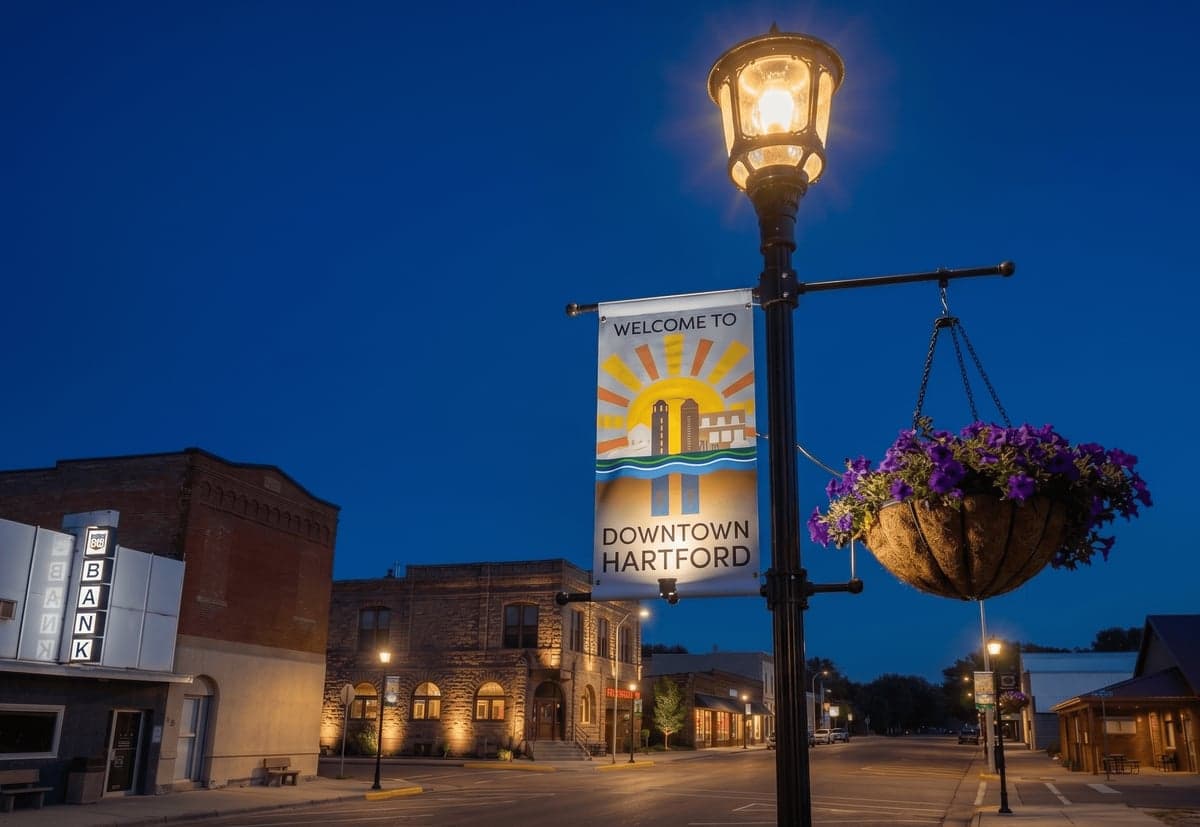
Hartford, South Dakota, presents a quality of life defined by small-town affluence and rapid suburban growth, attracting a mix of young families, commuters, and agricultural professionals. With a cost of living index of 87 (13% below the U.S. average), the community offers a notably lower financial barrier than nearby Sioux Falls while maintaining a median household income that supports a stable, middle-to-upper-middle-class lifestyle. The town’s character is shaped by its proximity to Interstate 90, drawing residents who prioritize space, safety, and a slower pace without sacrificing access to a major metro area.
Cost of living, housing affordability, and how it compares to Sioux Falls
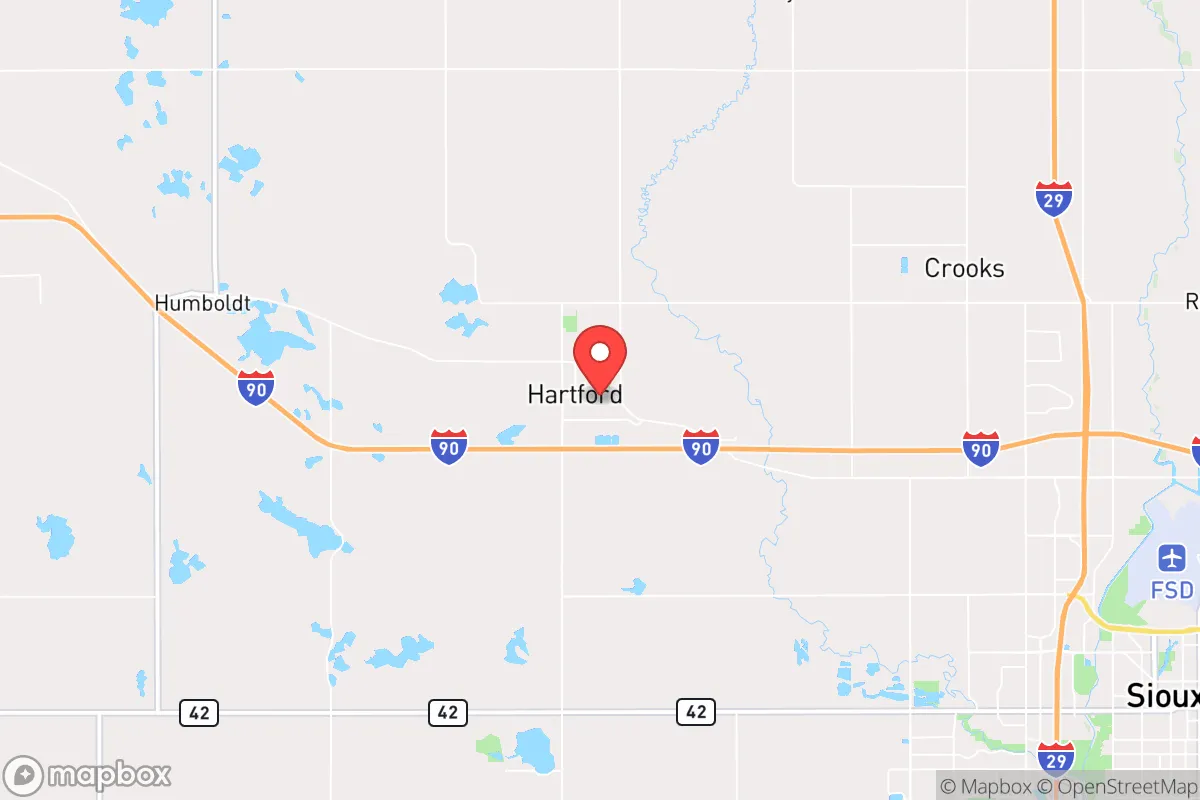
Hartford’s cost of living is a primary draw, with the overall index of 87 making it significantly cheaper than the national norm and roughly 10-15% less expensive than Sioux Falls, where the index hovers near 95. The median home value of $266,600 is a key advantage—while higher than the South Dakota state median of about $240,000, it remains well below the Sioux Falls metro average of roughly $320,000, offering buyers more square footage and lot size for the same price. Renters also benefit, with a median rent of $954, which is approximately $150-200 less per month than comparable units in Sioux Falls. Property taxes in Minnehaha County are moderate, and South Dakota’s lack of a state income tax further stretches household budgets. The average commute of 18 minutes is a standout feature—far shorter than the national average of 26 minutes—allowing residents to live in a rural setting while working in Sioux Falls (a 20-25 minute drive) without enduring a long daily grind.
Amenities, schools, and the daily rhythm of life in Hartford
Daily life in Hartford centers on a compact, walkable downtown with a handful of local restaurants, a grocery store, and a public library. The West Central School District serves the town and is consistently rated above average in South Dakota, with a student-teacher ratio near 15:1 and strong extracurricular programs in agriculture and athletics. For broader amenities, residents drive 15-20 minutes to Sioux Falls for shopping at The Empire Mall, healthcare at Sanford USD Medical Center, and entertainment like the Washington Pavilion. The town’s parks—including the 40-acre Hartford City Park with sports fields and a fishing pond—anchor a family-oriented lifestyle. Community events like the annual Hartford Hometown Days and the summer farmers market reinforce a tight-knit social fabric. The pace is unhurried: mornings see commuters heading west on I-90, while afternoons are quiet, with kids biking to the pool and neighbors chatting at the post office.
Hartford is best suited for those who value affordable homeownership, short commutes, and a safe, family-centric environment over urban nightlife or cultural density. Young professionals and remote workers will appreciate the low cost of living and easy access to Sioux Falls’ job market, while retirees may find the quiet streets and low crime rates appealing. The town’s rapid growth—its population has nearly doubled since 2010—means new subdivisions and strip malls are changing the landscape, so those seeking a completely static rural hamlet may prefer smaller nearby towns like Humboldt. However, for anyone wanting a balance of rural affordability and metro convenience, Hartford delivers a compelling, data-backed quality of life.

Crime in Hartford, SD
Generally safer than 61% of comparable U.S. locations.
Violent CrimeViolent Crime Analysis
Property CrimeProperty Crime Analysis
Crime Analysis
Hartford, South Dakota, presents a mixed safety profile for prospective residents. The city’s violent crime rate of 293.7 per 100,000 residents is notably higher than the national average, while its property crime rate of 1,283 per 100,000 sits near the national median. These figures place Hartford in a position where careful consideration of local law enforcement and judicial practices is warranted, particularly given its proximity to the larger Sioux Falls metro area.
Crime in context
When compared to state and national benchmarks, Hartford’s violent crime rate is approximately 20% higher than the U.S. average of roughly 240 per 100,000. This elevated rate is driven primarily by aggravated assault incidents, which make up the majority of violent offenses in the area. Property crime, while closer to the national norm, still represents a tangible risk for homeowners and renters. The city’s location within Minnehaha County means it falls under the jurisdiction of a county court system that, like many in larger metro areas, has faced scrutiny for progressive sentencing policies. Liberal-leaning judicial approaches that prioritize rehabilitation over incarceration can result in shorter sentences and earlier releases, potentially increasing the number of repeat offenders active in communities like Hartford. This dynamic is a legitimate concern for families and individuals prioritizing public safety.
What residents experience
Day-to-day life in Hartford involves a heightened awareness of property crime, particularly theft from vehicles and burglaries. The city’s small-town character means neighbors often look out for one another, but the proximity to Sioux Falls introduces transient criminal elements that can exploit quieter neighborhoods. Violent crime is less common in daily experience but remains a statistical outlier compared to similarly sized South Dakota towns. Residents should note that the progressive judicial philosophy prevalent in Minnehaha County courts tends to emphasize alternatives to incarceration, such as diversion programs and reduced bail requirements. While these measures aim to address root causes of crime, they can also lead to a revolving-door effect where offenders cycle through the system without meaningful accountability. For victims, this can feel like a secondary injustice, as perpetrators may face minimal consequences for their actions.
Neighborhood-level variation in Hartford is modest but worth examining. Older, established areas near the city center tend to report lower crime rates, while newer developments on the outskirts, particularly those with easy highway access, see more property crime incidents. The lack of a strong neighborhood watch presence in some subdivisions leaves them more vulnerable. Prospective residents should research specific blocks and consult local police reports, as crime can cluster around rental properties and areas with higher population turnover. Overall, Hartford demands a proactive approach to safety—locking vehicles, securing homes, and staying informed about local judicial trends that may affect community security.
* Values derived from national, state, county, city and local statistics and may differ in a specific area. Last updated: 2026-09-27T15:22:50.000Z
Narrative content on this page is AI-generated and may contain mistakes. Verify any details that matter before acting on them.
ReloMaps may earn a commission from affiliate links at no extra cost to you.

