Photo: Wikipedia
Demographics of Haysville, KS
Affluence Level in Haysville, KS
A middle-class area roughly in line with national averages across income, home values, education, and employment.
People of Haysville, KS
Haysville, Kansas, is a predominantly white, family-oriented suburb of Wichita with a population of 11,117, where 81.9% of residents identify as white and 8.3% as Hispanic. The city is characterized by its low foreign-born population (2.0%), a modest college attainment rate of 16.8%, and a strong sense of local identity rooted in its agricultural and railroad past. Its people are largely working- and middle-class, with a density that feels suburban—neither rural nor urban—and a reputation for being a quiet, safe place to raise a family. Distinctive markers include a high rate of homeownership and a community calendar centered on the annual Haysville Days festival.
How the city was settled and grew
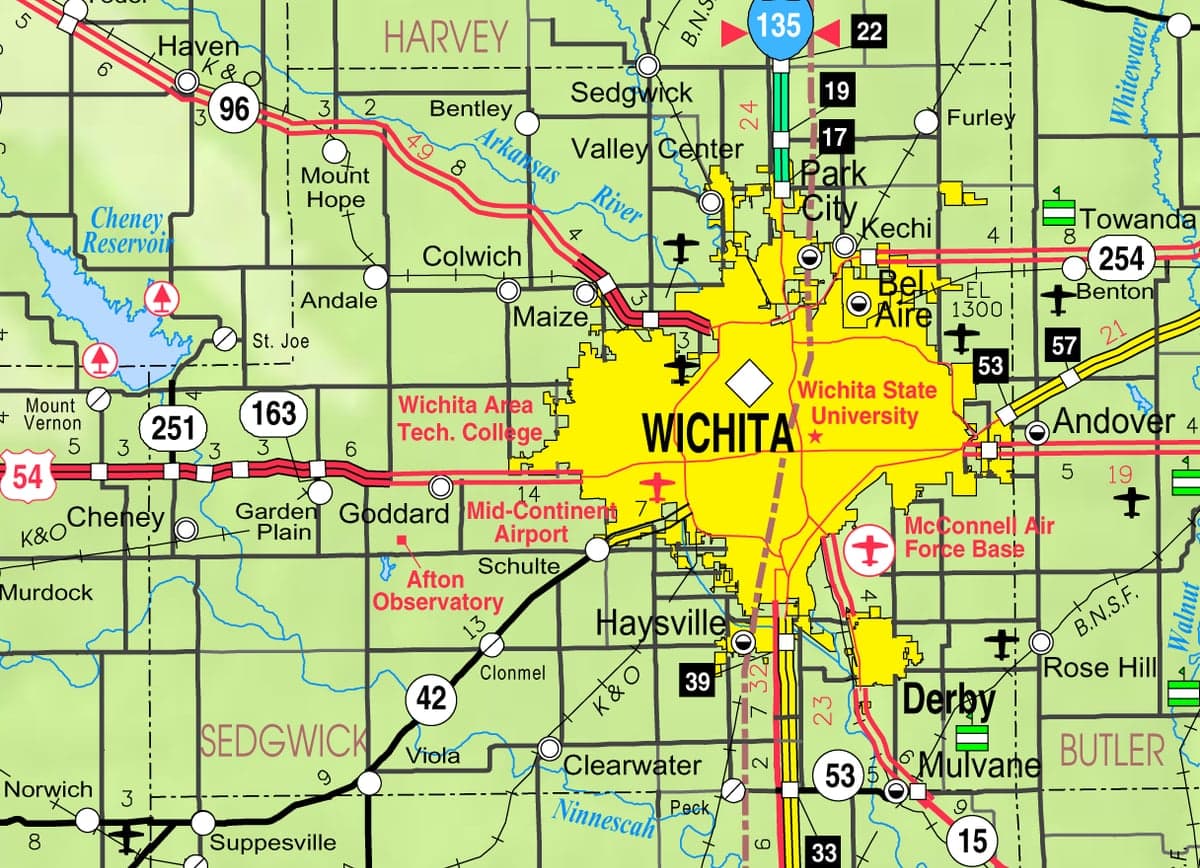
Haysville was founded in the late 19th century as a railroad stop on the Atchison, Topeka and Santa Fe line, drawing its first wave of settlers from Midwestern farming families of German and English descent. These original homesteaders built the core of what is now Old Town Haysville, the historic district along Main Street where the earliest homes and the original grain elevator still stand. The city was officially incorporated in 1902, and growth remained slow through the 1940s, driven by the agricultural economy—wheat farming and livestock—and the railroad’s need for local labor. A second wave arrived during the Dust Bowl and Great Depression, when displaced farmers from Oklahoma and the Texas Panhandle moved north, settling in the South Haysville area near the railroad tracks, where smaller, more modest homes were built. By 1950, the population was nearly entirely white, with a small number of Hispanic families working in seasonal agriculture, concentrated in the River District along the Arkansas River floodplain.
Modern era (post-1965)
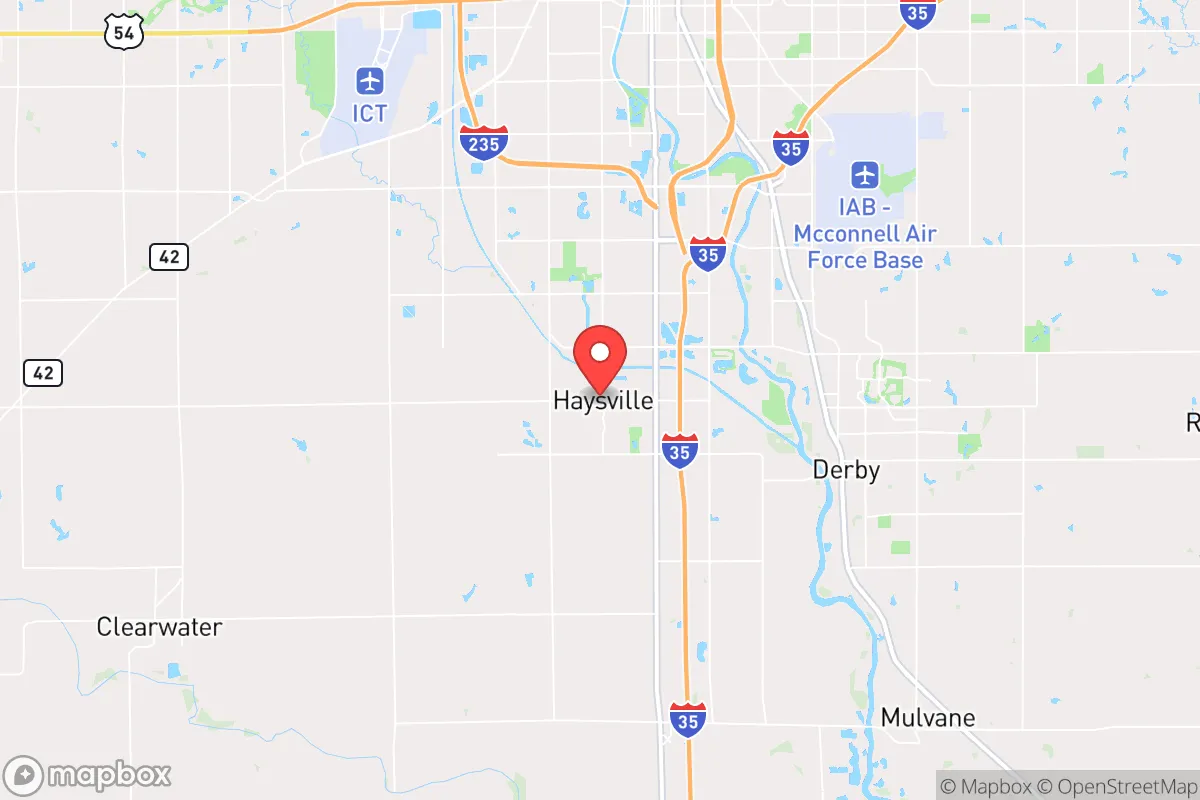
After the 1965 Hart-Cellar Act, Haysville saw minimal immigration from outside the United States, reflecting its inland, non-metropolitan character. The foreign-born share today is just 2.0%, and the city’s Asian population (East and Southeast Asian) is only 0.5%, with no measurable Indian-subcontinent population. The major demographic shift after 1965 was domestic: suburbanization from Wichita. As Wichita’s white middle class sought larger lots and lower taxes, Haysville absorbed a steady stream of families moving south along Meridian Avenue. These newcomers built the Meadowbrook and Woodland Hills subdivisions in the 1970s and 1980s, which remain the city’s most affluent neighborhoods, with newer homes and higher property values. The Hispanic population grew modestly from the 1990s onward, reaching 8.3% today, with many families settling in the West Haysville area near the Kansas Turnpike, where older, more affordable housing stock exists. The Black population remains very small at 1.3%, concentrated in scattered rental properties rather than a distinct neighborhood. The city’s college-educated share (16.8%) is below the national average, reflecting a workforce heavily employed in trades, manufacturing, and Wichita’s aviation industry.
The future
Haysville’s population is projected to grow slowly, likely reaching 12,000–12,500 by 2035, driven by continued spillover from Wichita’s suburbs rather than new immigration. The city is homogenizing in racial terms: the white share is declining slightly (from 85% in 2010 to 81.9% in 2024), but the Hispanic share is rising at a steady but moderate pace, and the Asian and Black populations are expected to remain below 2% each. The foreign-born population is plateauing, as most new Hispanic residents are U.S.-born children of earlier migrants. The city is not tribalizing into distinct ethnic enclaves; instead, neighborhoods like Meadowbrook and Woodland Hills are becoming slightly more diverse as Hispanic families move into previously all-white subdivisions. The biggest demographic challenge is aging: the median age is rising, and younger families are being priced out by rising home values in Wichita’s closer-in suburbs, pushing them farther south to Derby or Mulvane. For a new resident, Haysville offers a stable, low-crime, predominantly white community with a strong sense of local identity, but limited ethnic diversity and a workforce that relies heavily on commuting to Wichita.
For someone moving in now, Haysville is becoming a quieter, older suburb—less dynamic than Wichita’s northern suburbs but more affordable and family-stable. The population is slowly diversifying along Hispanic lines, but the city remains overwhelmingly white and native-born, with a culture rooted in Midwestern conservatism and local self-reliance. The next decade will likely see continued slow growth, modest Hispanic integration, and a gradual aging of the existing housing stock, making it a solid choice for families seeking predictability over urban amenities.

* Values derived from national, state, county, city and local statistics and may differ in a specific area. Last updated: 2026-04-30T03:06:34.000Z
Narrative content on this page is AI-generated and may contain mistakes. Verify any details that matter before acting on them.
ReloMaps may earn a commission from affiliate links at no extra cost to you.

