Photo: Wikipedia
Political ClimatePolitical Climate in Haysville, KS
District shown is the primary district for this city’s centroid. Cities may span multiple districts.
Local Political AnalysisPolitical Analysis of Haysville, KS
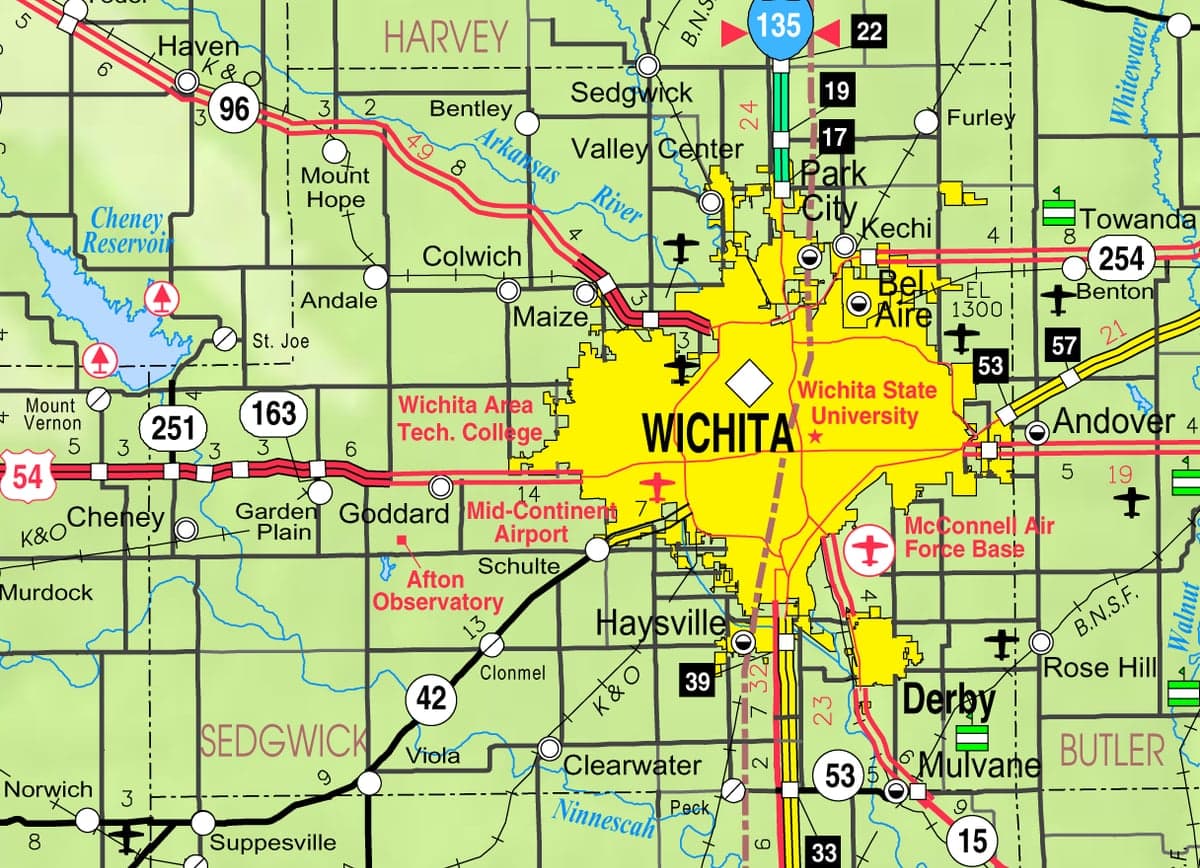
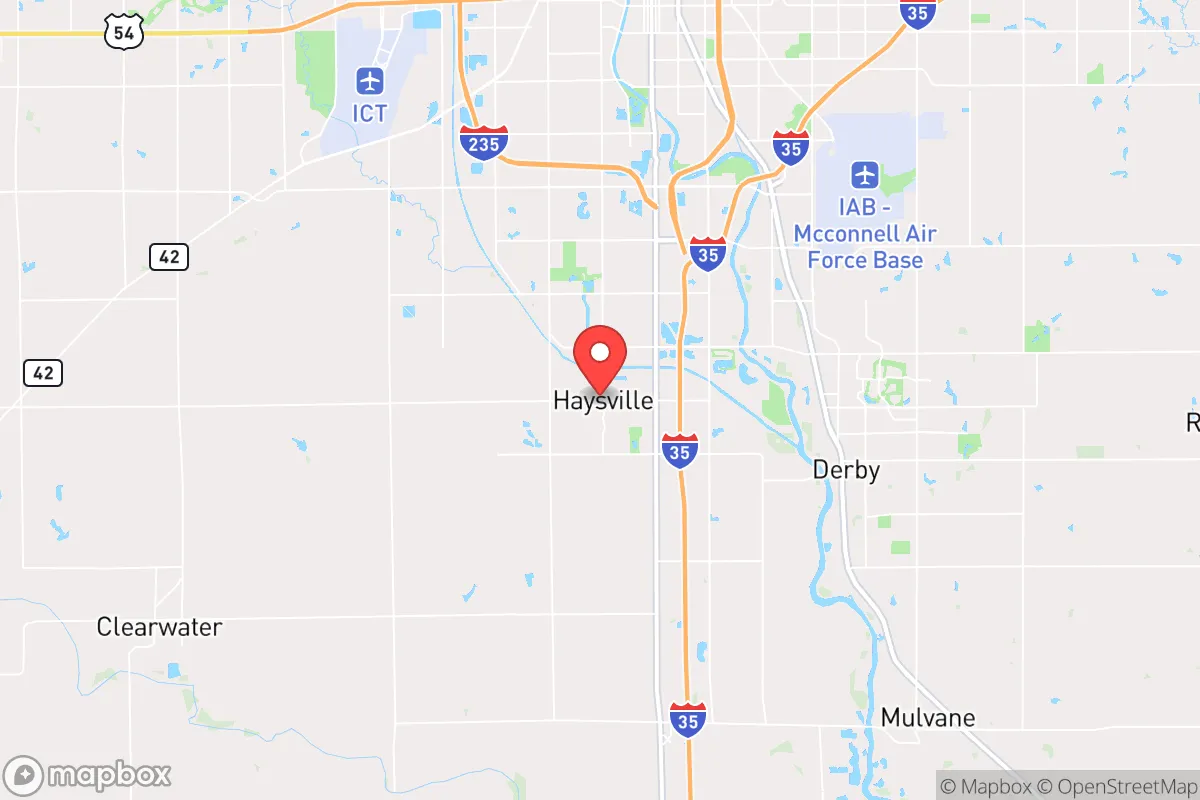
Haysville, Kansas, sits comfortably in a deep-red pocket of Sedgwick County, with a Cook PVI of R+12 that reflects a community where conservative values aren't just a preference—they're the baseline. For as long as I've been around, this town has leaned solidly Republican, and the trajectory hasn't budged much, even as Wichita to the north has seen some purple creep. If you're looking for a place where folks still believe in limited government, personal responsibility, and keeping the feds out of your business, Haysville is about as steady as they come.
How it compares
Drive ten miles north into Wichita proper, and you'll hit precincts that swing blue or lean competitive, especially around the university and downtown areas. But Haysville? It's a different world. Compared to nearby Derby or Mulvane, Haysville holds a similar conservative line, though Derby has a slightly more suburban, white-collar feel. The real contrast is with places like Lawrence or Kansas City, where progressive policies on taxes, zoning, and social issues have taken hold. Here in Haysville, the county commission and school board races rarely see a serious progressive challenger, and when one does pop up, they usually get a polite but firm "no thanks" at the ballot box. The R+12 rating isn't just a number—it means Republicans routinely win by double digits, and that's been the case for decades.
What this means for residents
For someone moving here, the political climate translates into a few concrete realities. First, you won't see a lot of government overreach into your daily life—no mask mandates that drag on forever, no heavy-handed business closures, and a general attitude that your property and your choices are yours. The city council tends to keep taxes low and regulations light, which is why you still see small, independent shops holding their own against big-box chains. Second, the schools here emphasize traditional values and parental rights, which is a big deal for families who don't want their kids exposed to the kind of ideological experiments you hear about in coastal districts. Third, if you're worried about the direction of the country, Haysville feels like a bit of a refuge—a place where the progressive wave hasn't crashed yet, and where folks are actively pushing back against it.
That said, there are some cultural distinctions worth noting. Haysville is a dry town—no alcohol sales within city limits—which is a remnant of its older, more religious roots. That's changing slowly, with some residents pushing for a vote to allow beer and wine sales, but it's a sign of how deeply conservative the community's social fabric is. You'll also find a strong sense of neighborly self-reliance: people here don't expect the government to solve their problems. If a storm knocks out power, you help your neighbor clear the branches. If the school needs new books, the PTA raises the money. That's the Haysville way. Looking ahead, I don't see that changing much. The national trends might be worrying, but this town has a stubborn streak when it comes to preserving its way of life. As long as that holds, Haysville will stay the kind of place where you can breathe easy and live free.

State Political ClimatePolitical Climate in Kansas
State Political AnalysisPolitical Environment in the State
Kansas has long been a reliably Republican state, but don't let the "red" label fool you — it's a deeply divided place where the political climate is more like a slow-burning civil war between traditional conservatives and a growing progressive-liberal coalition concentrated in a few key metros. Over the last 10-20 years, the state has shifted from a solidly conservative stronghold to a purple-ish battleground, with the GOP holding a supermajority in the legislature but losing the governorship to Democrat Laura Kelly in 2018 and 2022. The real story is the urban-rural split: the state's two major population centers — Johnson County (suburban Kansas City) and Douglas County (Lawrence) — now drive the Democratic vote, while the rest of the state remains deeply red. If you're looking for a place where your values align with the majority, you'll want to pay close attention to which part of Kansas you land in.
Urban vs. rural divide
The political map of Kansas is a textbook case of the urban-rural chasm. The eastern third of the state, anchored by the Kansas City metro area, is where the blue votes pile up. Johnson County, the state's wealthiest and most populous county, has been trending left for a decade — it voted for Biden in 2020 and has elected Democrats to the state legislature in several districts. Lawrence, home to the University of Kansas, is a deep-blue island where progressive politics dominate, with a city council that has pushed sanctuary city policies and defunded police rhetoric. Meanwhile, Wyandotte County (Kansas City, KS) is reliably Democratic, driven by a large minority and working-class population. The rest of the state is overwhelmingly Republican. Sedgwick County (Wichita) is a bellwether — it voted for Trump in 2020 but by a narrower margin than in 2016, and the city itself is more moderate than the surrounding rural areas. Riley County (Manhattan), home to Kansas State University, is a rare purple spot, often splitting tickets between GOP and Democratic candidates. The rural counties — like Sherman County in the west and Allen County in the southeast — vote 70-80% Republican, and their influence in the legislature is amplified by the state's heavy reliance on rural districts in the House and Senate. If you're moving to Kansas, your political experience will be radically different depending on whether you settle in Overland Park or a farm town like Goodland.
Policy environment
Kansas's policy environment is a mixed bag for conservatives. On the plus side, the state has a flat income tax rate of 5.7% (down from a progressive structure under the Brownback tax cuts, which were partially reversed), and no state tax on Social Security benefits. Property taxes are relatively low, though they vary by county. The state's regulatory posture is generally business-friendly, with right-to-work laws and limited zoning in rural areas. However, the education policy is a flashpoint: the Kansas Supreme Court has repeatedly ordered the legislature to increase school funding, leading to a constant tug-of-war between the GOP-controlled legislature and the courts. School choice is limited — there's no universal voucher program, though a tax-credit scholarship program exists for low-income students. Healthcare policy is a sore spot: Kansas has not expanded Medicaid under the ACA, which keeps costs down for taxpayers but leaves a coverage gap for low-income adults. Election laws are solidly conservative: the state requires a photo ID to vote, has strict signature verification for mail ballots, and banned ballot drop boxes in 2021. The state also passed a constitutional amendment in 2022 declaring no right to abortion, which took effect immediately after the Dobbs decision. For a conservative, the policy environment is generally favorable, but the constant court battles and the influence of the Kansas City suburbs mean that nothing is settled.
Trajectory & freedom
Kansas's trajectory on personal freedom is a mixed picture, and it's trending in two directions at once. On the positive side for conservatives, the state has expanded gun rights significantly: in 2021, the legislature passed a permitless carry law (HB 2058), allowing any adult who can legally possess a firearm to carry it concealed without a permit. The state also has a strong castle doctrine and stand-your-ground law. Parental rights got a boost in 2023 with the passage of a Parents' Bill of Rights (HB 2236), which requires schools to notify parents of any changes to a student's health or well-being and prohibits instruction on sexual orientation or gender identity in grades K-3. On the negative side, the state's tax burden has crept back up after the Brownback experiment was largely repealed in 2017 — the flat tax is still lower than many states, but it's higher than it was in 2015. Medical freedom took a hit in 2024 when the legislature overrode Governor Kelly's veto to ban gender-affirming care for minors (SB 180), which conservatives see as protecting children but which also represents a significant expansion of government power over medical decisions. The biggest concern for liberty-minded residents is the state's heavy reliance on property taxes to fund schools, which has led to a growing push for a constitutional amendment to cap property tax increases — something that's been debated but not passed. Overall, Kansas is becoming more free on cultural issues (guns, parental rights) but less free on economic ones (taxes, regulation).
Civil unrest & political movements
Kansas has seen its share of political flashpoints, though nothing like the coastal states. The most visible movement in recent years has been the anti-abortion activism, which culminated in the 2022 "Value Them Both" constitutional amendment campaign — a massive grassroots effort that successfully passed the amendment despite being outspent by pro-choice groups. On the left, the Kansas City area has seen protests over police brutality, particularly in Wyandotte County, and Lawrence has a small but vocal activist scene pushing for defunding the police and sanctuary city policies. Immigration politics are relatively quiet compared to border states, but the state has passed laws requiring E-Verify for public contractors and banning sanctuary cities. Election integrity has been a hot topic since 2020: the state's GOP-led legislature passed a series of voting restrictions in 2021 (HB 2332), including a ban on ballot harvesting and stricter ID requirements, which were met with lawsuits from the ACLU. There's been no serious secession or nullification rhetoric, but the rural-urban divide has fueled talk of splitting the state into two — a proposal that surfaces every few years but never gains traction. For a new resident, the political climate is generally calm, but you'll notice the tension between the conservative rural majority and the liberal urban minority, especially during election season.
Projection
Over the next 5-10 years, Kansas is likely to become more politically competitive, but not necessarily more liberal. The key demographic trend is the continued growth of Johnson County, which is attracting young professionals and families from the Kansas City metro who are more moderate or left-leaning. This will put pressure on the GOP to moderate on cultural issues, but the rural counties are not shrinking fast enough to flip the state legislature. The biggest wildcard is in-migration: Kansas is seeing a net outflow of population to Texas and Florida, but a small inflow from California and Colorado — mostly to the Kansas City suburbs. This could shift the balance slightly leftward in the long run. On policy, expect continued fights over school funding, property taxes, and abortion. The state's flat tax is likely to stay, but there will be pressure to lower it further as neighboring states (Oklahoma, Missouri) cut their rates. The parental rights and school choice movements will keep pushing, and a universal voucher program could pass within the next five years if the GOP can overcome rural opposition. For a conservative moving in now, the state will remain a safe bet for your values in the near term, but the Kansas City suburbs will continue to be a battleground where your vote matters most.
Bottom line: Kansas is a solidly conservative state with a liberal urban core that's growing. If you're a conservative looking for a place where your values are the norm, you'll be comfortable in most of the state — just avoid Johnson County and Lawrence if you want to live among like-minded neighbors. The policy environment is generally favorable, with strong gun rights, parental rights, and election integrity laws, but you'll need to keep an eye on property taxes and school funding battles. The state is not trending toward the progressive nightmare you see in California or Illinois, but the fight is real and ongoing. If you're willing to engage in that fight, Kansas is a great place to raise a family and build a life. If you just want to be left alone, the rural counties are your best bet.
* Values derived from national, state, county, city and local statistics and may differ in a specific area. Last updated: 2026-04-30T03:06:34.000Z
Narrative content on this page is AI-generated and may contain mistakes. Verify any details that matter before acting on them.
ReloMaps may earn a commission from affiliate links at no extra cost to you.

