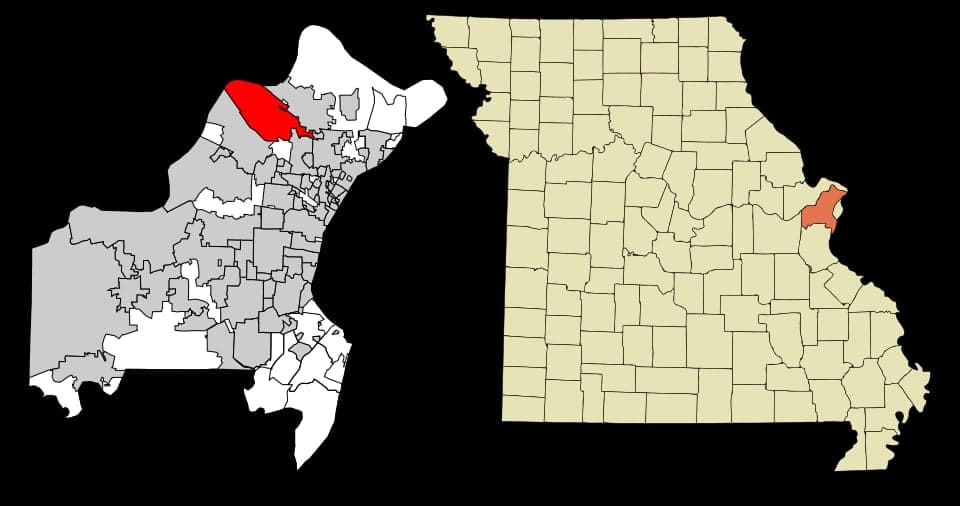
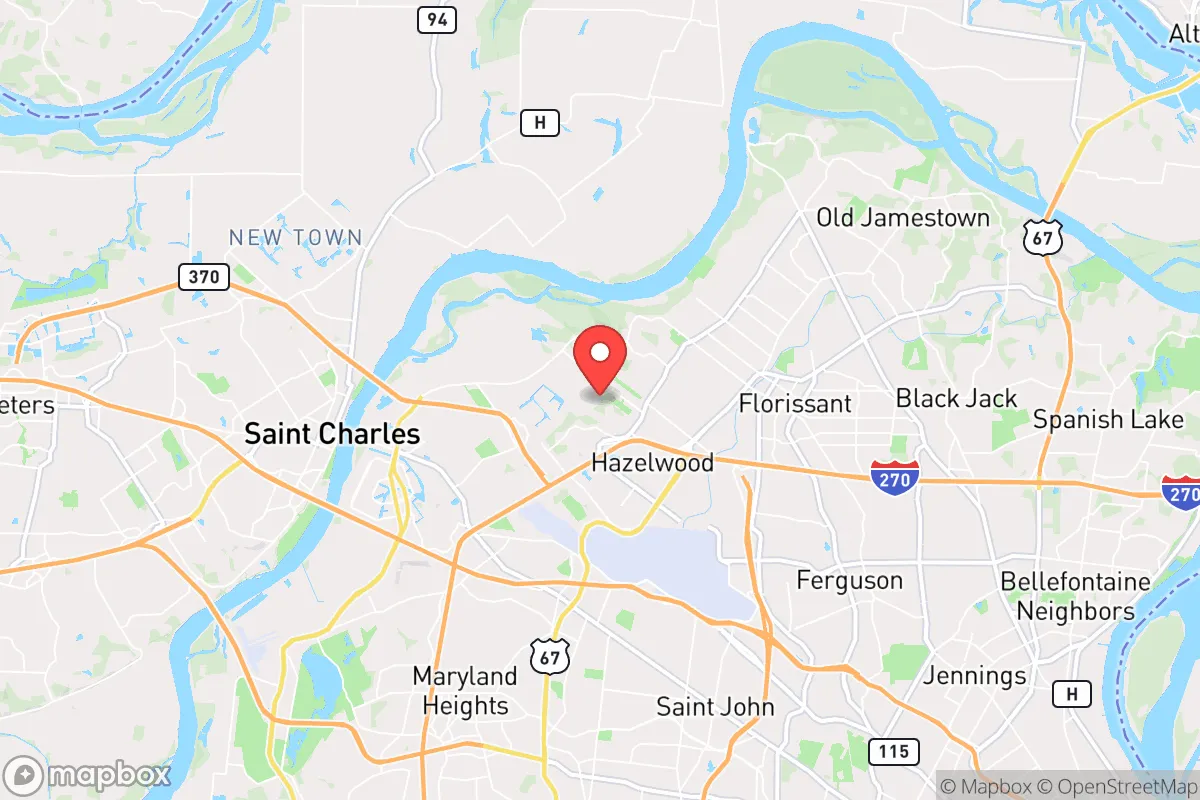
Photo: Wikipedia
Political ClimatePolitical Climate in Hazelwood, MO
District shown is the primary district for this city’s centroid. Cities may span multiple districts.
Local Political AnalysisPolitical Analysis of Hazelwood, MO
Hazelwood, Missouri, is a deep blue island in a sea of red, with a Cook PVI of D+29 that makes it one of the most reliably Democratic suburbs in the St. Louis region. That wasn't always the case—back in the 90s and early 2000s, this was a solidly working-class, union Democrat town where folks voted for the person, not the party, and you could count on a balanced local government that kept taxes low and didn't meddle in your business. But over the last decade, the political winds have shifted hard left, and it's not just about voting for Democrats anymore—it's about a whole new set of priorities that feel less like common-sense governance and more like top-down social engineering. If you're looking at moving here, you need to understand that the local politics are increasingly driven by a progressive agenda that touches everything from zoning to school policies, and it's a far cry from the live-and-let-live ethos that built this town.
How it compares
Drive ten minutes west to St. Charles or fifteen minutes north to Florissant, and you'll feel the political whiplash. St. Charles County is reliably Republican, with a PVI around R+15, and its local governments tend to prioritize low taxes, property rights, and a hands-off approach to business. Florissant, while still Democratic, is more moderate—think D+10 or so—and its city council has pushed back on some of the more aggressive progressive policies you see in Hazelwood. Meanwhile, Hazelwood's city council and school board have embraced things like diversity, equity, and inclusion (DEI) initiatives, sanctuary city rhetoric (though not officially designated), and a zoning code that increasingly favors high-density, transit-oriented development over single-family homes. The contrast is stark: in St. Charles, you can still build a fence without a permit hassle; in Hazelwood, you're looking at a growing list of regulations that feel like they're designed to control, not protect.
What this means for residents
For the average homeowner or small business owner, the shift means more bureaucracy and less personal freedom. The city has been aggressive with code enforcement—think fines for tall grass, parking violations, and even the color of your front door—under the guise of "neighborhood improvement." Property taxes have crept up, and while they're still lower than in St. Louis City, the trend is upward. The school district, Hazelwood School District, has been a flashpoint: they've implemented critical race theory-adjacent curriculum and gender identity policies that allow students to use preferred names and pronouns without parental consent. If you value parental rights and local control, this is a major red flag. The long-term trajectory is concerning: as older, more conservative residents move out or pass away, the city is being reshaped by younger, more progressive transplants who see government as a tool for social change, not a limited protector of your rights.
One cultural distinction worth noting: Hazelwood has a strong sense of community among its long-time residents, many of whom are retirees or empty-nesters who remember when the city was a quiet, safe, affordable place to raise a family. But the political direction is alienating that base. The city's embrace of light rail expansion and high-density apartment complexes near the Lambert Airport corridor is a clear sign that the powers-that-be want to transform Hazelwood into a transit-oriented, urban-style suburb—whether the existing residents want it or not. If you're a conservative or even a moderate who values personal liberty, low taxes, and minimal government interference, you'll want to keep a close eye on city council meetings and school board elections. The fight for Hazelwood's soul is ongoing, but right now, the progressives have the upper hand.

State Political ClimatePolitical Climate in Missouri
State Political AnalysisPolitical Environment in the State
Missouri has long been considered a bellwether state, but over the past 15 years it has shifted decisively from a classic purple swing state to a solidly red one. The state voted for Donald Trump by double digits in both 2016 and 2020, and the GOP now holds supermajorities in both chambers of the state legislature. This wasn’t always the case—Missouri voted for Bill Clinton in 1992 and 1996 and was within a point of the national average as recently as 2008. The shift has been driven by a combination of rural realignment, suburban flight from Democratic policies, and a growing conservative cultural identity that now defines the state’s political center of gravity.
Urban vs. rural divide
The political map of Missouri is a textbook study in the urban-rural split. The two major metro areas—St. Louis and Kansas City—are deep blue islands in a sea of red. St. Louis City and County, along with Jackson County (Kansas City), reliably deliver 60-70% of their votes to Democrats. But outside those corridors, the state is overwhelmingly Republican. The rural counties of the Ozarks, like Christian County and Greene County (home to Springfield), vote 70-80% Republican. The Bootheel region in the southeast, once a Democratic stronghold due to labor unions and agriculture, has flipped hard red over the last two decades. The St. Louis suburbs like St. Charles County and Jefferson County have also moved right, with St. Charles County now reliably voting 60%+ Republican. The Kansas City suburbs in Platte and Clay counties are more competitive but trending red. The only real blue growth is in Columbia, home to the University of Missouri, which has become a progressive enclave, but its population is too small to offset the rural and suburban tide.
Policy environment
Missouri’s policy environment is among the most conservative in the Midwest. The state has a flat income tax rate of 4.95%, and in 2022 the legislature passed a series of tax cuts that will eventually phase the rate down to 4.5%. There is no estate tax, and property taxes are low—averaging around 0.9% of home value. The state is a right-to-work state (though voters repealed the law in a 2018 referendum, the legislature has since passed other union-restricting measures). Missouri is a constitutional carry state, meaning no permit is required to carry a concealed firearm. The state has some of the loosest gun laws in the nation, including a 2021 law that nullifies federal gun regulations—a direct challenge to federal authority. On education, Missouri has a robust school choice movement, with charter schools in St. Louis and Kansas City and a growing number of private school scholarship programs. The state also passed a parental rights bill in 2022 that requires schools to notify parents of any curriculum changes related to sexuality. On healthcare, Missouri did not expand Medicaid until 2021, and only after a voter-led ballot initiative forced the issue. The state has also passed laws restricting abortion to the point of near-total prohibition, with no exceptions for rape or incest. Election laws have been tightened, including a 2022 voter ID law that requires a photo ID to vote.
Trajectory & freedom
Missouri is on a clear trajectory toward more personal freedom in the conservative sense—less government interference in gun ownership, education, and taxation. The 2021 Second Amendment Preservation Act, which declares federal gun laws unenforceable in Missouri, is a landmark piece of legislation that has drawn both praise and legal challenges. The state has also passed a religious freedom law protecting individuals and businesses from being forced to participate in same-sex weddings. On the other hand, the state has expanded government power in some areas: the 2023 ban on gender-affirming care for minors represents a significant government intervention into medical decisions. The state has also cracked down on pandemic-era mandates, with a 2021 law prohibiting vaccine passports and mask mandates in schools. Overall, the trend is toward a state that prioritizes individual liberty in the traditional sense—gun rights, parental rights, and low taxes—while being willing to use state power to restrict what it sees as harmful social experiments.
Civil unrest & political movements
Missouri has seen its share of political flashpoints. The Ferguson protests of 2014 in the St. Louis suburb were a national catalyst for the Black Lives Matter movement, and the city of St. Louis has seen periodic protests over police shootings and racial justice. More recently, the state has become a battleground for election integrity debates, with St. Louis being a focal point for claims of voter irregularities. The Missouri Freedom Caucus has emerged as a powerful force in the state legislature, pushing for more aggressive conservative policies and often clashing with the more establishment GOP leadership. There is a growing nullification movement, with the Second Amendment Preservation Act being the most prominent example. Immigration politics are less heated than in border states, but there have been efforts to ban sanctuary cities, and the state has a law requiring law enforcement to cooperate with federal immigration authorities. A new resident would notice the strong presence of conservative activist groups, particularly in the rural areas and suburbs, and a palpable distrust of federal authority that is woven into the state’s political culture.
Projection
Over the next 5-10 years, Missouri is likely to become more conservative, not less. The in-migration patterns favor red areas: people moving from Illinois and California are settling in the St. Louis and Kansas City suburbs, but they are often conservative-leaning families seeking lower taxes and better schools. The rural areas are depopulating slowly, but the political weight of the suburbs is growing. The state’s Republican supermajority is unlikely to be threatened, and the legislature will continue to push the envelope on issues like school choice, tax cuts, and gun rights. The biggest wild card is the St. Louis region, where the city’s population decline and the county’s political fragmentation could lead to a push for municipal consolidation or even a city-county divorce. The Democratic Party in Missouri is increasingly confined to St. Louis City, Kansas City, and Columbia, and its influence will continue to wane. A new resident moving in now should expect a state that is firmly conservative, with a government that is actively trying to shrink its footprint in most areas of life, while being willing to use its power to enforce traditional values.
Bottom line for a new resident: If you’re looking for a state where your gun rights are protected, your taxes are low, your kids’ schools are accountable to you, and the government generally stays out of your business, Missouri is a strong bet. You’ll find a welcoming culture in the suburbs and rural areas, but you’ll need to be comfortable with the political reality that the state is deeply red and likely to stay that way. The urban areas are their own world, but they’re easy to avoid. Just know that the political battles here are real—especially around St. Louis—and the state is not afraid to pick a fight with the federal government. If that sounds like home, you’ll fit right in.
* Values derived from national, state, county, city and local statistics and may differ in a specific area. Last updated: 2026-05-01T05:55:07.000Z
Narrative content on this page is AI-generated and may contain mistakes. Verify any details that matter before acting on them.
ReloMaps may earn a commission from affiliate links at no extra cost to you.

