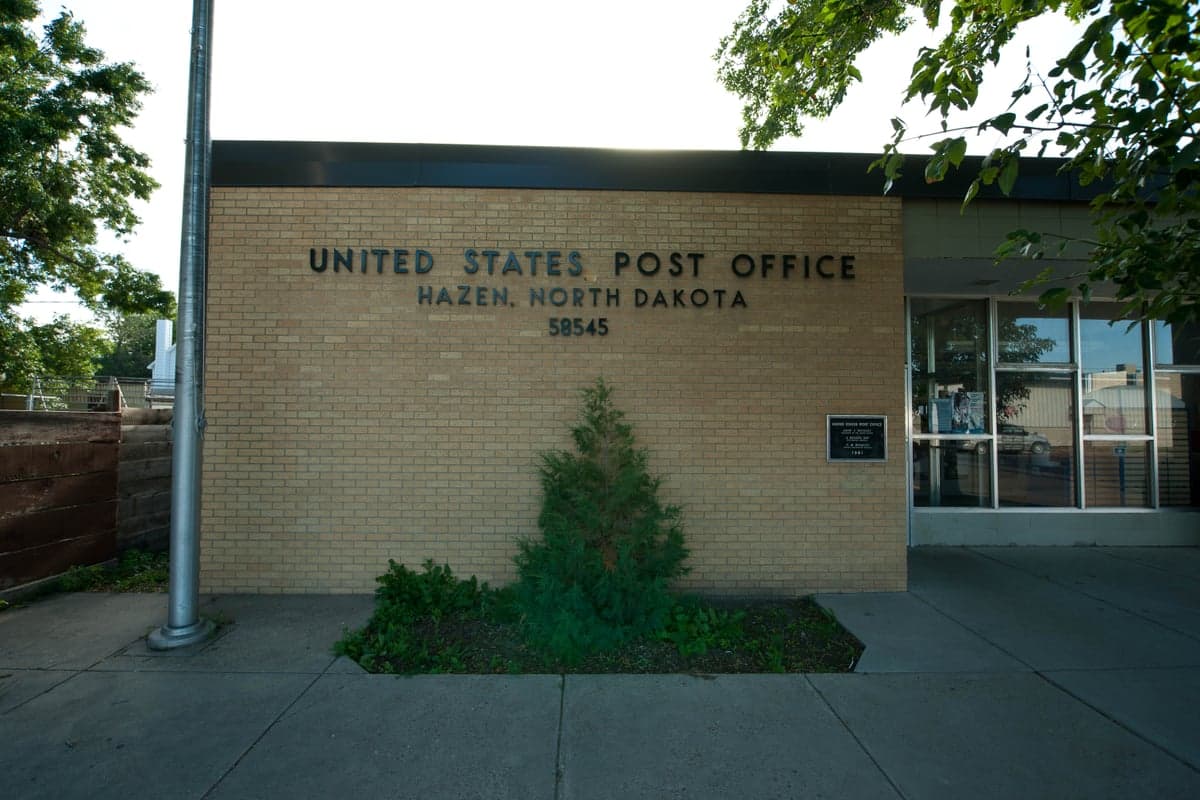
Photo: Wikipedia
Political ClimatePolitical Climate in Hazen, ND
District shown is the primary district for this city’s centroid. Cities may span multiple districts.
Inherited from parent state — no local data available.
Local Political AnalysisPolitical Analysis of Hazen, ND
Hazen, North Dakota, sits in a deeply conservative corner of the state, and that’s not changing anytime soon. The Cook PVI of R+18 tells you the math, but the real story is the culture: folks here have long believed in minding your own business and keeping government out of your backyard. That said, you can feel a subtle shift in the air—not a blue wave, but a slow creep of progressive ideas that would’ve been laughed out of the coffee shop twenty years ago. If you’re looking for a place where personal freedoms are still the default, Hazen is solid, but you’ve got to keep an eye on the horizon.
How it compares
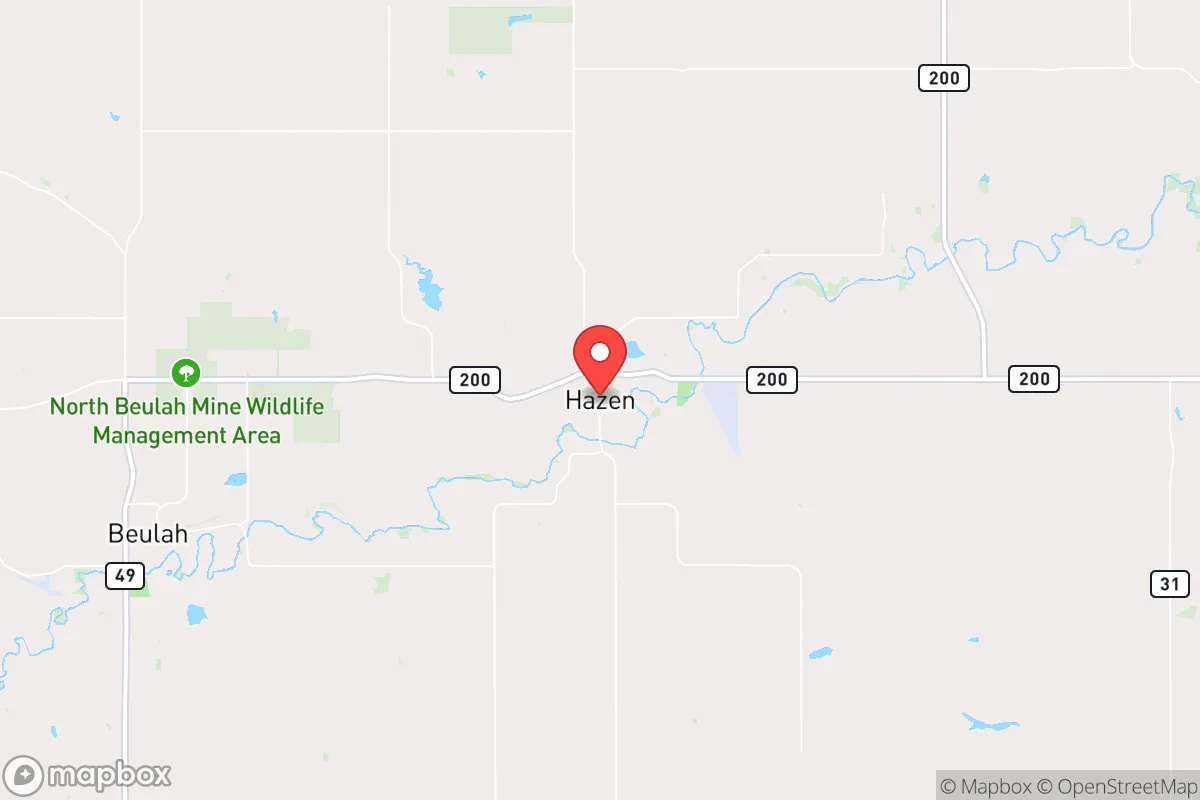
Drive thirty miles east to Bismarck, and you’ll find a different animal. The capital city has a more moderate, suburban vibe—more transplants, more state employees, and a noticeable tolerance for policies that would raise eyebrows in Hazen. Meanwhile, towns like Beulah and Center are cut from the same cloth as Hazen: heavy on energy workers, light on regulation. The contrast is sharpest during election cycles, when Hazen’s precincts reliably deliver 70-75% Republican votes, while Bismarck’s outer wards sometimes dip into the 50s. For a long-time resident, that gap feels like a warning: the bigger the town, the more government overreach you’ll tolerate.
What this means for residents
For the average Hazenite, the political climate means you can still run your life without a dozen permits or a committee’s approval. Want to build a shed on your property? You’re probably fine. Carry a firearm? No one’s batting an eye. The local school board and city council are dominated by folks who remember when the town was smaller and the rules were simpler. But here’s the concern: as the oil and gas industry brings in new faces from out of state, you’ll see more pressure for “equity” initiatives in schools or zoning changes that sound harmless but chip away at property rights. It’s not a crisis yet, but it’s a slow drip. If you value low taxes and minimal interference, Hazen is still a stronghold—but don’t assume it’ll stay that way without paying attention.
Culturally, Hazen holds onto a few distinctions that set it apart. The annual Hazen Day celebration is a no-frills affair—parades, rodeo, and a lot of pickup trucks—not a platform for political grandstanding. The local newspaper, the Hazen Star, still runs editorials that would make a coastal editor cringe, and that’s a good sign. Policy-wise, the city has resisted adopting the kind of “livability” ordinances that Bismarck has embraced, like strict noise codes or bike lane mandates. The unspoken rule here is simple: if it’s not broken, don’t fix it with a law. That’s the Hazen way, and it’s worth fighting for as the state’s demographics shift. If you’re thinking of moving here, just know you’re buying into a community that values freedom over convenience—and that’s a trade worth making.

State Political ClimatePolitical Climate in North Dakota
State Political AnalysisPolitical Environment in the State
North Dakota has long been one of the most reliably Republican states in the nation, with a deep-rooted conservative culture that has only solidified over the past two decades. The state hasn’t voted for a Democratic presidential candidate since Lyndon Johnson in 1964, and in 2024, Donald Trump carried it by over 20 points. The dominant coalition is a mix of rural agricultural voters, oil patch workers from the Bakken region, and a growing number of conservative transplants fleeing high-tax states. Over the last 10-20 years, the state has shifted further right, driven by the energy boom and a backlash against federal overreach, though the small but growing cities of Fargo and Grand Forks have introduced a modest urban-liberal counterweight.
Urban vs. rural divide
The political map of North Dakota is starkly divided between its handful of small cities and the vast, deeply conservative countryside. Fargo, the largest city, is the state’s most liberal area—Cass County voted for Joe Biden in 2020 by a narrow margin, a rarity in the state. Grand Forks and Bismarck are more moderate but still lean Republican, with Grand Forks County trending slightly left due to the university influence. Meanwhile, the rural counties—especially in the western oil patch like McKenzie, Williams, and Dunn counties—vote Republican by margins of 70-80%. The divide is less about ideology and more about density: the open plains and small towns of the east and central regions, places like Jamestown, Minot, and Dickinson, are solidly red, while the sparse western counties are among the most conservative in the nation. The energy boom in Williston and Watford City has actually deepened the rural conservative tilt, as the workforce there tends to be libertarian-leaning and hostile to regulation.
Policy environment
North Dakota’s policy environment is a model of limited government and low taxation, which is a major draw for conservatives. There is no state income tax—a deliberate choice that has fueled in-migration from high-tax states like California and Illinois. Property taxes are moderate, and the state’s oil tax revenue keeps the budget flush without needing to squeeze residents. The regulatory posture is business-friendly, with minimal red tape for energy extraction, agriculture, and manufacturing. On education, the state has a robust school choice movement, including a new Education Savings Account program passed in 2023 that allows parents to use public funds for private or homeschool expenses. Healthcare is largely market-driven, with no Medicaid expansion under the Affordable Care Act until a 2018 ballot measure forced it through—a move many conservatives still resent. Election laws are among the most secure in the nation: voter ID is required, same-day registration is not allowed, and the state has resisted mail-in ballot expansions. The legislature, dominated by Republicans, has consistently blocked progressive initiatives on gun control, abortion, and environmental regulation.
Trajectory & freedom
North Dakota is becoming more free in many respects, particularly on gun rights, parental rights, and tax policy. In 2023, the legislature passed a constitutional carry law, allowing residents to carry concealed firearms without a permit—a move that solidified the state’s status as one of the most gun-friendly in the nation. Parental rights were strengthened with a 2021 law requiring schools to notify parents of any curriculum involving sexuality or gender identity, and a 2023 law banned transgender athletes from female sports. Medical autonomy has been a flashpoint: the state passed a near-total abortion ban in 2023, with exceptions only for rape, incest, and life of the mother, reflecting the conservative majority’s values. Property rights are strong, with no statewide zoning mandates and a robust right-to-farm law that protects agricultural operations from nuisance lawsuits. However, there are concerns about federal overreach—particularly on energy regulations and land use in the Bakken—and some residents worry about the growing influence of out-of-state money in local politics. The trajectory is toward more personal liberty, but the state’s small population means it’s vulnerable to federal pressure.
Civil unrest & political movements
North Dakota has seen its share of political flashpoints, most notably the Standing Rock protests in 2016-2017, where thousands of activists—including left-wing environmentalists and Native American groups—clashed with law enforcement over the Dakota Access Pipeline. The protests were a major test of the state’s commitment to property rights and energy development, and the state government ultimately sided with the pipeline, using National Guard and state police to maintain order. Since then, the state has seen a rise in conservative activism, particularly around election integrity and parental rights. The Bismarck-area has become a hub for anti-federal sentiment, with groups like the North Dakota Republican Party pushing for nullification of federal gun laws and environmental regulations. Immigration politics are relatively quiet—the state has a small immigrant population, mostly in the oil patch—but there is a strong undercurrent of opposition to sanctuary policies, with the legislature passing a law in 2019 banning sanctuary cities. Election integrity remains a hot topic: the 2020 election saw no major controversies, but the state has since tightened absentee ballot rules and banned ballot drop boxes. A new resident would notice a general distrust of federal authority, especially in rural areas, but little in the way of violent unrest.
Projection
Over the next 5-10 years, North Dakota is likely to become even more conservative, driven by two trends: continued in-migration from blue states and the aging of the state’s liberal-leaning university populations. The oil patch will keep attracting libertarian-leaning workers, while the state’s low taxes and family-friendly policies will draw families from places like Minnesota and Illinois. The urban-rural divide may widen slightly as Fargo grows, but the state’s small population means the rural vote will continue to dominate. The biggest risk is federal overreach—if the Biden or a future Democratic administration cracks down on oil and gas, it could hurt the state’s economy and trigger a backlash. But for now, the state is on a trajectory of increasing freedom: expect more school choice, further gun rights expansions, and continued resistance to federal mandates. A new resident moving in now should expect to find a state that values personal liberty, low taxes, and traditional values, with a government that is generally on their side.
For a conservative individual or family looking to relocate, North Dakota offers a rare combination of low taxes, strong gun rights, parental control over education, and a government that respects personal freedom. The winters are harsh, but the political climate is welcoming. If you’re tired of high taxes, overregulation, and progressive school curricula, this is a state where you can build a life on your own terms—just be prepared for the cold and the long drives between towns.
* Values derived from national, state, county, city and local statistics and may differ in a specific area. Last updated: 2026-04-19T05:46:52.000Z
Narrative content on this page is AI-generated and may contain mistakes. Verify any details that matter before acting on them.
ReloMaps may earn a commission from affiliate links at no extra cost to you.

