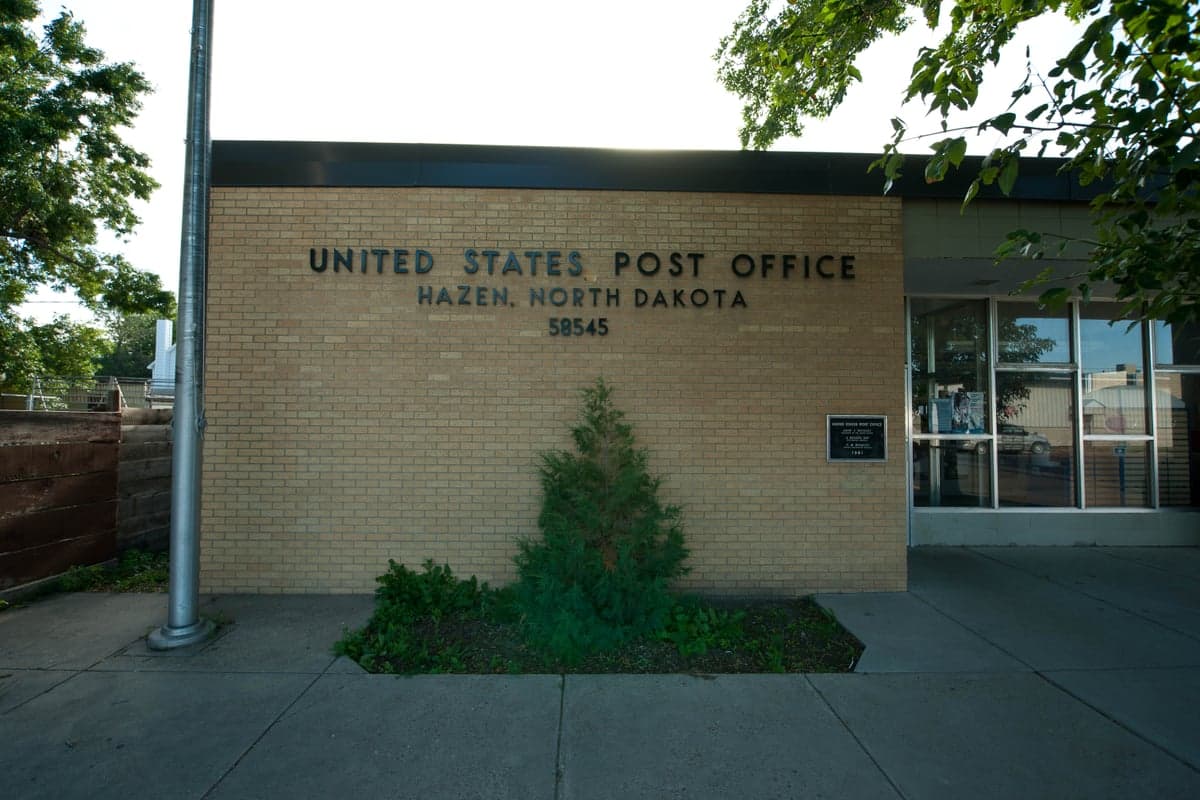
Photo: Wikipedia
Quality of Life in Hazen, ND
A livable area that tracks near national norms for affordability, walkability, and neighborhood health.
What does Quality of Life tell us?
Quality of Life blends cost of living, nearby amenities, socioeconomic signals, and neighborhood character. City-level scores represent the whole municipality; individual neighborhoods can differ.
What does this tell us?
Quality of Life blends cost of living, nearby amenities, socioeconomic signals, and neighborhood character. City-level scores represent the whole municipality; individual neighborhoods can differ.
Cost of Living
22% below national average
The Real Cost of Living in Hazen, ND for 2026
| Tier | Individual | Family (4) |
|---|---|---|
| Survival | $16k | $30k |
| Comfortable | $37k | $54k |
| Luxury | $115k+ | $179k+ |
| Elite (Top 5%) | $136k+ | $211k+ |
133%
The Area Signal
A metric tracking the socioeconomic signals of the area.


Limited data for this area
Limited data for this area
Hobbies
Explore the areaGroceries
5 within 10 miles
Gas
0 within 10 miles
Hospital
2 within 20 miles
Airport
Mercer County Regional Airport
Post Office
USPS — Hazen, ND
Critical Amenities
Quality-of-Life Analysis
Hazen, North Dakota, presents a notably affordable quality of life that attracts a mix of energy-sector workers, farming families, and retirees seeking a low-stress, small-town environment. With a cost-of-living index of 78—22 points below the U.S. average—the community offers financial breathing room rarely found in larger regional hubs. The population skews toward middle-income households, with a median home value of $189,300 and a median rent of $989, making homeownership attainable for many who would be priced out of markets like Bismarck or Minot.
Cost of living, housing, and how Hazen compares to nearby towns
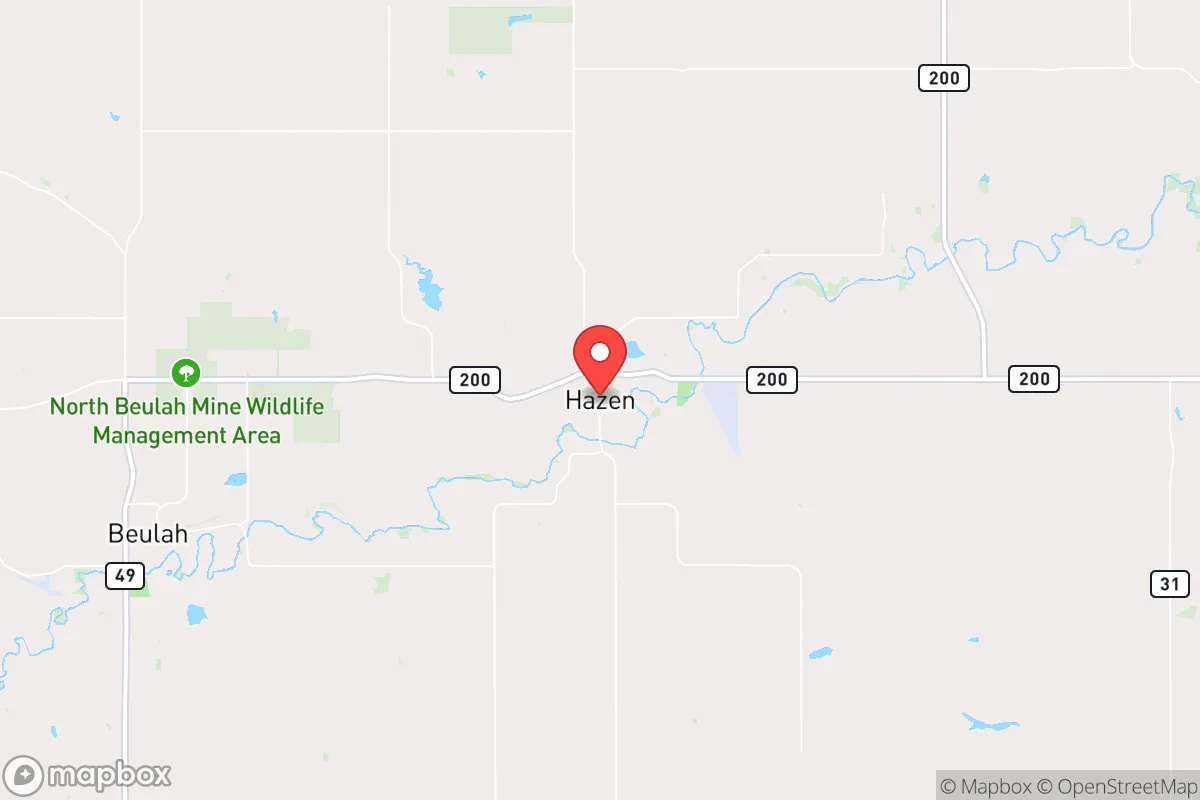
Hazen’s cost of living is a standout feature, driven primarily by housing costs that are roughly 30% below the national median. The median home value of $189,300 is significantly lower than the North Dakota state median of approximately $240,000, and the median rent of $989 is about $200 less than the state average. Compared to nearby Beulah (5 miles west) or Center (15 miles east), Hazen’s housing stock is slightly newer and more varied, with a mix of single-family homes and rental duplexes catering to oil-field workers. The average commute of just over 18 minutes is notably short—well under the national average of 26 minutes—reflecting the town’s compact layout and the proximity of major employers like the Dakota Gasification Company and the nearby coal-fired power plants. Property taxes in Mercer County remain among the lowest in the state, further stretching household budgets.
Local amenities, schools, and what daily life feels like
Daily life in Hazen centers on a walkable downtown core anchored by a grocery store, a hardware store, and a handful of locally owned restaurants and cafes. The Hazen Public School District serves roughly 600 students across one elementary, one middle, and one high school, with a student-teacher ratio of about 12:1—well below the national average—and a graduation rate consistently above 95%. For recreation, the Hazen City Park offers a swimming pool, baseball fields, and a walking trail along the Knife River, while the nearby Lake Sakakawea (a 30-minute drive) provides boating, fishing, and camping. Healthcare is handled by the Hazen Clinic (part of CHI St. Alexius Health), though serious cases require a 45-minute drive to Bismarck. The town’s rhythm is quiet and predictable: most businesses close by 6 p.m., and weekend social life revolves around high school sports, church events, and the annual Hazen Harvest Festival in September.
Hazen is best suited for those who value low costs, short commutes, and a tight-knit community over urban amenities or career diversity. Energy-sector employees—especially those working at the Great Plains Synfuels Plant or in the Bakken oil fields—will find the commute and housing costs especially favorable. Families with school-age children benefit from the strong public schools and safe streets, while retirees appreciate the low property taxes and access to basic healthcare. However, those seeking nightlife, cultural events, or specialized medical care will need to look to Bismarck or Williston. For the right person, Hazen offers a stable, affordable foundation for a quiet, self-sufficient life.

Crime in Hazen, ND
Lower crime rates than 94% of comparable U.S. locations.
Violent CrimeViolent Crime Analysis
Property CrimeProperty Crime Analysis
Crime Analysis
Hazen, North Dakota, presents a notably safe environment for its residents, with crime rates significantly below both state and national averages. The city's violent crime rate stands at 87.3 incidents per 100,000 people, while property crime occurs at a rate of 130.9 per 100,000. These figures place Hazen among the safer communities in the state, offering a level of security that is increasingly rare in many parts of the country.
Crime in context
When compared to broader benchmarks, Hazen's safety profile is exceptional. The national average for violent crime is roughly 380 per 100,000, meaning Hazen's rate is more than 75% lower. Similarly, the national property crime rate hovers around 1,950 per 100,000, making Hazen's rate of 130.9 a fraction of the typical American experience. Even within North Dakota, which itself has a lower-than-average crime profile, Hazen stands out. The state's violent crime rate is approximately 290 per 100,000, and its property crime rate is near 1,700 per 100,000. Hazen's numbers are roughly one-third the state average for violent crime and less than one-tenth for property crime. This stark contrast underscores a community where serious crime is an anomaly, not a daily concern.
What residents experience
For those living in Hazen, the low crime statistics translate into a tangible sense of security. Theft, burglary, and assault are rare events. Residents commonly report feeling safe walking at night, leaving doors unlocked, and allowing children to play outdoors without constant supervision. This environment is a direct result of a community-oriented culture and a local justice system that prioritizes public safety. Unlike larger metropolitan areas where progressive prosecutorial policies can lead to lenient sentencing and higher recidivism, Hazen benefits from a traditional approach to law and order. The local district attorney's office focuses on accountability, ensuring that offenders face consequences that protect the community and deter future crime. This philosophy directly supports the low crime rates and high quality of life that define Hazen.
Neighborhood-level variation
While comprehensive neighborhood-specific crime data for a small city like Hazen is not publicly available in granular detail, the overall uniformity of the low crime rate suggests minimal variation. The entire city, from its residential core to its outskirts, benefits from the same community-focused policing and conservative judicial philosophy. The most significant safety consideration for a new resident is not which block to choose, but rather the typical rural precautions: securing outbuildings and vehicles, as opportunistic theft can occasionally occur. However, even these incidents are infrequent. For anyone seeking a community where safety is a given rather than a gamble, Hazen represents a compelling choice, particularly when contrasted with the crime challenges found in larger, more politically progressive urban centers.
* Values derived from national, state, county, city and local statistics and may differ in a specific area. Last updated: 2026-04-19T05:46:52.000Z
Narrative content on this page is AI-generated and may contain mistakes. Verify any details that matter before acting on them.
ReloMaps may earn a commission from affiliate links at no extra cost to you.

