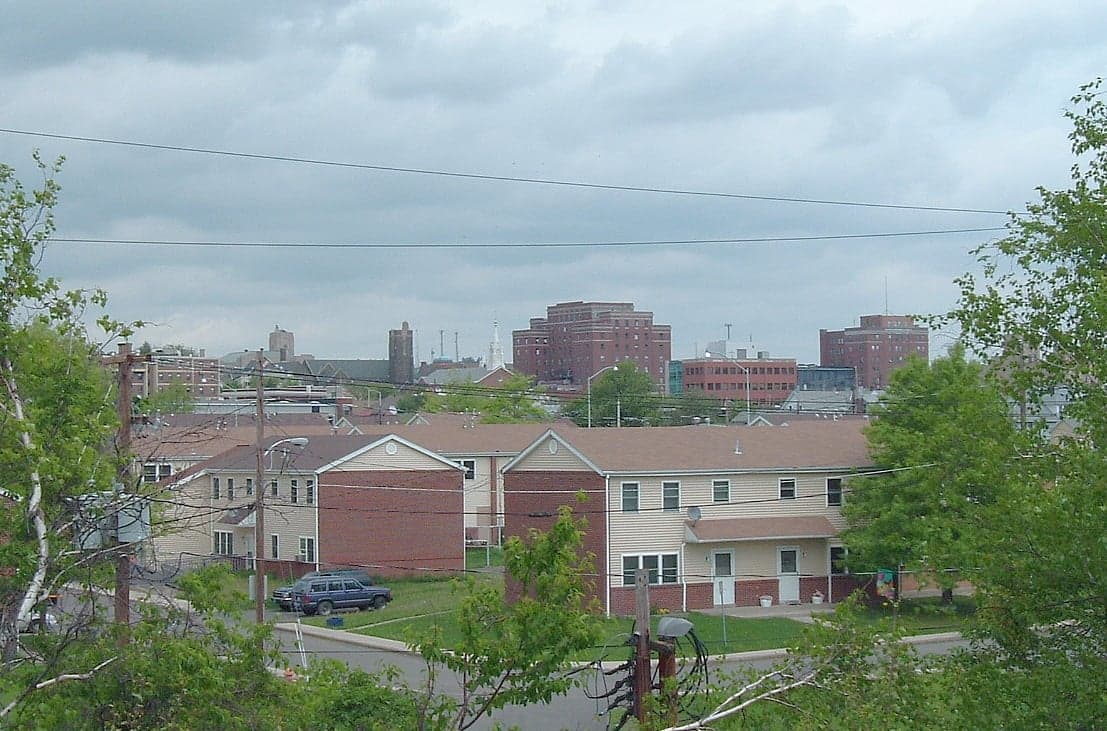
Photo: Wikipedia
Political ClimatePolitical Climate in Hazleton, PA
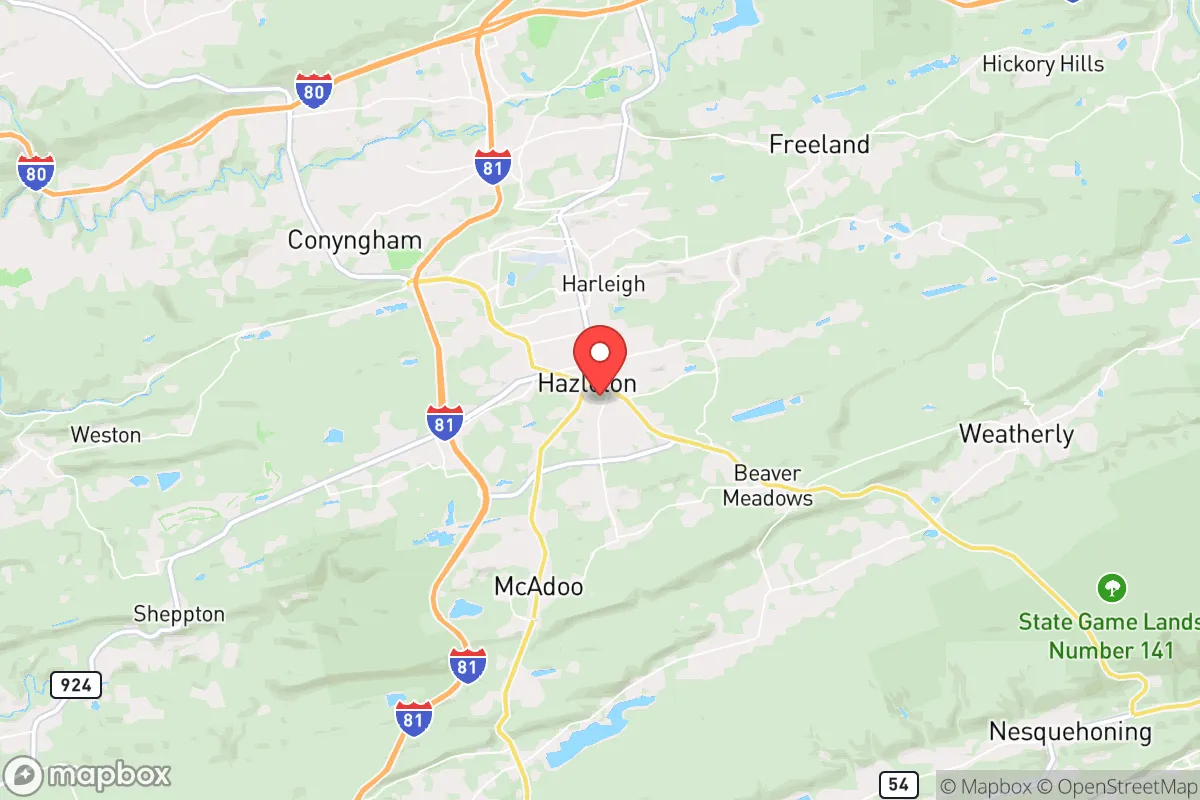
District shown is the primary district for this city’s centroid. Cities may span multiple districts.
Local Political AnalysisPolitical Analysis of Hazleton, PA
Hazleton, Pennsylvania, has long been a reliably conservative stronghold in Luzerne County, and that hasn’t changed much despite the national shifts. The Cook PVI rating of R+4 tells you the district leans Republican by a solid margin, but if you’ve lived here as long as I have, you know the real story is deeper than a number. We’ve seen waves of change—new faces, new businesses, and a growing population—but the core political vibe remains rooted in common-sense values: limited government, personal responsibility, and a healthy skepticism of anyone in Harrisburg or D.C. telling us how to live our lives. That said, there’s been a quiet undercurrent of progressive activism creeping in from the bigger cities nearby, and it’s worth keeping an eye on.
How it compares
Drive twenty minutes south to Wilkes-Barre, and you’ll feel a different energy—more union-heavy, more Democratic-leaning, with a city council that’s flirted with progressive policies like rent control and sanctuary city rhetoric. Head east to Allentown, and you’re in a blue stronghold where taxes and regulations have been climbing for years. Hazleton, by contrast, has held the line. Our local government has pushed back on state mandates, especially during the pandemic, and we’ve seen a 2021 ordinance restricting illegal immigration that drew national attention—love it or hate it, it showed we’re not afraid to stand up for what we think is right. Surrounding towns like West Hazleton and Freeland lean even more conservative, often voting +10 to +15 points redder than the county average. It’s a pocket of stability in a region that’s slowly shifting leftward, and that’s something a lot of us take pride in.
What this means for residents
For the average family here, the political climate translates into lower taxes than in neighboring blue counties and a lighter regulatory touch on small businesses. You won’t see the kind of overreach you get in places like Philadelphia or Pittsburgh—no mask mandates that drag on for years, no heavy-handed zoning rules that kill a mom-and-pop shop. The school board has stayed focused on academics and local control, not woke curriculum battles imported from the coasts. But there’s a catch: as Hazleton grows—and it is growing, fast—we’re seeing more transplants from New York and New Jersey who bring their big-government habits with them. If you’re worried about that, you’re not alone. The long-term trend depends on whether we can keep electing leaders who remember that freedom means being left alone to run your own life, your own business, and your own family without a bureaucrat’s permission slip.
One thing that sets Hazleton apart culturally is its strong sense of self-reliance. You won’t find a lot of hand-wringing over national headlines here; people are more concerned with potholes, school taxes, and whether the local diner still serves a decent pierogi. That’s not to say we’re isolated—we’re not. But there’s a quiet defiance in the air, a refusal to let outside trends dictate how we live. The biggest policy distinction? Our gun rights are taken seriously, with no local ordinances that infringe on the Second Amendment, and the county sheriff’s office is known for issuing permits without unnecessary delays. If you value a place where the government stays out of your garage, your church, and your backyard, Hazleton still feels like home. Just keep your eyes open—the progressive wave is lapping at our shores, and it’s up to us to hold the line.

State Political ClimatePolitical Climate in Pennsylvania
State Political AnalysisPolitical Environment in the State
Pennsylvania is a true battleground state, and if you’re looking at it from a conservative lens, the picture is mixed. The state leans slightly Democratic in statewide elections, but that’s driven almost entirely by the Philadelphia and Pittsburgh metros. Over the last 10-20 years, the rural and exurban areas have shifted hard right, while the suburbs have moved left, creating a political tug-of-war that makes Pennsylvania one of the most competitive and unpredictable states in the country. For a conservative family or individual, the key question is whether the state’s policy environment and cultural trajectory align with your values, and the answer depends heavily on where you land.
Urban vs. rural divide
The political map of Pennsylvania is a textbook example of the urban-rural split. Philadelphia and its collar counties—Montgomery, Delaware, Chester, and Bucks—are the engine of the Democratic vote. In 2020, Joe Biden won Philadelphia County by over 80 points, and the surrounding suburbs have become reliably blue, with many former Republican strongholds like Bucks County flipping to the left. Pittsburgh and Allegheny County are similarly Democratic, though the city itself is less dominant than Philly. The real conservative firepower comes from the vast rural and small-town regions: Lancaster County, York County, Franklin County, and the entire northern tier from Bradford to Tioga are deeply red. The Scranton/Wilkes-Barre area (Lackawanna and Luzerne counties) is a key battleground—once reliably blue, it swung hard for Trump in 2016 and 2020, driven by working-class voters who feel left behind by the Democratic Party’s cultural and economic shifts. The Harrisburg region (Dauphin County) is a microcosm of the state: the city is blue, the suburbs are purple, and the rural areas are red. If you’re a conservative, you’ll feel at home in the central and northern parts of the state, but you’ll be a minority voice in the southeast and southwest corners.
Policy environment
Pennsylvania’s state-level policy is a mixed bag for conservatives. The state has a flat income tax rate of 3.07%, which is relatively low and hasn’t changed much in years—a plus. Property taxes, however, are high, especially in good school districts, and there’s no state-level homestead exemption to cap them. The regulatory environment is moderate; Pennsylvania is not Texas or Florida in terms of business friendliness, but it’s not California either. On education, the state has a robust school choice movement: the Educational Improvement Tax Credit (EITC) and Opportunity Scholarship Tax Credit (OSTC) programs allow businesses to fund scholarships for private and parochial schools, and there’s a growing push for universal school vouchers. Governor Josh Shapiro, a Democrat, has been more moderate than his predecessor, but he’s still aligned with teachers’ unions on most issues. Healthcare is heavily regulated, and the state expanded Medicaid under the Affordable Care Act, which is a non-negotiable for many conservatives. Election laws are a flashpoint: Pennsylvania has no-excuse mail-in voting (enacted in 2019 under Act 77), and voter ID requirements are weak—you only need to show ID the first time you vote at a new polling place. This has been a source of ongoing controversy, with many conservatives pushing for stricter laws. The state also has a Democratic-majority Supreme Court, which has weighed in on redistricting and election disputes in ways that often favor the left.
Trajectory & freedom
On the freedom front, Pennsylvania is trending in a concerning direction for conservatives. The biggest red flag is the erosion of Second Amendment rights. In 2022, the state passed Act 79, which expanded background checks to include long guns sold at gun shows and online, and there’s a constant push for “red flag” laws (extreme risk protection orders) that allow temporary confiscation of firearms without due process. Philadelphia and Pittsburgh have their own strict local gun ordinances, which the state legislature has tried to preempt, but the battle continues. On parental rights, the state has seen heated school board meetings over curriculum transparency and library books, but no major statewide legislation has passed. Medical freedom took a hit during COVID: Pennsylvania had some of the longest-lasting school closures and mask mandates in the country, and the state health department still has broad emergency powers that many conservatives want to rein in. Property rights are generally respected, but zoning laws in urban areas can be restrictive. The tax burden is moderate, but there’s no state-level right-to-work law, which means union power remains strong, especially in the public sector. Overall, the trajectory is toward more government involvement in personal decisions, particularly around health and firearms.
Civil unrest & political movements
Pennsylvania has seen its share of political flashpoints. The 2020 election aftermath was intense, with massive protests in Philadelphia over ballot counting and allegations of irregularities. The state was ground zero for the “Stop the Steal” movement, and there were armed demonstrations outside the Pennsylvania Convention Center. More recently, pro-Palestinian protests have erupted on college campuses like the University of Pennsylvania and Penn State, leading to clashes and arrests. Immigration politics are less visible here than in border states, but Philadelphia is a self-declared “sanctuary city,” and the state has seen a surge in migrant arrivals from New York City, straining resources in places like Allentown and Reading. There’s a growing grassroots movement for election integrity, with groups like the Pennsylvania Election Integrity Network pushing for audits and reforms. Secession or nullification rhetoric is rare, but there’s a strong “Second Amendment sanctuary” movement in rural counties—over 30 counties have passed resolutions declaring they won’t enforce unconstitutional gun laws. The most visible flashpoint for a new resident would be the culture war in public schools, especially in suburban districts like Central Bucks and Pittsburgh’s North Allegheny, where school board meetings have become battlegrounds over critical race theory, gender ideology, and library content.
Projection
Looking 5-10 years out, Pennsylvania is likely to become more polarized, not less. The Philadelphia and Pittsburgh suburbs will continue to drift left as educated, affluent professionals move in from blue states. Meanwhile, the rural and exurban areas will stay deep red, and the working-class towns in the northeast and southwest will remain competitive but lean Republican. The state’s population is aging and growing slowly, with most growth concentrated in the southeast. This demographic shift means the state will probably stay a toss-up in presidential elections, but the state legislature will remain Republican-controlled due to gerrymandering and rural overrepresentation. For conservatives, the best-case scenario is that the state becomes a “purple” battleground where your vote matters, but you’ll have to fight for every inch of freedom. The worst-case is that the urban centers continue to drive statewide policy on guns, education, and taxes, making it harder for rural and suburban conservatives to live according to their values. If you’re moving in now, expect to see more fights over school choice, election integrity, and Second Amendment rights, with no clear resolution in sight.
For a conservative family or individual considering Pennsylvania, the bottom line is this: choose your location carefully. If you settle in Lancaster, York, or Franklin County, you’ll find a strong community of like-minded people, lower taxes, and good schools. If you end up in the Philadelphia suburbs or Pittsburgh, you’ll be in a blue bubble with high property taxes and progressive policies that may clash with your values. The state as a whole is a battleground, and your vote will matter, but you’ll need to be engaged and active to protect your freedoms. It’s not a red state, but it’s not a lost cause either—it’s a place where conservatives can thrive if they’re willing to fight for it.
* Values derived from national, state, county, city and local statistics and may differ in a specific area. Last updated: 2026-05-01T04:11:46.000Z
Narrative content on this page is AI-generated and may contain mistakes. Verify any details that matter before acting on them.
ReloMaps may earn a commission from affiliate links at no extra cost to you.

