Photo: Wikipedia
Personal Sovereignty in Hempstead, NY
Moderate friction. Expect trade-offs in some aspect of personal liberty and independence.
What does Personal Sovereignty tell us?
Personal Sovereignty measures your capacity for self-reliance and independence with minimal government friction. Higher scores mean fewer barriers between you and the way you want to live... but it assumes you have the space you need and good neighbors.
What does this tell us?
Personal Sovereignty measures your capacity for self-reliance and independence with minimal government friction. Higher scores mean fewer barriers between you and the way you want to live... but it assumes you have the space you need and good neighbors.
State Policy
Energy independence: Importer (12% of energy produced in-state)
Personal Liberty
Homesteading

Personal Liberty Analysis
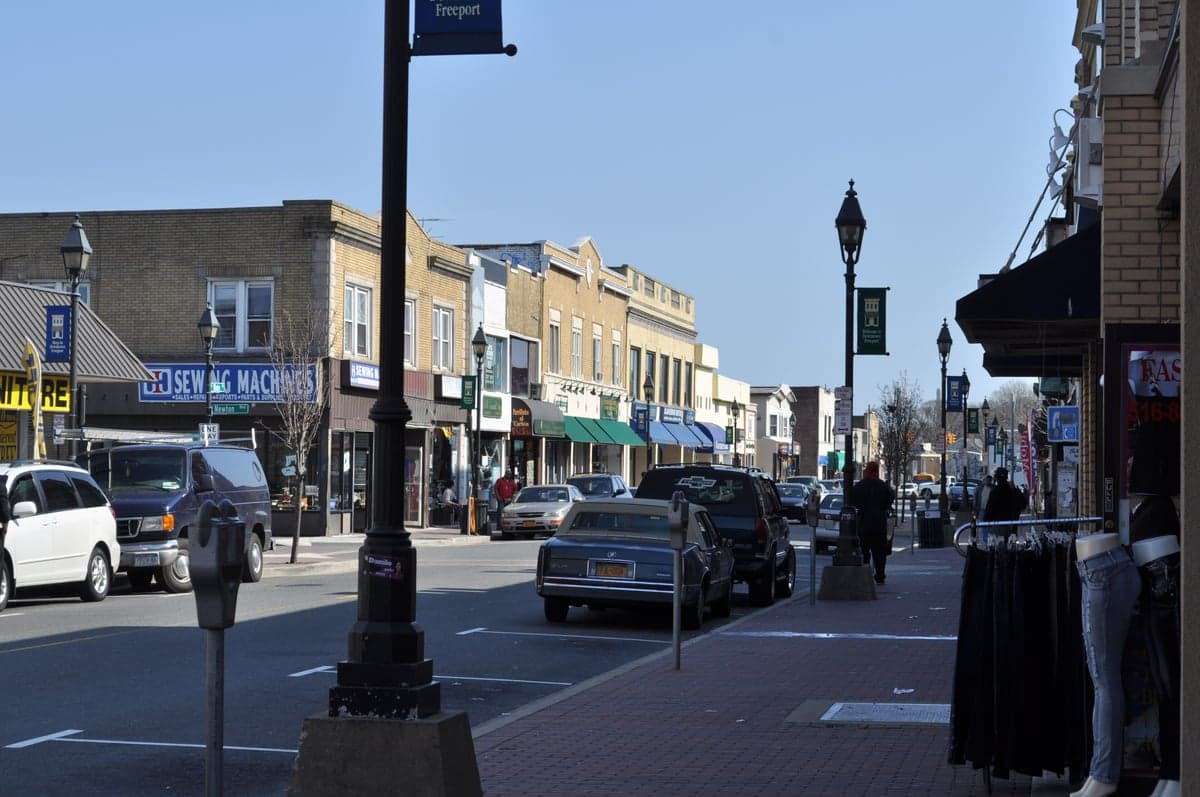
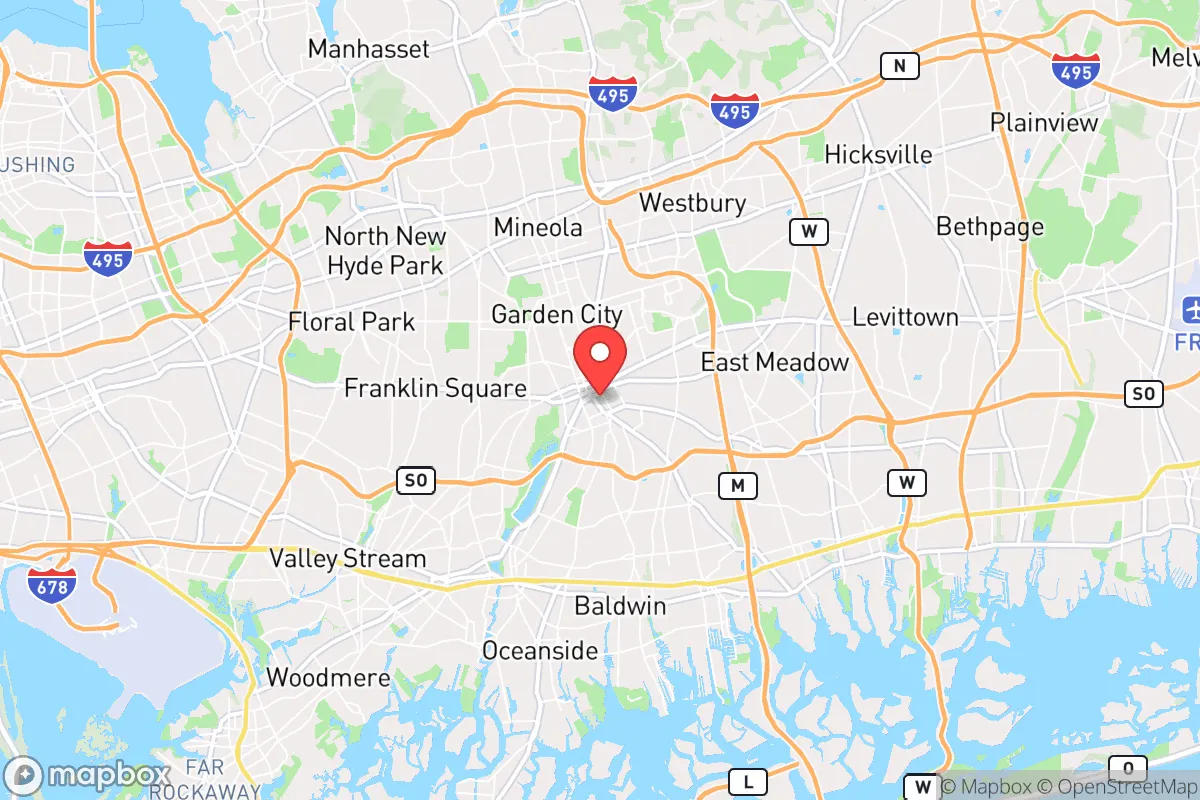
Hempstead, New York presents a challenging environment for personal sovereignty, where state-level policies significantly constrain individual autonomy in ways that conservative-leaning individuals and families should carefully weigh. As a village within the Town of Hempstead on Long Island, residents operate under New York State’s dense regulatory framework, which consistently ranks among the most restrictive in the nation for gun rights, tax burdens, and medical freedom. For those prioritizing self-reliance and minimal government interference, Hempstead offers limited room to maneuver, with local zoning and state mandates creating a landscape where personal choices are heavily mediated by Albany and county authorities. This analysis breaks down the specific sovereignty factors—taxes, self-defense, homesteading, and personal liberties—that matter most to preppers and conservative families evaluating relocation.
Tax burden and regulatory posture: what residents pay for limited local control
New York’s tax burden is the highest in the country, and Hempstead residents feel it acutely. Property taxes in Nassau County average around 1.8% of home value, among the steepest in the U.S., with a median annual bill exceeding $10,000 for a modest single-family home. State income taxes top out at 10.9%, and sales tax in Hempstead hits 8.625%. For a prepper mindset, this means a significant portion of household income is siphoned before any savings or preparedness investments can be made. Regulatory posture is equally heavy: New York’s building codes, environmental regulations, and business licensing requirements are among the most stringent in the Northeast. Starting a home-based business—like a small-scale food preservation operation or a firearms training course—requires navigating layers of permits from the village, town, and state. The state’s Climate Leadership and Community Protection Act also pushes aggressive energy mandates, including bans on natural gas hookups in new construction, which limits off-grid energy options like propane or diesel generators. For those seeking to minimize government overreach, Hempstead’s tax and regulatory climate is a significant deterrent.
Self-defense and gun law specifics: what the Second Amendment looks like in practice
New York’s gun laws are among the most restrictive in the nation, and Hempstead residents must comply with the state’s Concealed Carry Improvement Act (CCIA), passed in 2022. This law requires a pistol permit for any concealed carry, with applicants undergoing a 16-hour training course, a background check, and a “good moral character” review by a county judge. In Nassau County, the permitting process can take 6 to 12 months, and the state maintains a list of “sensitive locations” where carry is banned—including parks, public transportation, and any private property without explicit owner permission. Magazine capacity is capped at 10 rounds, and the state bans “assault weapons” by feature-based criteria. For a survivalist, this means building a defensive firearms arsenal is heavily restricted: you cannot own standard-capacity magazines, and semi-automatic rifles with features like pistol grips or flash suppressors are illegal. Stand-your-ground laws do not exist; New York imposes a “duty to retreat” before using deadly force, even in one’s home, unless the intruder poses an immediate threat of death or serious injury. For parents, this creates a legal gray area around home defense scenarios. The New York State Rifle & Pistol Association continues to challenge these laws in court, but as of 2026, the restrictions remain in full effect. For anyone prioritizing self-defense autonomy, Hempstead is a high-restriction zone.
Self-reliance and homesteading viability: lot sizes, zoning, and off-grid feasibility
Hempstead’s suburban density makes traditional homesteading nearly impossible. Typical residential lots range from 5,000 to 10,000 square feet—enough for a small garden but not for livestock, significant food production, or water independence. Zoning codes in the Town of Hempstead prohibit keeping chickens, goats, or bees on most residential parcels without special permits, and those permits are rarely granted. Off-grid living is effectively illegal: the village requires connection to municipal water and sewer systems, and solar panels must be grid-tied with net metering approval from PSEG Long Island. Rainwater collection is restricted by state health codes, and composting toilets are not permitted as primary sanitation. For a prepper seeking to build a self-sufficient compound, Hempstead offers no viable path. The nearest areas with larger parcels and looser zoning are in Suffolk County’s eastern towns (e.g., Brookhaven, Riverhead), where 1- to 5-acre lots are more common and some agricultural uses are allowed. Even there, New York’s building codes and environmental regulations (e.g., the State Environmental Quality Review Act) add layers of cost and delay. For those serious about homesteading, Hempstead is a dead end—it’s a commuter suburb, not a frontier.
Personal liberties: parental rights, medical autonomy, speech, and property
New York’s progressive governance extends into areas of personal liberty that concern conservative families. Parental rights have been a flashpoint: the state’s 2022 “Parental Bill of Rights” law (Education Law §3201-a) guarantees parents access to curriculum and medical records, but local school boards in Hempstead—like the Hempstead Union Free School District—have faced controversies over transparency in sex education and gender identity policies. The state also mandates that schools allow students to use names and pronouns without parental consent, a policy that many conservative parents view as an infringement on family authority. Medical autonomy is similarly constrained: New York has some of the strictest vaccine mandates in the country, including for school attendance (COVID-19, MMR, varicella), with only narrow religious exemptions. The state’s “Right to Refuse Medical Treatment” laws are limited, and emergency health orders during declared crises can override individual choice. Free speech is protected under the First Amendment, but New York’s hate crime laws and social media regulations (e.g., the 2023 “Stop HATE” Act) create chilling effects for speech that critics argue is protected political expression. Property rights are also constrained: eminent domain is frequently used for redevelopment projects, and the state’s rent stabilization laws in Hempstead (covering many multi-family units) limit what landlords can charge or evict. For a survivalist, these policies signal a government that prioritizes collective mandates over individual consent.
Overall, Hempstead ranks low on personal sovereignty compared to other U.S. regions. For a conservative-leaning individual or family prioritizing self-defense, tax freedom, and homesteading viability, the village is a poor fit. Neighboring states like Pennsylvania, New Hampshire, or even upstate New York’s more rural counties (e.g., Wyoming, Allegany) offer lower taxes, looser gun laws, and larger parcels for self-reliance. If you must be on Long Island for work or family, Hempstead can be managed with careful legal compliance—but it’s a place to operate within the system, not to build an independent life outside it. For those who view government overreach as a growing threat, the smart move is to look elsewhere.

* Values derived from national, state, county, city and local statistics and may differ in a specific area. Last updated: 2026-04-24T07:45:32.000Z
Narrative content on this page is AI-generated and may contain mistakes. Verify any details that matter before acting on them.
ReloMaps may earn a commission from affiliate links at no extra cost to you.

