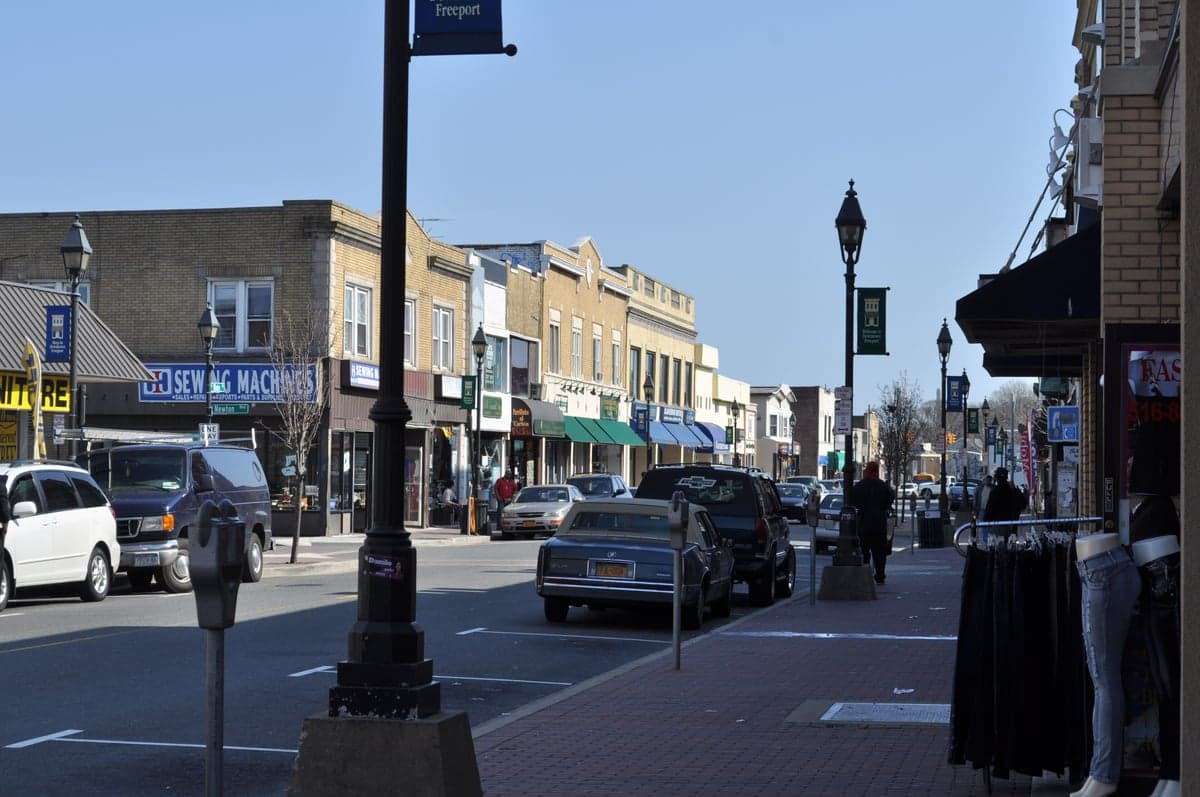
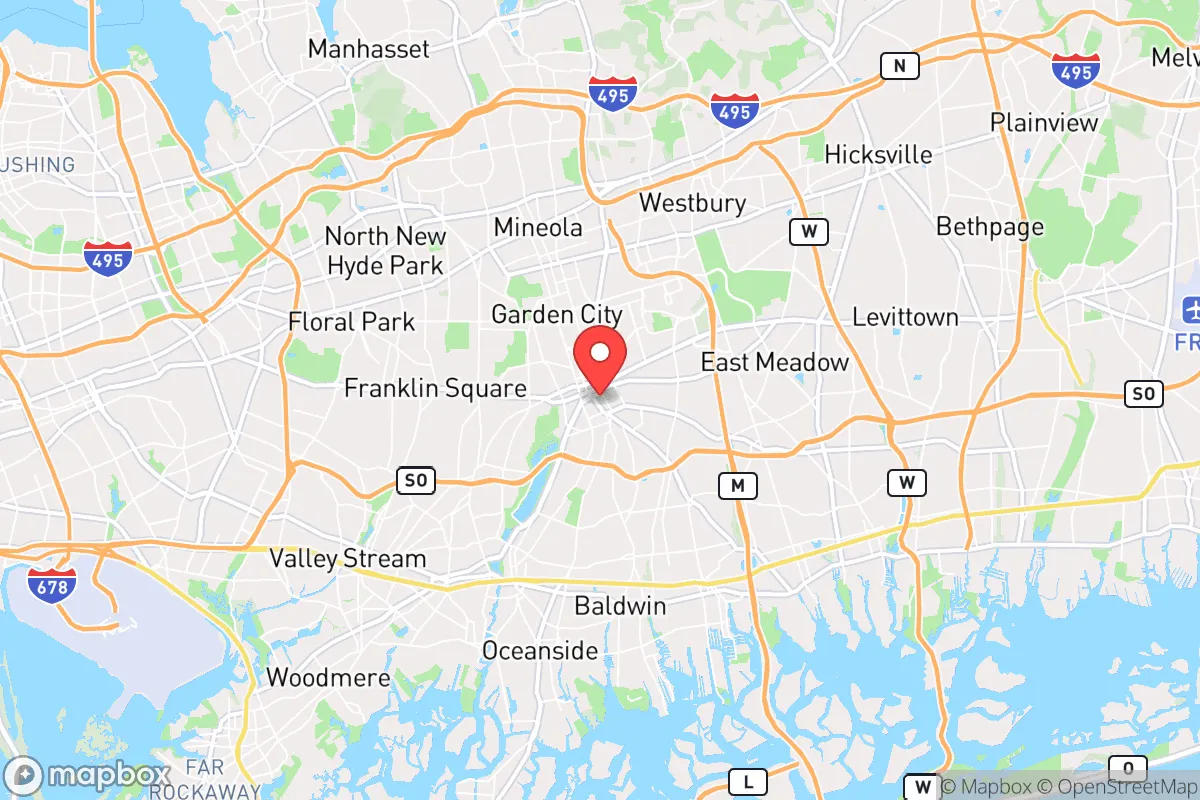
Photo: Wikipedia
Quality of Life in Hempstead, NY
A high quality of life with strong walkability, manageable living costs, healthy neighborhood signals, and solid amenity access.
What does Quality of Life tell us?
Quality of Life blends cost of living, nearby amenities, socioeconomic signals, and neighborhood character. City-level scores represent the whole municipality; individual neighborhoods can differ.
What does this tell us?
Quality of Life blends cost of living, nearby amenities, socioeconomic signals, and neighborhood character. City-level scores represent the whole municipality; individual neighborhoods can differ.
Cost of Living
48% above national average
The Real Cost of Living in Hempstead, NY for 2026
| Tier | Individual | Family (4) |
|---|---|---|
| Survival | $26k | $49k |
| Comfortable | $86k | $126k |
| Luxury | $149k+ | $231k+ |
| Elite (Top 5%) | $182k+ | $282k+ |
65%
The Area Signal
A metric tracking the socioeconomic signals of the area.
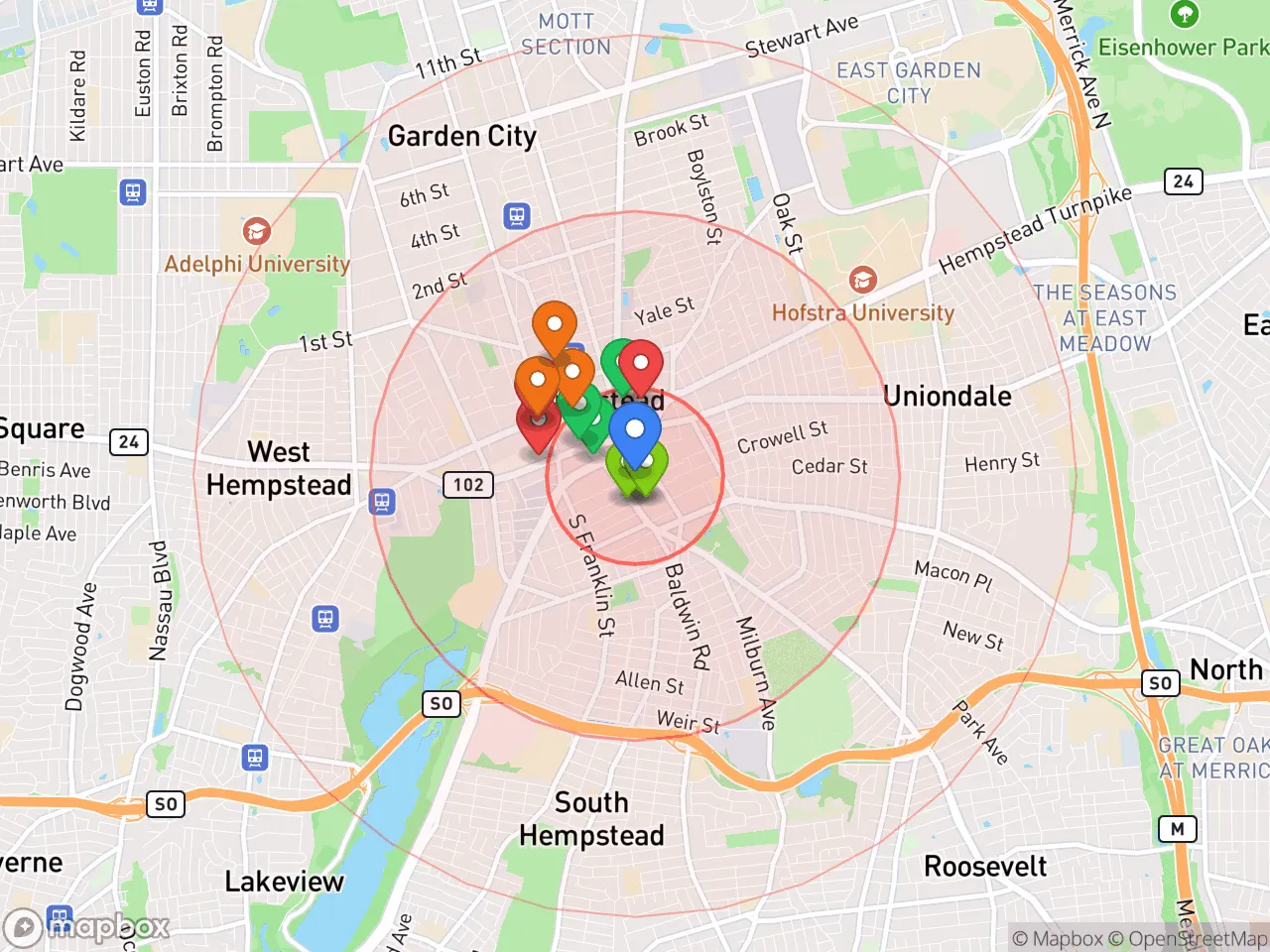
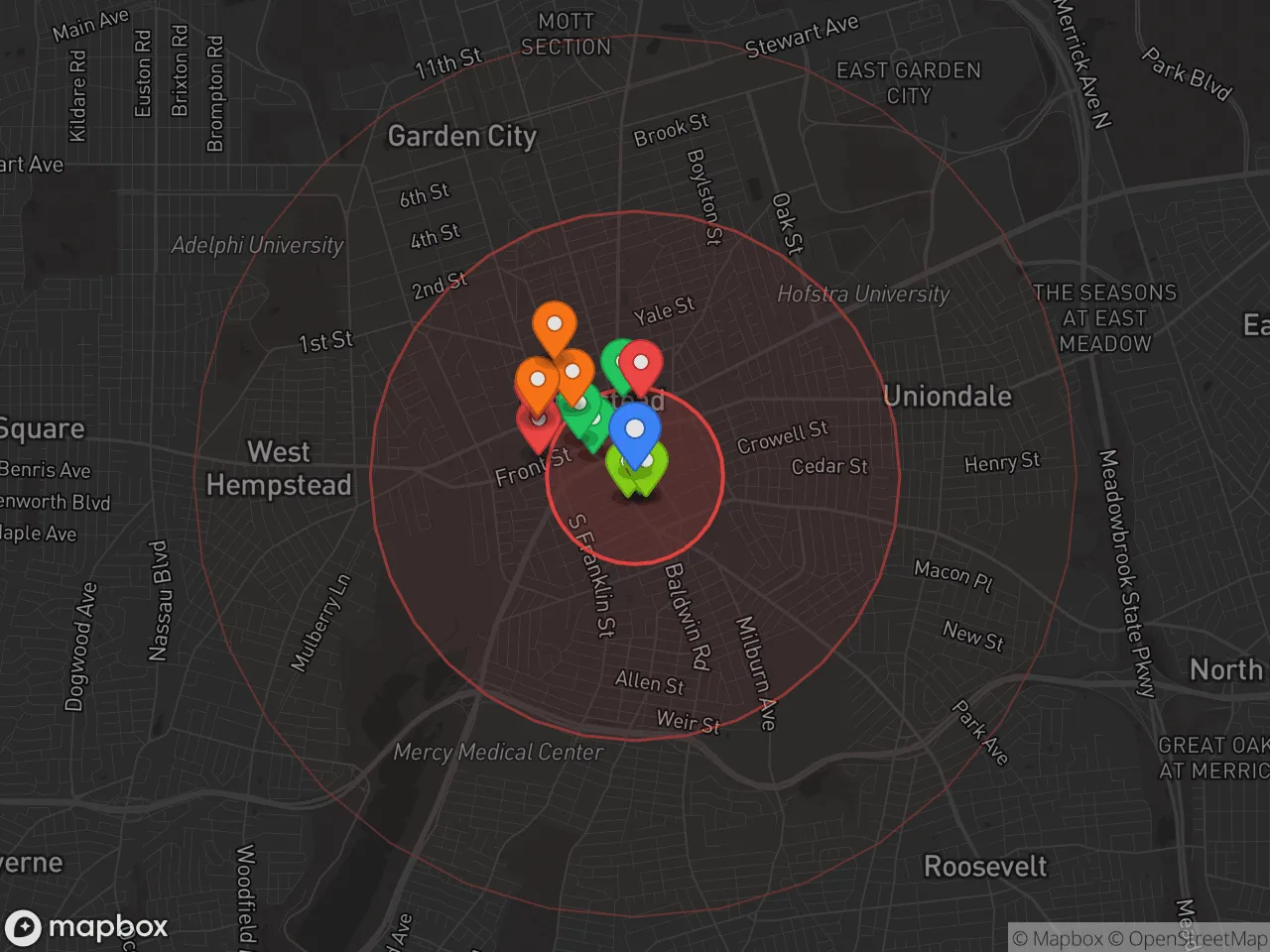
Hobbies
Explore the areaGroceries
9 within 10 miles
Gas
20 within 10 miles
Hospital
20 within 20 miles
Airport
JFK — John F. Kennedy International
Post Office
USPS — Hempstead, NY
Critical Amenities
Quality-of-Life Analysis
Hempstead, New York, presents a quality of life defined by suburban affluence and dense, family-oriented living within striking distance of New York City. The village and town of Hempstead are home to a diverse population of approximately 55,000 residents, including many long-established families, young professionals commuting to Manhattan, and students attending Hofstra University. With a cost of living index of 148—48% above the national average—life here is expensive but offers direct access to the economic and cultural opportunities of the nation's largest metro area.
Cost of living, housing costs, and affordability compared to nearby towns
Housing is the primary driver of Hempstead's elevated cost of living. The median home value sits at $442,100, which is significantly higher than the national median but notably lower than in neighboring Nassau County communities like Garden City or Manhasset, where median values often exceed $700,000. For renters, the median monthly rent of $1,649 is more affordable than the Long Island average, though still a substantial outlay. The average commute of 33 minutes is a key trade-off: residents gain lower housing costs relative to the immediate region while accepting a longer trip to Manhattan via the Long Island Rail Road (Hempstead station) or major highways like the Meadowbrook State Parkway. Property taxes in the Town of Hempstead are among the highest in the nation, often exceeding $10,000 annually, which is a critical factor for any potential homeowner to weigh against the area's strong school system and proximity to jobs.
Schools, local amenities, and the daily rhythm of life
Daily life in Hempstead revolves around its robust public services and convenient amenities. The Hempstead Union Free School District operates several elementary and middle schools, with Hempstead High School offering a range of Advanced Placement courses and athletic programs. For higher education, Hofstra University anchors the community, providing cultural events, a law school, and a major conference center. The area is well-served by retail, with the Hempstead Turnpike corridor lined with supermarkets, pharmacies, and national chains. Recreation is centered on Eisenhower Park, one of the largest public parks in Nassau County, featuring golf courses, pools, and sports fields. The daily rhythm is distinctly suburban: early morning commutes to the train station, school drop-offs, and weekend errands at local shopping plazas. The village's downtown area has seen revitalization efforts, including new mixed-use developments, but retains a working-class, no-frills character compared to the more polished downtowns of nearby villages.
Hempstead is best suited for families and professionals who prioritize proximity to New York City jobs and a strong school system over lower housing costs or a quiet, rural setting. It is a pragmatic choice for those who accept high taxes and a long commute in exchange for a dense, diverse community with solid public infrastructure and immediate access to the economic engine of the New York metro area. Individuals seeking a low-cost, car-free lifestyle or a slower pace of life would likely find better options elsewhere on Long Island or upstate.

Crime in Hempstead, NY
Generally safer than 67% of comparable U.S. locations.
Violent CrimeViolent Crime Analysis
Property CrimeProperty Crime Analysis
Crime Analysis
Hempstead, New York, presents a crime and safety profile that demands careful consideration, particularly for those relocating from safer suburban or rural environments. The village's violent crime rate stands at 321.3 incidents per 100,000 residents, while its property crime rate is 768.2 per 100,000. These figures place Hempstead in a higher-risk category compared to many other Long Island communities, a reality shaped significantly by its proximity to New York City and the progressive criminal justice policies that dominate the region.
Crime in context
To understand Hempstead's safety landscape, it is essential to compare its crime rates to broader benchmarks. The village's violent crime rate is roughly 1.5 times the national average and significantly higher than the New York State average, which is suppressed by safer upstate communities. Property crime, while closer to the national norm, still exceeds the state average by a notable margin. These elevated rates are not an anomaly but a consistent pattern linked to the village's status as a dense, economically diverse hub within the New York metropolitan area. The influence of progressive district attorneys and judges in Nassau County and neighboring jurisdictions is a critical factor; policies emphasizing diversion, reduced bail, and lenient sentencing for repeat offenders have been shown to correlate with higher recidivism and more crimes committed by individuals who would otherwise be incarcerated. This ideological approach, while intended to reduce incarceration, directly contributes to a higher number of active offenders on the streets, undermining public safety and victim justice.
What residents experience
Daily life for Hempstead residents is marked by a heightened awareness of personal and property security. Violent crimes, including aggravated assault, robbery, and occasional shootings, are concentrated in specific areas but create a general atmosphere of caution. Property crimes such as burglary, larceny, and motor vehicle theft are more widespread, often targeting parked cars and unsecured homes. Residents frequently report concerns about gang activity and drug-related offenses, which are exacerbated by the revolving-door justice system. The practical impact is that many locals invest in security systems, avoid walking alone at night, and remain vigilant about locking vehicles and homes. The presence of Hofstra University adds a transient population that can be targeted for theft, though the campus itself maintains its own security force.
Neighborhood-level variation is pronounced in Hempstead. The area around the downtown commercial corridor and the transit hub near the Hempstead LIRR station experiences the highest concentration of both violent and property crime. In contrast, quieter residential streets in the western and northern sections of the village, particularly those with single-family homes and stronger homeowners' associations, see lower incident rates. However, no neighborhood is entirely insulated from the broader crime trends driven by the region's lenient criminal justice policies. For prospective residents, a thorough block-by-block assessment and consultation with local police precincts are strongly advised before committing to a specific location.
* Values derived from national, state, county, city and local statistics and may differ in a specific area. Last updated: 2026-04-24T07:45:32.000Z
Narrative content on this page is AI-generated and may contain mistakes. Verify any details that matter before acting on them.
ReloMaps may earn a commission from affiliate links at no extra cost to you.

