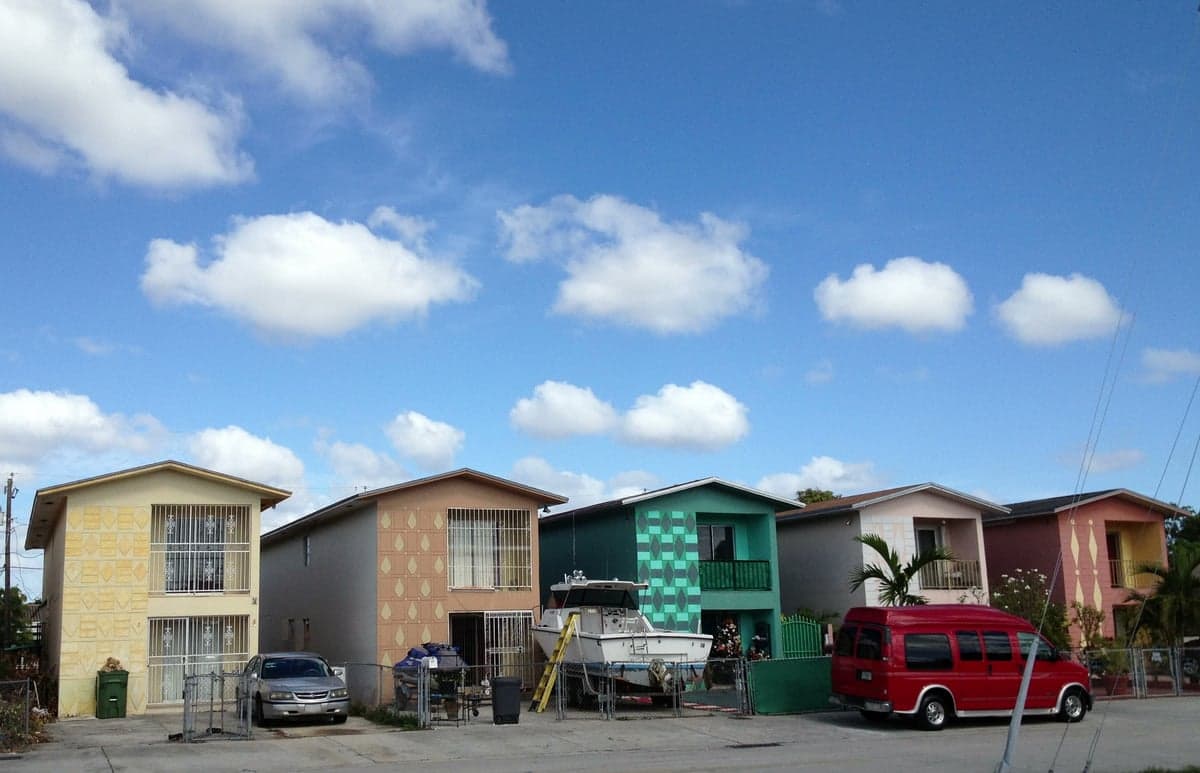
Photo: Wikipedia
Strategic Assessment of Hialeah, FL
High tactical risk. This location is likely close to major population centers, strategic targets, or sits in a high-disaster corridor. A retreat property and careful exit planning is required.
What does the Strategic Assessment tell us?
Our Strategic Assessment grades tactical survivability of an area. Major population centers, military targets, fallout zones, natural disasters, and border exposure all drive risk — lower exposure means a more defensible position in a crisis.
This is heavily inspired by Joel Skousen's Strategic Relocation book. Highly recommended you checkout the book ($)What does this tell us?
Our Strategic Assessment grades tactical survivability of an area. Major population centers, military targets, fallout zones, natural disasters, and border exposure all drive risk — lower exposure means a more defensible position in a crisis.
This is heavily inspired by Joel Skousen's Strategic Relocation book. Highly recommended you checkout the book ($)Strategic Pillars

Key Distances
Regional Safe Places
Below is our recommended "safe zones" in Florida and the surrounding area based on our strategic heuristics. For most people, it's unrealistic to live in a “safe zone” full-time due to work, family or other personal reasons. They tend to be more rural. However, many of these areas are perfect for second homes and retreat properties that double as a vacation home or even a short-term rental.

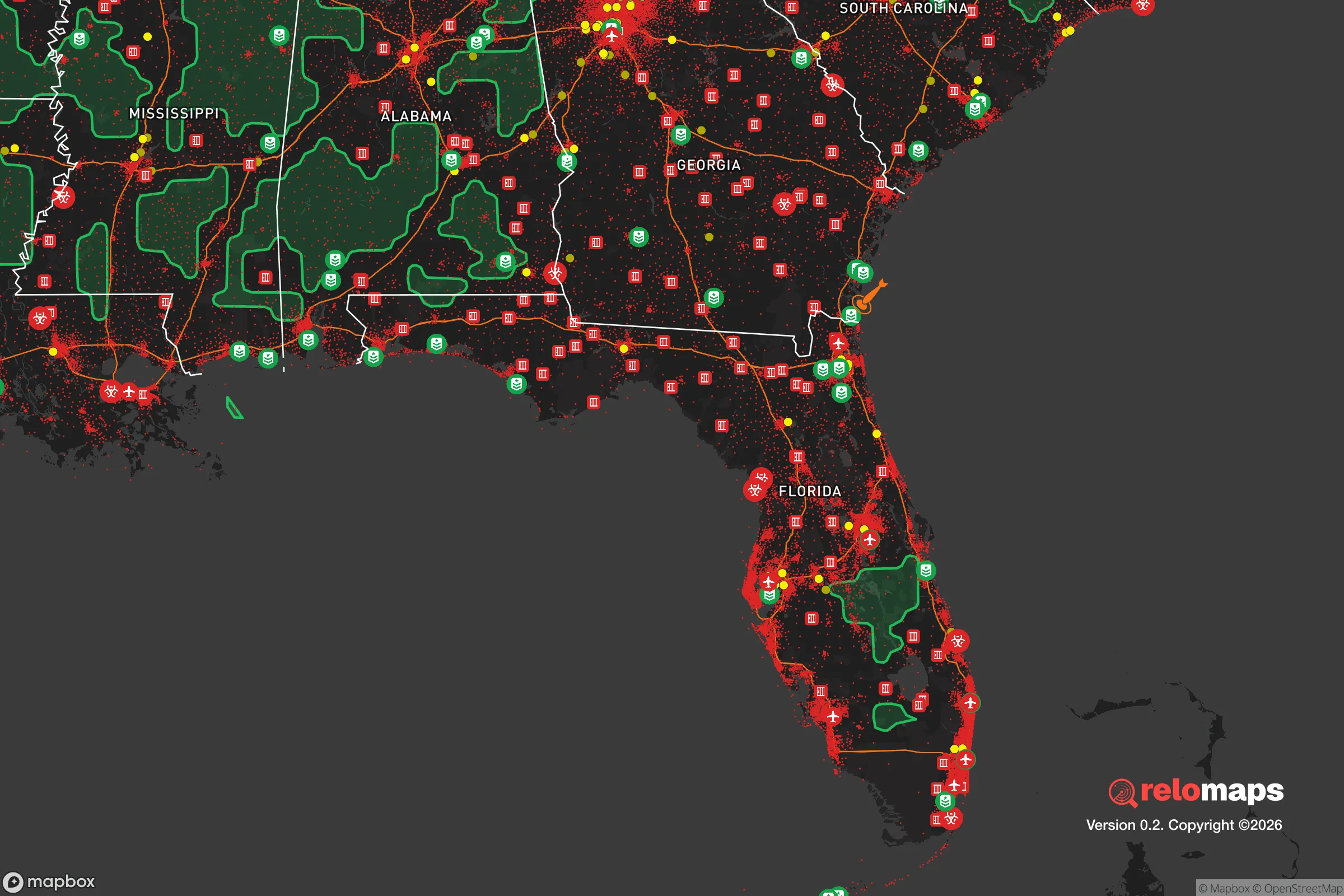


Important Note: For informational purposes only. This does not mean nothing bad ever happens in the green zones. Please use common sense. This is based on public data and modeled with AI. We tried to take a conservative approach but mistakes happen. We update this regularly as new information becomes available.
Solar Generator Recommendations
Backup power matters more here than in safer locations. We've picked three solar generators across budgets and capacity tiers — start with the budget unit if you only need a few essentials, or step up if you want to run a fridge and HVAC for days at a time.

Jackery Portable Power Station Explorer 300
Budget OptionPower on the Go: Weighing only 11 lbs, it's convenient to set up and store with book-sized foldable solar panels

BLUETTI Portable Power Station AC180
Designed for both indoor and outdoor scenarios, AC180 is highly capable as it has a robost capacity and continuous output power.

EF ECOFLOW DELTA Pro Ultra Power Station
Upgraded PickEcoFlow DELTA Pro Ultra is a whole-home energy system designed to grow with your family. Integrated with the Smart Home Panel 2, it scales to meet your evolving energy needs — keeping your home powered, intelligent, and secure through every stage of life.
We earn a commission, at no additional cost to you.
Strategic Assessment Analysis
Hialeah, Florida presents a deeply contradictory picture for the strategic relocator. On one hand, its dense, urbanized character and proximity to Miami make it a potential chokepoint in a crisis; on the other, its location within a state that has prioritized individual preparedness and its own infrastructure resilience offers some counterbalancing advantages. For the conservative-minded prepper, Hialeah is not a retreat—it is a forward operating base with significant exposure, requiring a clear-eyed assessment of its strengths and, more importantly, its vulnerabilities.
Geographic position and natural advantages for long-term stability
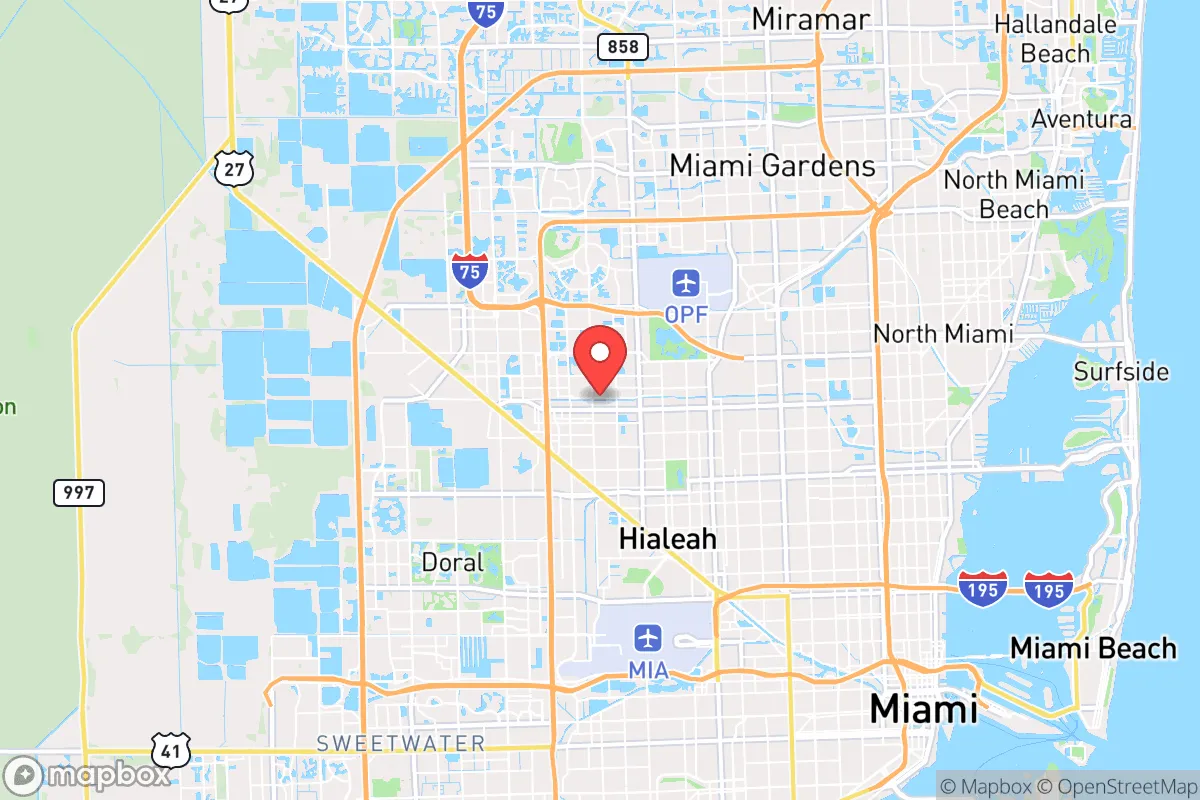
Hialeah sits in the heart of Miami-Dade County, roughly 10 miles northwest of downtown Miami. Its primary natural advantage is its position on the Miami Rock Ridge, a limestone spine that provides slightly higher elevation than the surrounding Everglades and coastal floodplains. This ridge means Hialeah is less prone to the storm surge that devastates coastal communities during hurricanes—a meaningful consideration for anyone planning for weather-related disruptions. The area also benefits from Florida's aggressive state-level preemption laws, which limit local government overreach on issues like firearm regulations and emergency powers, a factor that appeals to those concerned about civic overreach during a crisis. The subtropical climate allows for year-round food production, and the proximity to the Everglades—a massive, largely undeveloped watershed—provides a potential (if challenging) source of fresh water and game, though accessing it requires navigating protected lands and dense urban sprawl first.
Risks, exposures, and proximity to fallout-relevant landmarks
The most glaring vulnerability for Hialeah is its density. With over 220,000 people packed into roughly 21 square miles, it is one of the most densely populated cities in the United States. In a scenario involving civil unrest, a disease outbreak, or a supply chain collapse, this density becomes a liability. Evacuation routes are limited: the Palmetto Expressway (SR 826) and Okeechobee Road (US 27) are the primary arteries, and both can gridlock within minutes during a routine thunderstorm, let alone a mass evacuation event. Hialeah is also within a 15-mile radius of Miami International Airport, the Port of Miami, and multiple major hospitals—all high-value targets in a conflict scenario or potential vectors for biological or chemical incidents. The city's proximity to the Homestead Air Reserve Base (about 25 miles south) and the U.S. Southern Command headquarters in Doral (less than 10 miles away) means that any large-scale event targeting federal assets could create secondary effects—checkpoints, road closures, or military traffic—that would directly impact movement in and out of Hialeah. For the prepper, this is not a location that offers standoff distance; it is a location that sits inside the blast radius of multiple strategic assets.
Practical resilience for a relocator: food, water, energy, and defensibility
For a single individual or family considering Hialeah, the practical resilience picture is mixed. Water security is the most immediate concern. The city draws its municipal water from the Biscayne Aquifer, a shallow, porous system that is vulnerable to saltwater intrusion and contamination from surface runoff. A major hurricane or industrial accident could compromise the supply for days or weeks. A prepper would need to store at least two weeks of potable water per person, plus have a means of filtration or purification—the aquifer's shallow nature means well drilling is possible but regulated, and most residential lots are too small for a private well. Food security is more achievable. Hialeah has a strong Latin American food culture, with numerous small markets (bodegas) and a robust network of wholesale produce distributors along the 27th Avenue corridor. In a slow-burn crisis, these supply chains may hold longer than big-box stores. Backyard gardening is feasible on typical 5,000- to 7,000-square-foot lots, though soil quality is sandy and requires amendment. Energy resilience is a weak point. Florida Power & Light (FPL) serves the area, and while the grid has been hardened since Hurricane Irma in 2017, outages during major storms are still common. Solar panels are viable given the abundant sunshine, but Hialeah's homeowners' associations and city codes can be restrictive; a prepper should verify local ordinances before investing. Defensibility is the hardest factor. Hialeah's street grid is dense and interconnected, with few natural chokepoints. The city's demographics are overwhelmingly Cuban-American and Hispanic, with a strong sense of community and a high rate of legal firearm ownership—this could be a stabilizing factor in localized unrest, as neighborhoods may self-police. However, the lack of rural buffer zones means that any large-scale disturbance in Miami would spill over quickly. A single-family home with a walled yard and a reinforced door is the minimum viable setup; apartments and townhomes offer far less security.
The overall strategic picture for Hialeah is one of high risk with conditional rewards. It is not a place to ride out a nationwide collapse or a nuclear event—the density, limited egress, and proximity to high-value targets make it a poor choice for long-term isolation. However, for the relocator who must remain in South Florida for work or family reasons, Hialeah offers a community that is culturally self-reliant, politically aligned with conservative values, and located in a state that has shown a willingness to push back against federal overreach. The key is to treat Hialeah as a base of operations, not a final redoubt. Stockpile supplies, build community ties, and have a pre-planned bug-out route heading northwest toward the rural counties of Hendry or Glades, where population density drops and defensible land becomes available. In a world of increasing uncertainty, Hialeah is a place to live, but not a place to hide.

* Values derived from national, state, county, city and local statistics and may differ in a specific area. Last updated: 2026-04-24T03:53:53.000Z
Narrative content on this page is AI-generated and may contain mistakes. Verify any details that matter before acting on them.
ReloMaps may earn a commission from affiliate links at no extra cost to you.

