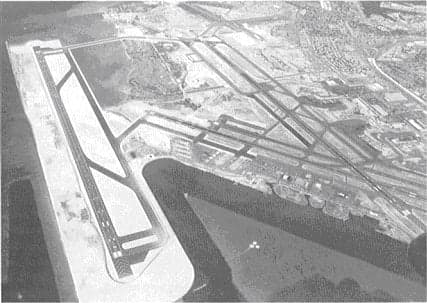
Photo: Wikipedia
Demographics of Hickam Housing, HI
Affluence Level in Hickam Housing, HI
An upper-middle-class area. Household wealth, education levels, and homeownership run ahead of national benchmarks.
People of Hickam Housing, HI
Hickam Housing, Hawaii, is a tight-knit, predominantly military-affiliated community of 9,195 residents, defined by its role as the primary on-base housing area for Joint Base Pearl Harbor-Hickam. The population is notably diverse, with a White plurality at 54.4%, a significant Hispanic presence at 14.1%, and substantial Black (9.1%) and East/Southeast Asian (6.5%) communities, yet it remains a highly transient place where the average resident stays only a few years. With a foreign-born population of just 1.6% and over half of adults holding a college degree, the character of Hickam Housing is less about rooted ethnic enclaves and more about a shared, temporary identity tied to the U.S. military. The community’s human history is not one of gradual settlement but of strategic deployment, with each wave of residents arriving and departing in sync with the nation’s defense priorities.
How the city was settled and grew
Hickam Housing did not exist as a civilian settlement; it was purpose-built as a military housing area adjacent to Hickam Field, which was established in 1935. The original population was composed entirely of U.S. Army Air Corps personnel and their families, who were stationed there as part of the buildup of American air power in the Pacific. The first wave of residents lived in the original Officers’ Row and enlisted quarters near the base’s main gate, areas now largely replaced by modern housing. The attack on Pearl Harbor on December 7, 1941, transformed Hickam Field into a front-line base, and the housing areas swelled with thousands of service members and civilian support staff during World War II. Post-war, the base became a permanent hub for the newly independent U.S. Air Force, and the housing stock expanded in the 1950s and 1960s with the construction of Lauula Street and Kuntz Avenue neighborhoods, which housed the growing number of career airmen and their families. Unlike typical American towns, Hickam Housing had no immigrant gateway or land-rush founding; its population was entirely a product of federal defense policy, with each new building reflecting a new strategic commitment.
Modern era (post-1965)
The post-1965 era brought significant demographic change to Hickam Housing, driven by the all-volunteer force and the diversification of the U.S. military. The 1970s and 1980s saw a steady influx of Black and Hispanic service members, who were assigned to Hickam as part of the Air Force’s broader integration efforts. These families were housed in the newer, larger units in the Hangar Road and Reeve Road neighborhoods, which were built to accommodate the influx of personnel during the Vietnam War and the subsequent Cold War buildup. The 1990s and 2000s brought a notable increase in East/Southeast Asian residents, primarily Filipino and Japanese American service members and their families, many of whom chose to live in the Vickers Avenue area due to its proximity to the base’s elementary school. The Hispanic population grew steadily through the 2000s, concentrated in the Burgess Circle and Mann Street sections, reflecting broader national trends in military recruitment. Today, the community remains highly integrated, with no single ethnic group dominating any one neighborhood; instead, the housing areas are mixed, with diversity levels that mirror the overall composition of the active-duty Air Force. The transient nature of military life means that these demographic shifts are not permanent—each rotation cycle brings a new mix of families, preventing the formation of long-standing ethnic enclaves.
The future
The population of Hickam Housing is likely to remain stable in size but will continue to reflect the demographic trends of the U.S. military. The White share, currently 54.4%, is expected to decline gradually as the military becomes more diverse, with Hispanic and Black representation projected to increase slightly over the next decade. The East/Southeast Asian population, at 6.5%, may grow modestly as the Navy and Air Force continue to recruit heavily from West Coast and Pacific Islander communities. The Indian subcontinent population is effectively zero and is unlikely to change, as Hickam Housing does not attract the civilian tech or medical professionals who drive Indian immigration to other parts of Hawaii. The community will not homogenize or tribalize into distinct enclaves; instead, it will remain a highly integrated, transient military suburb where families cycle through every two to four years. The biggest demographic shift will be generational—as the military modernizes its housing, older units in Lauula Street and Kuntz Avenue may be replaced with new construction, potentially altering the physical layout but not the essential character of the population.
For someone moving in now, Hickam Housing offers a unique environment: a stable, safe, and diverse community where the population is defined not by ancestry or long-term roots, but by a shared mission. The lack of a permanent civilian population means that newcomers are quickly integrated, and the high rate of turnover ensures that no one is an outsider for long. This is a place for those who value order, diversity, and a sense of purpose over deep local history or ethnic tradition.

* Values derived from national, state, county, city and local statistics and may differ in a specific area. Last updated: 2026-04-24T06:07:27.000Z
Narrative content on this page is AI-generated and may contain mistakes. Verify any details that matter before acting on them.
ReloMaps may earn a commission from affiliate links at no extra cost to you.

