
Photo: Wikipedia
Political ClimatePolitical Climate in Hickam Housing, HI
District shown is the primary district for this city’s centroid. Cities may span multiple districts.
Local Political AnalysisPolitical Analysis of Hickam Housing, HI
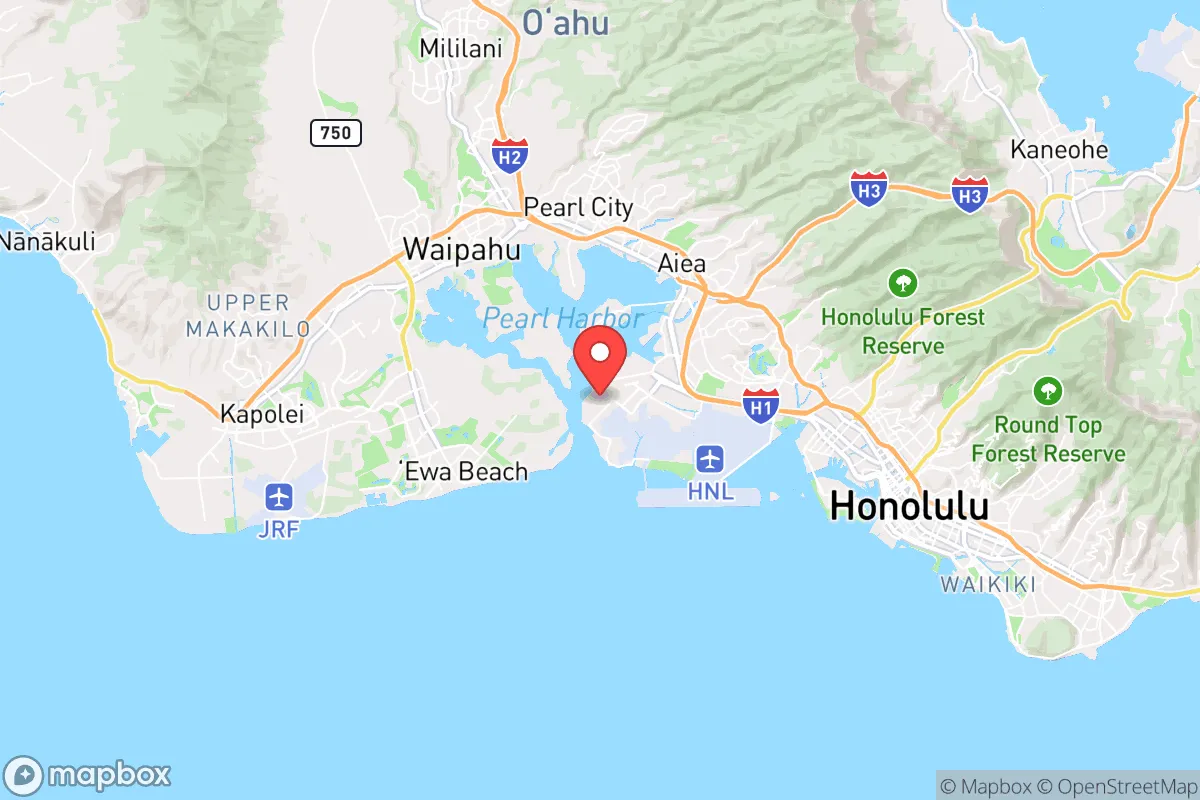
Hickam Housing, located on Oahu near Joint Base Pearl Harbor-Hickam, leans heavily Democratic, with a Cook PVI of D+13, meaning it votes about 13 points more Democratic than the national average. This isn't surprising given its status as a military housing area, but the political drift here has been noticeable over the past decade. While the base itself has a long history of being a mix of conservative and moderate military families, the surrounding Honolulu metro area—especially neighborhoods like Salt Lake and Moanalua—has pulled the local politics steadily leftward. If you're a conservative moving here, you'll find yourself in a blue bubble, but it's not as intense as downtown Honolulu or Waikiki.
How it compares
Compared to the rest of Hawaii, Hickam Housing is actually a bit more moderate than the state average. The state as a whole is reliably Democratic, but areas like Kapolei and Ewa Beach to the west lean more conservative, with a stronger military and retiree presence. In contrast, neighborhoods like Manoa and Kaimuki are deep blue, driven by university faculty and progressive activists. Hickam sits in the middle—still blue, but with a noticeable undercurrent of military pragmatism. The nearby town of Aiea, for example, has a similar demographic mix, but its politics are slightly more conservative due to older homeowners and local businesses. Still, don't expect any Republican strongholds within a 20-minute drive; the entire island is solidly Democratic.
What this means for residents
For residents, the political climate here means you'll see a lot of government involvement in daily life. Hawaii has some of the highest taxes in the nation, strict land-use regulations, and a heavy-handed approach to everything from housing to business permits. The local government has pushed for more progressive policies, like mandatory paid family leave and aggressive renewable energy mandates, which can feel like overreach if you value personal freedom. The military community often pushes back on these trends, but they're outnumbered in local elections. If you're used to a place where your property rights and gun ownership are respected, you'll find Hawaii's laws restrictive—think long waiting periods for firearm purchases and tight rental controls. The shift toward more regulation has accelerated since 2020, and it's unlikely to reverse anytime soon.
Culturally, Hickam Housing is a unique blend. The base itself has a strong sense of community, with many families sharing a common military background. But off-base, you'll encounter a mix of native Hawaiian culture, Asian influences, and mainland transplants. The local government's push for "sustainability" and "equity" often translates into higher costs for residents—gas prices are among the highest in the country, and housing is incredibly expensive. If you're looking for a place where your vote actually matters in a national sense, this isn't it; Hawaii's electoral votes are safely blue. But if you're here for the job or the lifestyle, you'll learn to navigate the politics by sticking close to the military community and avoiding the more activist-heavy areas. Just be prepared for a government that's increasingly comfortable telling you how to live your life.

State Political ClimatePolitical Climate in Hawaii
State Political AnalysisPolitical Environment in the State
Hawaii has been a one-party Democratic stronghold for decades, with Democrats controlling the governorship and supermajorities in both legislative chambers since the early 1960s. The state’s overall partisan lean is roughly D+20 in presidential elections, but that masks a growing conservative undercurrent, particularly on the neighbor islands and in rural Oahu. Over the last 10-20 years, the Democratic coalition has shifted from a moderate, labor-oriented base to a more progressive, coastal-elite faction, while Republicans have been squeezed into a rump party centered on military families, agricultural communities, and a small but vocal libertarian contingent. The trajectory is one of increasing polarization: Honolulu and its suburbs drive the blue vote, while the rest of the state is slowly reddening, though still outnumbered.
Urban vs. rural divide
The political map of Hawaii is starkly divided between the urban core of Oahu and the rest of the state. Honolulu County, home to about 70% of the state’s population, votes reliably Democratic—Biden won it by 35 points in 2020. Within Oahu, the affluent Windward side (Kailua, Kaneohe) and the dense urban neighborhoods of Makiki and Manoa are the most progressive, while the Leeward side (Waianae, Nanakuli) and the central plateau (Mililani, Wahiawa) are more mixed, with a significant military and Filipino-American population that leans conservative on social issues. The neighbor islands tell a different story: Hawaii County (the Big Island) is a swing county, with rural districts like Puna and Ka’u voting Republican in local races, while Kona and Hilo remain Democratic. Maui County is more Democratic overall, but upcountry areas like Kula and Makawao have a strong libertarian streak. Kauai is the most consistently Democratic of the neighbor islands, but even there, the north shore (Hanalei) is progressive while the west side (Waimea) is more conservative. The rural-urban divide is also geographic: the further you get from Honolulu’s traffic and high-rises, the more likely you are to hear complaints about overregulation, high taxes, and government overreach.
Policy environment
Hawaii’s policy environment is a mixed bag for conservatives. The state has the highest combined state and local tax burden in the nation, with a general excise tax (GET) of 4% that applies to nearly everything, including business-to-business transactions, and property taxes that are relatively low but can spike in high-demand areas. Income taxes are progressive, with a top marginal rate of 11% on income over $200,000. The regulatory posture is heavy: Hawaii has some of the strictest land-use laws in the country, a statewide rent control law (Act 57, 2023) that caps annual rent increases at 5% plus inflation, and a mandatory paid family leave program set to launch in 2028. Education policy is dominated by a single statewide school district, the Hawaii Department of Education, which has been criticized for bureaucratic inefficiency and low test scores; charter schools exist but are tightly controlled, and private school enrollment is high among families who can afford it. Healthcare is heavily regulated, with a state-run insurance exchange and a Medicaid expansion that covers about 20% of the population. Election laws are moderately restrictive: Hawaii has all-mail voting, same-day registration, and no voter ID requirement, which has led to concerns about election integrity among conservatives. The state also has a “sanctuary” policy (Act 2, 2019) that limits cooperation with federal immigration enforcement, a flashpoint for right-leaning residents.
Trajectory & freedom
Hawaii is becoming less free across multiple dimensions, particularly in the last five years. On gun rights, the state has some of the strictest laws in the nation: a 2022 law (Act 207) bans the open carry of firearms and requires a “good cause” permit for concealed carry, effectively making it impossible for most residents to carry. A 2023 law (Act 52) raised the minimum age to purchase a firearm to 21 and expanded the list of prohibited places. On parental rights, a 2023 law (Act 2) requires public schools to adopt policies that affirm a student’s “gender identity” without parental notification, a major concern for conservative parents. On medical autonomy, Hawaii has legalized recreational marijuana (Act 1, 2024) but maintains strict licensing that favors large corporations over small growers. On property rights, the state’s land-use commission (LUC) and county planning departments have near-total control over development, leading to a housing crisis and a growing “tiny home” movement that is often shut down by code enforcement. On taxation, the 2023 tax reform (Act 46) reduced the top income tax rate from 11% to 9.5% over four years, a modest win for conservatives, but the GET remains regressive and burdensome. The overall trajectory is one of expanding government control over daily life, with little organized resistance from the state’s weak Republican Party.
Civil unrest & political movements
Hawaii has a history of civil unrest that is both left- and right-leaning. The most visible flashpoint in recent years was the 2023 Maui wildfires, which sparked protests over the government’s response and land-use policies, with some residents accusing officials of using the disaster to push a “green” agenda that restricts rebuilding. The Mauna Kea telescope protests (2019-2020) were a left-liberal coalition of Native Hawaiian activists and environmentalists, but they also drew support from libertarians who opposed government land seizures. On the right, the Hawaii Firearms Coalition has organized rallies at the state capitol against gun control laws, and the Hawaii Republican Party has seen a small but vocal faction of “constitutional conservatives” who advocate for nullification of federal laws. Immigration politics are muted compared to the mainland, but the sanctuary policy has led to tensions in communities like Waipahu and Kalihi, where immigrant populations are dense. Election integrity is a growing concern: the 2020 and 2022 elections saw allegations of ballot harvesting and voter roll irregularities, though no major court cases have succeeded. The most visible political movement is the Hawaiian sovereignty movement, which ranges from moderate calls for federal recognition to radical secessionist rhetoric; it is a wildcard that could reshape state politics if it gains traction.
Projection
Over the next 5-10 years, Hawaii is likely to become more progressive on social issues and more restrictive on economic freedom. Demographic trends favor the Democrats: the state’s population is aging, with a growing retiree class that votes reliably blue, and the military population (a conservative bloc) is shrinking due to base realignments. In-migration from California and the West Coast, which accelerated during the pandemic, has brought a wave of wealthy progressives who support higher taxes and stricter regulations. The Republican Party shows no signs of revival, as it remains fractured between moderates and a small but loud libertarian wing. The most likely scenario is a continuation of the status quo: Democratic supermajorities, rising taxes, and a housing crisis that drives out young families and middle-class workers. A wildcard is the sovereignty movement: if it gains enough momentum to push for a constitutional convention or a referendum on independence, it could realign politics along native vs. non-native lines, potentially creating a conservative-libertarian coalition among non-Hawaiians who oppose the movement’s goals. For now, the state is on a path of declining personal freedom and increasing government control, with little organized opposition.
For a conservative considering a move to Hawaii, the bottom line is this: you will be a political minority, and the state’s policies will often clash with your values on taxes, guns, education, and parental rights. The best places to find like-minded neighbors are the rural districts of the Big Island (Puna, Ka’u), the upcountry areas of Maui (Kula, Makawao), and the Leeward side of Oahu (Waianae, Nanakuli). But even there, you’ll face high costs, heavy regulation, and a government that is increasingly hostile to traditional freedoms. If you value low taxes, gun rights, and local control, Hawaii is likely a poor fit—unless you’re willing to fight for change in a state that has been blue for generations.
* Values derived from national, state, county, city and local statistics and may differ in a specific area. Last updated: 2026-04-24T06:07:27.000Z
Narrative content on this page is AI-generated and may contain mistakes. Verify any details that matter before acting on them.
ReloMaps may earn a commission from affiliate links at no extra cost to you.

