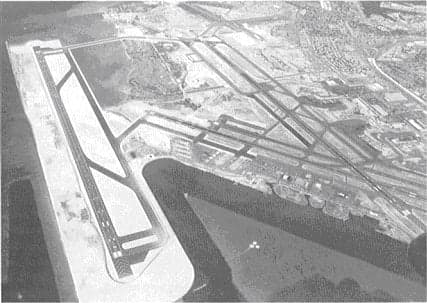
Photo: Wikipedia
Strategic Assessment of Hickam Housing, HI
Meaningful friction. Expect exposure to either population pressure, blast zones, or natural disaster risk. Consider buying a retreat property.
What does the Strategic Assessment tell us?
Our Strategic Assessment grades tactical survivability of an area. Major population centers, military targets, fallout zones, natural disasters, and border exposure all drive risk — lower exposure means a more defensible position in a crisis.
This is heavily inspired by Joel Skousen's Strategic Relocation book. Highly recommended you checkout the book ($)What does this tell us?
Our Strategic Assessment grades tactical survivability of an area. Major population centers, military targets, fallout zones, natural disasters, and border exposure all drive risk — lower exposure means a more defensible position in a crisis.
This is heavily inspired by Joel Skousen's Strategic Relocation book. Highly recommended you checkout the book ($)Strategic Pillars

Key Distances
Regional Safe Places
Below is our recommended "safe zones" in Hawaii and the surrounding area based on our strategic heuristics. For most people, it's unrealistic to live in a “safe zone” full-time due to work, family or other personal reasons. They tend to be more rural. However, many of these areas are perfect for second homes and retreat properties that double as a vacation home or even a short-term rental.

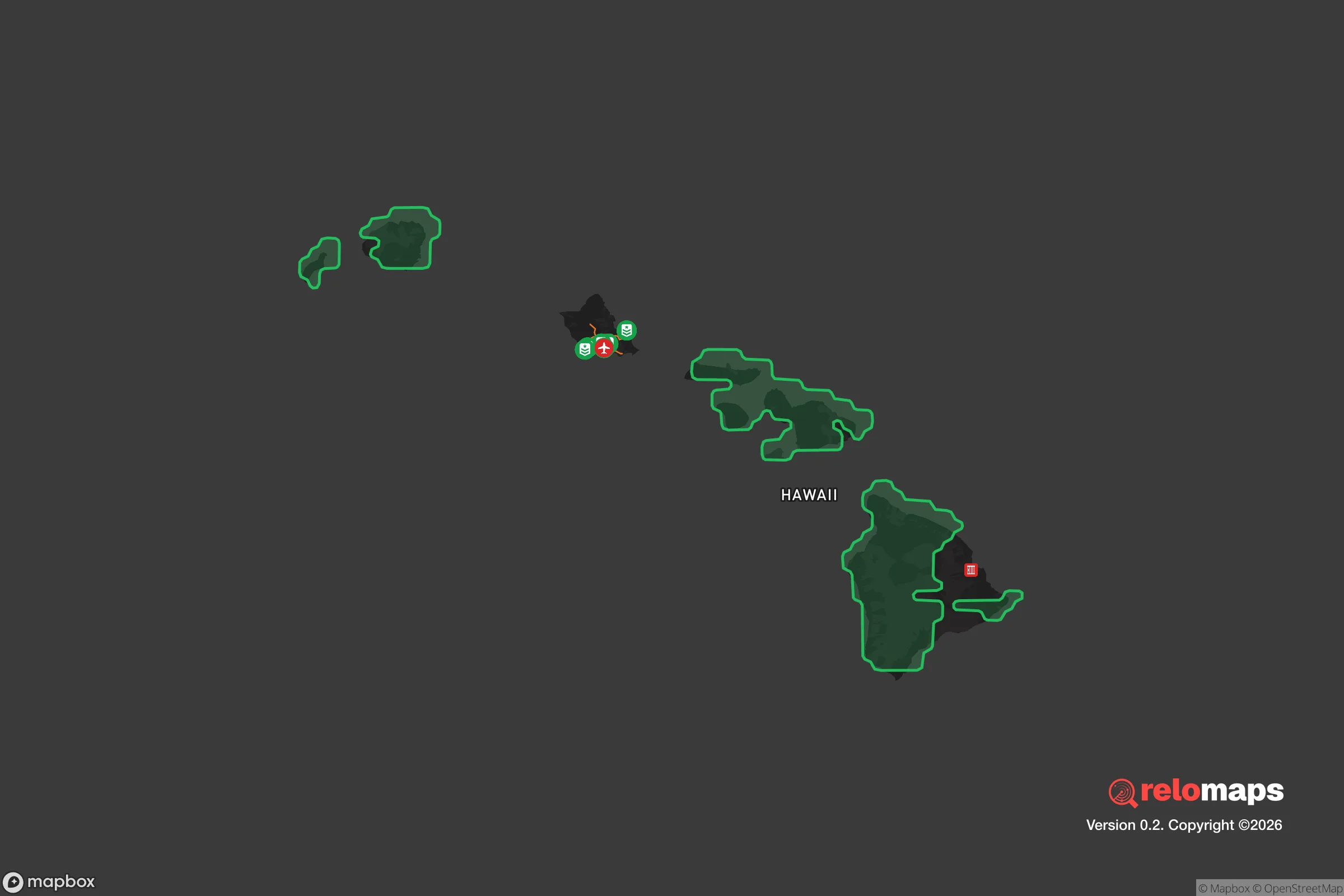


Important Note: For informational purposes only. This does not mean nothing bad ever happens in the green zones. Please use common sense. This is based on public data and modeled with AI. We tried to take a conservative approach but mistakes happen. We update this regularly as new information becomes available.
Solar Generator Recommendations
Backup power matters more here than in safer locations. We've picked three solar generators across budgets and capacity tiers — start with the budget unit if you only need a few essentials, or step up if you want to run a fridge and HVAC for days at a time.

Jackery Portable Power Station Explorer 300
Budget OptionPower on the Go: Weighing only 11 lbs, it's convenient to set up and store with book-sized foldable solar panels

BLUETTI Portable Power Station AC180
Designed for both indoor and outdoor scenarios, AC180 is highly capable as it has a robost capacity and continuous output power.

EF ECOFLOW DELTA Pro Ultra Power Station
Upgraded PickEcoFlow DELTA Pro Ultra is a whole-home energy system designed to grow with your family. Integrated with the Smart Home Panel 2, it scales to meet your evolving energy needs — keeping your home powered, intelligent, and secure through every stage of life.
We earn a commission, at no additional cost to you.
Strategic Assessment Analysis
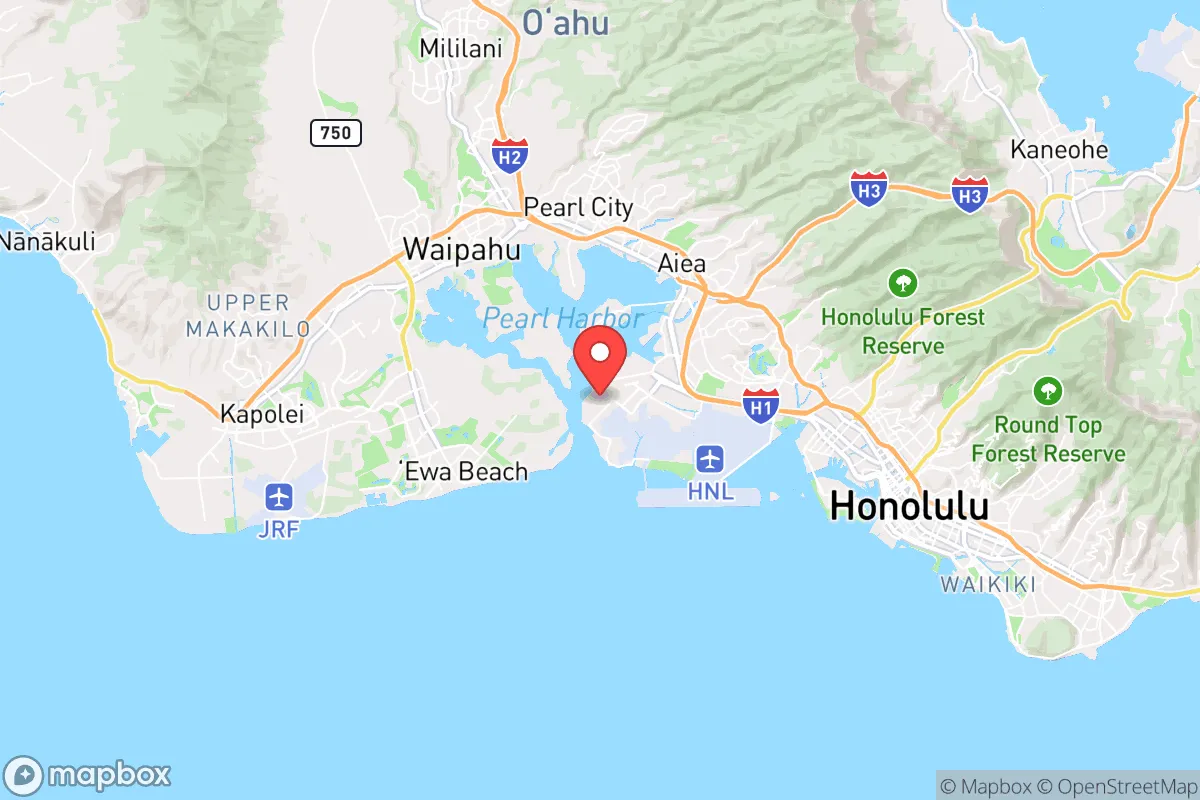
Hickam Housing, situated on the southern coast of Oahu within the Joint Base Pearl Harbor-Hickam complex, offers a unique but deeply flawed strategic position for the survival-minded relocator. Its primary advantage is its location within a high-security military installation, which provides a layer of physical defense against civil unrest and opportunistic crime that few civilian neighborhoods can match. However, this same proximity to a major strategic military target—Pearl Harbor and Hickam Air Force Base—makes it one of the highest-risk locations in the Pacific for any scenario involving state-level conflict, nuclear escalation, or large-scale terrorist attack. For the prepper focused on long-term resilience, the base’s security is a double-edged sword: it buffers against day-to-day chaos but sits directly on a potential ground zero.
Geographic position and natural advantages for a survival scenario
Hickam Housing’s location on the leeward (south) coast of Oahu provides relatively mild weather patterns, with less rainfall than the windward side, which is a practical advantage for maintaining dry storage and avoiding mold-related infrastructure failures. The base itself is built on flat, low-lying land reclaimed from coral reefs and former sugarcane fields, which means the terrain is easily navigable on foot or by bicycle—a key consideration if fuel becomes scarce. The immediate area benefits from the presence of the U.S. Pacific Command’s logistical infrastructure, including the base’s own water treatment facilities, emergency power generation, and stockpiled supplies. For a relocator with base access privileges, this means a higher baseline of emergency services and supply chain continuity compared to civilian neighborhoods like Waipahu or Aiea. The nearby Pearl Harbor channel also offers potential for small-boat evacuation or fishing, though this is heavily regulated and monitored. The natural barrier of the Pacific Ocean provides a buffer against land-based invasion or mass migration from the mainland, but it also creates a hard trap if the island’s supply lines are severed.
Risks, exposures, and proximity to fallout-relevant landmarks
The most glaring vulnerability of Hickam Housing is its location directly adjacent to one of the most strategically significant military targets in the Pacific: Joint Base Pearl Harbor-Hickam. In any scenario involving a peer-level adversary—China, Russia, or North Korea—this installation would be a first-strike priority for conventional or nuclear weapons. The base’s runways, submarine pens, and fuel depots are visible from satellite and represent high-value targets. A single 500-kiloton airburst over Pearl Harbor would render Hickam Housing uninhabitable for decades due to fallout, even if the housing units themselves survive the blast wave. Additionally, the base is less than 10 miles from downtown Honolulu, a population center of nearly 350,000 people. In a civil unrest scenario, the base’s gates would likely be locked down, but the surrounding civilian population could surge toward the perimeter, creating a humanitarian and security crisis. The nearby Honolulu International Airport (Daniel K. Inouye International) is a dual-use facility shared with the base, meaning any aviation disaster or terrorist incident at the airport directly impacts the housing area. Tsunami risk is also elevated: the low elevation (under 20 feet above sea level) means a Pacific-wide seismic event could inundate the housing area with little warning, as the 2011 Tohoku tsunami demonstrated when it caused damage to the base’s harbor facilities.
Practical resilience for a relocator: food, water, energy, and defensibility
For the individual or family committed to staying on base, water security is the strongest asset. The base draws from the Honolulu Board of Water Supply’s municipal system, which is fed by the Ko‘olau Range’s aquifers, but it also maintains its own emergency wells and storage tanks. In a prolonged grid-down scenario, base residents would likely have priority access to potable water for weeks, while civilian neighborhoods would face rationing within days. Food security is more problematic: the base commissary and local grocery stores (e.g., Foodland at Pearl Harbor) rely on just-in-time shipping from the mainland. A port closure or strike would empty shelves within 72 hours. Preppers should plan for at least 90 days of shelf-stable food per person, stored in climate-controlled containers to avoid humidity damage. Energy resilience is mixed: the base has backup diesel generators for critical infrastructure, but individual housing units are not wired for off-grid solar without significant modification. The base’s electrical grid is tied to Hawaiian Electric’s fragile system, which is prone to blackouts during storms and volcanic vog events. Defensibility is the base’s strongest selling point: the perimeter is fenced, guarded by armed military police, and monitored by cameras. In a civil unrest scenario, this creates a hard perimeter that would deter most looters and mobs. However, the base is not designed for sustained siege; its gates are porous for authorized personnel, and a determined adversary with insider knowledge could compromise security. For the single individual or family, the base offers a community of like-minded military and civilian personnel, which can be leveraged for mutual aid and skill-sharing—but only if you actively build those relationships before a crisis.
The overall strategic picture for Hickam Housing is one of high security paired with extreme target risk. For the prepper who values immediate physical safety from civil unrest and has the resources to stockpile supplies and maintain a low profile, the base offers a defensible enclave with robust emergency infrastructure. However, the location’s proximity to a Tier-1 military target and a major population center means that any large-scale conflict—whether conventional, nuclear, or biological—would likely render the area uninhabitable or subject to evacuation. The conservative-minded relocator must weigh the day-to-day stability of base life against the catastrophic tail risks that come with living on a strategic asset. If your primary concern is surviving a societal collapse or a pandemic, Hickam Housing is a poor choice due to its isolation and target value. If your concern is more immediate—riots, supply chain disruptions, or localized natural disasters—the base’s security and resources make it one of the better options in Hawaii. The honest assessment is that this location is a temporary haven, not a long-term retreat. Plan accordingly, and have a secondary bug-out location on another island or the mainland if your risk tolerance is low.

* Values derived from national, state, county, city and local statistics and may differ in a specific area. Last updated: 2026-04-24T06:07:27.000Z
Narrative content on this page is AI-generated and may contain mistakes. Verify any details that matter before acting on them.
ReloMaps may earn a commission from affiliate links at no extra cost to you.

