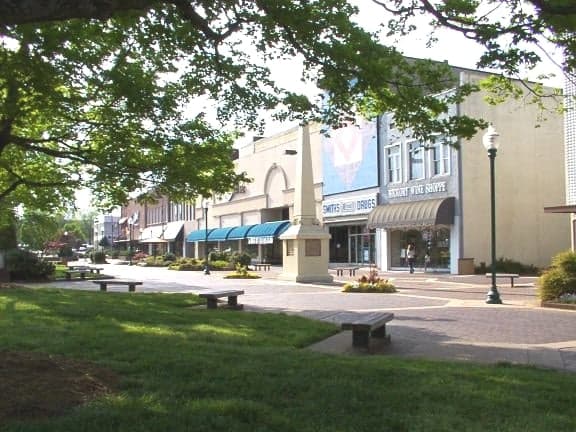
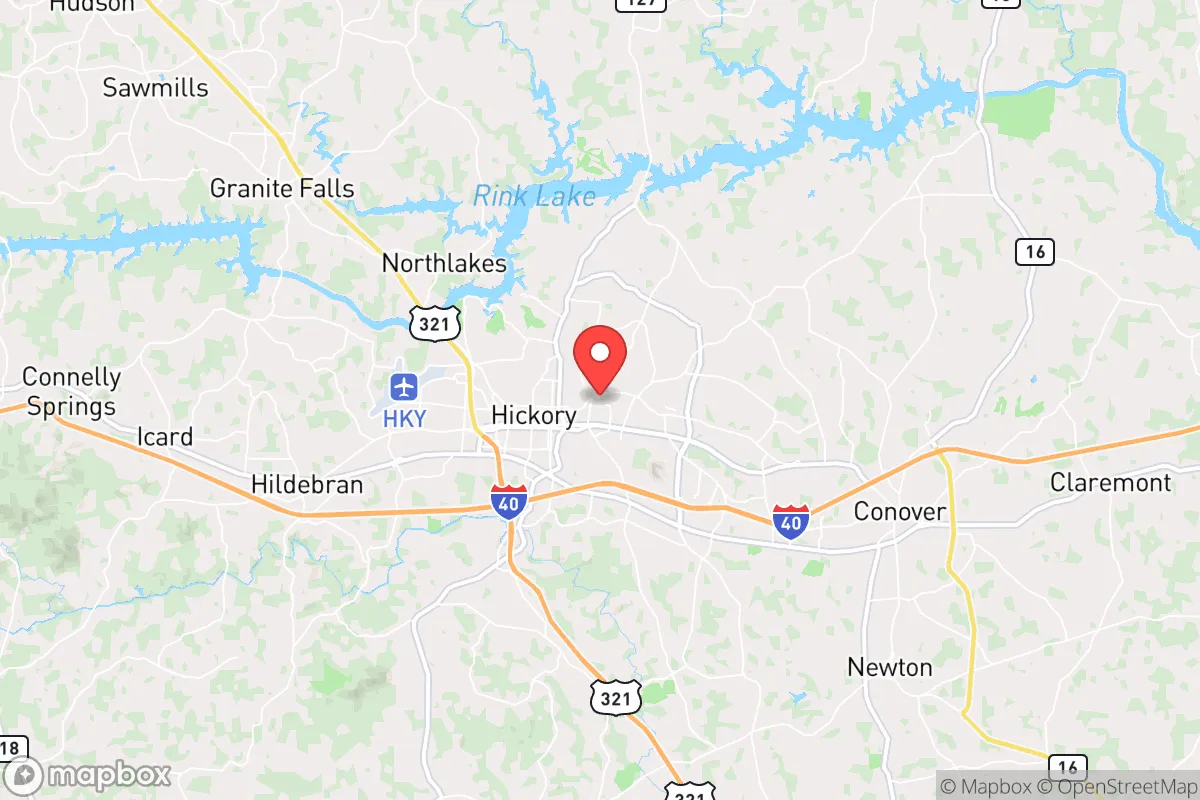
Photo: Wikipedia
Quality of Life in Hickory, NC
A high quality of life with strong walkability, manageable living costs, healthy neighborhood signals, and solid amenity access.
What does Quality of Life tell us?
Quality of Life blends cost of living, nearby amenities, socioeconomic signals, and neighborhood character. City-level scores represent the whole municipality; individual neighborhoods can differ.
What does this tell us?
Quality of Life blends cost of living, nearby amenities, socioeconomic signals, and neighborhood character. City-level scores represent the whole municipality; individual neighborhoods can differ.
Cost of Living
14% below national average
The Real Cost of Living in Hickory, NC for 2026
| Tier | Individual | Family (4) |
|---|---|---|
| Survival | $16k | $29k |
| Comfortable | $48k | $71k |
| Luxury | $114k+ | $177k+ |
| Elite (Top 5%) | $150k+ | $232k+ |
89%
The Area Signal
A metric tracking the socioeconomic signals of the area.
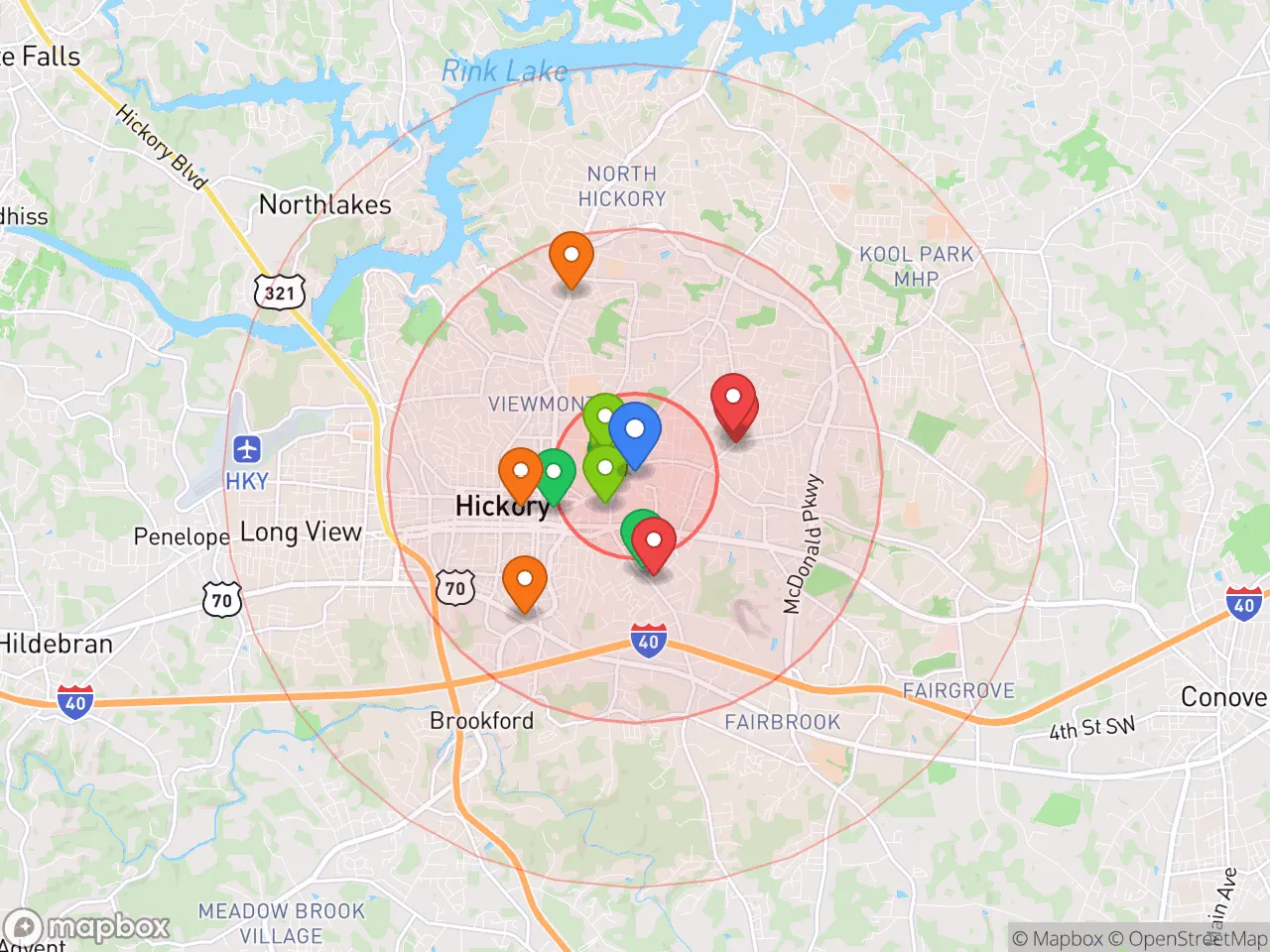
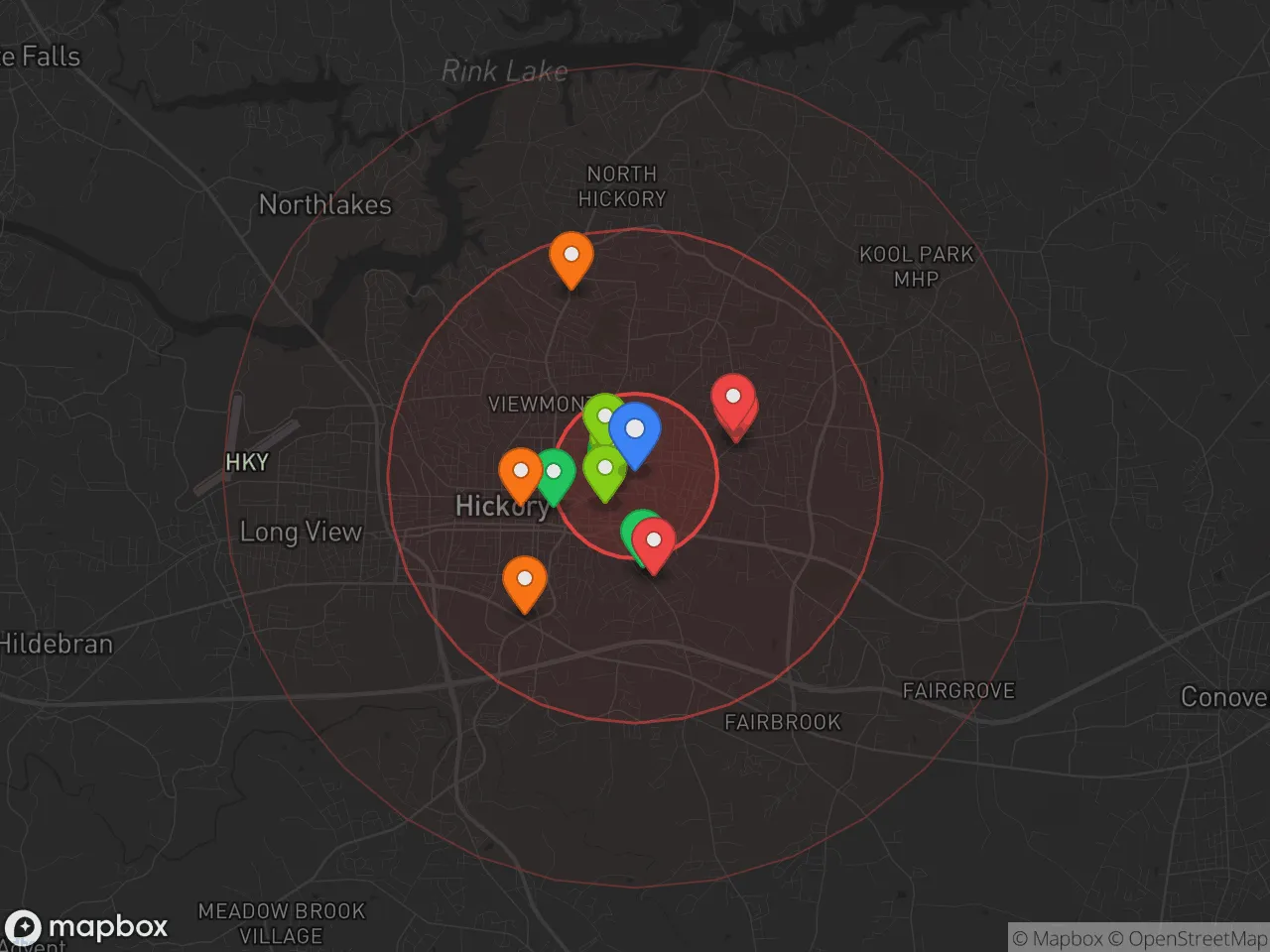
Hobbies
Explore the areaGroceries
7 within 10 miles
Gas
20 within 10 miles
Hospital
11 within 20 miles
Airport
CLT — Charlotte Douglas International
Post Office
USPS — Hickory, NC
Critical Amenities
Quality-of-Life Analysis
Hickory, North Carolina, offers a quality of life defined by solid middle-class comfort, a strong manufacturing and healthcare employment base, and a notably lower cost of living than the national average. With a cost-of-living index of 86 (100 is the U.S. average), the city attracts a mix of young families seeking affordable homeownership, retirees looking to stretch their savings, and skilled tradespeople drawn to the region’s furniture and logistics sectors. The population skews slightly older and more family-oriented than the state average, with a median age of 40.7, reflecting a stable, rooted community rather than a transient college town or a booming tech hub.
How housing costs and daily expenses compare to Charlotte and Asheville
Hickory’s affordability is its strongest draw. The median home value sits at $248,300, roughly half the median in Charlotte ($485,000) and less than a third of Asheville’s ($575,000). For renters, the median monthly rent of $975 is about $400 cheaper than the national median and nearly $700 less than the Charlotte metro average. This pricing gap means a household earning the local median income of roughly $58,000 can comfortably afford a three-bedroom home, a scenario increasingly out of reach in North Carolina’s larger metros. The average commute of 20.1 minutes is shorter than both the state average (24.6 minutes) and the national average (26.4 minutes), reducing transportation costs and freeing up time for family or recreation. Property taxes in Catawba County are moderate, averaging about 0.72% of assessed value, which keeps monthly carrying costs low even for newer construction in subdivisions near Lake Hickory or the city’s western edge.
What daily life is like for families: schools, parks, and local amenities
Daily life in Hickory revolves around a manageable pace and accessible outdoor recreation. The city’s public school system, Hickory Public Schools, serves about 4,200 students and includes two magnet schools—Hickory High’s International Baccalaureate program and the STEM-focused Grandview Middle School—that draw families from across the county. For higher education, Lenoir-Rhyne University and Catawba Valley Community College provide local options for dual-enrollment and continuing education. The city maintains over 20 parks, with the 40-acre Hickory City Park and the Lake Hickory access points offering fishing, kayaking, and walking trails. The downtown area along Union Square has seen steady reinvestment, with locally owned restaurants, a craft brewery scene anchored by Hickory Hops (the city’s annual beer festival), and the Hickory Museum of Art. Retail is concentrated along the US 70/321 corridor, anchored by Valley Hills Mall, but the overall rhythm is quieter than Charlotte’s—restaurants close by 9 p.m. on weeknights, and weekend traffic is negligible compared to the I-77 corridor.
Hickory is best suited for people who prioritize affordability, short commutes, and a slower daily rhythm over urban nightlife or cutting-edge cultural amenities. Young families will find the housing market accessible and the schools adequate, while remote workers and retirees will appreciate the low cost of living and proximity to the Blue Ridge Parkway (45 minutes west) for weekend hiking. Those seeking a diverse, fast-growing job market or a vibrant arts scene may find Hickory too insular; the local economy remains heavily tied to furniture manufacturing, healthcare (Frye Regional Medical Center is a top employer), and logistics. For anyone who values a stable, low-stress environment where a median-income household can own a home and be at work in under 20 minutes, Hickory delivers a quality of life that larger cities in the state can no longer offer.

Crime in Hickory, NC
Higher crime rates than 68% of comparable U.S. locations.
Violent CrimeViolent Crime Analysis
Property CrimeProperty Crime Analysis
Crime Analysis
Hickory, North Carolina, presents a mixed safety profile, with crime rates that significantly exceed both state and national averages. The city's violent crime rate stands at 563.4 incidents per 100,000 residents, while property crime occurs at a rate of 2,903 per 100,000. These figures place Hickory in a higher-risk category compared to many peer communities in the Catawba Valley region, though neighborhood-level conditions vary substantially.
Crime in context
Hickory's violent crime rate is roughly 50% higher than the national average and significantly above the North Carolina state average of approximately 400 per 100,000. The property crime rate of 2,903 per 100,000 also exceeds both state and national benchmarks. For context, the national property crime average hovers around 1,950 per 100,000, meaning Hickory residents face a nearly 50% elevated risk of experiencing burglary, theft, or motor vehicle theft. These statistics place Hickory among the more challenging mid-sized cities in the state for public safety, comparable to nearby Gastonia but worse than Morganton or Lenoir.
What residents experience
Residents report that property crimes—particularly vehicle break-ins and package thefts—are the most common safety concerns in daily life. Hickory's location along Interstate 40 contributes to transient crime patterns, with thieves targeting parked cars at shopping centers along Highway 70 and the Lenoir-Rhyne University area. Violent crime, while less frequent, tends to concentrate in specific corridors rather than spreading uniformly across the city. The Hickory Police Department has implemented targeted patrols and a real-time crime center to address hot spots, but response times in outlying neighborhoods can stretch to 15-20 minutes during peak hours. Progressive prosecutorial policies in Catawba County have drawn criticism from some residents, who argue that lenient sentencing for repeat property offenders undermines deterrence and contributes to recidivism. The district attorney's office has emphasized diversion programs for nonviolent offenders, a philosophy that aligns with broader urban trends but frustrates victims seeking stricter accountability.
Neighborhood-level safety varies considerably. The area around downtown Hickory and the Ridgeview neighborhood sees higher violent crime rates, while the western sections near Lake Hickory and the southern suburbs around St. Stephens generally report lower incident numbers. Gated communities and newer developments along Highway 127 tend to have minimal crime. Prospective residents should examine block-level data for specific addresses, as a single street can shift from high-risk to relatively safe within a few blocks. The city's overall safety trajectory depends heavily on whether current justice system reforms reduce recidivism or inadvertently increase opportunities for property crime.
* Values derived from national, state, county, city and local statistics and may differ in a specific area. Last updated: 2026-04-21T17:14:29.000Z
Narrative content on this page is AI-generated and may contain mistakes. Verify any details that matter before acting on them.
ReloMaps may earn a commission from affiliate links at no extra cost to you.

