
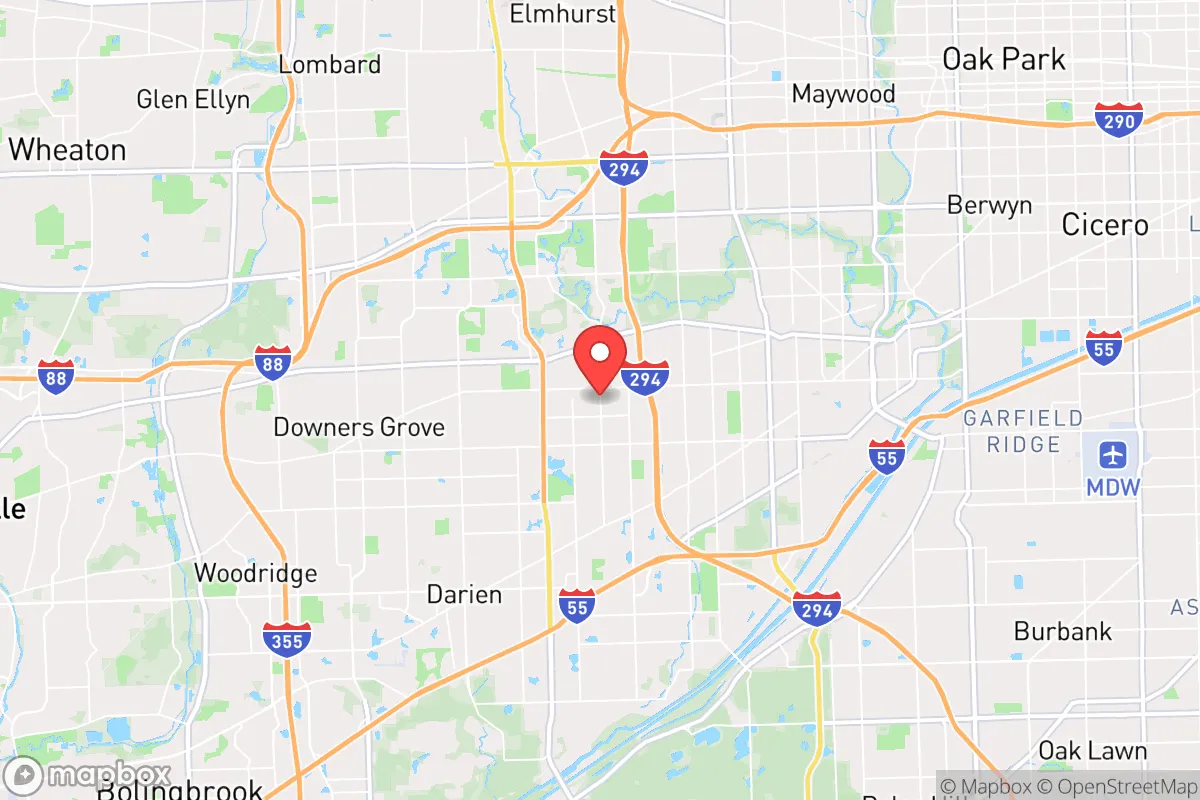
Photo: Wikipedia
Personal Sovereignty in Hinsdale, IL
Viable for self-reliance. Generally workable, though some barriers may limit total independence.
What does Personal Sovereignty tell us?
Personal Sovereignty measures your capacity for self-reliance and independence with minimal government friction. Higher scores mean fewer barriers between you and the way you want to live... but it assumes you have the space you need and good neighbors.
What does this tell us?
Personal Sovereignty measures your capacity for self-reliance and independence with minimal government friction. Higher scores mean fewer barriers between you and the way you want to live... but it assumes you have the space you need and good neighbors.
State Policy
Energy independence: Importer (45% of energy produced in-state)
Personal Liberty
Homesteading

Personal Liberty Analysis
Hinsdale, Illinois, presents a complex picture for those prioritizing personal sovereignty. While the village itself maintains a strong sense of local control and community self-reliance, it operates within the broader framework of Illinois state law, which imposes significant constraints on individual autonomy in areas like taxation, self-defense, and medical freedom. For the survivalist or prepper, Hinsdale offers a high degree of economic freedom and a like-minded community, but the state-level regulatory environment requires careful navigation and strategic planning to preserve one's independence.
Tax burden and regulatory posture: how Illinois state policy impacts your autonomy
The most immediate challenge to personal sovereignty in Hinsdale is the state's tax structure. Illinois has a flat income tax rate of 4.95%, and property taxes are among the highest in the nation. In Hinsdale, effective property tax rates often exceed 2% of assessed value, meaning a $1 million home could carry an annual tax bill of $20,000 or more. This creates a significant ongoing financial obligation that directly reduces the resources available for self-reliance projects, such as land acquisition, emergency supplies, or alternative energy systems. The state's regulatory posture is similarly burdensome. Illinois maintains strict environmental and building codes that can complicate off-grid infrastructure. For example, installing a private well or septic system requires extensive permitting and compliance with state health department standards, which can delay or increase the cost of such projects. The state also has a history of aggressive enforcement of tax and business regulations, meaning that any side business or independent contracting work—common among those seeking financial independence—must be meticulously documented. While Hinsdale's village government is generally more business-friendly than Chicago, the overarching state apparatus remains a significant factor in any sovereignty calculation.
Self-defense and gun law specifics: what you can and cannot do in Hinsdale
Illinois is one of the most restrictive states in the nation regarding firearm ownership and self-defense, and Hinsdale residents must operate within these constraints. The state requires a Firearm Owner's Identification (FOID) card to possess any firearm or ammunition, a process that involves a background check and can take months to process. For concealed carry, a separate license is required, and Illinois is a "may-issue" state in practice, though the law has been reformed to be more objective. However, the most significant limitation is the state's ban on "assault weapons" and high-capacity magazines, enacted in 2023. This law prohibits the possession, sale, and transfer of a wide range of commonly owned rifles and handguns, as well as magazines holding more than 10 rounds for long guns and 15 rounds for handguns. For the prepper, this means that standard defensive platforms like the AR-15 are effectively illegal to acquire new, and existing owners must register them with the state police—a process many view as a de facto registry that could be used for future confiscation. Self-defense law in Illinois also imposes a "duty to retreat" in public spaces, meaning you cannot use deadly force unless you are in your home or vehicle and cannot safely retreat. This is a stark contrast to stand-your-ground states and places a legal burden on the defender. For those prioritizing armed self-defense, Hinsdale's location in DuPage County offers some relief, as the county sheriff's office is generally more supportive of Second Amendment rights than Cook County, but the state-level restrictions remain a serious concern.
Self-reliance and homesteading viability: lot sizes, zoning, and off-grid feasibility
Hinsdale is a densely developed, affluent suburb with lot sizes typically ranging from one-quarter to one-half acre in the older sections, though some larger estates exist near the village's edges. Zoning regulations are strict and designed to maintain a uniform, upscale residential character. This means that visible self-reliance activities—such as keeping chickens, goats, or other livestock—are generally prohibited or heavily restricted. The village code also limits the use of outbuildings, meaning a large workshop or storage shed for prepping supplies may require a variance. Off-grid feasibility is extremely low. The village requires connection to municipal water and sewer systems, and solar panel installations must comply with aesthetic guidelines that can limit their size and placement. Rainwater collection for potable use is not permitted under Illinois Department of Public Health regulations, though non-potable collection for gardening may be allowed with permits. For the serious homesteader or off-grid prepper, Hinsdale is not a viable location. The village is designed for a lifestyle of convenience and service reliance, not self-sufficiency. However, for those who view their home as a base of operations—a secure location for storing supplies and coordinating with a network—the dense suburban environment offers some advantages, such as a strong community watch and low crime rates. The key is to recognize Hinsdale as a "hub" rather than a "homestead," and to plan accordingly with a secondary rural property for actual self-reliance activities.
Personal liberties: parental rights, medical autonomy, speech, and property
Illinois has been at the forefront of expanding state authority into areas traditionally considered personal liberties. Parental rights have been significantly eroded by state laws that allow minors to consent to certain medical procedures without parental knowledge, including reproductive health services and gender transition care. The state also mandates comprehensive sex education in public schools, which some parents view as infringing on their right to direct their children's moral and religious upbringing. Medical autonomy is similarly constrained. Illinois has strict vaccine mandates for school attendance, and during the COVID-19 pandemic, the state imposed some of the most prolonged emergency orders in the nation. While those specific mandates have expired, the precedent for state intervention in personal health decisions remains. On the positive side, freedom of speech is generally robust in Illinois, though local ordinances in some suburbs have attempted to regulate political signage and public gatherings. Property rights are protected by the Illinois Constitution, but the state's strong eminent domain powers and aggressive tax collection policies mean that the government can effectively take property through tax foreclosure if obligations are not met. For the sovereignty-minded individual, these factors create a need for proactive legal and financial planning. Trusts, LLCs, and other asset protection strategies are advisable to shield property from state overreach. The key takeaway is that while Hinsdale offers a high quality of life and a community of like-minded individuals, the state of Illinois actively limits several core personal liberties, requiring residents to be vigilant and strategic in protecting their autonomy.
In the broader landscape of American personal sovereignty, Hinsdale represents a trade-off. It offers the economic freedom and community stability of a wealthy suburb, but it sits within a state that consistently ranks among the worst for individual liberty according to indices like the Cato Institute's Freedom in the 50 States. Compared to states in the Southeast or Mountain West, where property taxes are lower, gun laws are more permissive, and regulatory burdens are lighter, Hinsdale is a constrained environment. For the survivalist or prepper who values community and economic opportunity above all else, it can work as a base, but it requires a defensive posture—careful legal compliance, strategic asset protection, and a clear-eyed understanding that true self-reliance may need to be pursued elsewhere. The village itself is not the problem; the state is. And that distinction is critical for anyone making a relocation decision based on personal sovereignty.

* Values derived from national, state, county, city and local statistics and may differ in a specific area. Last updated: 2026-04-27T14:16:42.000Z
Narrative content on this page is AI-generated and may contain mistakes. Verify any details that matter before acting on them.
ReloMaps may earn a commission from affiliate links at no extra cost to you.

