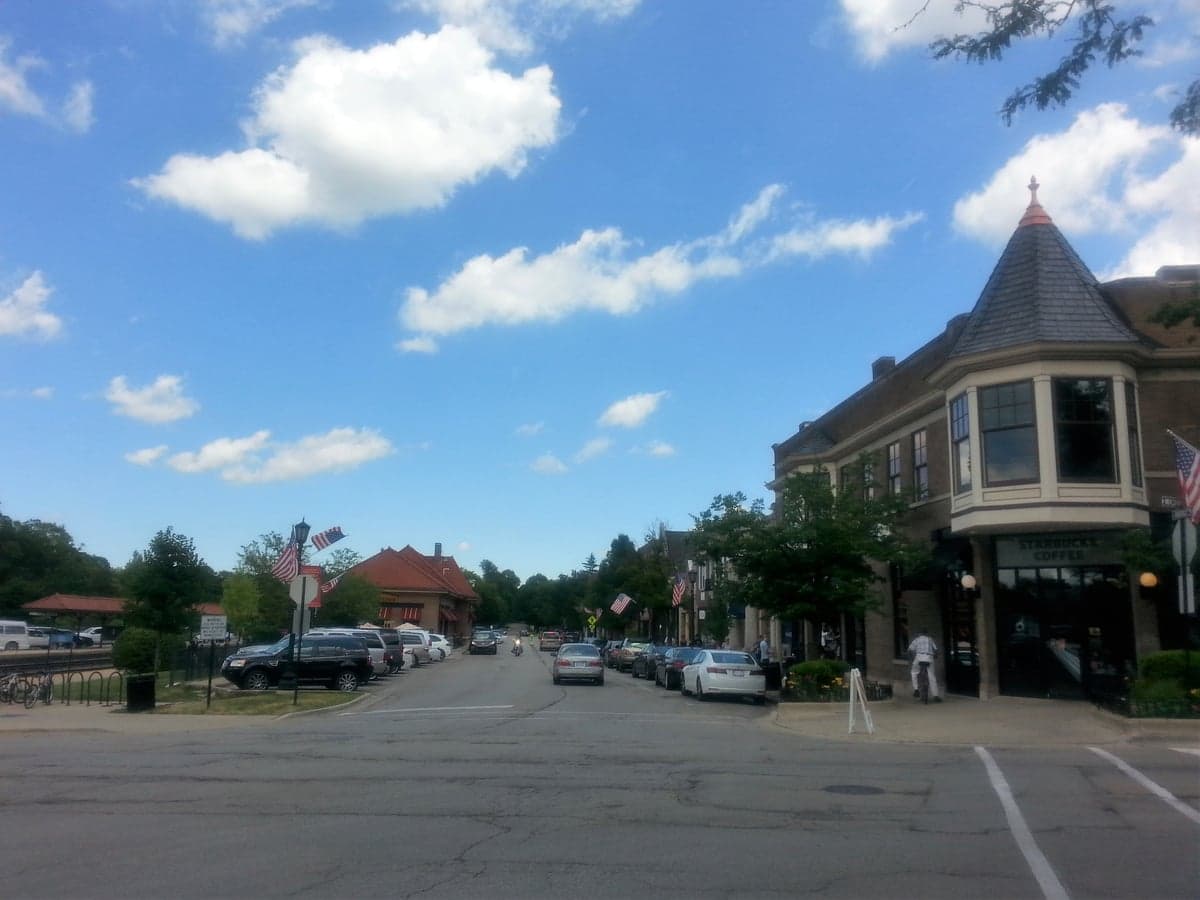
Photo: Wikipedia
Political ClimatePolitical Climate in Hinsdale, IL
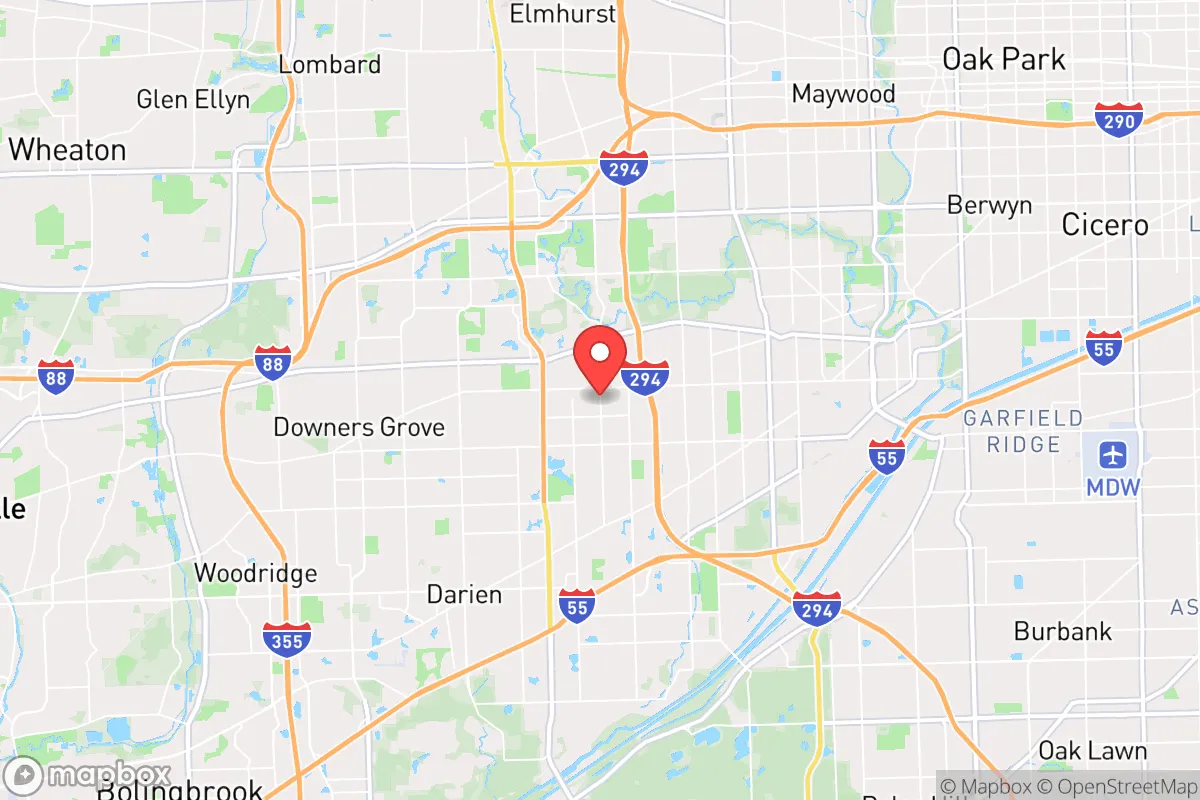
District shown is the primary district for this city’s centroid. Cities may span multiple districts.
Local Political AnalysisPolitical Analysis of Hinsdale, IL
Hinsdale, Illinois, sits in a political bubble that’s been slowly deflating. While the village itself has historically leaned conservative, it’s now firmly part of a county—DuPage—that’s been trending blue for years. The Cook Partisan Voting Index (PVI) for the area is D+17, meaning the district votes 17 points more Democratic than the national average. That’s a stark shift from even 15 years ago, when Hinsdale was reliably red. The trajectory is clear: the old-school, small-government ethos that defined this town is being squeezed by progressive policies coming from Springfield and Washington, D.C., and it’s showing up in local elections and school board races.
How it compares
Drive 10 minutes west to Naperville, and you’ll find a similar story—a once-conservative suburb now leaning left, though not as dramatically as Hinsdale. But head south to Burr Ridge or west to Oak Brook, and you’ll see pockets of resistance where fiscal conservatism still holds sway. The real contrast is with nearby Chicago, just 20 miles east, where the Cook County machine runs the show. Hinsdale’s political identity is caught in the middle: it’s not as deep blue as the city, but it’s no longer the bastion of traditional values it was in the 1990s. The DuPage County Board still has a Republican majority, but that’s a thin veneer over a county that voted for Biden in 2020. The surrounding towns like Clarendon Hills and Westmont are even more mixed, with younger families bringing in progressive views on taxes and social issues.
What this means for residents
For a long-time resident, the biggest red flag is the creeping government overreach into personal freedoms. The school board, once a quiet affair focused on curriculum and budgets, has become a battleground over mask mandates, critical race theory, and gender identity policies. Property taxes in Hinsdale are already among the highest in the state—think $20,000 to $30,000 a year on a typical home—and the progressive push for more spending on social programs and DEI initiatives is only driving them higher. The village council has also flirted with zoning changes that favor high-density development, which feels like a backdoor way to dilute the community’s character. If you value keeping government out of your wallet and your family’s decisions, the trend here is concerning. The local Republican Party is still active, but it’s fighting an uphill battle against a demographic shift that brings in voters who see government as a solution, not a problem.
On the cultural front, Hinsdale still has its conservative roots—the country clubs, the private schools, the quiet streets—but the political winds are shifting faster than most folks realize. The 2024 election saw DuPage County swing even further left, and local races are now decided by a few hundred votes. If you’re considering a move here, know that the days of “live and let live” are fading. The progressive agenda is chipping away at property rights, school choice, and local control. It’s still a great place to raise a family, but you’ll need to stay engaged—and maybe join the local GOP—if you want to keep it that way. The next five years will tell whether Hinsdale holds the line or becomes another blue suburb in a blue state.

State Political ClimatePolitical Climate in Illinois
State Political AnalysisPolitical Environment in the State
Illinois has been a reliably blue state for decades, but its political climate is far more complex than a simple partisan label suggests. The Democratic stronghold is powered overwhelmingly by Chicago and its immediate suburbs, while the rest of the state—downstate and the collar counties—has shifted sharply red, creating a deep urban-rural chasm. Over the last 20 years, the state has moved from a purple swing state to a solidly Democratic one at the statewide level, driven by population loss in conservative rural areas and explosive growth in the progressive Chicago metro. For a conservative considering a move, the reality is that your vote will likely be drowned out by Cook County, but your daily life will be shaped by a state government that has increasingly embraced progressive policies on taxes, crime, and regulation.
Urban vs. rural divide
The political map of Illinois is a tale of two worlds. Chicago and its inner-ring suburbs like Evanston and Oak Park are the engine of the state’s Democratic machine, delivering massive margins that swamp the rest of the state. Cook County alone accounts for roughly 40% of the state’s population and votes about 75% Democratic. Meanwhile, the collar counties—DuPage, Lake, Kane, McHenry, and Will—have been trending blue in recent cycles, especially in areas like Naperville and Schaumburg, as suburbanites shift left on social issues. Downstate, places like Peoria, Springfield, and the Metro East area near St. Louis are more competitive, but the real red strongholds are the rural counties: places like Effingham, Mount Vernon, and the far southern tip around Cairo vote 70-80% Republican. The divide is so stark that many downstate conservatives feel completely disconnected from the state government, which is dominated by Chicago interests. This isn’t just a political difference—it’s a cultural and economic chasm that shows no signs of narrowing.
Policy environment
Illinois’s policy environment is a textbook case of progressive governance, and it’s a major reason conservatives are leaving. The state has the second-highest property tax burden in the nation, with effective rates often exceeding 2% of home value, and a flat income tax of 4.95% that is among the highest in the Midwest. In 2020, voters rejected a graduated income tax amendment, but the legislature keeps finding ways to raise revenue. The regulatory posture is heavy: Illinois has some of the strictest gun laws in the country, including a 2023 ban on assault weapons and high-capacity magazines, and it’s a “may-issue” state for concealed carry, meaning local authorities have discretion. On education, the state funds schools through a deeply inequitable property tax system, and Chicago Public Schools remains a battleground over school choice and union power. Healthcare is heavily regulated, with a state-based insurance exchange and Medicaid expansion under the Affordable Care Act. Election laws are notably liberal: Illinois has same-day voter registration, no-excuse mail-in voting, and automatic voter registration through the DMV. For a conservative, the policy environment feels like a slow, steady squeeze on personal freedom and economic opportunity.
Trajectory & freedom
The trajectory of Illinois over the last decade has been unmistakably toward less freedom, particularly in areas conservatives value most. The 2023 assault weapons ban (HB 5471) was a major flashpoint, sparking lawsuits and a wave of gun owners moving to Indiana or Missouri. Parental rights have been eroded by the state’s 2021 expansion of the “Parental Notice of Abortion Act,” which actually removed parental notification requirements for minors seeking abortions. On medical autonomy, Illinois has become a sanctuary for abortion access, with the 2019 Reproductive Health Act codifying abortion as a “fundamental right” and removing nearly all restrictions. Property rights are under constant threat from high property taxes and a powerful eminent domain framework used for projects like the Obama Presidential Center in Chicago. Taxation is the biggest freedom killer: the state’s pension debt is over $140 billion, and there’s no serious plan to address it, meaning taxes will only go up. The only bright spot for conservatives is that the state has not adopted a statewide rent control or a wealth tax, but those are perennial proposals. The trend line is clear: more regulation, higher taxes, and less individual autonomy.
Civil unrest & political movements
Illinois has been a hotbed of political activism, and the flashpoints are impossible to ignore. The 2020 George Floyd protests in Chicago were among the largest and most destructive in the country, with looting and arson in the Loop and along the Magnificent Mile. The city’s response—or lack thereof—under Mayor Lori Lightfoot became a national symbol of progressive governance failure. On the right, the “Illinois Freedom Caucus” in the state legislature has been a vocal but largely powerless opposition, and groups like the Illinois State Rifle Association have fought the gun ban in court. Immigration politics are a major fault line: Illinois is a sanctuary state under the 2017 TRUST Act, and Chicago has been a “Welcoming City” since 2012, meaning local police do not cooperate with federal immigration enforcement. This has led to tensions in suburbs like Elgin and Aurora, where immigrant populations have grown rapidly. Election integrity has been a persistent concern for conservatives, especially after the 2020 election saw widespread use of mail-in ballots and no-excuse voting, though no major fraud was proven. The most visible flashpoint for a new resident would be the constant political polarization: drive through a downstate town and you’ll see Trump flags; drive through Evanston and you’ll see “In This House We Believe” signs. It’s a state at war with itself.
Projection
Looking ahead 5-10 years, the trajectory is not encouraging for conservatives. Demographic trends are working against them: Illinois lost population for the ninth straight year in 2023, with most of the losses coming from downstate and rural areas, while Chicago’s population has stabilized. The people leaving are disproportionately conservative-leaning, which only deepens the blue hue of the state. In-migration is minimal, and the few newcomers tend to be younger, more diverse, and more progressive, drawn to Chicago’s job market in tech, finance, and healthcare. The state’s pension crisis will eventually force either a massive tax hike or a bankruptcy-like restructuring, and neither outcome is good for property owners or small businesses. The political power of Chicago will only grow as the rest of the state shrinks, meaning more progressive policies on guns, taxes, and social issues are likely. The only wild card is a potential federal shift: if a conservative Supreme Court strikes down the assault weapons ban or limits sanctuary city policies, it could slow the trend. But for someone moving in now, the realistic expectation is that Illinois will be a more expensive, more regulated, and less free state in a decade.
For a conservative considering a move to Illinois, the bottom line is this: you can find like-minded communities in the rural south and west, but you will be fighting an uphill battle against a state government that is increasingly hostile to your values. The property taxes alone are a dealbreaker for many, and the gun laws will feel oppressive if you’re coming from a free state. Your vote for president or Senate will be meaningless, but your local vote in a red county can still matter. If you’re a single professional or a parent looking for good schools and a lower cost of living, places like the Metro East or the Quad Cities offer a more conservative-friendly environment, but you’ll still be subject to Springfield’s whims. Illinois is a beautiful state with great people, but it’s a state that has chosen a path that many conservatives find increasingly untenable. Come for the job or the family, but don’t expect the political climate to change anytime soon.
* Values derived from national, state, county, city and local statistics and may differ in a specific area. Last updated: 2026-04-27T14:16:42.000Z
Narrative content on this page is AI-generated and may contain mistakes. Verify any details that matter before acting on them.
ReloMaps may earn a commission from affiliate links at no extra cost to you.

