Photo: Wikipedia
Personal Sovereignty in Hoboken, NJ
Moderate friction. Expect trade-offs in some aspect of personal liberty and independence.
What does Personal Sovereignty tell us?
Personal Sovereignty measures your capacity for self-reliance and independence with minimal government friction. Higher scores mean fewer barriers between you and the way you want to live... but it assumes you have the space you need and good neighbors.
What does this tell us?
Personal Sovereignty measures your capacity for self-reliance and independence with minimal government friction. Higher scores mean fewer barriers between you and the way you want to live... but it assumes you have the space you need and good neighbors.
State Policy
Energy independence: Importer (8% of energy produced in-state)
Personal Liberty

Personal Liberty Analysis
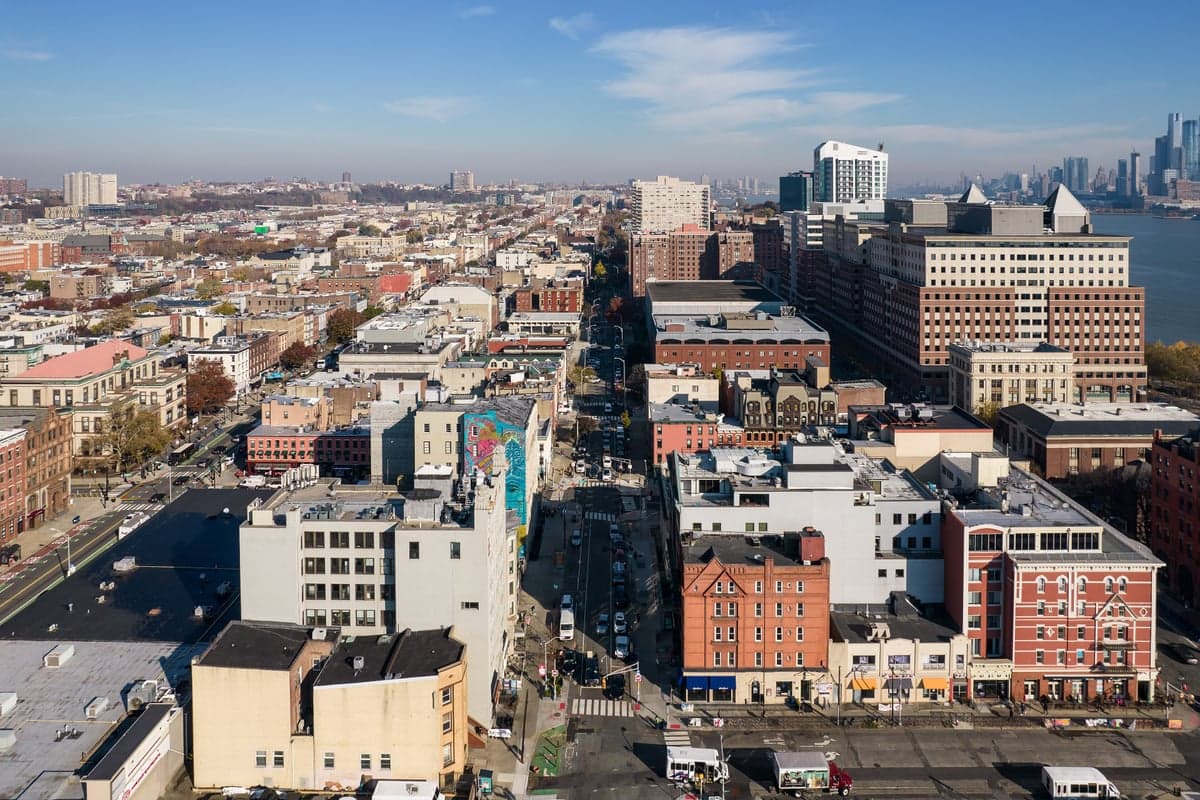
For a conservative-leaning individual or family evaluating Hoboken, New Jersey, from a personal sovereignty standpoint, the assessment is sobering. This dense, 1.3-square-mile city across the Hudson from Manhattan operates under a state government that consistently ranks among the most restrictive in the nation for gun rights, tax burdens, and regulatory autonomy. While the city offers unmatched walkability and proximity to New York City jobs, the trade-off is a heavily managed existence where local and state authorities exert significant control over daily life, from what you can own to how you can use your property. For those prioritizing self-reliance and minimal government interference, Hoboken represents a challenging environment that requires careful navigation of New Jersey's dense legal and fiscal landscape.
Tax burden and regulatory posture for residents and property owners
New Jersey's tax burden is the highest in the nation, and Hoboken residents feel this acutely. The combined state and local tax burden consumes over 12% of income, with property taxes in Hudson County averaging around $8,000 to $10,000 annually for a modest condo or apartment—though units with higher assessments can easily exceed $15,000. The state's progressive income tax tops out at 10.75% for high earners, and sales tax is 6.625%, with no exemptions for essential preparedness supplies like bulk food or emergency gear. Regulatory posture is equally aggressive: New Jersey's COAH (Council on Affordable Housing) mandates force municipalities to zone for high-density development, limiting the ability to own land for private use. The state's strict environmental regulations, including the Freshwater Wetlands Protection Act, can restrict even minor property modifications. For a prepper, this means that stockpiling resources or making structural changes to a home for self-sufficiency (e.g., installing a backup generator or reinforcing a basement) often requires permits and inspections, adding layers of bureaucratic friction to personal preparedness efforts.
Self-defense realities and New Jersey's restrictive gun laws
New Jersey is one of the most difficult states in the U.S. for law-abiding citizens to exercise their Second Amendment rights, and Hoboken residents face the full brunt of these restrictions. The state requires a Firearms Purchaser Identification Card (FPID) for long guns and a separate permit for each handgun purchase, with a 30-day waiting period between handgun purchases. Concealed carry is effectively impossible for most residents due to the state's "justifiable need" standard, which was only partially loosened after the Bruen decision—but New Jersey's response has been to impose stringent "sensitive places" bans that cover virtually all public spaces, including parks, public transit, and private property without explicit owner permission. Magazine capacity is capped at 10 rounds, and hollow-point ammunition is heavily regulated. In Hoboken itself, the city's dense urban environment means that even if you could legally carry, the practical reality of navigating crowded sidewalks and buildings with a firearm is fraught with legal risk. For self-defense at home, the state's Castle Doctrine does not apply with the same force as in more gun-friendly states; you have a duty to retreat in many circumstances outside your home. This legal framework effectively disarms law-abiding residents, leaving them reliant on less-lethal options or the responsiveness of the Hoboken Police Department, which has an average response time of under 5 minutes for emergencies—but that is cold comfort in a home invasion scenario.
Self-reliance and homesteading viability in a vertical city
Hoboken's urban density makes traditional homesteading or off-grid living nearly impossible. The city's zoning is almost entirely multi-family residential, with lot sizes averaging just 2,500 to 5,000 square feet for the few single-family homes that exist. Most residents live in condos or apartments with no private outdoor space, and community gardens are limited to small, city-managed plots. Off-grid feasibility is essentially zero: the city requires connection to municipal water and sewer, and solar panel installation is subject to strict historic preservation rules in many neighborhoods. For a prepper, this means self-reliance must take a different form—focusing on urban survival skills like water storage (a 55-gallon drum takes up significant space in a 700-square-foot apartment), food stockpiling (limited by kitchen and closet space), and community networking. The city's Office of Emergency Management runs a robust emergency notification system and maintains a network of shelters, but reliance on government infrastructure is the default. The Hudson River provides a potential water source, but purification would require advanced filtration systems that are hard to store and deploy in a small apartment. For those serious about self-sufficiency, Hoboken is a staging ground, not a final destination—a place to build financial resources before relocating to a more sovereignty-friendly area.
Personal liberties: parental rights, medical autonomy, speech, and property
New Jersey's progressive governance extends deeply into personal liberties, with implications for conservative families. Parental rights are under consistent pressure: the state's LGBTQ+ inclusive curriculum mandate (starting in kindergarten) and sex education standards (which include discussions of gender identity and sexual orientation) override parental opt-out in many cases. Medical autonomy is similarly constrained—New Jersey has some of the strictest vaccine mandates in the country, including for school attendance, with limited philosophical exemptions. During the COVID-19 pandemic, the state imposed some of the longest-lasting mask and vaccine mandates in the nation, and Hoboken's local government was an early adopter of strict business closures and capacity limits. Free speech is protected under the First Amendment, but the state's hate crime laws and anti-discrimination statutes are aggressively enforced, creating a chilling effect for speech that deviates from progressive orthodoxy on public property or in the workplace. Property rights are heavily circumscribed: the state's eminent domain powers are broad, and Hoboken's rent control ordinances (covering most pre-1987 buildings) limit what landlords can do with their own property. For a homeowner, the Historic Preservation Commission can dictate exterior paint colors, window replacements, and even landscaping choices in designated historic districts. This regulatory density means that personal sovereignty is constantly negotiated with the state, not assumed.
In the broader context of the United States, Hoboken ranks near the bottom for personal sovereignty. Compared to a place like Maricopa County, Arizona or Rural Montana, where property rights, gun laws, and parental autonomy are far more robust, Hoboken is a high-tax, high-regulation environment that prioritizes collective governance over individual freedom. For a conservative prepper or survivalist, the city offers strategic advantages—proximity to financial centers, a dense social network, and access to the Northeast corridor—but these come at the cost of constant government oversight. The sobering reality is that Hoboken is a place to work and earn, not to build a sovereign life. If your goal is to minimize government overreach and maximize personal autonomy, this city is a temporary base camp, not a long-term homestead. The wise move is to use Hoboken's economic opportunities to fund a future elsewhere, while accepting that daily life here requires compliance with a system that views personal sovereignty as secondary to state-defined public good.

* Values derived from national, state, county, city and local statistics and may differ in a specific area. Last updated: 2026-05-23T21:47:46.000Z
Narrative content on this page is AI-generated and may contain mistakes. Verify any details that matter before acting on them.
ReloMaps may earn a commission from affiliate links at no extra cost to you.

