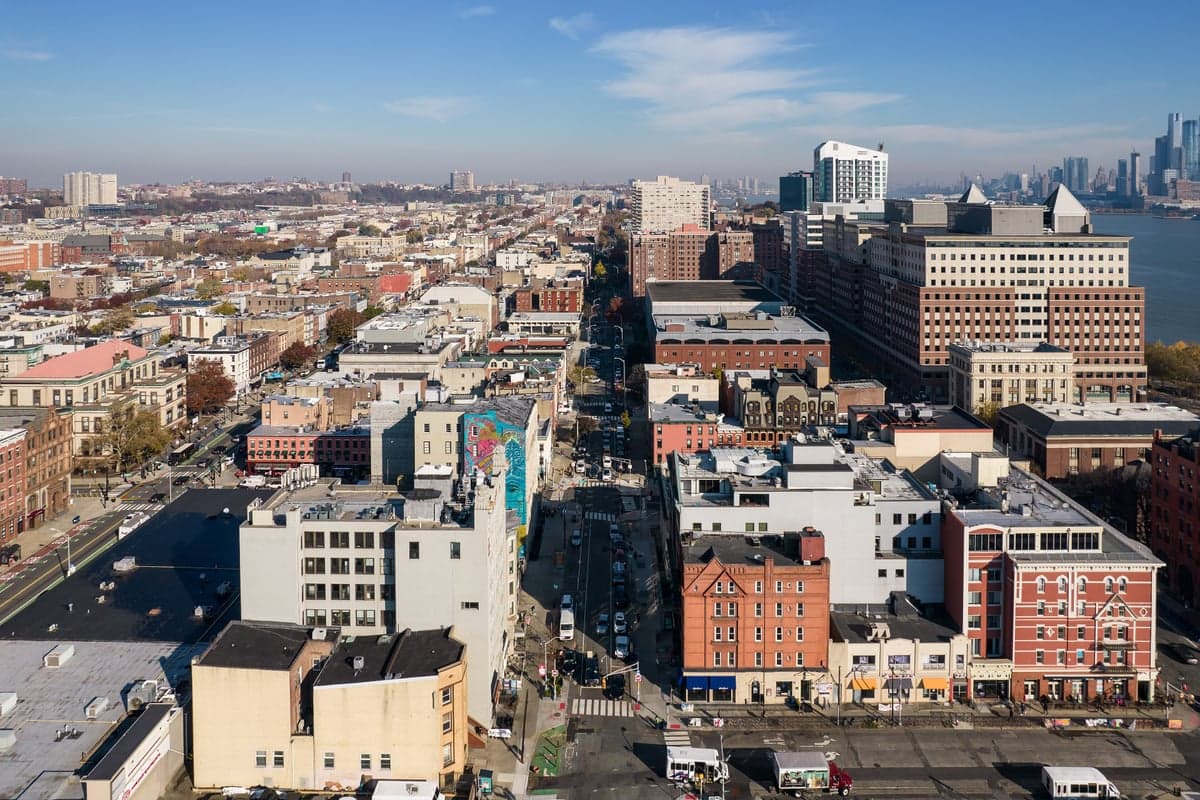
Photo: Wikipedia
Political ClimatePolitical Climate in Hoboken, NJ
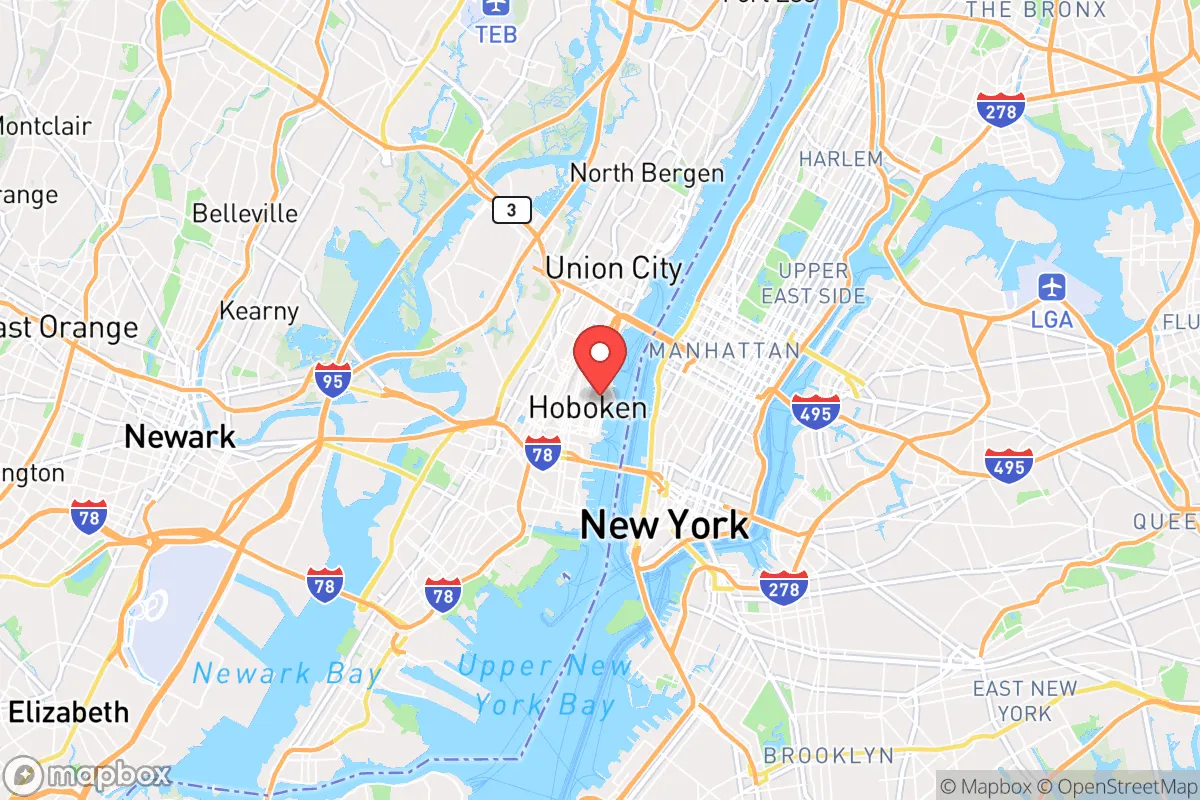
District shown is the primary district for this city’s centroid. Cities may span multiple districts.
Local Political AnalysisPolitical Analysis of Hoboken, NJ
Look, I’ve lived in Hoboken long enough to remember when this town was a working-class Italian and Irish enclave where folks kept their politics to themselves and the biggest debate was whether the parking authority was being too aggressive. Today, Hoboken is a solidly blue city with a Cook PVI of D+15, meaning it votes about 15 points more Democratic than the national average. That’s a full ten points more liberal than New Jersey as a whole, which sits at D+5. The shift has been steady over the last two decades, driven by an influx of young professionals from New York City and a local government that’s increasingly comfortable with progressive policies. If you’re someone who values personal freedoms and worries about government overreach, the trajectory here is worth paying attention to.
How it compares
Hoboken’s D+15 rating puts it in a different political universe from much of New Jersey. The state as a whole is reliably Democratic, but it’s a moderate blue—think suburban swing districts where taxes and schools dominate conversation. Hoboken, by contrast, is deep blue, more aligned with Jersey City (D+18) than with nearby towns like Secaucus or Kearny, which lean more moderate or even purple. Even within Hudson County, Hoboken stands out: while the county overall votes Democratic, the city’s politics are noticeably more progressive on social issues, housing regulations, and environmental mandates. For example, Hoboken has aggressively pursued rent control expansions and plastic bag bans, policies that would face stiff opposition in more conservative parts of the state like Sussex County or even parts of Bergen. The contrast with surrounding towns is stark—drive ten minutes west to Union City, and you’ll find a more mixed political landscape where local officials are less eager to embrace the full progressive agenda.
What this means for residents
For someone who values limited government and personal autonomy, living in Hoboken means navigating a local government that’s increasingly comfortable telling you how to live. The city council has passed ordinances restricting short-term rentals, mandating paid sick leave for all workers, and imposing strict building codes that can make home renovations a bureaucratic nightmare. Property taxes are high—among the highest in the state—and the local school board has embraced progressive curriculum changes that some parents find intrusive. The police department, while generally professional, operates under tight civilian oversight that can feel like second-guessing. If you’re a small business owner, you’ll face a maze of licensing requirements and health inspections that go beyond state mandates. The trend is clear: each year brings new regulations on everything from e-bike usage to noise levels, and the city’s political leadership shows little appetite for rolling them back. For conservatives or libertarians, this can feel like a slow erosion of the freedom to run your life without a government official looking over your shoulder.
Culturally, Hoboken has traded its blue-collar roots for a hip, progressive identity that’s reflected in everything from the farmers’ markets to the bike lanes. The local Democratic machine is strong, and independent or Republican candidates rarely get a serious hearing. If you’re politically out of step with the majority, you’ll likely find yourself keeping your opinions to yourself at neighborhood block parties or school board meetings. The long-term outlook? Expect more of the same—Hoboken’s demographics and housing costs ensure it will stay deep blue, with policies that prioritize collective goals over individual choice. If that sounds like your kind of place, you’ll fit right in. If not, you might want to look at towns like Weehawken or North Bergen, where the political temperature is a few degrees cooler.

State Political ClimatePolitical Climate in New Jersey
State Political AnalysisPolitical Environment in the State
New Jersey is a solidly Democratic state with a Cook PVI of D+5, meaning it votes about five points more Democratic than the national average in presidential elections. The dominant coalition is a mix of urban progressives, suburban moderates, and powerful public-sector unions, with Republicans largely confined to rural and exurban pockets. Over the last 10-20 years, the state has shifted leftward, driven by demographic changes in the northern suburbs and the continued growth of the New York City commuter belt, while the southern and western parts of the state have become more reliably Republican but lack the population to flip statewide races.
Urban vs. rural divide
The political map of New Jersey is a tale of two states. The northeastern corridor—Newark, Jersey City, Paterson, and Elizabeth—is overwhelmingly Democratic, with precincts often delivering 80-90% of the vote to the party. These cities are dense, diverse, and heavily unionized, with strong ties to the Democratic machine. In contrast, the rural and exurban areas of Sussex County, Warren County, and Salem County are reliably Republican, often voting 60-65% for GOP candidates. The suburbs of Morris County and Hunterdon County have historically been swing areas but have trended left in recent cycles, especially in towns like Montclair and Maplewood, where affluent professionals have moved in and shifted the balance. The Jersey Shore counties—Ocean and Monmouth—remain Republican strongholds, with Ocean County being one of the most reliably red in the Northeast, often delivering 55-60% for GOP candidates. The divide is stark: the state's political power is concentrated in the urban north, while the rural south and west feel increasingly marginalized.
Policy environment
New Jersey's policy environment is among the most progressive in the nation, with a tax structure that is heavily burdensome. The state has the highest property taxes in the country, averaging over $9,500 per year, and a progressive income tax that tops out at 10.75% for income over $1 million. The regulatory posture is aggressive, with strict environmental rules, rent control in many municipalities, and a strong public-sector union presence that drives up costs. Education policy is dominated by the teachers' unions, with per-pupil spending among the highest in the nation, yet outcomes in urban districts like Newark and Camden remain poor. Healthcare is heavily regulated, with a state-run insurance exchange and mandates that drive up premiums. Election laws are among the most liberal: no-excuse mail-in voting, automatic voter registration, and same-day registration are all in place, which has led to concerns about election integrity among conservatives. The state also has a "sanctuary" policy that limits cooperation with federal immigration enforcement, a flashpoint for many residents.
Trajectory & freedom
New Jersey is becoming less free by almost any measure. Recent legislation has expanded government control over personal choices. In 2022, the state passed a law requiring all public schools to teach "inclusive" sex education, including LGBTQ+ topics, which has sparked parental rights battles. The state also enacted a strict gun control package in 2022 that bans carrying firearms in "sensitive places" like parks and libraries, effectively nullifying the Bruen decision. Property rights are under assault: the state's "Mount Laurel" doctrine forces towns to zone for affordable housing, often overriding local control. Medical autonomy took a hit with the state's strict COVID-19 vaccine mandates for healthcare workers and school staff, which were among the most aggressive in the nation. On the positive side, the state has not expanded its "red flag" law as aggressively as some blue states, and there is a growing pushback movement, particularly in Toms River and Jackson Township, where local school boards have been taken over by conservative parents. But the overall trajectory is toward more regulation, higher taxes, and less personal freedom.
Civil unrest & political movements
New Jersey has seen its share of civil unrest and political activism. The 2020 Black Lives Matter protests in Newark and Jersey City were large but largely peaceful, though they led to calls to defund the police, which were rejected by most municipalities. The state's sanctuary policy has made it a flashpoint for immigration politics, with ICE raids in Paterson and Elizabeth drawing protests from activist groups. On the right, the "Parents' Rights" movement has been particularly strong in Ocean County and Morris County, where school board meetings have become battlegrounds over curriculum and library books. Election integrity remains a concern for conservatives, especially after the 2020 election saw widespread use of mail-in ballots without strict signature verification. There have been no major secession or nullification movements, but the "Jersey Shore" counties have occasionally floated the idea of breaking away to form a more conservative state, though it remains a fringe idea. A new resident would notice the political tension at the local level, especially in school board and town council races, which are often more competitive than statewide contests.
Projection
Over the next 5-10 years, New Jersey is likely to continue its leftward drift, driven by in-migration from New York City and the growth of the Asian and Hispanic populations, which tend to vote Democratic. The state's high cost of living and tax burden are pushing out middle-class families, particularly in Bergen County and Essex County, who are moving to Pennsylvania or Florida. This exodus is likely to accelerate, leaving the state more dominated by wealthy progressives and public-sector employees. The Republican Party is becoming increasingly marginalized, with its base concentrated in aging, rural areas that are losing population. A new resident moving in now should expect to see more progressive policies on housing, education, and taxation, with little chance of a political shift. The state will likely become more expensive, more regulated, and less friendly to conservative values, though the local-level pushback in places like Toms River and Jackson Township may provide some pockets of resistance.
For a conservative-leaning individual or family, New Jersey is a tough sell. The taxes are crushing, the regulatory environment is stifling, and the political culture is increasingly hostile to traditional values. If you're moving here for a job in New York or Philadelphia, you'll find some like-minded communities in the rural and exurban areas, but you'll be fighting an uphill battle against a state government that is determined to expand its reach. The bottom line: New Jersey is a place where you can find a good school district and a nice house, but you'll pay a premium in taxes and freedom. If you value low taxes, gun rights, and local control, you're better off looking at Pennsylvania or Delaware.
* Values derived from national, state, county, city and local statistics and may differ in a specific area. Last updated: 2026-05-23T21:47:46.000Z
Narrative content on this page is AI-generated and may contain mistakes. Verify any details that matter before acting on them.
ReloMaps may earn a commission from affiliate links at no extra cost to you.

