Photo: Wikipedia
Strategic Assessment of Hoboken, NJ
High tactical risk. This location is likely close to major population centers, strategic targets, or sits in a high-disaster corridor. A retreat property and careful exit planning is required.
What does the Strategic Assessment tell us?
Our Strategic Assessment grades tactical survivability of an area. Major population centers, military targets, fallout zones, natural disasters, and border exposure all drive risk — lower exposure means a more defensible position in a crisis.
This is heavily inspired by Joel Skousen's Strategic Relocation book. Highly recommended you checkout the book ($)What does this tell us?
Our Strategic Assessment grades tactical survivability of an area. Major population centers, military targets, fallout zones, natural disasters, and border exposure all drive risk — lower exposure means a more defensible position in a crisis.
This is heavily inspired by Joel Skousen's Strategic Relocation book. Highly recommended you checkout the book ($)Strategic Pillars

Key Distances
Regional Safe Places
Below is our recommended "safe zones" in New Jersey and the surrounding area based on our strategic heuristics. For most people, it's unrealistic to live in a “safe zone” full-time due to work, family or other personal reasons. They tend to be more rural. However, many of these areas are perfect for second homes and retreat properties that double as a vacation home or even a short-term rental.
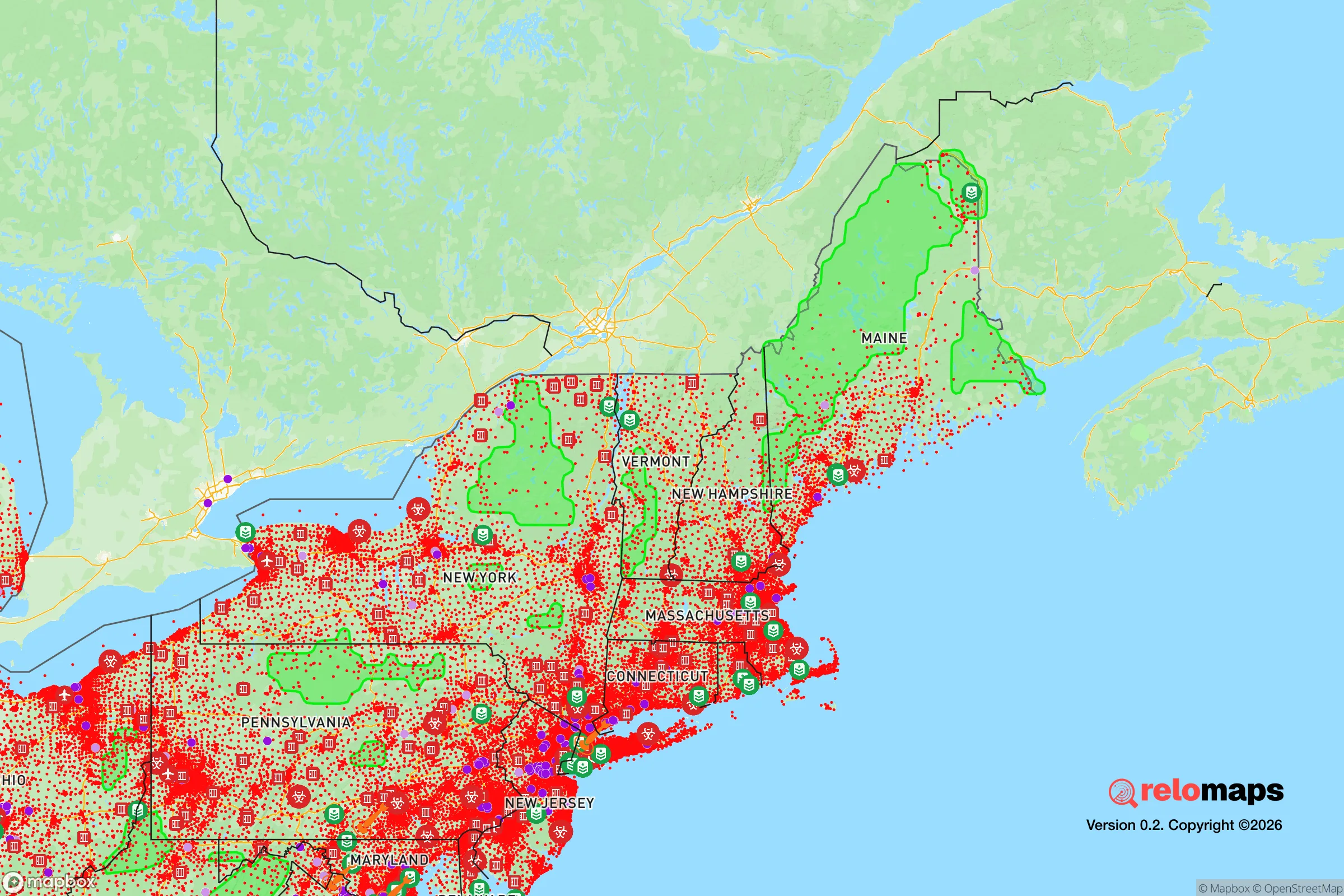
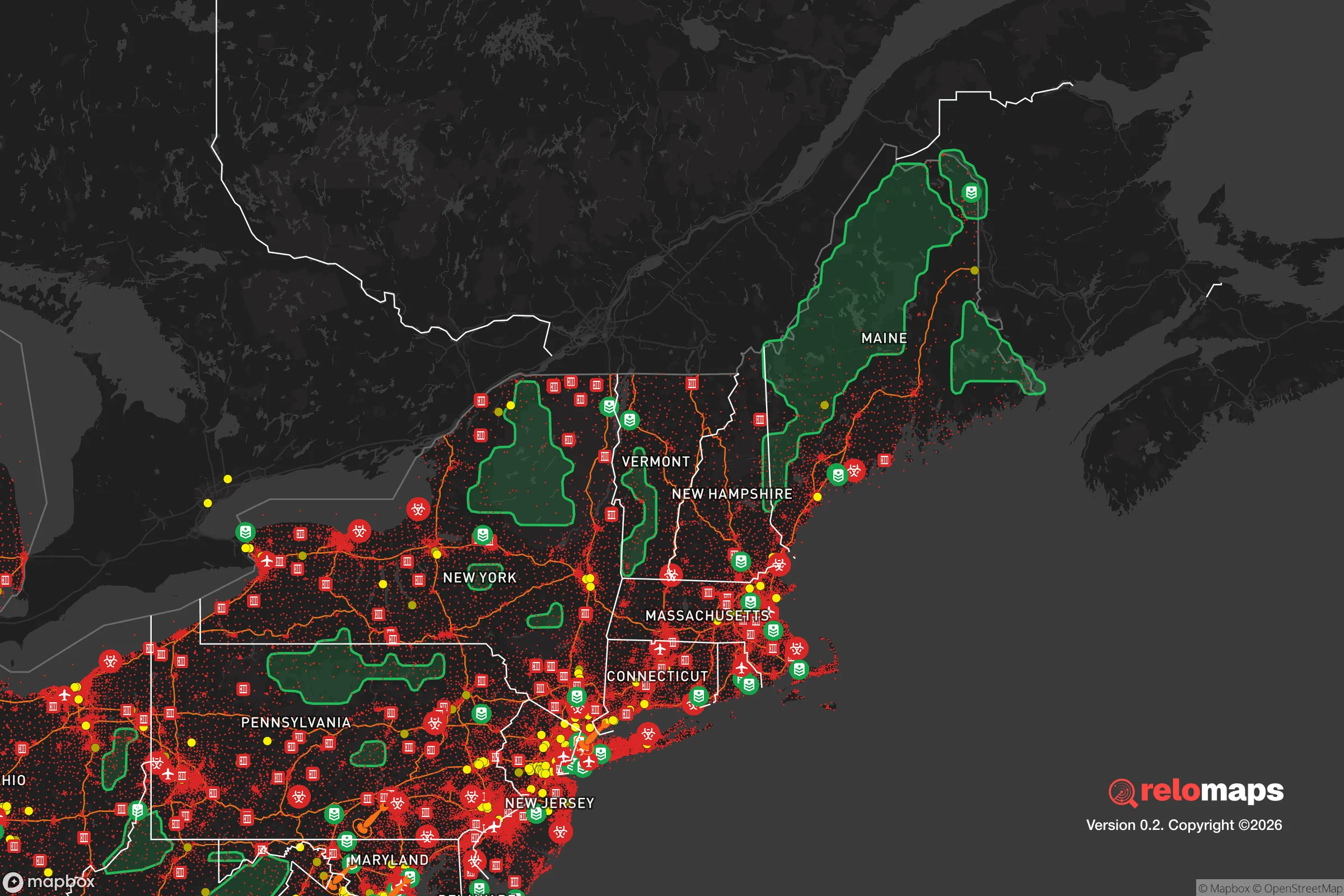


Important Note: For informational purposes only. This does not mean nothing bad ever happens in the green zones. Please use common sense. This is based on public data and modeled with AI. We tried to take a conservative approach but mistakes happen. We update this regularly as new information becomes available.
Solar Generator Recommendations
Backup power matters more here than in safer locations. We've picked three solar generators across budgets and capacity tiers — start with the budget unit if you only need a few essentials, or step up if you want to run a fridge and HVAC for days at a time.

Jackery Portable Power Station Explorer 300
Budget OptionPower on the Go: Weighing only 11 lbs, it's convenient to set up and store with book-sized foldable solar panels

BLUETTI Portable Power Station AC180
Designed for both indoor and outdoor scenarios, AC180 is highly capable as it has a robost capacity and continuous output power.

EF ECOFLOW DELTA Pro Ultra Power Station
Upgraded PickEcoFlow DELTA Pro Ultra is a whole-home energy system designed to grow with your family. Integrated with the Smart Home Panel 2, it scales to meet your evolving energy needs — keeping your home powered, intelligent, and secure through every stage of life.
We earn a commission, at no additional cost to you.
Strategic Assessment Analysis
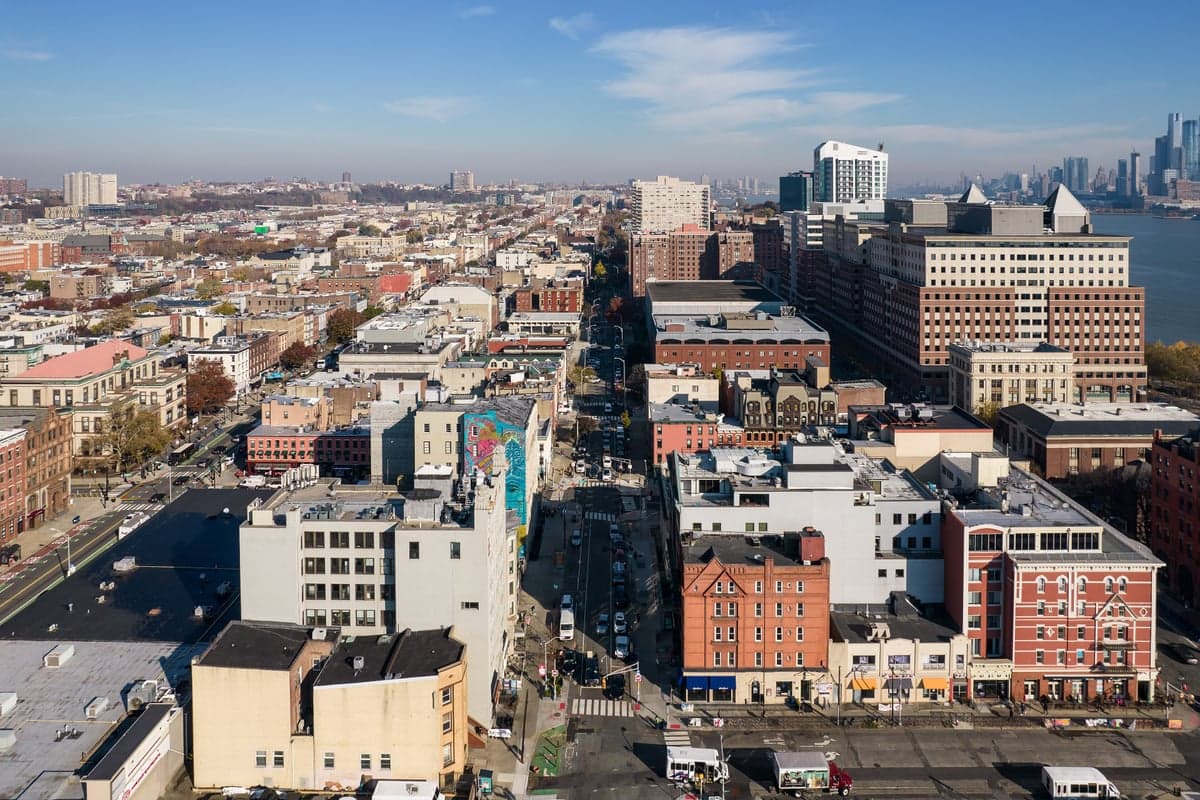
Hoboken, New Jersey, presents a paradox for the strategic relocator. Its dense, transit-oriented layout and position on the Hudson River directly across from Midtown Manhattan make it a high-value target in any scenario involving civil unrest, infrastructure collapse, or geopolitical conflict. While the city boasts a resilient, walkable core and a robust local food scene, its proximity to New York City—a primary fallout-relevant landmark—introduces severe risks that outweigh its tactical advantages for anyone prioritizing long-term survival and self-sufficiency. For the conservative prepper, Hoboken is less a sanctuary and more a forward operating base with a dangerously short shelf life once the grid goes down.
Geographic position and natural advantages: A peninsula with a single lifeline
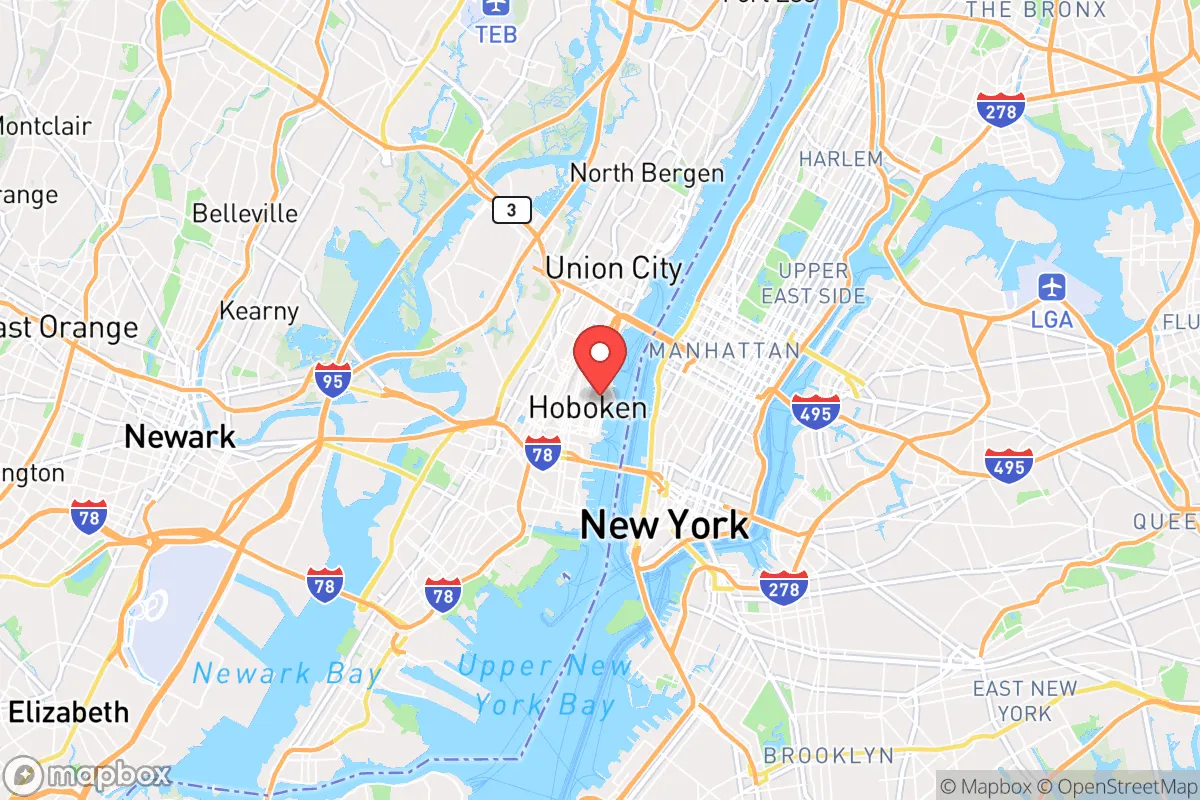
Hoboken occupies a roughly one-square-mile peninsula on the western bank of the Hudson River, bordered by the river to the east and the Weehawken Cove and Jersey City to the north and south. Its primary natural advantage is direct water access, which could theoretically support small-boat evacuation, fishing, or resupply if the bridges and tunnels become impassable. The Hudson River is a deep, tidal estuary, meaning it does not freeze solid in winter, maintaining a potential waterborne escape route. The city’s elevation is low—mostly between 10 and 30 feet above sea level—which offers no high-ground defensibility and leaves it vulnerable to storm surge from nor’easters or hurricanes. The Palisades cliffs to the west, rising sharply in Weehawken and Union City, provide a natural barrier that funnels movement into a narrow corridor along the river. For a relocator, this means there is essentially one viable land exit: south into Jersey City or west up the steep, congested streets toward the New Jersey Turnpike. In a gridlock scenario, that single choke point becomes a death trap. The city’s compact, walkable grid is excellent for daily life but terrible for tactical dispersion.
Risks, exposures, and proximity to fallout-relevant landmarks
Hoboken’s greatest vulnerability is its location. It sits less than two miles from the Lincoln Tunnel entrance and roughly three miles from the Holland Tunnel, both of which connect directly to Manhattan. In any mass casualty event or civil unrest in New York City, Hoboken becomes a primary egress route for hundreds of thousands of panicked people. The city’s population of roughly 60,000 swells to over 200,000 during a typical workday due to commuters. When the tunnels close, those commuters are stranded, and the city’s resources—food, water, fuel, medical supplies—are consumed within hours. The Port Authority of New York and New Jersey operates the PATH train system, which runs directly under the Hudson River into the World Trade Center and 33rd Street stations. Those tunnels are critical infrastructure that, if targeted or compromised, could cause catastrophic flooding or structural collapse in Hoboken’s downtown. Additionally, the city is within the immediate fallout zone of any radiological or dirty-bomb event targeting Manhattan. Prevailing westerly winds would carry fallout directly over Hoboken. The nearby Bayonne Bridge and Port Newark–Elizabeth Marine Terminal, major shipping and military logistics hubs, are high-value targets for sabotage or conventional attack. For the prepper, Hoboken is not a retreat; it is a blast radius.
Practical resilience for a relocator: Food, water, energy, and defensibility
Hoboken’s practical resilience is poor for any scenario lasting more than 72 hours. The city has no meaningful agricultural land; every inch is paved or built upon. There are zero functioning farms, community gardens of significant scale, or livestock within city limits. Food supply depends entirely on just-in-time delivery from warehouses in New Jersey and New York. The city’s grocery stores—ShopRite, Trader Joe’s, and several bodegas—hold roughly three to five days of inventory for the resident population. When the trucks stop, shelves empty in hours. Water is supplied by Suez Water (now Veolia) via the Hackensack River and reservoirs in northern New Jersey. The system is gravity-fed and electrically pumped; a prolonged power outage means no water pressure above the first few floors. Boiling or filtering Hudson River water is possible but dangerous due to industrial runoff, sewage overflows, and saltwater intrusion during droughts. Energy comes from PSE&G, with overhead lines that are notoriously vulnerable to storms. Hoboken has no natural gas storage or backup generation at the residential level. Defensibility is the weakest point. The city is a dense, multi-story grid of brick and concrete buildings with narrow streets and alleys. There is no defensible perimeter; every block is exposed to fire from adjacent rooftops and street-level approaches. The Hoboken Police Department fields roughly 120 officers, but in a mass-casualty or civil-unrest event, they would be overwhelmed within minutes. The city’s proximity to the Hudson River also means it is a natural funnel for refugees fleeing Manhattan, making any attempt at neighborhood security a losing battle against sheer numbers.
The overall strategic picture for Hoboken is clear: it is a high-risk, low-resilience location for anyone serious about long-term preparedness. Its advantages—walkability, water access, and a dense social fabric—are real but fleeting. The city functions well in peacetime but collapses rapidly under stress. For the conservative relocator who values self-sufficiency, defensibility, and distance from primary targets, Hoboken is a poor choice. It is best understood as a temporary staging area for those who must work in Manhattan but maintain a secondary retreat further inland—perhaps in the Hudson Valley or northwestern New Jersey. If you are single and can evacuate within 12 hours of a trigger event, Hoboken might serve as a base of operations. If you have a family and are looking for a place to ride out a crisis, look elsewhere. The city’s density, single-point-of-failure infrastructure, and proximity to the highest-value target in the United States make it a liability, not an asset, in any serious strategic relocation plan.

* Values derived from national, state, county, city and local statistics and may differ in a specific area. Last updated: 2026-05-23T21:47:46.000Z
Narrative content on this page is AI-generated and may contain mistakes. Verify any details that matter before acting on them.
ReloMaps may earn a commission from affiliate links at no extra cost to you.

