 Popular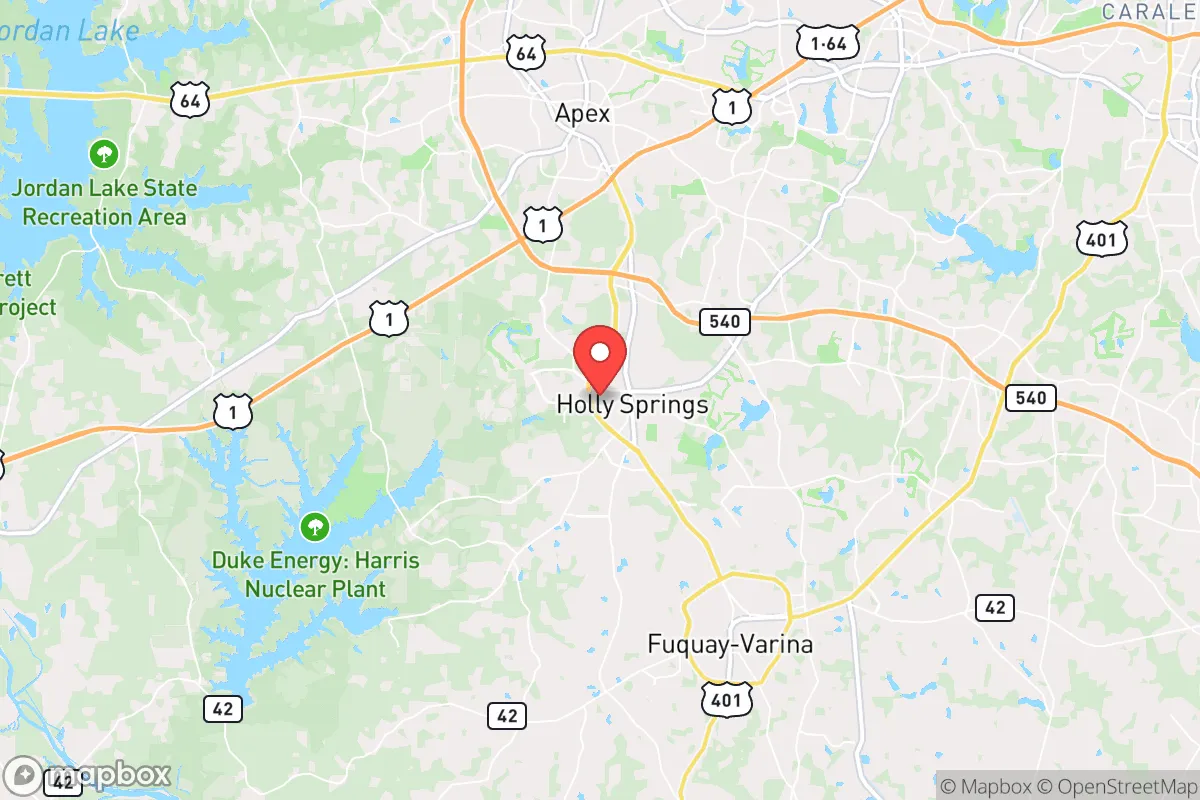
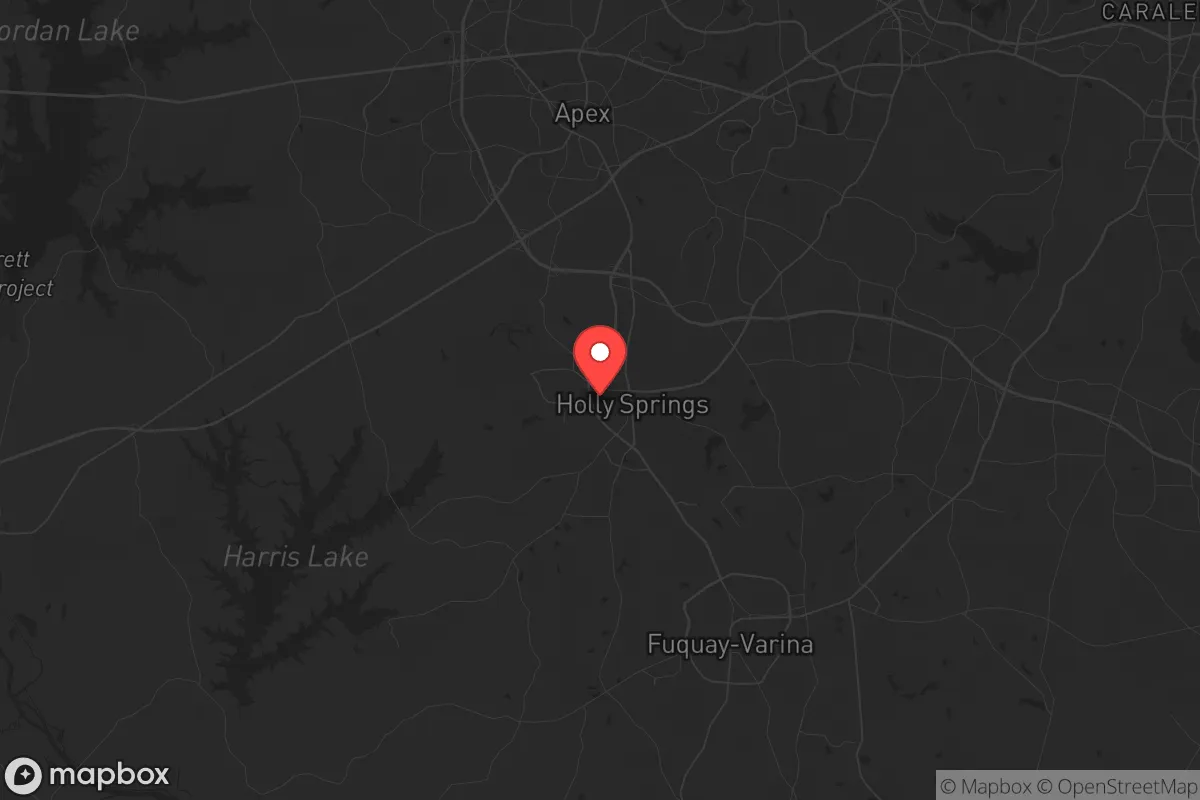
Photo: Wikipedia
Strategic Assessment of Holly Springs, NC
Multiple tactical vulnerabilities. Population density, target proximity, or disaster risk are likely compounding. A retreat property and exit planning is required.
What does the Strategic Assessment tell us?
Our Strategic Assessment grades tactical survivability of an area. Major population centers, military targets, fallout zones, natural disasters, and border exposure all drive risk — lower exposure means a more defensible position in a crisis.
This is heavily inspired by Joel Skousen's Strategic Relocation book. Highly recommended you checkout the book ($)What does this tell us?
Our Strategic Assessment grades tactical survivability of an area. Major population centers, military targets, fallout zones, natural disasters, and border exposure all drive risk — lower exposure means a more defensible position in a crisis.
This is heavily inspired by Joel Skousen's Strategic Relocation book. Highly recommended you checkout the book ($)Strategic Pillars

Key Distances
Regional Safe Places
Below is our recommended "safe zones" in North Carolina and the surrounding area based on our strategic heuristics. For most people, it's unrealistic to live in a “safe zone” full-time due to work, family or other personal reasons. They tend to be more rural. However, many of these areas are perfect for second homes and retreat properties that double as a vacation home or even a short-term rental.

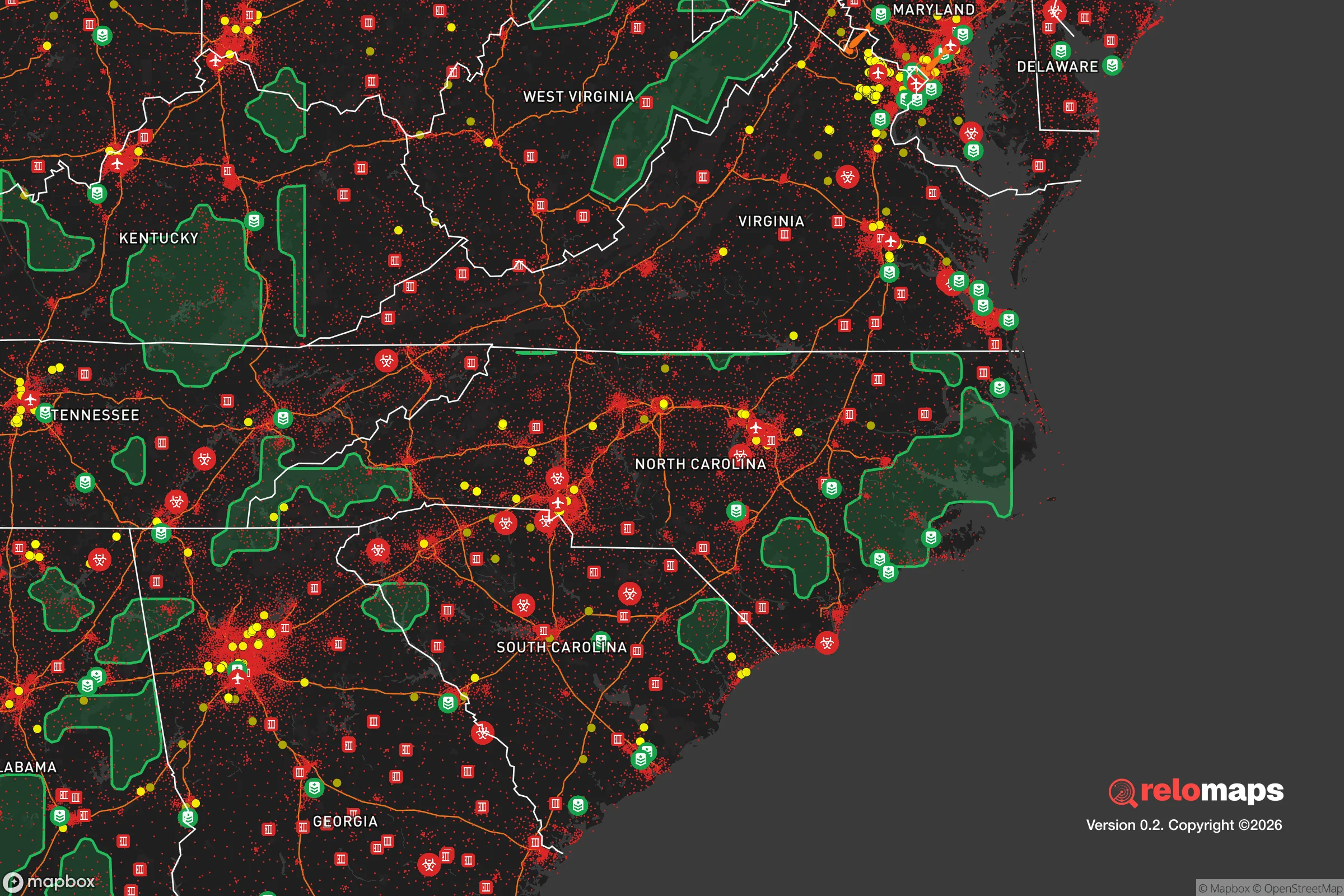


Important Note: For informational purposes only. This does not mean nothing bad ever happens in the green zones. Please use common sense. This is based on public data and modeled with AI. We tried to take a conservative approach but mistakes happen. We update this regularly as new information becomes available.
Solar Generator Recommendations
Backup power matters more here than in safer locations. We've picked three solar generators across budgets and capacity tiers — start with the budget unit if you only need a few essentials, or step up if you want to run a fridge and HVAC for days at a time.

Jackery Portable Power Station Explorer 300
Budget OptionPower on the Go: Weighing only 11 lbs, it's convenient to set up and store with book-sized foldable solar panels

BLUETTI Portable Power Station AC180
Designed for both indoor and outdoor scenarios, AC180 is highly capable as it has a robost capacity and continuous output power.

EF ECOFLOW DELTA Pro Ultra Power Station
Upgraded PickEcoFlow DELTA Pro Ultra is a whole-home energy system designed to grow with your family. Integrated with the Smart Home Panel 2, it scales to meet your evolving energy needs — keeping your home powered, intelligent, and secure through every stage of life.
We earn a commission, at no additional cost to you.
Strategic Assessment Analysis
Holly Springs, North Carolina, presents a mixed strategic picture for the relocation-minded reader focused on resilience and self-sufficiency. Its primary advantages are a strong local economy and a location that sits just outside the immediate blast and fallout zones of major metropolitan targets, while its primary disadvantages are a high degree of dependence on regional infrastructure and a growing population density that erodes long-term defensibility. For a single individual or family seeking a balance between access to urban employment and a reasonable buffer from worst-case scenarios, Holly Springs offers a workable, if not ideal, position that requires deliberate preparation to offset its vulnerabilities.
Geographic position and natural advantages for disaster readiness
Holly Springs occupies a strategic spot in western Wake County, roughly 20 miles southwest of downtown Raleigh and about 30 miles from the Raleigh-Durham International Airport and Research Triangle Park. This places it within the outer suburban ring of the Triangle metro area, a region that has experienced explosive growth over the past two decades. From a resilience standpoint, this proximity to a major metropolitan hub is a double-edged sword. The area sits on the Piedmont plateau, a region of rolling hills and clay-based soils that is generally well-drained and less prone to the catastrophic flooding seen in coastal or riverine areas. The nearest significant waterway is the Cape Fear River, which flows well to the west, and Holly Springs itself is not situated in a designated floodplain, reducing the risk of storm surge or riverine flooding from hurricanes that have already lost much of their energy by the time they reach central North Carolina. The local climate is humid subtropical, with hot summers and mild winters, meaning extreme cold events are rare and typically short-lived. The area is not located in a major earthquake zone, and tornadoes, while possible, are less frequent and intense than in the Plains or Deep South. These natural factors give Holly Springs a baseline of environmental stability that is better than many other parts of the country.
Risks, exposures, and proximity to fallout-relevant landmarks
The most significant risk for a Holly Springs relocator is not natural disaster but man-made and infrastructure-driven threats. The Triangle region is home to several high-value targets in a major conflict scenario. Raleigh is the state capital, housing government and administrative functions. Fort Liberty (formerly Fort Bragg), one of the largest military installations in the world, is located roughly 50 miles southwest, in Fayetteville. Research Triangle Park contains numerous biotech, pharmaceutical, and tech firms with potential dual-use or defense-related contracts. In a nuclear exchange or large-scale conventional attack, these would be primary or secondary targets. Holly Springs, at 20-30 miles from downtown Raleigh and 50 miles from Fort Liberty, sits in a zone that could experience significant fallout depending on wind patterns and weapon yield. A ground burst at either location could deposit dangerous radioactive particles over the town within hours. The prevailing winds in the region are from the west and southwest, meaning a strike on Fort Liberty or the industrial areas of Fayetteville could push fallout directly toward Holly Springs. Conversely, a strike on Raleigh would likely send fallout east or northeast, potentially sparing the town. This is not a safe distance; it is a marginal one that demands a robust fallout shelter plan and at least two weeks of supplies. Beyond military threats, the area is also vulnerable to grid-scale disruptions. The entire Triangle relies on a centralized power grid fed by Duke Energy, with limited local generation. A cyberattack, EMP, or severe ice storm could knock out power for days or weeks, as seen in the 2002 ice storm that left much of the region without electricity for up to two weeks. The water supply is similarly centralized, with Holly Springs drawing from a combination of groundwater wells and surface water from the Cape Fear River basin, treated at regional plants. A contamination event or pump failure would quickly stress the system.
Practical resilience for a relocator: food, water, energy, and defensibility
For a relocator serious about self-sufficiency, Holly Springs offers a mixed bag of opportunities and constraints. Food security is the strongest point. Wake County, despite its urbanization, still has significant agricultural land to the west and south. Within a 30-minute drive, you can find numerous farms, farmers' markets, and u-pick operations. The local soil, while clay-heavy, can be amended for gardening, and the long growing season (roughly April to October) allows for substantial home food production. The town itself has a few small grocery stores, but most residents rely on large chains like Harris Teeter, Publix, and Walmart, which are vulnerable to supply chain disruptions. For long-term food storage, a deep pantry or root cellar is advisable. Water is a more serious concern. The municipal supply is treated and reliable under normal conditions, but a prolonged power outage would stop the pumps. A private well is the gold standard for resilience, but many newer subdivisions in Holly Springs are on municipal water. If you are buying, prioritize a property with an existing well or the space and water table depth to drill one. Rainwater collection is legal in North Carolina but regulated; a 100-gallon system for gardening is fine, but a larger potable system requires permits and professional installation. Energy resilience is achievable but requires upfront investment. The area receives ample sunlight, making solar panels a viable option. Net metering is available through Duke Energy, but a grid-tied system without battery backup is useless during a blackout. A battery bank (e.g., Tesla Powerwall or a DIY lithium setup) is essential for true off-grid capability. Propane is widely available for backup generators, cooking, and heating. Defensibility is the weakest link. Holly Springs is a classic suburban bedroom community: dense subdivisions with cul-de-sacs, limited choke points, and a high reliance on a few main roads (NC-55, US-1) for egress. In a crisis, these roads would clog quickly. The town's police force is professional but small, and response times in a widespread emergency would be stretched thin. For a single individual or family, the best strategy is to live on the outskirts of town, on a minimum of 2-5 acres, with a clear line of sight to approach routes and a neighbor network you can trust. Gated communities offer a false sense of security; they are often the first places targeted by desperate people.
The overall strategic picture for Holly Springs is one of calculated trade-offs. It offers a solid economic base, a mild climate, and proximity to resources that make daily life comfortable and provide a foundation for building resilience. However, it is not a retreat or a bug-out location. Its proximity to high-value targets, reliance on centralized infrastructure, and suburban density mean that a relocator must be proactive, not passive. The smart move here is to treat Holly Springs as a base of operations: secure a property with a well and solar capability, build a deep pantry, establish a local network of like-minded neighbors, and have a secondary plan for a more remote location if the threat environment escalates. For the conservative-leaning family that wants to stay employed in the Triangle while hedging against instability, Holly Springs is a defensible choice—but only if you do the work.

* Values derived from national, state, county, city and local statistics and may differ in a specific area. Last updated: 2026-10-10T16:27:40.000Z
Narrative content on this page is AI-generated and may contain mistakes. Verify any details that matter before acting on them.
ReloMaps may earn a commission from affiliate links at no extra cost to you.

