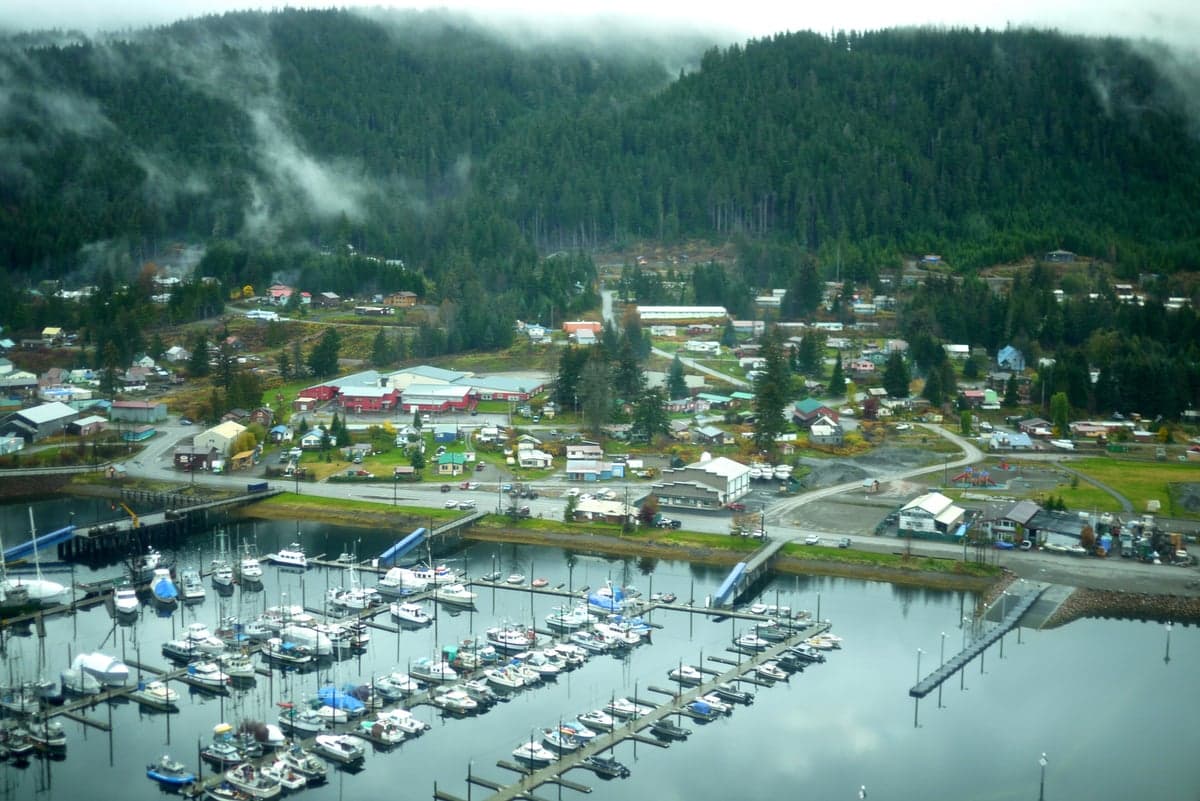
Photo: Wikipedia
Personal Sovereignty in Hoonah, AK
Strong independent fundamentals that actively favor personal liberty and low regulation.
What does Personal Sovereignty tell us?
Personal Sovereignty measures your capacity for self-reliance and independence with minimal government friction. Higher scores mean fewer barriers between you and the way you want to live... but it assumes you have the space you need and good neighbors.
What does this tell us?
Personal Sovereignty measures your capacity for self-reliance and independence with minimal government friction. Higher scores mean fewer barriers between you and the way you want to live... but it assumes you have the space you need and good neighbors.
State Policy
Energy independence: Net exporter (350% of energy produced in-state)
Personal Liberty
Homesteading

Personal Liberty Analysis
Hoonah, Alaska, offers a rare degree of personal sovereignty that is increasingly difficult to find in the Lower 48, making it a compelling option for those prioritizing autonomy over convenience. As a remote Tlingit community accessible only by air or sea, Hoonah operates under a unique blend of state law, tribal governance, and practical self-reliance that inherently limits the reach of federal and state overreach. For the survivalist or prepper, this isolation is not a drawback but a strategic asset—a buffer against the cascading failures and regulatory creep that plague urban centers. However, the trade-offs are real: limited infrastructure, extreme weather, and a subsistence-based economy demand a high level of personal capability and preparation.
Tax burden and regulatory posture in a remote Alaska town
Alaska’s state-level tax environment is among the most favorable in the nation for those seeking to minimize government extraction. There is no state income tax, no state sales tax, and no state property tax—a trifecta that leaves residents with significantly more disposable income to invest in their own preparedness and land. Hoonah itself does not levy a municipal sales tax, though the City and Borough of Juneau (which administers some services) imposes a modest 5% sales tax on purchases made within its jurisdiction. Property taxes in Hoonah are negligible, with the effective rate hovering around 0.5% of assessed value, far below the national average. The regulatory posture is equally light: building permits are minimal, business licensing is straightforward, and there is no state-level zoning authority that can dictate land use. The Alaska Department of Environmental Conservation has limited reach here, and the federal presence—while present through the U.S. Forest Service (Tongass National Forest surrounds the town)—is more about land management than daily life interference. For a conservative audience wary of government overreach, this is a jurisdiction where the state largely stays out of your wallet and your business.
Self-defense and gun law specifics in a remote coastal community
Alaska is a constitutional carry state, and Hoonah residents enjoy the full spectrum of Second Amendment protections without the bureaucratic hurdles common elsewhere. No permit is required to open or conceal carry a firearm for anyone legally allowed to possess one. There is no state-level firearm registry, no waiting periods, and no magazine capacity restrictions. The state preempts local gun ordinances, meaning Hoonah’s city council cannot impose its own restrictions. For the prepper, this means you can legally own and carry AR-15s, suppressors (with a federal tax stamp), and high-capacity magazines without local interference. Bear defense is a practical necessity here—brown bears and black bears are common—and the legal framework supports lethal force in defense of life and property. Alaska’s “stand your ground” law is robust, with no duty to retreat in any place where you are lawfully present. The remote nature of Hoonah also means that law enforcement response times can be measured in hours, not minutes, placing the ultimate responsibility for personal and family safety squarely on the individual. This is not a place where you can rely on 911; it is a place where you must be your own first responder.
Self-reliance and homesteading viability: lot sizes, zoning, and off-grid feasibility
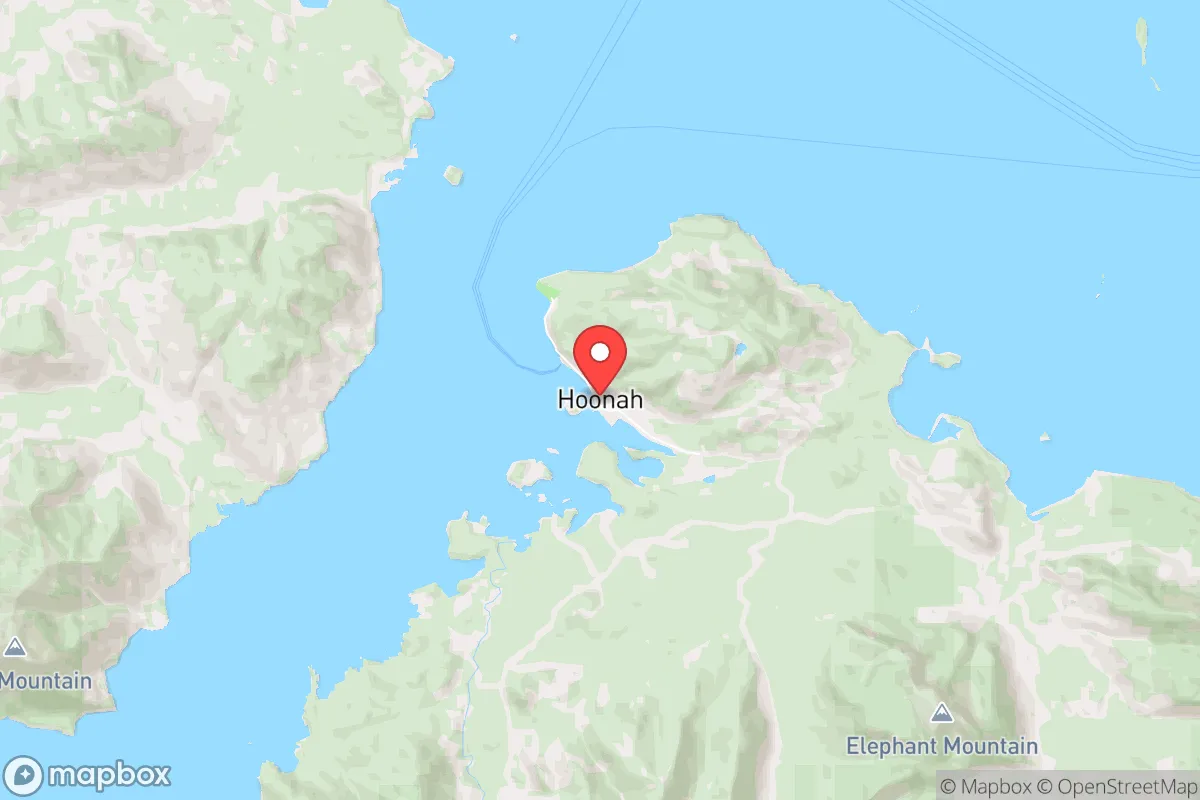
Hoonah’s geography and governance structure make it one of the most viable locations in the U.S. for a self-reliant, off-grid lifestyle. The town is situated on Chichagof Island, with most residential lots ranging from 0.25 to 5 acres, though larger parcels are available through private sales or Native corporation land leases. Zoning is minimal: the city’s code primarily addresses health and safety (septic, setbacks) but does not restrict livestock, gardening, or alternative energy systems. Off-grid feasibility is high—many residents already rely on rainwater catchment, solar panels (with battery storage), and wood stoves for heat. The Hoonah Indian Association and the local electric utility (Inside Passage Electric Cooperative) provide grid power, but connection is optional. The Tongass National Forest surrounds the town, offering legal access to timber for construction and firewood, as well as hunting and fishing grounds. However, note that subsistence hunting and fishing are regulated by both state and federal agencies, and non-Native residents must adhere to standard Alaska hunting and fishing seasons and bag limits. For the serious homesteader, the primary challenge is logistics: building materials, fuel, and equipment must be barged or flown in, adding significant cost. But for those willing to invest in a barge container and a chainsaw, Hoonah offers a level of land-use freedom that is extinct in most of the Lower 48.
Personal liberties: parental rights, medical autonomy, speech, and property
Alaska’s legal culture leans heavily toward individual liberty, and Hoonah reflects that ethos. Parental rights are strongly protected under state law, with no universal vaccine mandates for school attendance and broad exemptions for religious or philosophical objections to medical treatments. Homeschooling is unrestricted and does not require state approval, and the remote location means that many families already educate their children at home or via correspondence programs like the Alaska Virtual School. Medical autonomy is similarly robust: Alaska has no state-level mask or vaccine mandates, and the state’s health department has limited enforcement power in rural communities. The Alaska Supreme Court has historically upheld broad free speech protections under the state constitution, which are at least as strong as the First Amendment. Property rights are secure, with no state-level rent control, no forced inclusionary zoning, and a straightforward process for land title transfer. The primary limitation on property rights comes from the federal government: the Tongass National Forest imposes restrictions on commercial timber harvest and some recreational uses, but these do not affect residential property within the city limits. For the conservative individualist, Hoonah is a place where the government largely leaves you alone—provided you are not trying to run a large-scale commercial operation on federal land.
In the broader context of American personal sovereignty, Hoonah stands out as a genuine outlier. While the Lower 48 sees increasing regulatory density, surveillance, and erosion of property and gun rights, this remote Southeast Alaska town offers a functional alternative: low taxes, minimal regulation, constitutional carry, and a culture of self-reliance. The trade-offs are significant—isolation, high cost of goods, limited healthcare access, and a harsh climate—but for those who view these as acceptable costs for freedom, Hoonah represents one of the last places in the United States where a person can live largely on their own terms. It is not a utopia; it is a frontier. And for the survivalist or prepper, that is precisely the point.

* Values derived from national, state, county, city and local statistics and may differ in a specific area. Last updated: 2026-04-19T19:21:29.000Z
Narrative content on this page is AI-generated and may contain mistakes. Verify any details that matter before acting on them.
ReloMaps may earn a commission from affiliate links at no extra cost to you.

