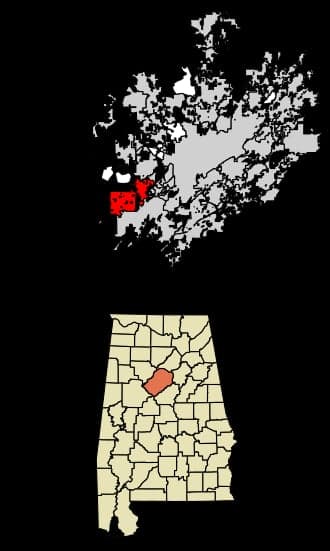
Photo: Wikipedia
Political ClimatePolitical Climate in Hueytown, AL
District shown is the primary district for this city’s centroid. Cities may span multiple districts.
Local Political AnalysisPolitical Analysis of Hueytown, AL
Hueytown has long been a solidly Democratic stronghold on paper, with a Cook PVI of D+13, but if you've lived here as long as I have, you know that label doesn't tell the whole story. This town was built by working-class folks—steelworkers, pipefitters, and their families—who voted Democrat because that's what their daddies did, not because they bought into any progressive agenda. Over the last decade, you've seen a real shift: more and more neighbors are quietly voting Republican, especially in local races, because they're tired of the government sticking its nose where it doesn't belong. The trajectory is clear—Hueytown is slowly but surely moving right, even if the registration numbers haven't caught up yet.
How it compares
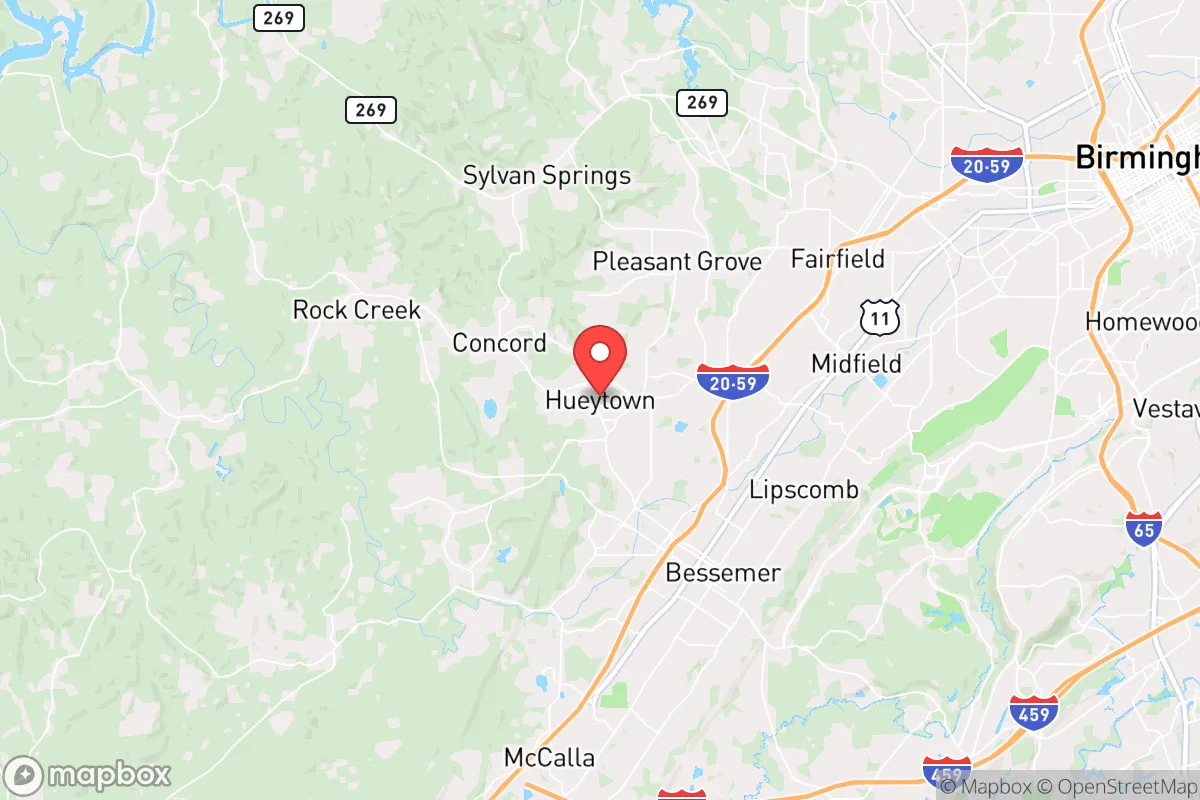
Drive ten minutes east to Bessemer, and you'll find a place that's still deep blue, with a Cook PVI around D+20, and you can feel it in the air—more government programs, more taxes, more rules about what you can and can't do with your own property. Head west toward McCalla or Vance, and it's a whole different world: those areas are trending red fast, with folks who'll tell you straight up they moved out of Jefferson County to get away from the overreach. Hueytown sits right in the middle, but it's leaning more toward the McCalla mindset every year. The contrast is stark when you look at how the city council handles things—Hueytown's still got a Democratic majority, but they're a lot more cautious about raising taxes or pushing new regulations than their counterparts in Birmingham or Bessemer.
What this means for residents
For the average Hueytown family, this political tug-of-war means you've got to keep your eyes open. The city's still pretty good about leaving you alone—no mask mandates that lasted forever, no overbearing noise ordinances, and property taxes that won't make you choke on your sweet tea. But there's a creeping concern: as the old guard retires, younger, more progressive candidates are starting to pop up, and they've got ideas about "equity" and "sustainability" that usually translate to more fees, more permits, and more control over your backyard. If you value your Second Amendment rights or don't want the city telling you what kind of fence you can build, you need to pay attention to who's running for city council. The good news is, most folks here still believe in common sense—they'll vote for the person who promises to stay out of their business, regardless of party label.
One thing that sets Hueytown apart from some of its neighbors is a stubborn streak of independence. You won't find a lot of enthusiasm for regional transit plans or county-wide zoning overlays here—people remember how those things turned into backdoor taxes in other towns. The cultural vibe is still very much "live and let live," as long as you're not asking for a handout or a new regulation. If the progressive wave keeps washing over Birmingham and Jefferson County, expect Hueytown to dig in its heels even harder. The long-term outlook? I'd say we're headed for a political realignment that'll make this place look more like a red dot in a blue county within the next ten years, and that's just fine with most of the folks I know.

State Political ClimatePolitical Climate in Alabama
State Political AnalysisPolitical Environment in the State
Alabama is a deeply conservative state, with Republicans holding every statewide elected office and supermajorities in both legislative chambers, but the picture is more layered than a simple red-state label suggests. The state has shifted rightward over the past 20 years, driven by the realignment of rural white voters and the collapse of the old Democratic coalition that once dominated the Black Belt. Today, Alabama votes roughly +25 to +30 points Republican in presidential elections, though that margin masks a stark urban-rural split and a growing suburban battleground in places like Madison and Auburn.
Urban vs. rural divide
The political map of Alabama is essentially a tale of two Alabamas. The rural north and south are overwhelmingly Republican, with counties like DeKalb and Marshall routinely delivering 80%+ of the vote to GOP candidates. The Black Belt, stretching from Selma to Montgomery, remains the Democratic stronghold, driven by African American voters who make up 60-80% of the population in counties like Lowndes and Wilcox. The major metros are where the real action is: Birmingham’s Jefferson County is a Democratic island, while Huntsville’s Madison County has become a fascinating hybrid—deeply conservative in the rural parts but trending purple in the city itself, thanks to an influx of tech workers and defense contractors. Mobile and Montgomery are more evenly split, with Mobile’s Baldwin County (the fastest-growing in the state) leaning hard right while the city itself tilts Democratic. The Auburn-Opelika area is a conservative anchor, driven by the university’s traditional values and a booming aerospace sector.
Policy environment
Alabama’s policy environment is a textbook example of limited-government conservatism, though with some notable exceptions. The state has no income tax on retirement income, a flat 5% corporate tax, and a property tax rate that is among the lowest in the nation—roughly 0.4% of assessed value, meaning a $300,000 home carries about $1,200 in annual property taxes. The regulatory climate is business-friendly, with no state-level minimum wage above the federal $7.25 and a right-to-work law that keeps union influence minimal. Education policy is a mixed bag: the state has a robust school choice program through the Alabama Accountability Act, which provides tax credits for private school tuition, but public school funding remains near the bottom nationally. The 2023 CHOOSE Act expanded Education Savings Accounts for low-income families, a win for parental rights. Healthcare is a sore spot—Alabama did not expand Medicaid under the ACA, leaving a coverage gap of roughly 200,000 working poor, but the state has also resisted federal overreach in vaccine mandates and public health orders. Election laws are strict: voter ID is required, absentee ballot drop boxes are banned, and the 2021 SB1 law made it a felony to distribute unsolicited absentee ballot applications. The state’s abortion ban, the Human Life Protection Act of 2019, is one of the most restrictive in the country, protecting life from conception with no exceptions for rape or incest.
Trajectory & freedom
On the freedom front, Alabama has been moving in a decidedly positive direction over the past five years, though the pace is uneven. The 2022 permitless carry law (HB272) made Alabama a constitutional carry state, allowing any law-abiding adult to carry a concealed firearm without a permit—a major expansion of Second Amendment rights. The 2023 CHOOSE Act and the 2024 expansion of the Alabama Accountability Act have given parents more control over their children’s education, with ESAs now available to families earning up to 300% of the federal poverty level. Property rights were strengthened by the 2021 “Taking of Private Property” law, which limits the ability of local governments to use eminent domain for private development. On the downside, the state’s medical cannabis program, passed in 2021, has been mired in bureaucratic delays and lawsuits, leaving patients without access despite legislative approval. The 2023 “Don’t Say Gay” style law (HB385) bans classroom instruction on sexual orientation and gender identity in K-5, which parents’ rights advocates see as a necessary protection of childhood innocence, while critics call it government overreach into curriculum. The state’s tax burden remains low, but the 2023 grocery tax cut (from 4% to 3%) was a modest step toward reducing the regressive nature of the sales tax.
Civil unrest & political movements
Alabama has seen relatively little civil unrest compared to other states, but there are flashpoints. The 2020 George Floyd protests in Birmingham and Montgomery were largely peaceful, though a statue of Confederate Admiral Raphael Semmes was removed in Mobile by the city government, sparking a backlash that helped fuel the 2021 “Save Our Monuments” law, which prohibits the removal of historical monuments without state approval. Immigration politics are a growing issue, particularly in the poultry processing towns of Russellville and Albertville, where the Hispanic population has surged. The 2011 HB56 law, once the strictest anti-immigration law in the country, has been largely gutted by court rulings, but the political sentiment remains strong—the 2023 “Sanctuary City” ban (SB129) prohibits local governments from adopting policies that limit cooperation with federal immigration enforcement. Election integrity remains a hot-button issue: the 2020 election saw no major fraud in Alabama, but the 2021 SB1 law was passed in response to national concerns, tightening absentee voting rules. The “Stop the Steal” movement had a muted presence here, though a small group of activists in Cullman and Baldwin County remain vocal. The state’s secessionist rhetoric is mostly historical, though the 2021 “Alabama Sovereignty Act” (HB100) attempted to assert state nullification of federal laws, but it failed to pass.
Projection
Over the next 5-10 years, Alabama is likely to remain solidly conservative, but the demographic shifts are real. The Huntsville metro is growing at nearly 3% annually, driven by the Space Command and defense sector, and that influx is bringing a more educated, slightly more moderate electorate. The Baldwin County boom, with Gulf Shores and Fairhope seeing explosive growth from out-of-state retirees and remote workers, is adding a libertarian-leaning, low-tax crowd that could push the state toward even more fiscal conservatism. The Black Belt continues to depopulate, losing political clout, while the Hispanic population in north Alabama is growing, potentially creating a new voting bloc that could shift the GOP’s immigration stance. The biggest wildcard is education: if the school choice movement continues to expand, it could attract more families from blue states, reinforcing the conservative tilt. However, if the state fails to address the healthcare coverage gap or infrastructure needs in growing areas like Madison and Auburn, it could create friction. Expect the GOP to remain dominant, but with a more suburban, tech-driven flavor in the metros, while the rural areas double down on cultural conservatism.
For a new resident, the bottom line is this: Alabama offers a low-tax, high-freedom environment with a strong sense of community and traditional values, but you’ll need to navigate a patchwork of local cultures. If you’re moving to Huntsville, you’ll find a booming economy and a politically mixed suburbia; if you’re heading to Mobile or Birmingham, expect more urban challenges and a more diverse political landscape. The state is trending in the right direction on gun rights, school choice, and tax relief, but the healthcare and infrastructure gaps are real. Come for the freedom, stay for the pace of life—just know that the politics here are as real as the sweet tea, and they’re not changing anytime soon.
* Values derived from national, state, county, city and local statistics and may differ in a specific area. Last updated: 2026-04-19T18:55:11.000Z
Narrative content on this page is AI-generated and may contain mistakes. Verify any details that matter before acting on them.
ReloMaps may earn a commission from affiliate links at no extra cost to you.

