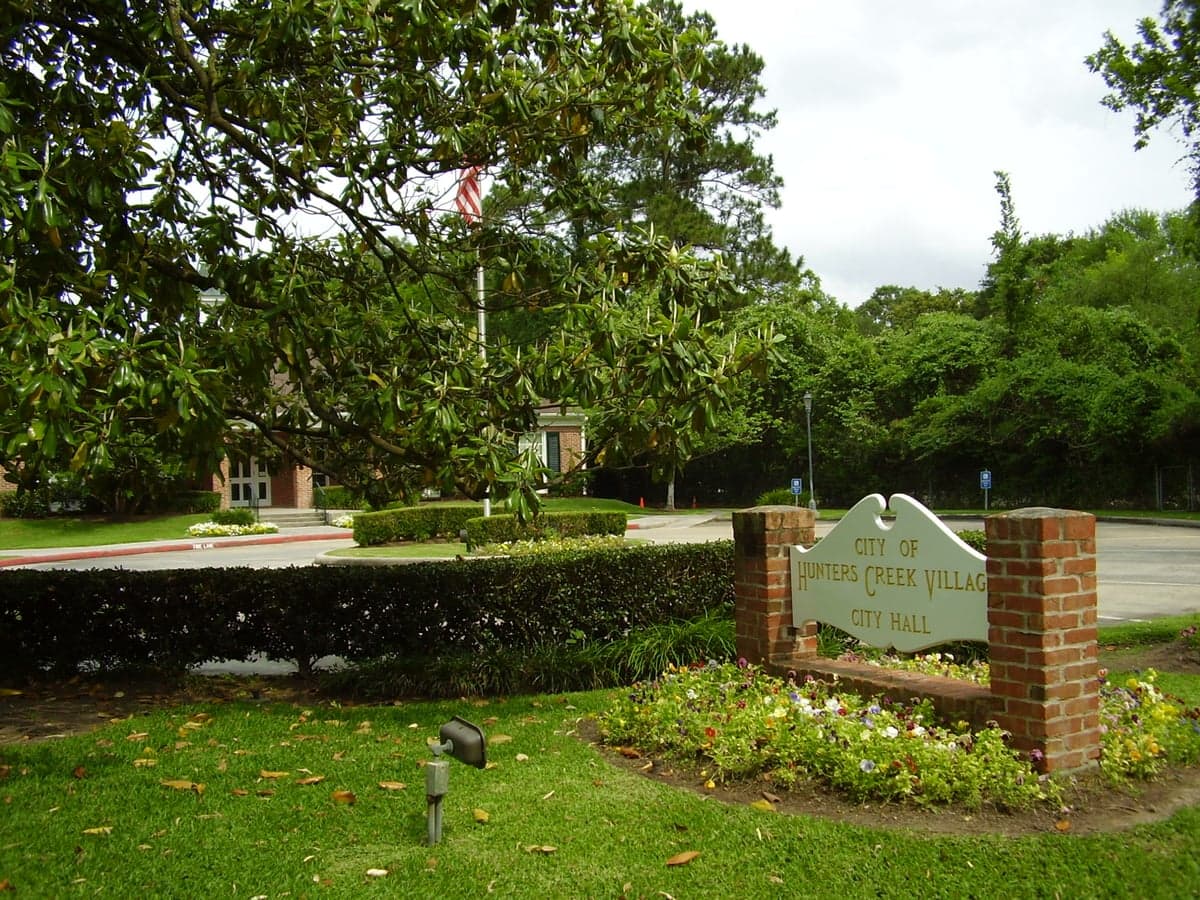
Photo: Wikipedia
Strategic Assessment of Hunters Creek Village, TX
Multiple tactical vulnerabilities. Population density, target proximity, or disaster risk are likely compounding. A retreat property and exit planning is required.
What does the Strategic Assessment tell us?
Our Strategic Assessment grades tactical survivability of an area. Major population centers, military targets, fallout zones, natural disasters, and border exposure all drive risk — lower exposure means a more defensible position in a crisis.
This is heavily inspired by Joel Skousen's Strategic Relocation book. Highly recommended you checkout the book ($)What does this tell us?
Our Strategic Assessment grades tactical survivability of an area. Major population centers, military targets, fallout zones, natural disasters, and border exposure all drive risk — lower exposure means a more defensible position in a crisis.
This is heavily inspired by Joel Skousen's Strategic Relocation book. Highly recommended you checkout the book ($)Strategic Pillars

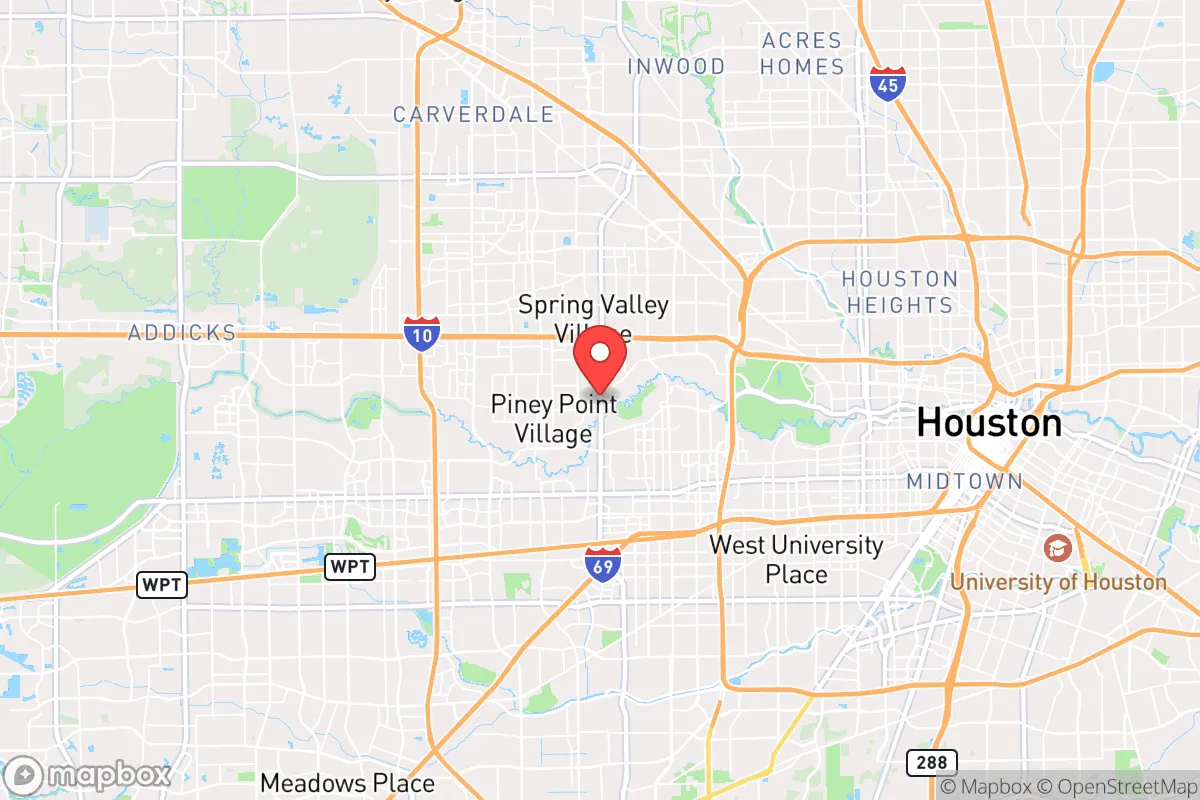
Key Distances
Regional Safe Places
Below is our recommended "safe zones" in Texas and the surrounding area based on our strategic heuristics. For most people, it's unrealistic to live in a “safe zone” full-time due to work, family or other personal reasons. They tend to be more rural. However, many of these areas are perfect for second homes and retreat properties that double as a vacation home or even a short-term rental.

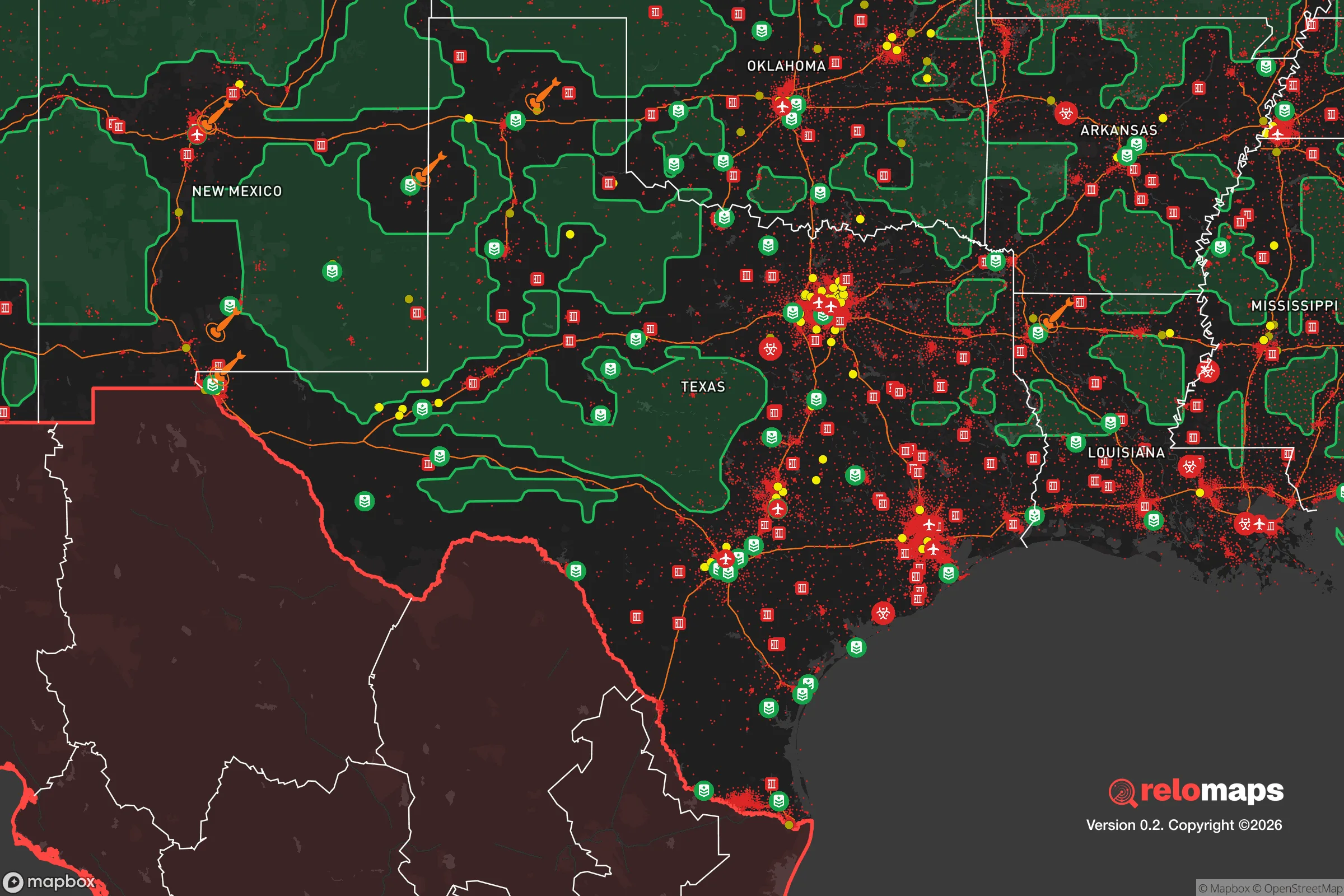


Important Note: For informational purposes only. This does not mean nothing bad ever happens in the green zones. Please use common sense. This is based on public data and modeled with AI. We tried to take a conservative approach but mistakes happen. We update this regularly as new information becomes available.
Solar Generator Recommendations
Backup power matters more here than in safer locations. We've picked three solar generators across budgets and capacity tiers — start with the budget unit if you only need a few essentials, or step up if you want to run a fridge and HVAC for days at a time.

Jackery Portable Power Station Explorer 300
Budget OptionPower on the Go: Weighing only 11 lbs, it's convenient to set up and store with book-sized foldable solar panels

BLUETTI Portable Power Station AC180
Designed for both indoor and outdoor scenarios, AC180 is highly capable as it has a robost capacity and continuous output power.

EF ECOFLOW DELTA Pro Ultra Power Station
Upgraded PickEcoFlow DELTA Pro Ultra is a whole-home energy system designed to grow with your family. Integrated with the Smart Home Panel 2, it scales to meet your evolving energy needs — keeping your home powered, intelligent, and secure through every stage of life.
We earn a commission, at no additional cost to you.
Strategic Assessment Analysis
Hunters Creek Village, an affluent enclave within Houston’s Memorial area, presents a mixed strategic picture for the conservative prepper. Its immediate resilience is high due to wealth, community cohesion, and local governance, but its location within the fourth-largest metro area in the U.S. introduces significant vulnerabilities. For a relocator prioritizing long-term survival and self-sufficiency, this is a location of calculated risk—strong on day-to-day security and resource access, but exposed to the cascading failures that could accompany a major urban collapse or mass casualty event.
Geographic position and natural advantages for long-term survival
Hunters Creek Village sits on a high-bank ridge along Buffalo Bayou, a natural elevation advantage in a region prone to flooding. The village’s 1.1 square miles are zoned for low-density, large-lot residential use, with many homes on half-acre or larger parcels—rare for inner-loop Houston. This provides space for rainwater catchment, gardening, and off-grid energy systems like rooftop solar, which is increasingly common among residents. The village is surrounded by the 1,500-acre Memorial Park system, offering immediate access to dense forest, game trails, and natural water sources. The park’s thick canopy and bayou corridors could serve as a bug-out route or concealment zone in a crisis. The area’s subtropical climate means year-round growing seasons, though heat and humidity complicate long-term food storage without power. The village’s location along I-10 and the West Loop gives quick egress to rural areas west (Katy, Brookshire) and north (Tomball, Magnolia), but those routes are notorious choke points during evacuations—Hurricane Rita’s 2005 gridlock is a cautionary tale.
Risks, exposures, and proximity to fallout-relevant landmarks
The primary strategic liability is Hunters Creek Village’s position within the Houston urban core. The village is less than 5 miles from the Texas Medical Center, the world’s largest medical complex, which in a pandemic or bioweapon scenario would become an epicenter of contagion and resource strain. The nearby Port of Houston—the nation’s busiest in foreign tonnage—is a high-value target for terrorism or supply-chain disruption. The village is also within 15 miles of the LyondellBasell refinery in Pasadena, one of the largest oil refineries in the country, which in a major industrial accident or attack could release toxic clouds that drift northwest over the village. The proximity to I-10 and the Katy Freeway means that any mass evacuation of Houston’s 2.3 million residents would funnel past the village’s borders, creating a human wave of desperate people. The village’s gated entrances and private police force (the Hunters Creek Village Police Department, with 24/7 patrols) provide a first layer of defense, but a determined mob or organized looters would test those barriers. The area’s wealth makes it a target for civil unrest—during the 2020 George Floyd protests, the nearby Galleria area saw looting and arson, and the village’s exclusive character could draw resentment in a breakdown scenario.
Practical resilience for a relocator: food, water, energy, and defensibility
For a relocator serious about prepping, Hunters Creek Village offers a mixed bag. Water security is a major concern: the village relies on the City of Houston’s water system, which draws from Lake Houston and the Trinity River. A prolonged power outage or contamination event (chemical spill, cyberattack on the water utility) would cut supply. Residents should plan for at least 30 days of stored water or a well-drilling permit—though the village’s deed restrictions may complicate that. Food security is moderate: the large lots allow for vegetable gardens and small livestock (chickens are permitted in some areas), but the HOA-style covenants in many subdivisions restrict visible prepping like root cellars or large water tanks. The nearby Memorial Villages Farmers Market (Saturdays at 10840 Beinhorn Road) is a good source for local produce, but in a crisis, it would be stripped quickly. Energy resilience is improving: many homes have backup generators, and solar-plus-battery systems are becoming standard in new builds. The village’s underground power lines reduce storm-related outages, but the grid is still tied to the fragile Texas Interconnection, which failed catastrophically during Winter Storm Uri in 2021. Defensibility is the village’s strongest card: the gated entrances, private police force, and neighborhood watch programs create a hardened perimeter. The village’s 4,500 residents are largely like-minded professionals (doctors, lawyers, energy executives) who would likely organize mutual-aid networks. However, the village lacks a central community center or hardened shelter—the Hunters Creek Village City Hall is a small building with no storm shelter or fortified space. The nearby Memorial Park could become a contested zone for resources (firewood, game, water) in a prolonged crisis.
Overall strategic picture for the conservative relocator
Hunters Creek Village is a viable option for the prepper who values community wealth and local governance over rural isolation. The village’s private police force, gated access, and high property values create a natural buffer against the chaos of urban collapse—but only for the first 72 hours to a week. After that, the lack of independent water, the proximity to high-value targets (Medical Center, refineries, port), and the choke-point evacuation routes become critical liabilities. For a single individual or family with the resources to stockpile supplies, install solar, and build a defensible home, this location offers a comfortable baseline with moderate risk. The conservative prepper should view Hunters Creek Village as a “bug-in” location for short-term crises (hurricanes, civil unrest, grid failure) but have a secondary bug-out plan for long-term collapse—ideally a rural property in the Hill Country (e.g., Kerrville or Fredericksburg) within a 3-4 hour drive. The village’s real strength is its social fabric: in a world where trust is scarce, having neighbors who share your values and resources is the ultimate hedge. Just don’t mistake the manicured lawns and private security for true independence—this is a fortress, not a homestead.

* Values derived from national, state, county, city and local statistics and may differ in a specific area. Last updated: 2026-04-14T05:04:05.000Z
Narrative content on this page is AI-generated and may contain mistakes. Verify any details that matter before acting on them.
ReloMaps may earn a commission from affiliate links at no extra cost to you.

