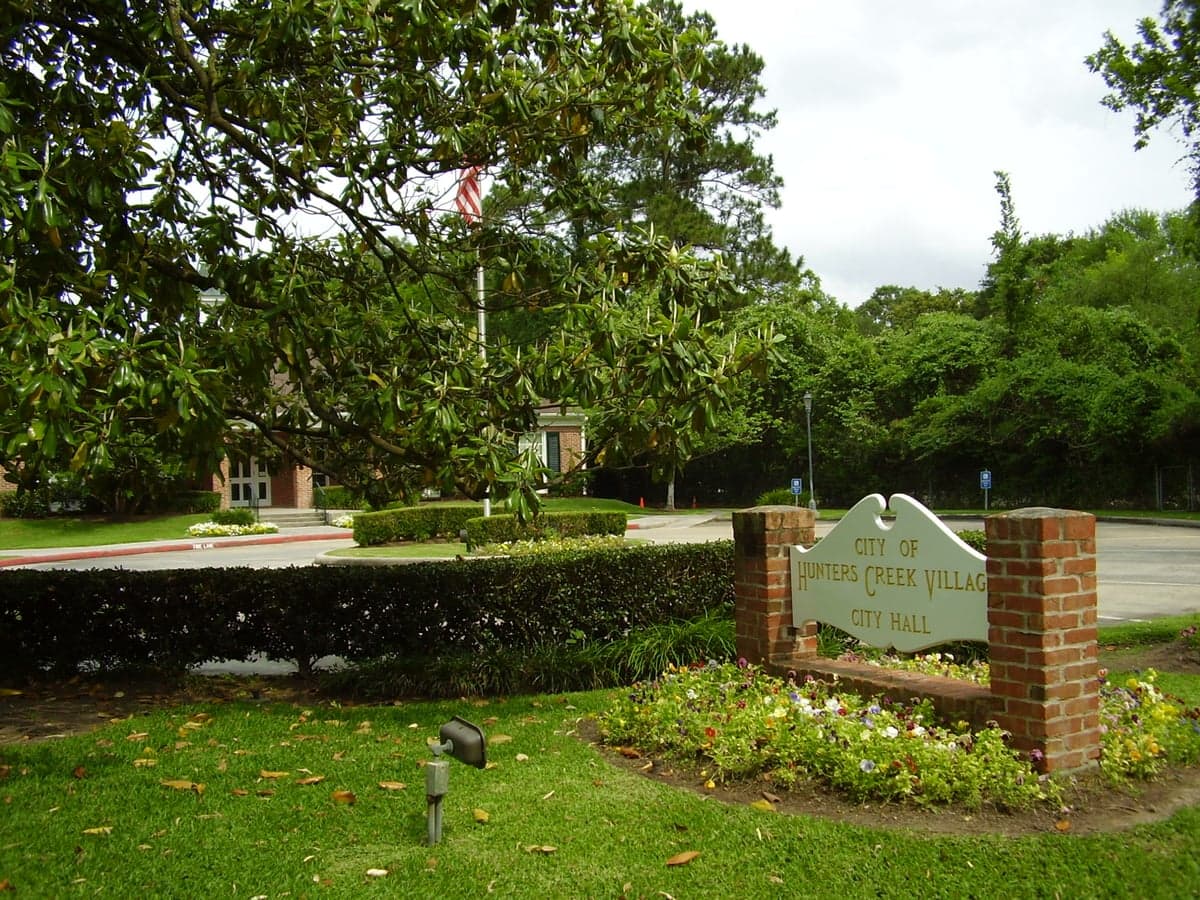
Photo: Wikipedia
Political ClimatePolitical Climate in Hunters Creek Village, TX
District shown is the primary district for this city’s centroid. Cities may span multiple districts.
Local Political AnalysisPolitical Analysis of Hunters Creek Village, TX
Hunters Creek Village has long been one of the most reliably conservative enclaves in the Houston metro area, and that hasn’t changed much. The Cook Partisan Voting Index (PVI) for the area sits at R+10, meaning the electorate here votes about ten points more Republican than the national average. That’s not just a number on a map—it reflects a deep, lived-in preference for limited government, low taxes, and a hands-off approach to personal and property rights. If you’ve been around here for a while, you’ve seen the same values hold steady through election cycles, even as nearby cities like Houston proper have drifted leftward. The trajectory here is one of cautious stability: folks aren’t looking for radical change, and they tend to vote accordingly.
How it compares
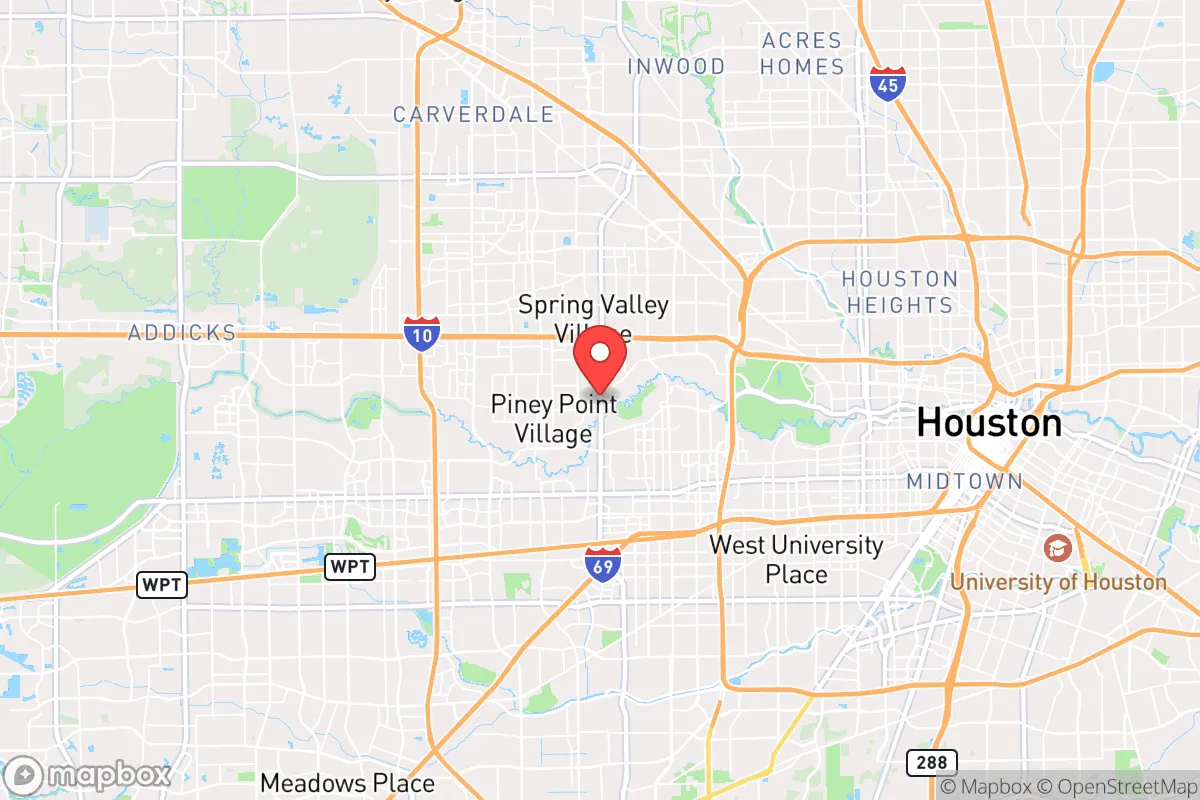
When you stack Hunters Creek Village against its neighbors, the contrast is pretty stark. Head east into the Houston city limits, and you’re in a county that went for Biden by a solid margin in 2020—Harris County as a whole is now reliably blue. But here in the Memorial Villages, the political DNA is different. Places like Bunker Hill Village and Piney Point Village share the same R+10 lean, forming a conservative pocket that feels insulated from the progressive wave washing over the urban core. Even nearby West University Place, while still right-of-center, has seen more purple-leaning shifts in local races. Hunters Creek Village, though, has held the line. It’s not about being reactionary—it’s about a consistent belief that government should stay out of your business, your backyard, and your wallet. That’s a perspective that feels increasingly rare as you drive closer to downtown.
What this means for residents
For someone living here, the political climate translates directly into daily life. You’re not going to see the kind of zoning overreach or tax hikes that pop up in more progressive suburbs. The city council and local boards tend to prioritize property rights and fiscal restraint—things like keeping police funding solid and resisting state-level mandates that feel like overreach. There’s a healthy skepticism of “one-size-fits-all” policies coming from Austin or Washington. If you’re worried about government creeping into your personal freedoms—whether that’s school curriculum, health mandates, or land-use rules—Hunters Creek Village offers a buffer. The long-term concern here is that as Harris County continues to shift left, state preemption laws might be the only thing keeping local control intact. Residents are watching that dynamic closely, because nobody wants to see Houston-style policies trickle into the Villages.
Culturally, Hunters Creek Village is the kind of place where people still wave at neighbors and expect the city to fix a pothole without a bureaucratic fight. There’s no appetite for performative politics or divisive social experiments. The local vibe is more “live and let live” than “government knows best.” That said, there’s a quiet wariness about the future—especially if national trends push more progressive candidates into county-level positions that could affect property taxes or public safety funding. For now, the community remains a stronghold of traditional conservative values, but the surrounding political landscape is shifting. If you value personal autonomy and a government that stays in its lane, this is still one of the safest bets in the region. Just keep an eye on those county elections—they’re where the real battles are fought.

State Political ClimatePolitical Climate in Texas
State Political AnalysisPolitical Environment in the State
Texas is a solidly Republican state, but the margin has been tightening over the last decade. In 2024, Donald Trump won the state by about 14 points, down from 19 points in 2016cars, reflecting a slow but steady shift driven by explosive growth in the blue-leaning suburbs of Dallas, Houston, and Austin. The dominant coalition remains a mix of rural conservatives, suburban moderates, and a growing number of Hispanic voters in the Rio Grande Valley who are trending right, but the state’s political future is being fought over in places like Collin County, Tarrant County, and Hays County.
Urban vs. rural divide
The political map of Texas is a tale of three regions. The big metros—Houston, Dallas, San Antonio, and especially Austin—are deep blue, with Harris County (Houston) and Travis County (Austin) routinely voting Democratic by 20+ points. Meanwhile, the vast rural expanse from the Panhandle down to the Permian Basin is blood red; Lubbock and Midland-Odessa are among the most conservative areas in the country. The real battleground is the suburban ring around these cities. Collin County (north of Dallas) was once a Republican stronghold but has become a purple toss-up, with Democrats winning local races in 2020 and 2022. Tarrant County (Fort Worth) flipped blue in 2020 for the first time since 1964, though it swung back slightly in 2024. The Rio Grande Valley, historically Democratic, is now a key swing region—Hidalgo County went from +40 D in 2012 to +15 D in 2024, with Starr County flipping to Trump outright. This urban-rural split means state politics are dominated by rural and exurban voices, but the demographic tide is pulling the state leftward.
Policy environment
Texas remains a low-tax, low-regulation state by design. There is no state income tax, and property taxes are high but capped by a 2023 law (Proposition 4) that raised the homestead exemption to $100,000 and cut school property tax rates. The regulatory posture is business-friendly, with no state-level minimum wage above the federal $7.25 and weak occupational licensing requirements. Education policy is a flashpoint: the 2023 school voucher bill (SB 8) failed in the House due to rural Republican opposition, but Governor Greg Abbott has made it a priority for 2025, and a new version is expected to pass. Healthcare is a mixed bag—Texas has the highest uninsured rate in the nation (over 16%) and has refused Medicaid expansion under the ACA, a stance that remains popular with conservatives but strains rural hospitals. Election laws tightened after 2020 with SB 1 (2021), which banned drive-through voting, restricted mail-in ballot access, and empowered partisan poll watchers. Abortion is effectively banned after six weeks under SB 8 (2021) and a trigger law that took effect in 2022, with no exceptions for rape or incest. The state also passed a 2023 law (HB 900) requiring age verification for adult content online, a move aimed at protecting minors.
Trajectory & freedom
On balance, Texas has become more free in several key areas over the last five years, but with notable exceptions. Gun rights expanded significantly with permitless carry (HB 1927, 2021), allowing most adults to carry a handgun without a license. Parental rights were strengthened by the 2023 law (HB 900) restricting sexually explicit content in school libraries and the 2021 ban on transgender athletes in school sports (SB 29). Medical autonomy took a hit with the near-total abortion ban, which conservatives see as protecting life but critics view as government overreach. Property rights were bolstered by the 2023 law limiting eminent domain for private projects and the 2021 law (SB 8) allowing private citizens to sue abortion providers—a novel enforcement mechanism that has since been replicated in other states. However, the state has also expanded surveillance: the 2023 law (SB 22) requires social media platforms to verify user ages for certain content, and the 2021 election law (SB 1) added new voter ID requirements. The overall trajectory is toward more conservative governance, but the growth of blue suburbs means the state’s freedom index could shift left if Democrats gain a majority in the legislature—something that is still a decade away at current trends.
Civil unrest & political movements
Texas has seen its share of political flashpoints. The 2020 Black Lives Matter protests in Austin were among the largest in the country, leading to the city council defunding the police by $150 million—a move that was partially reversed after a backlash. Immigration politics are a constant source of tension, with Governor Abbott’s Operation Lone Star (2021) deploying state troopers and National Guard to the border, busing migrants to New York and Chicago, and passing a 2023 law (SB 4) that makes illegal entry a state crime—currently tied up in court. The “secession” rhetoric from the Texas Nationalist Movement (TEXIT) remains a fringe but vocal force, with a 2022 poll showing 18% of Texans supporting independence. Election integrity controversies flared after 2020, with Attorney General Ken Paxton leading a failed lawsuit to overturn the results in four swing states. In 2023, the state House impeached Paxton over corruption allegations, but the Senate acquitted him—a move that deepened the rift between establishment Republicans and the Trump-aligned faction. A new resident would notice the heavy police presence in border towns like El Paso and the constant political ads on TV, especially during primary season.
Projection
Over the next 5-10 years, Texas will likely remain Republican-controlled but with a shrinking margin. The state is adding about 1,000 new residents per day, most of them moving to the blue-leaning suburbs of Dallas, Houston, and Austin. If current trends hold, the state could be a true swing state by 2032, with Democrats winning statewide office for the first time since 1994. However, the Republican legislature is likely to gerrymander congressional maps aggressively after the 2030 census to preserve their advantage. The biggest wildcard is the Hispanic vote: if the Rio Grande Valley continues its rightward shift, Republicans could offset losses in the suburbs. For a new resident, expect the culture wars to intensify—school board meetings, library content, and transgender rights will remain battlegrounds. The economy will stay strong, but property taxes will keep rising as home values appreciate. The state’s freedom index will depend on who controls the governor’s mansion after 2026; a Republican win means more school choice and gun rights, while a Democratic win could bring Medicaid expansion and a rollback of abortion restrictions.
For a conservative moving to Texas, the bottom line is this: you’re coming to a state that still values low taxes, gun rights, and local control, but the political ground is shifting under your feet. The rural areas and small towns—places like Lubbock, Midland, and the Hill Country—will remain deeply red for decades. The suburbs are where the fight is happening, and if you’re moving to a place like Frisco or Round Rock, you’ll be in a purple zone where your vote actually matters. The state government is on your side for now, but the demographic wave is real. If you want to live in a place that feels like the Texas of 2010, head west or south of I-10. If you want to be part of the fight to keep Texas conservative, move to the suburbs and get involved in local politics. Either way, you’ll pay no state income tax and you can carry a gun without a permit—but don’t expect that to last forever if the blue tide keeps rising.
* Values derived from national, state, county, city and local statistics and may differ in a specific area. Last updated: 2026-04-14T05:04:05.000Z
Narrative content on this page is AI-generated and may contain mistakes. Verify any details that matter before acting on them.
ReloMaps may earn a commission from affiliate links at no extra cost to you.

