 Popular
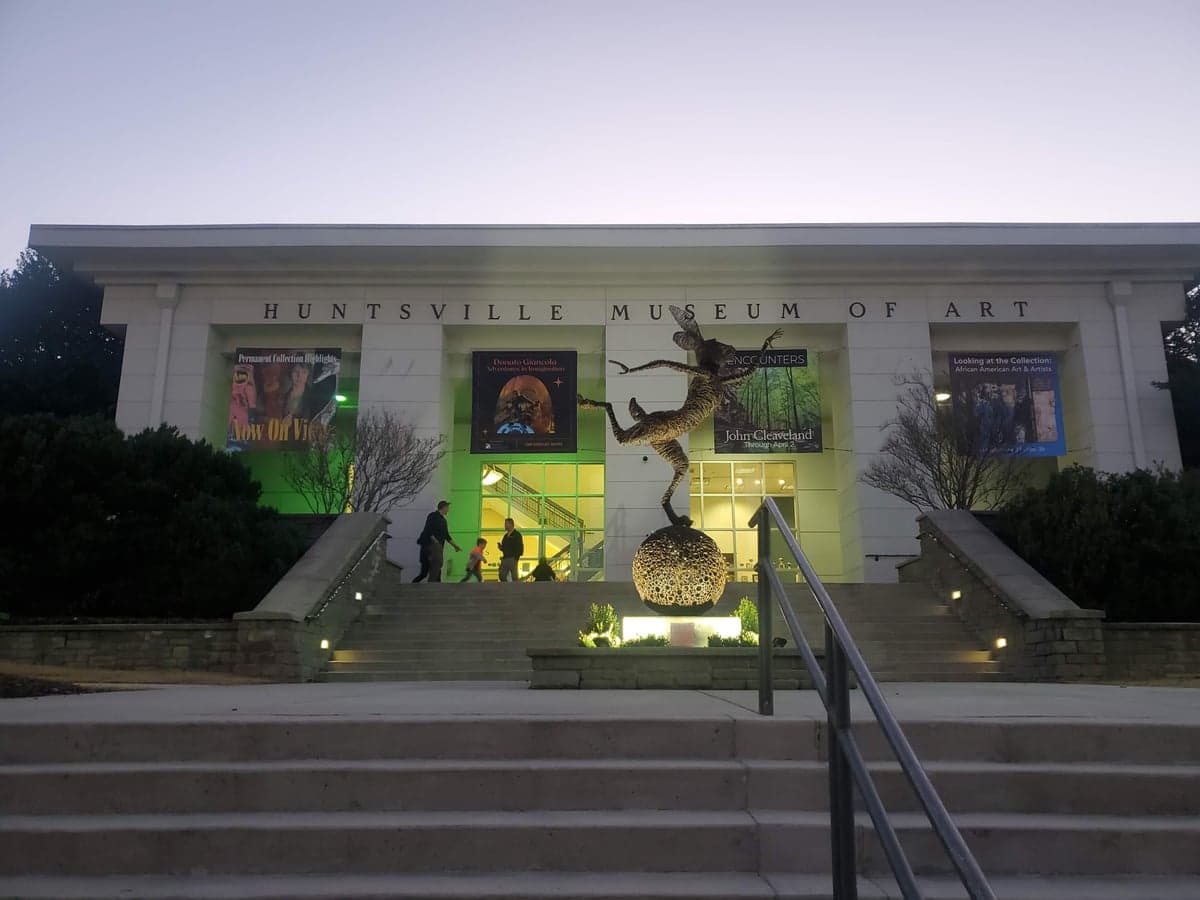
Photo: Wikipedia
Personal Sovereignty in Huntsville, AL
Viable for self-reliance. Generally workable, though some barriers may limit total independence.
What does Personal Sovereignty tell us?
Personal Sovereignty measures your capacity for self-reliance and independence with minimal government friction. Higher scores mean fewer barriers between you and the way you want to live... but it assumes you have the space you need and good neighbors.
What does this tell us?
Personal Sovereignty measures your capacity for self-reliance and independence with minimal government friction. Higher scores mean fewer barriers between you and the way you want to live... but it assumes you have the space you need and good neighbors.
State Policy
Energy independence: Importer (45% of energy produced in-state)
Personal Liberty
Homesteading

Personal Liberty Analysis
Huntsville, Alabama offers a personal sovereignty environment that is markedly stronger than most of the United States, particularly when compared to coastal states or those with heavy regulatory climates. For the survivalist or prepper, this city represents a strategic foothold in the Tennessee Valley where state-level preemption laws, a low tax burden, and a culture of self-reliance create a buffer against federal overreach. While no location is immune to government intrusion, Huntsville’s legal and economic framework gives individuals and families more room to operate independently, making it a serious consideration for those prioritizing autonomy in an increasingly unstable national landscape.
Tax burden and regulatory posture for independent living
Alabama’s tax structure is deliberately designed to minimize the state’s claim on your income and property, which directly supports personal sovereignty. There is no state-level tax on groceries or prescription drugs, and the state income tax is a flat 5% on taxable income over $3,000, with a standard deduction that shields the first few thousand dollars. Property taxes in Madison County, where Huntsville sits, are among the lowest in the nation, averaging around 0.41% of assessed value—meaning a $300,000 home carries an annual tax bill of roughly $1,230. This low property tax burden reduces the risk of being priced out of your land by escalating assessments, a common tactic in high-tax states that effectively forces relocation. On the regulatory side, Alabama is a right-to-work state with minimal occupational licensing requirements compared to the Northeast or West Coast. There are no state-level rent control laws, no mandatory paid family leave mandates, and no aggressive environmental regulations that would prevent you from building a workshop, storing supplies, or running a small home-based business. The state’s regulatory posture is one of “leave us alone,” which aligns directly with the prepper ethos of minimizing dependency on government permission slips.
Self-defense and gun law specifics for armed preparedness
For those who view the Second Amendment as a cornerstone of personal sovereignty, Huntsville delivers one of the most permissive legal environments in the country. Alabama is a constitutional carry state, meaning no permit is required to carry a concealed firearm for anyone legally allowed to possess a gun. This went into full effect in 2022, and it has not been rolled back despite federal pressure. There is no state-level registry, no magazine capacity restrictions, and no “assault weapon” bans. The Castle Doctrine is strong: you have no duty to retreat in your home, vehicle, or workplace, and the “stand your ground” law extends to any place you are lawfully present. For preppers, this means you can legally stockpile firearms and ammunition without fear of state confiscation orders, and you can train on your own property without special permits. The local sheriff’s office in Madison County is generally pro-2A, and the Huntsville Police Department does not conduct proactive gun confiscation or “red flag” enforcement beyond what is required by federal law. If you are concerned about civil unrest or supply chain disruptions, the ability to defend your household without bureaucratic hurdles is a significant advantage over states like New York, California, or Illinois.
Self-reliance and homesteading viability in Huntsville
Huntsville’s zoning and land use policies make it feasible to pursue a self-reliant lifestyle without moving to a remote rural area. Within the city limits, many residential lots are between 0.25 and 0.5 acres, which is enough for a substantial garden, a small chicken coop, and rainwater catchment systems. The city’s zoning code allows for “urban agriculture” as a permitted use in most residential districts, including the keeping of chickens, bees, and even goats on lots of sufficient size. Outside the city, in unincorporated Madison County or neighboring Limestone County, lot sizes jump to 1-5 acres, and there are no county-level restrictions on off-grid systems like solar panels, composting toilets, or private wells—though you will need to comply with state health department standards for well water. The climate supports a long growing season (roughly 220 frost-free days), and the soil in the Tennessee Valley is generally loamy and productive. For the prepper focused on food security, you can realistically produce a significant portion of your own vegetables, eggs, and even small livestock within a 30-minute drive of downtown Huntsville. Off-grid feasibility is high: the area receives ample sunlight for solar, and the Tennessee River provides a reliable water source for those with property along its tributaries. The main limitation is that the city does enforce building codes and requires permits for structural additions, so full “off-grid” living within city limits is not legal without some compliance, but the county is far more lenient.
Personal liberties: parental rights, medical autonomy, speech, and property
Alabama has been at the forefront of protecting parental rights and medical autonomy, particularly in the wake of federal overreach during the COVID-19 pandemic. The state passed legislation in 2022 that prohibits mask and vaccine mandates in public schools, and parental consent is required for any medical treatment of minors, including mental health services. This means you have the legal standing to refuse experimental treatments or vaccines for your children without fear of school exclusion or state intervention. On medical autonomy for adults, Alabama does not have a state-level vaccine passport system, and the legislature has repeatedly blocked attempts to create one. Free speech protections are robust: the state has no hate speech laws that criminalize political or religious expression, and public universities in Huntsville (like UAH) have not engaged in the kind of viewpoint censorship seen in more progressive states. Property rights are strongly protected under Alabama’s constitution, which includes a provision against “taking” private property for economic development (a check on eminent domain abuse). For the prepper, this means your land, supplies, and stored resources are less likely to be seized under public health orders or “nuisance” abatement programs. The overall legal climate in Huntsville is one where the presumption favors the individual over the state, which is increasingly rare in modern America.
When stacked against other relocation options for the sovereignty-minded, Huntsville holds its own against Texas or Tennessee while offering a lower cost of entry and a more centralized location for supply chains. The city’s reliance on federal defense contracts (NASA, Redstone Arsenal) creates a tension—some preppers view this as a vulnerability, as a federal shutdown could ripple through the local economy. However, the state-level legal protections for firearms, parental rights, and property ownership are not contingent on federal funding. For the single individual or family looking to maximize personal autonomy while maintaining access to jobs and infrastructure, Huntsville represents a rare balance: a place where the government largely stays out of your way, and where you can build a self-reliant life without having to disappear into the wilderness. It is not a libertarian utopia—there are still taxes, building codes, and the occasional overzealous bureaucrat—but it is one of the few cities in the South where the legal framework actively supports the prepper mindset rather than punishing it.

* Values derived from national, state, county, city and local statistics and may differ in a specific area. Last updated: 2026-04-19T18:55:52.000Z
Narrative content on this page is AI-generated and may contain mistakes. Verify any details that matter before acting on them.
ReloMaps may earn a commission from affiliate links at no extra cost to you.

