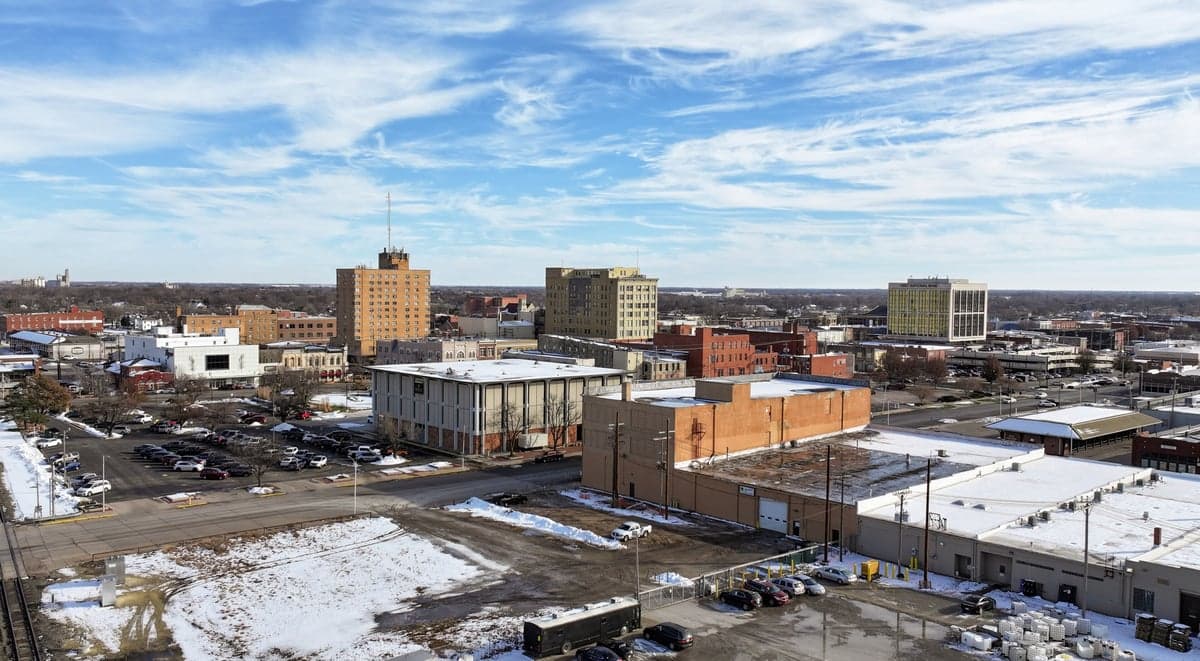
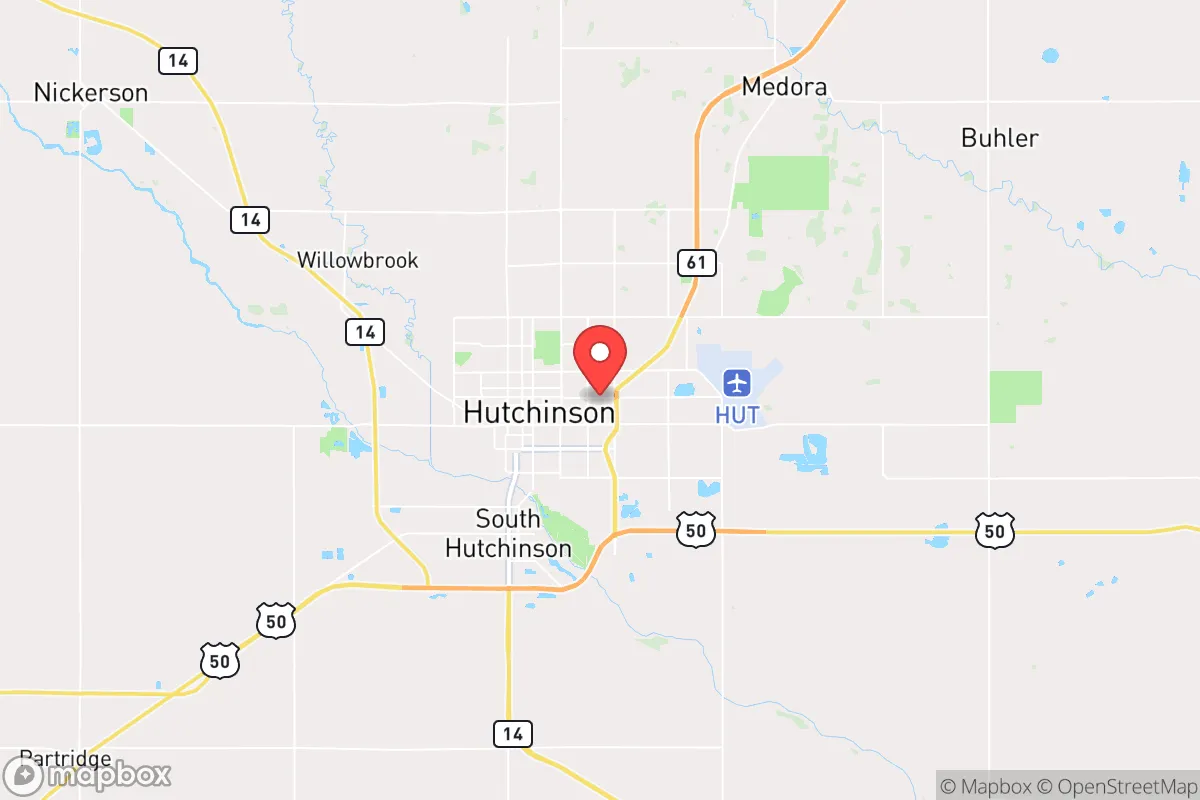
Photo: Wikipedia
Political ClimatePolitical Climate in Hutchinson, KS
District shown is the primary district for this city’s centroid. Cities may span multiple districts.
Local Political AnalysisPolitical Analysis of Hutchinson, KS
Hutchinson, Kansas, sits squarely in deep-red territory with a Cook PVI of R+16, meaning the area votes about 16 points more Republican than the national average. That’s not just a number—it reflects a community where conservative values like limited government, personal responsibility, and Second Amendment rights are still the default. But if you’ve lived here as long as I have, you’ve seen the winds shift. The county went for Trump by a comfortable margin in 2020, but there’s a creeping unease among locals that the old-school, live-and-let-live conservatism is being challenged by outside influences, especially as Wichita’s metro sprawl pushes north and brings more transient populations with different ideas about government’s role in daily life.
How it compares
Drive 50 miles east to Newton or 60 miles south to Wichita, and you’ll feel the difference. Wichita’s Sedgwick County is still red-leaning but has been trending purple, with pockets of progressive activism on city council and school board issues—things like mask mandates and DEI initiatives that would never fly here. Hutchinson, by contrast, remains a stronghold of traditional Kansas conservatism. Reno County commissioners have held the line on property tax increases and resisted federal overreach on land-use regulations. But the real contrast is with Lawrence or Kansas City, where you see outright progressive governance. Here, the biggest political fights are still about local control: whether the county should accept certain state or federal grants that come with strings attached, or how much say the city should have over private property use. It’s a quieter, more stubborn brand of conservatism—one that values freedom over efficiency.
What this means for residents
For someone moving here, the political climate means you’ll have a lot of breathing room. There’s no citywide plastic bag ban, no heavy-handed zoning that tells you what you can do with your own land, and the local sheriff’s office isn’t interested in enforcing federal gun laws they see as unconstitutional. That’s the upside. The downside? You’ve got to stay vigilant. I’ve watched school board races get more contentious as national culture-war issues trickle down—things like library book content and transgender athlete policies that would have been unthinkable to debate here a decade ago. The local paper and city council meetings are where the real action is. If you value personal freedoms, you’ll want to show up and vote in every primary, because the biggest threat to liberty here isn’t a liberal majority—it’s apathy. A handful of motivated people can shift a small-town council toward more government control before anyone notices.
Culturally, Hutchinson still feels like a place where your word is your bond and neighbors help without being asked. But there’s a growing divide between long-time families who remember when the city ran on wheat and salt mines, and newcomers who work remotely for out-of-state companies and bring different expectations about public services and “community standards.” The biggest policy distinction you’ll notice is the tax structure: Kansas has a flat income tax, and Reno County keeps its mill levy low. Any talk of raising taxes for “amenities” like bike lanes or public art gets met with serious skepticism. That’s the Hutchinson way—freedom first, and if you want something, you pay for it yourself, not through the government. It’s a good place if you want to be left alone, but you’ve got to keep your head up to make sure it stays that way.

State Political ClimatePolitical Climate in Kansas
State Political AnalysisPolitical Environment in the State
Kansas has long been a reliably Republican state, but don't let the "deep red" label fool you—the political climate here is more of a quiet, steady conservative majority with a few loud, progressive pockets that have been growing in influence over the last 10-20 years. The state hasn't voted for a Democratic presidential candidate since 1964, and Republicans hold supermajorities in both chambers of the legislature. However, the real story is the slow, grinding shift: the Kansas City suburbs, particularly Johnson County, have been trending leftward, while the rest of the state has dug in deeper on conservative values. If you're looking for a place where your vote actually counts and where traditional freedoms are still respected, Kansas is a solid bet—but you need to know where the fault lines are.
Urban vs. rural divide
The political map of Kansas is a textbook case of urban-rural polarization. The eastern third of the state, anchored by the Kansas City metro area, is where the blue dots cluster. Johnson County, the wealthiest and most populous county, flipped from reliably Republican to a swing county in the 2010s and now regularly votes Democratic in statewide races—it was the key to Laura Kelly's gubernatorial wins in 2018 and 2022. Wyandotte County (Kansas City, KS) and Douglas County (Lawrence, home to the University of Kansas) are deep blue, with progressive activism on issues like abortion and LGBTQ rights. Meanwhile, the rest of the state—the vast, flat expanse of central and western Kansas—is deeply red. Sedgwick County (Wichita) is a bellwether: it leans Republican but has a sizable moderate wing, while rural counties like Thomas County (Colby) and Grant County (Ulysses) routinely vote 80%+ Republican. The divide isn't just about party—it's about worldview. In rural Kansas, people still believe in limited government, self-reliance, and the Second Amendment. In Johnson County, you'll find more suburbanites concerned about school funding and social services. If you're moving here, pick your county carefully—your local government will reflect that split.
Policy environment
Kansas has a mixed record on freedom, and it's important to separate the rhetoric from the reality. On taxes, the state is a relative bright spot: there is no state tax on Social Security benefits, and the flat income tax rate was cut to 5.7% in 2024, with a path toward elimination. Property taxes are a local issue and can be high in good school districts like Blue Valley or Shawnee Mission, but the state has no inheritance or estate tax. On regulation, Kansas is generally business-friendly, with a right-to-work law and limited occupational licensing compared to coastal states. However, the education policy is a battleground. The state has a school choice program—the Tax Credit for Low-Income Students Scholarship Program—but it's limited compared to states like Florida or Arizona. The real concern for conservatives is the growing influence of the Kansas State Department of Education, which has pushed progressive curricula in some districts. Election laws are solid: Kansas requires a photo ID to vote, has no same-day registration, and has purged inactive voters from rolls. The state also has a voter ID law for absentee ballots. On healthcare, Kansas did not expand Medicaid under the Affordable Care Act, which keeps government out of your healthcare decisions but also means rural hospitals are struggling. The state has also passed a "Parents' Bill of Rights" (HB 2238 in 2023), which requires schools to notify parents about curriculum changes and allows them to opt their kids out of certain materials. That's a win for parental rights, but it's being challenged in court by progressive groups.
Trajectory & freedom
Kansas is in a tug-of-war between expanding and contracting personal freedom. On the positive side, the state has been a leader on Second Amendment rights: it passed constitutional carry in 2015, meaning no permit is needed to carry a concealed firearm, and it has a "Stand Your Ground" law. In 2023, the legislature overrode Governor Kelly's veto to pass a law banning local governments from enforcing federal gun laws that violate the Second Amendment—a direct challenge to federal overreach. On medical freedom, Kansas passed a law in 2024 prohibiting COVID-19 vaccine mandates by private employers and government entities, and it banned the use of vaccine passports. That's a big deal for anyone who values bodily autonomy. On the concerning side, the state has seen a push for "hate crime" legislation that could chill speech, and the Kansas Supreme Court has ruled that the state constitution protects abortion access—a ruling that the legislature is actively trying to circumvent with a proposed constitutional amendment. The biggest threat to freedom right now is the creeping influence of federal money: Kansas accepted billions in COVID relief, and that money came with strings attached that have expanded government power in education and healthcare. The trajectory is mixed, but the legislature is fighting back on multiple fronts.
Civil unrest & political movements
Kansas is not a hotbed of civil unrest, but there have been flashpoints. The most visible was the 2022 protests at the University of Kansas in Lawrence over a controversial speaker, which turned into a debate about free speech on campus. The state also saw significant pro-life activism after the Dobbs decision, with large rallies at the Statehouse in Topeka. On the left, the "Kansas People's Action" group has organized around Medicaid expansion and rent control, but they haven't gained much traction outside of Lawrence and Kansas City. Immigration politics are relatively quiet—Kansas has no sanctuary cities, and the legislature passed a law in 2023 requiring local law enforcement to cooperate with federal immigration authorities. There was a brief controversy in 2024 when the city of Topeka considered a "welcoming city" resolution, but it was defeated after public outcry. Election integrity has been a hot topic: the 2020 and 2022 elections saw no major scandals, but the legislature passed a law in 2021 banning ballot drop boxes and requiring signature verification for mail-in ballots. The most visible political movement right now is the "Parents' Rights" movement, which has been active in school board meetings across Johnson County and Wichita, pushing back against critical race theory and LGBTQ curriculum. If you move here, you won't see riots in the streets, but you will see passionate debates at school board meetings and county commission hearings.
Projection
Over the next 5-10 years, Kansas is likely to become more politically divided, but the conservative majority will hold. The key demographic shift is the continued growth of Johnson County, which is attracting out-of-state transplants from blue states like California and Illinois. Those newcomers tend to vote Democratic, which means the Kansas City suburbs will become more competitive. However, the rest of the state is growing more conservative, and the rural counties are not depopulating as fast as some predict—thanks to in-migration from Colorado and California. The legislature will likely pass a constitutional amendment to overturn the state Supreme Court's abortion ruling, and the fight over school choice will intensify. The biggest wildcard is the state's budget: if the flat tax continues to be cut, Kansas could become a tax haven, attracting more conservative migrants. If the state runs a deficit, expect pressure to raise taxes or expand Medicaid. For a new resident, the bottom line is this: if you move to a rural or exurban area, you'll find a community that shares your values on freedom, guns, and limited government. If you move to Johnson County, you'll be in a purple area where your vote matters, but you'll also face more progressive local policies. Kansas is still a good bet for conservatives, but it's not a monolith—choose your county wisely.
For a conservative individual or family looking to relocate, Kansas offers a strong foundation of Second Amendment protections, low taxes, and parental rights in education. The state is not without its battles—the Kansas City suburbs are a growing progressive beachhead, and the state Supreme Court is an activist body that needs to be reined in. But the legislature is fighting back, and the rural and exurban areas remain bastions of traditional values. If you want a place where your voice matters and where freedom is still the default, Kansas is worth a serious look. Just know that the fight for the soul of the state is ongoing, and your vote—and your presence—can make a difference.
* Values derived from national, state, county, city and local statistics and may differ in a specific area. Last updated: 2026-05-01T16:22:02.000Z
Narrative content on this page is AI-generated and may contain mistakes. Verify any details that matter before acting on them.
ReloMaps may earn a commission from affiliate links at no extra cost to you.

